
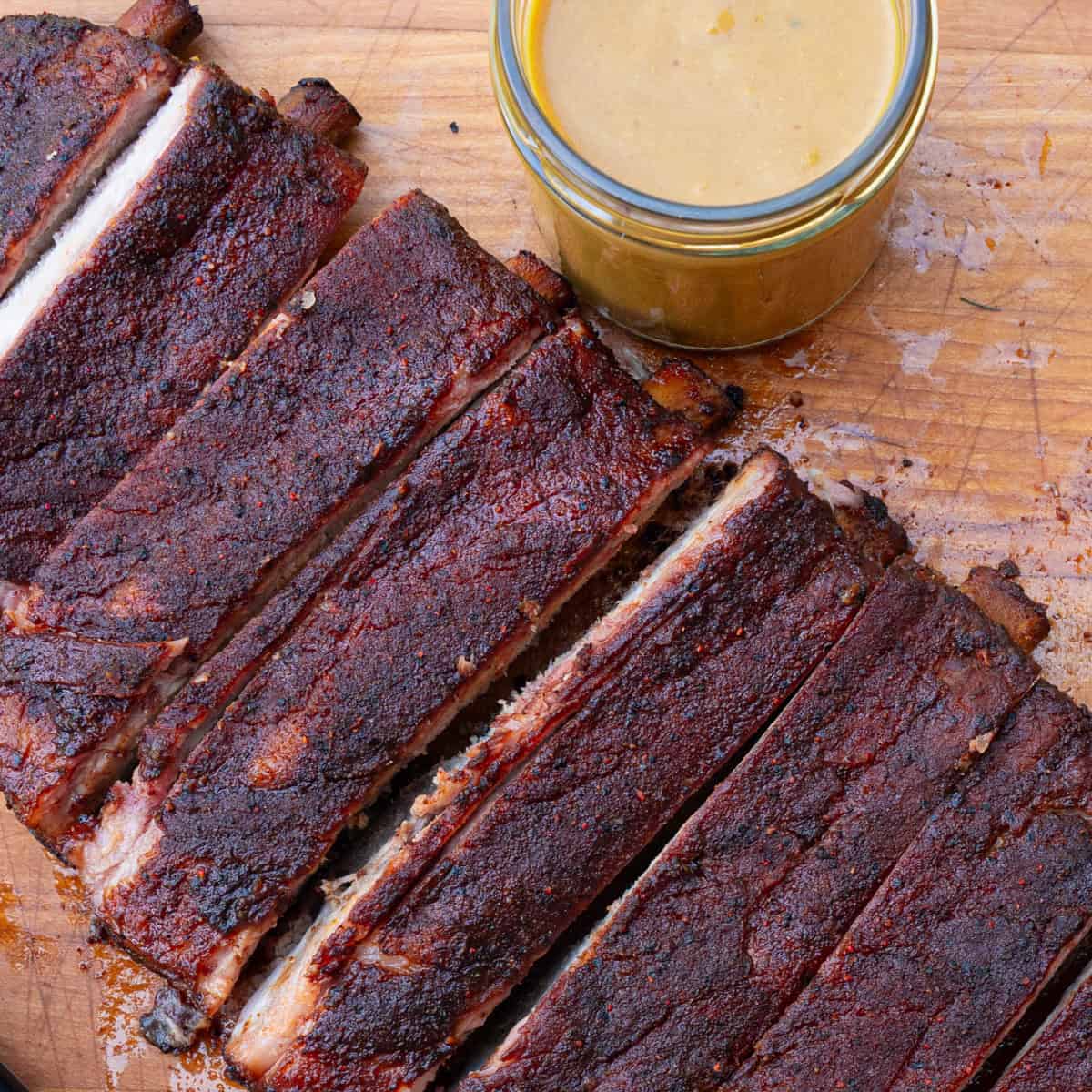
If you've ever pulled ribs off the smoker only to find they're tough or dry, you're not alone. If you've read my blog before, you already know ribs gave me more trouble than any other cut when I was starting. That being said, A lot of folks are adamant on using the 3-2-1 rib method (so much so that I did a full write-up on it here), and while it can work well, it's not always the best fit. The cut of ribs you're using, your smoker setup, and even your cooking temp all play a role in how things turn out.
Today, I want to walk you through another solid option: the 2-1-1 method. It's a great alternative—especially if you're cooking at slightly higher temperatures, dealing with thinner racks, or running a grill setup with more direct heat. The beauty of this method is that it still delivers great smoky flavor and tenderness while trimming your total cook time compared to something like the 3-2-1 method I mentioned previously.
In this post, I'll cover everything you need to know about 2-1-1 ribs so you can decide if it's the right call for your next cook—or if you should lean another direction based on your setup.
Jump to:
What Is the 2-1-1 Method for Ribs?
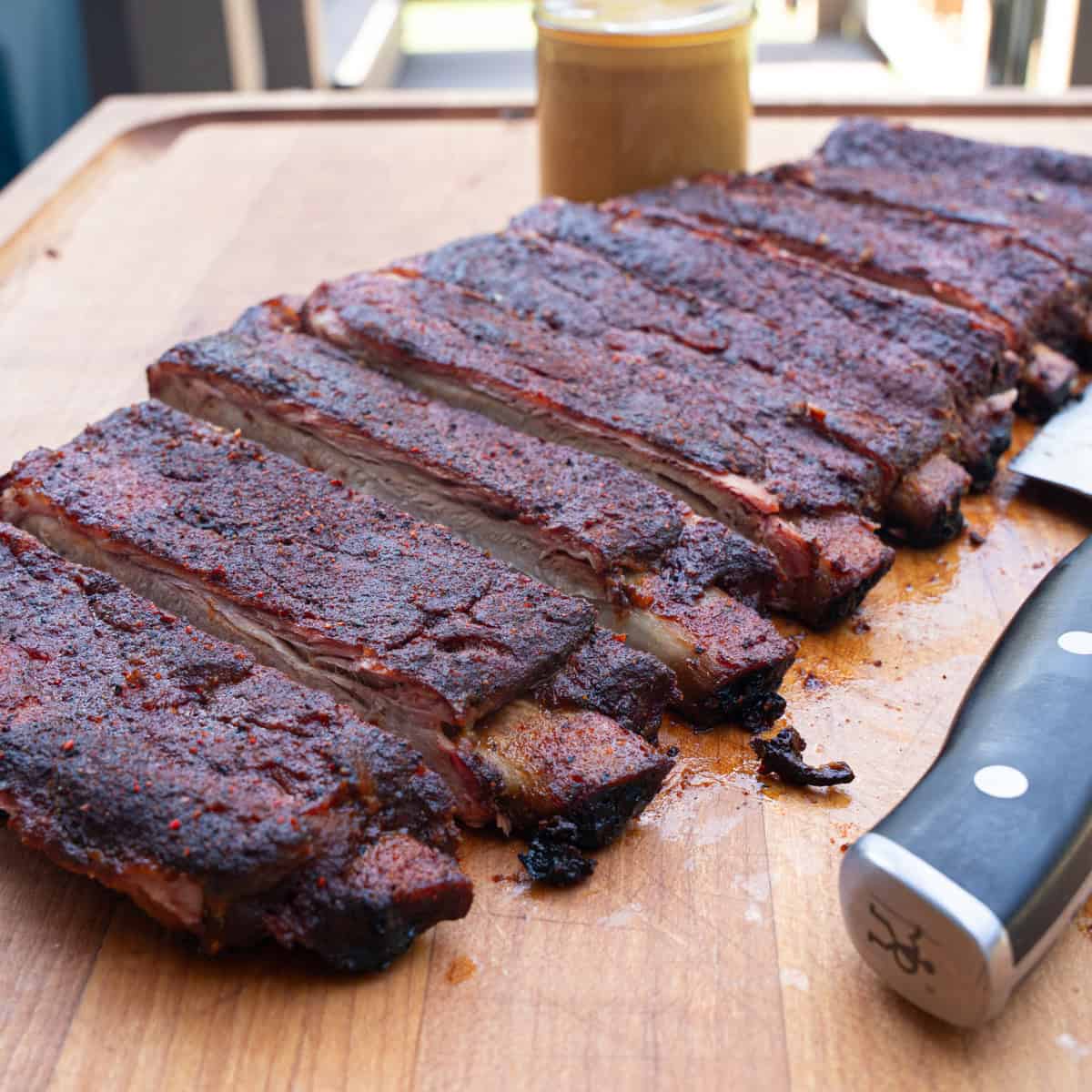
The 2-1-1 method is a simple, time-based approach to smoking ribs that gives you great results when the right factors are in place, while cutting down on total cooking time compared to other well-known methods. The numbers represent each stage of the process:
- 2 hours uncovered on the smoker to build bark and stake on the smoke.
- 1 hour wrapped in foil with a splash of liquid to steam and tenderize the meat.
- 1 final hour unwrapped to glaze, set the sauce, and let the bark firm back up.
It's essentially a shorter, hotter version of the 3-2-1 method—a little less forgiving if you overdo the heat, but perfect once you understand the physical cues you're looking for. This approach is especially good if you like ribs with a little more bite while still being plenty tender. It also happens to be one of the most repeatable ways to smoke ribs once you get your feel for how your smoker behaves.
That said, think of these times as a baseline—not a rule. Every rack cooks a little differently, so pay attention to the physical signs I'll walk through below and adjust your timing to match how your ribs are looking.
When (and Why) to Use the 2-1-1 Method
No matter what anyone tells you, there's no single "right" way to cook ribs. Like the old saying goes, there's more than one way to skin a cat—and that definitely applies here. What matters is matching your method to your setup.
With that in mind, here are a few key factors to think about before using the 2-1-1 method so you know when it's the right call:
When You're Cooking at Higher Temperatures (275–300°F)
The 2-1-1 method really shines when you're cooking a little hotter—around 275–300°F. At those temps, the fat renders more efficiently and the bark develops faster, giving you ribs that are still tender but with a cleaner bite.
When You're Cooking Over Direct or Semi-Direct Heat
On smaller smokers or combo grill-smoker setups where the ribs sit closer to the firebox or direct heat source, the meat will naturally cook faster. Think setups like a Weber Kettle, Kamado Joe, or Pit Boss—they run hotter and more direct compared to an offset. The closer your ribs are to the heat source, the faster they cook—and the more sense the 2-1-1 timeline makes.
For this cook, I used my Primo Ceramic Grill (similar to a Big Green Egg or Kamado Joe) with the heat deflector plates in place. By comparison, in my 3-2-1 ribs post, I used my gravity-fed smoker, where the ribs sit much farther from the fire. That setup is better for longer, lower cooks—but not ideal for the 2-1-1 method, since the distance from the heat source would slow things down too much.
This is also where heavy-duty foil or a small splash of apple cider in the wrap can help regulate temperature spikes, keeping your ribs tender even when the pit runs a little hot. That balance between building bark and locking in moisture is exactly what makes the 2-1-1 method shine on smaller, hotter pits.
When You're Working with Thinner Racks
Let's face it—you're not always going to find the perfect rack of ribs at the store. Whether it's price, availability, or just plain luck, the odds aren't always in your favor. Even when I grab a three-pack of St. Louis cut ribs from Costco, two might be beauties, but the third is usually the runt of the litter. Those thinner racks are tailor-made for the 2-1-1 method.
Baby backs, in particular, are a great fit for this approach. They're naturally leaner, smaller, and cook faster than spare ribs. Because they don't have as much connective tissue or intramuscular fat to break down, they don't need those long, slow six-hour cooks. This method also works beautifully for smaller St. Louis-style racks, which benefit from the same balance of smoke time and moisture retention.
If your rack is on the lighter side—say under 2½ pounds—trim a few minutes off the wrap phase (around 45–50 minutes instead of the full hour), and you'll land right in that zone where the ribs are tender and still hold their shape when sliced.
When You Want Faster Cooks Without Sacrificing Flavor
Sometimes you just don't have six hours to babysit ribs. Trust me—I definitely don't, not with two kids under five running wild and a weekend to-do list a mile long. That's where the 2-1-1 method comes in handy. Finishing in just 4 hours is a game-changer when every minute counts and your wife gives you a look that says, "Are the ribs done yet?"
When You're Confident Reading Visual and Tactile Cues
Unlike the 3-2-1 method, which you can almost set on autopilot, the 2-1-1 method rewards cooks who trust their instincts. You'll want to keep an eye on a few key signs as you go:
- Bark set: by the end of the first smoke phase, the surface should look dry and firm—not wet or mushy.
- Bone pull-back: during the wrap, look for the bones to start peeking out about ½ inch from the meat.
- Bend test: When you lift the rack with tongs from one end, it should bend easily but not break.
- Probe resistance: a thermometer or skewer should slide between the bones with just a little resistance by the end of the cook, like warm butter.
- Sauce tack: in the final hour, the glaze should tighten and turn glossy, not runny or sticky-wet.
If you can learn to read those cues instead of just watching the clock, the 2-1-1 method will give you that perfect balance of tenderness, structure, and smoke every single time.
Ingredients
Rack of spare ribs, trimmed St. Louis Style (or baby ribs, if preferred)
Personally, I think St. Louis Style and Baby Backs are the best choice if you're using the 2 1 1 method, but I'd stay away from Spare Ribs. Because they're larger and contain more connective tissue, they generally require longer cook times, which makes using this cut for this method difficult.
Worcestershire sauce
Use it as a binder before applying the rub because it helps the smoke stick to the ribs, giving more of that classic smoky flavor. Contrary to popular belief, it doesn't add any flavor to the ribs; it's purely a functional addition. It's not required to use a binder, but I do find it helpful. I've heard of people using mustard or even hot sauce, but Worcestershire has always been my go-to.
Your favorite BBQ seasoning
You can go with anything here: a homemade rub, storebought, or even plain old salt and pepper for a more traditional approach. Just make sure that if you are going with a rub with a higher sugar content, you pay close attention to the rack of ribs—you don't want the rub to burn, and higher-sugar rubs are prone to it as the temperature rises. I lean towards either Heath Riles or Malcolm Reed's lines of products because I've enjoyed the flavor of their rubs, and both offer great options that really enhance the visual appearance of ribs.
Apple cider
Using a liquid at the wrap phase really helps to both steam and tenderize the meat. I've used several varieties of liquids for this, but went seasonal with apple cider this go around. Any fruit juice (or even water, if you want) will work great.
BBQ sauce
I used my homemade Georgia-style, mustard-based sauce because I love how it pairs with pork, but you can go several ways here based on your flavor preferences.
Step-by-Step Instructions
Step 1: Preheat your smoker to 275°F
This is my favorite temperature to cook ribs at, no matter what smoker I'm using. It's hot enough to build a really good bark, but not so hot as to dry things out.
Step 2: Prepare the ribs
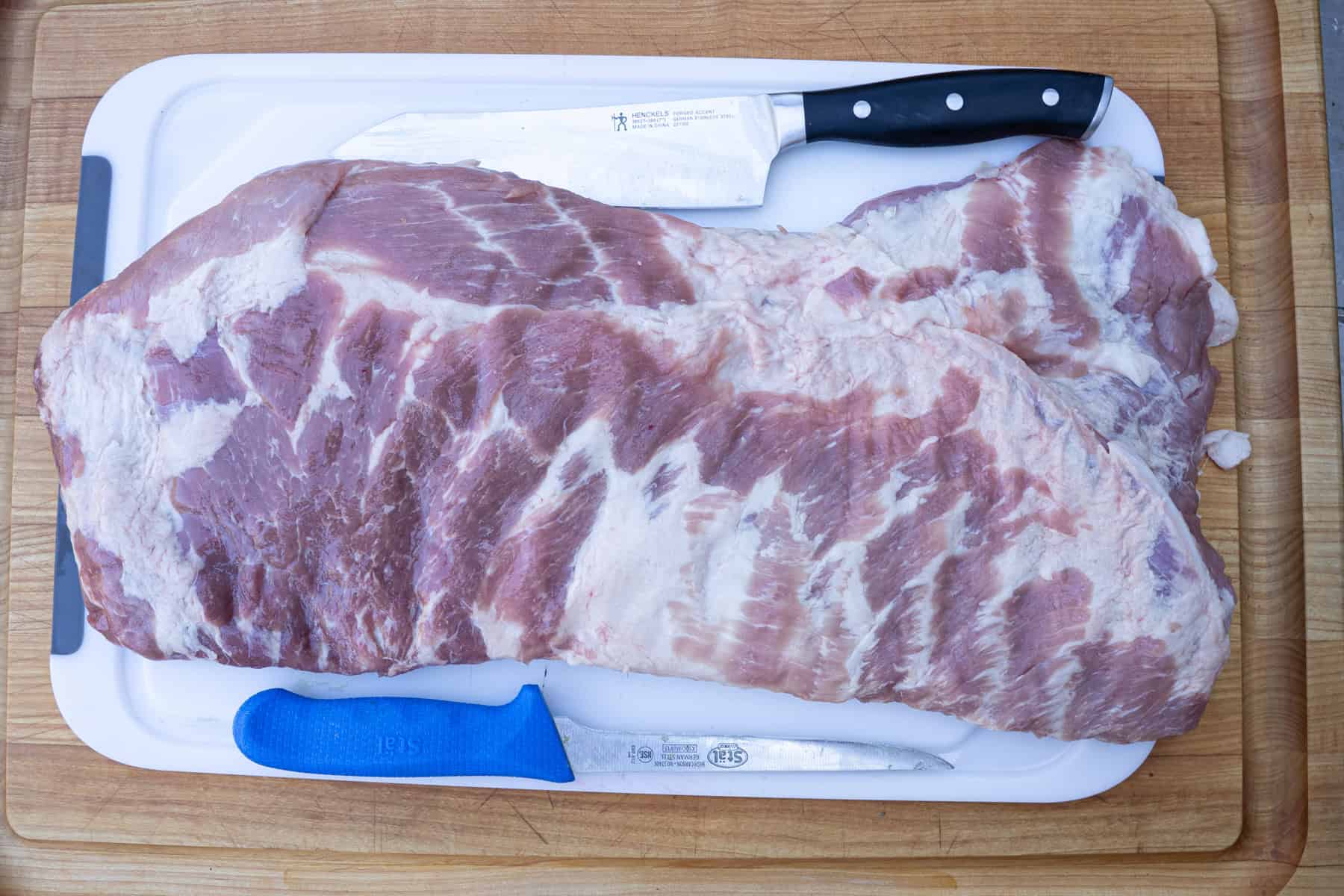
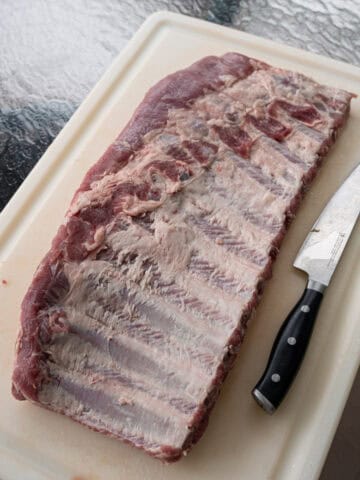
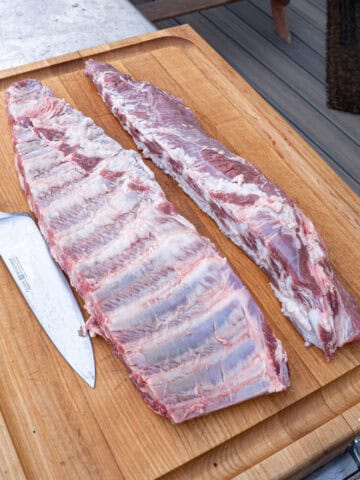
Start by trimming your ribs. If you're working with a full rack of spare ribs, you'll want to remove the rib tips to create a more uniform, rectangular rack—what's known as St. Louis-style. To do that, lay the ribs meat-side down on your cutting board and run your hand along the top edge where the bones stop and the softer cartilage begins. Use a sharp knife to cut straight across that line, separating the rib tips from the main rack. Don't toss them, though—they make great little snack pieces to smoke alongside the main ribs.
Note: If you're using baby back ribs, this step doesn't apply—they're pre-trimmed and ready to season as-is.
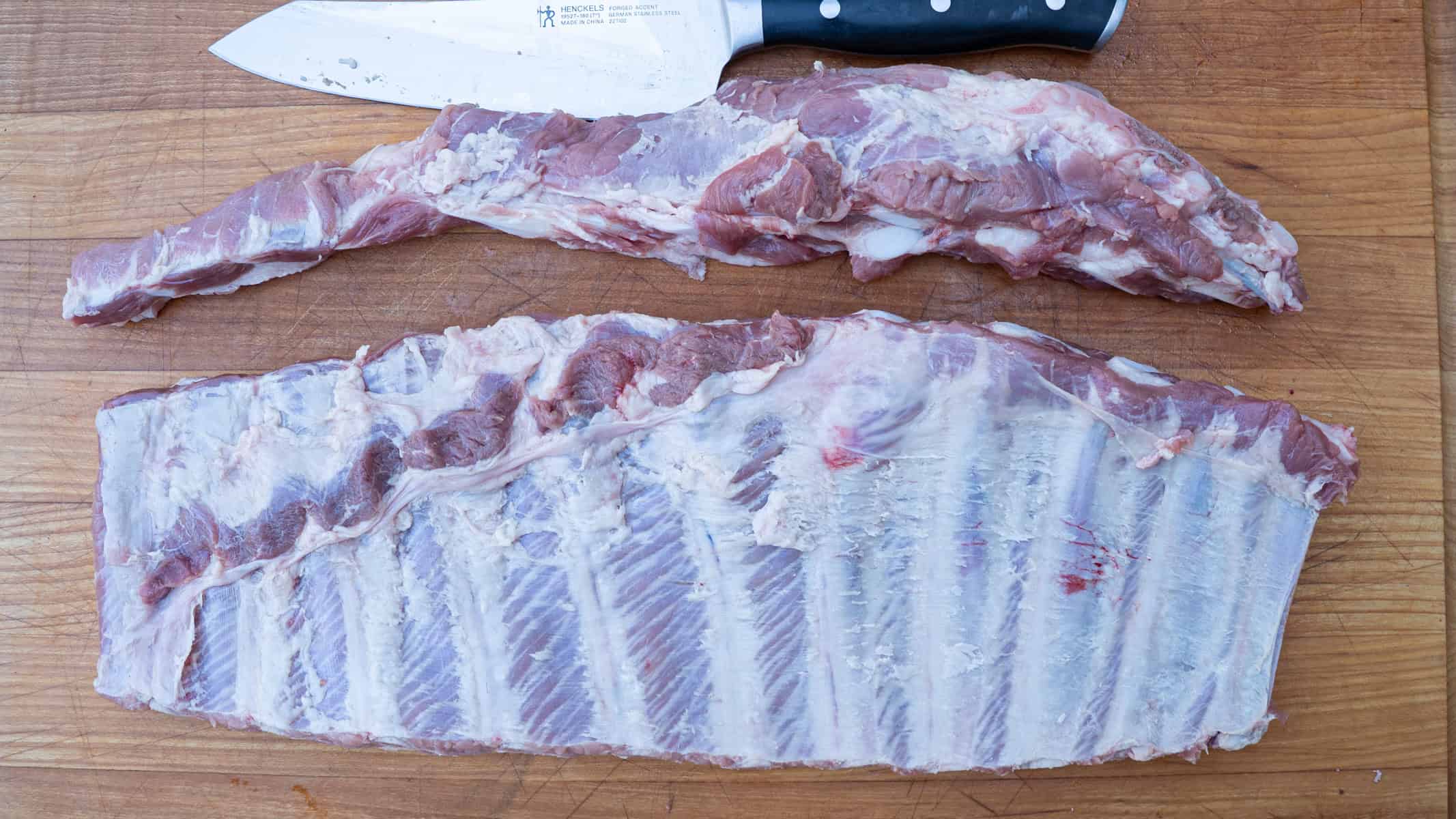
Once the rib tips are trimmed, take off any loose flaps of meat or thick pockets of fat. Then flip the rack over and peel off the thin membrane from the bone side. You can use a paper towel to get a good grip—it'll pull right off, allowing more smoke and flavor to penetrate the meat. It's not an absolute must, but I tend to take it off more times than not.
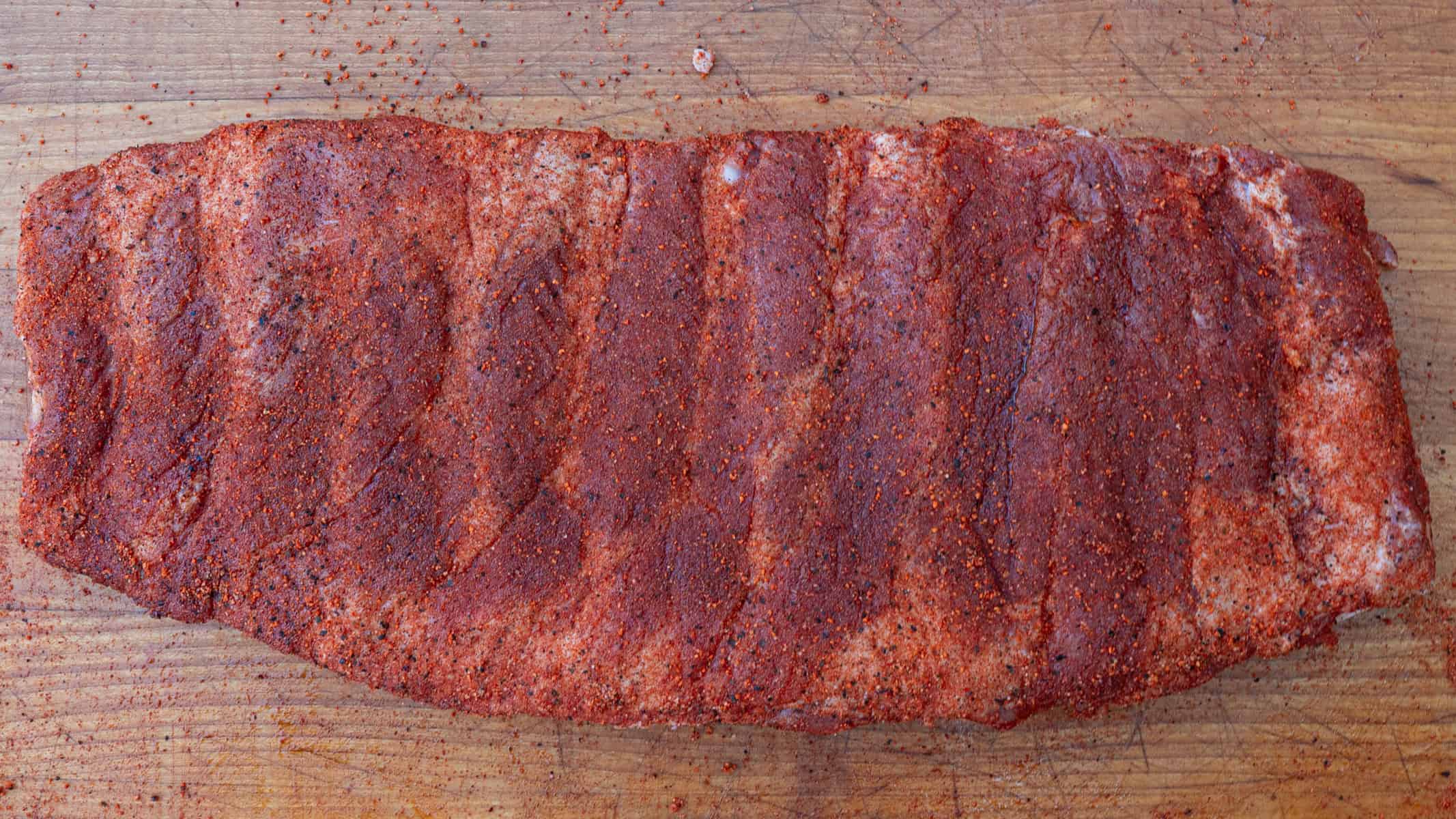
From there, rub a light coat of Worcestershire sauce on both sides as a binder, then generously season with your favorite BBQ rub. You can be liberal here -- I like to get a solid coat with the rub.
Step 3: Smoke uncovered for 2 hours
The first two hours are where you build that deep, smoky flavor and develop the all-important bark on the outside. Since you're running the pit a little hotter than a traditional low-and-slow cook, you shouldn't have any trouble getting a solid bark in that timeframe.
During this phase, you don't need to touch the ribs—just let them smoke. Personally, I don't even spritz my ribs when using this method -- I find it unnecessary, especially with the shorter cook time.
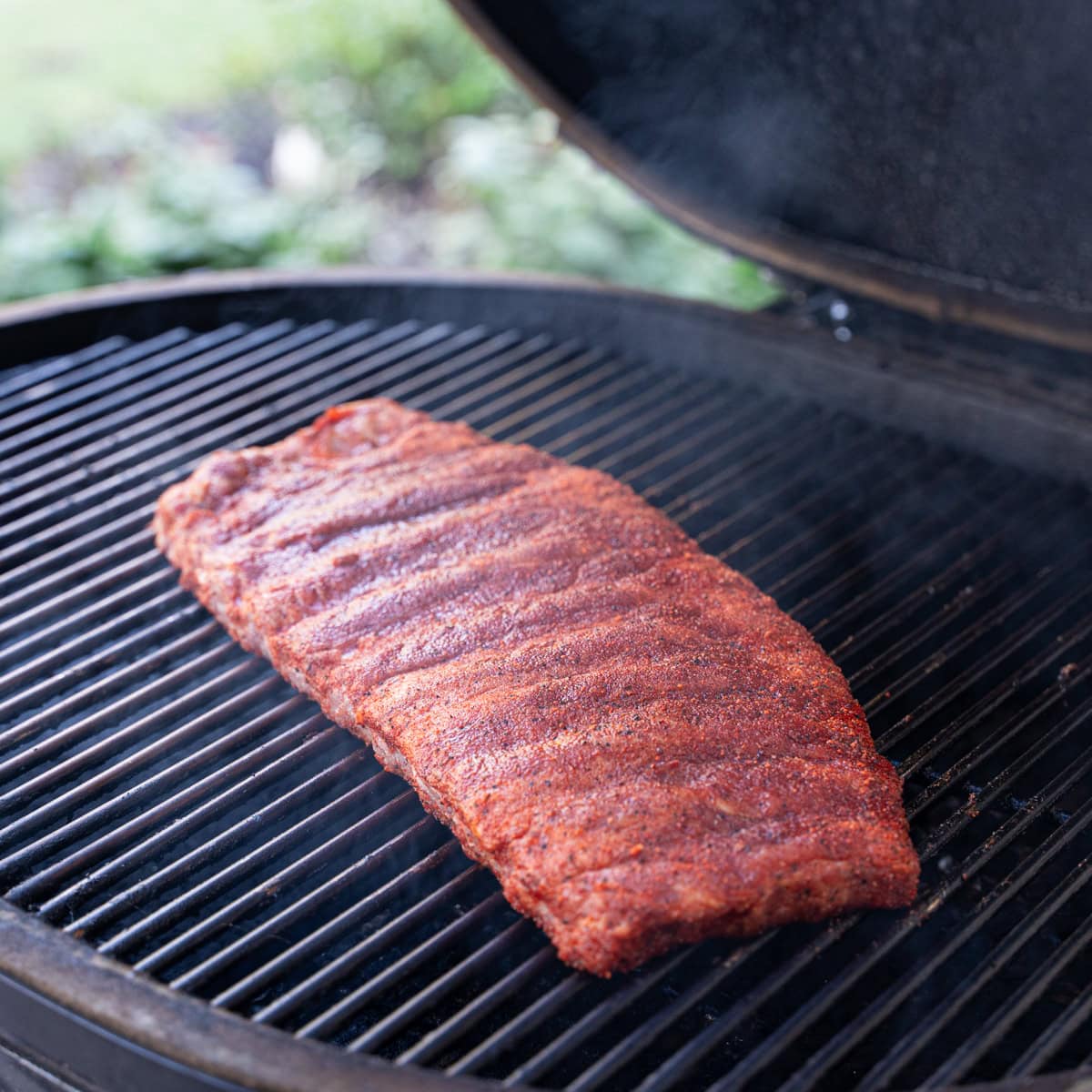
At the two-hour mark, check to make sure the rub has "set." To do this, gently run your finger along the meat side of the ribs. If the rub stays put and feels firm, you're ready to move to the wrap. If it still comes off easily, give the ribs a little more time and check again every 20 minutes or so. At this temperature, it shouldn't take long for that bark to finish setting.
Step 4: Wrap for 1 hour
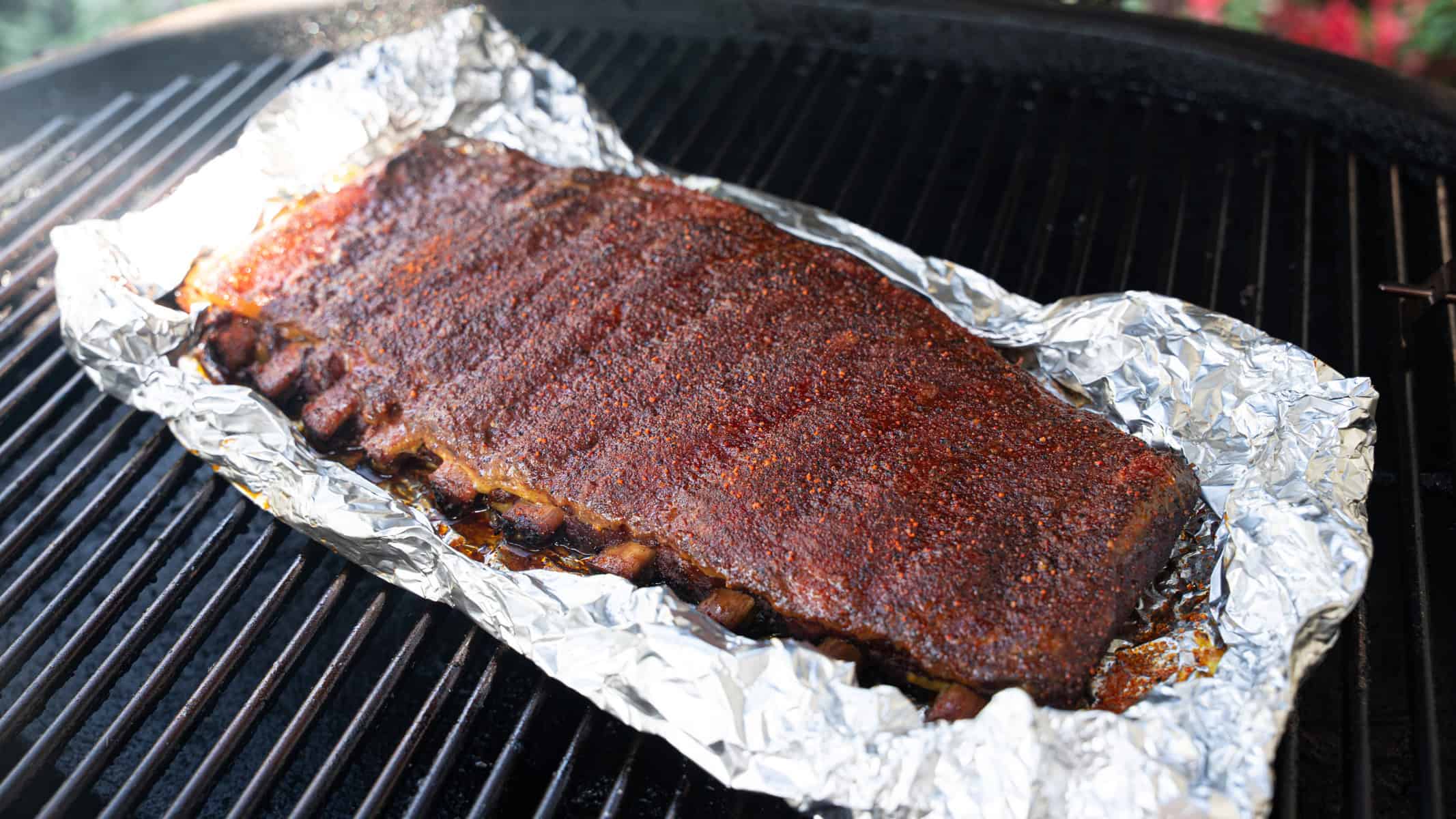
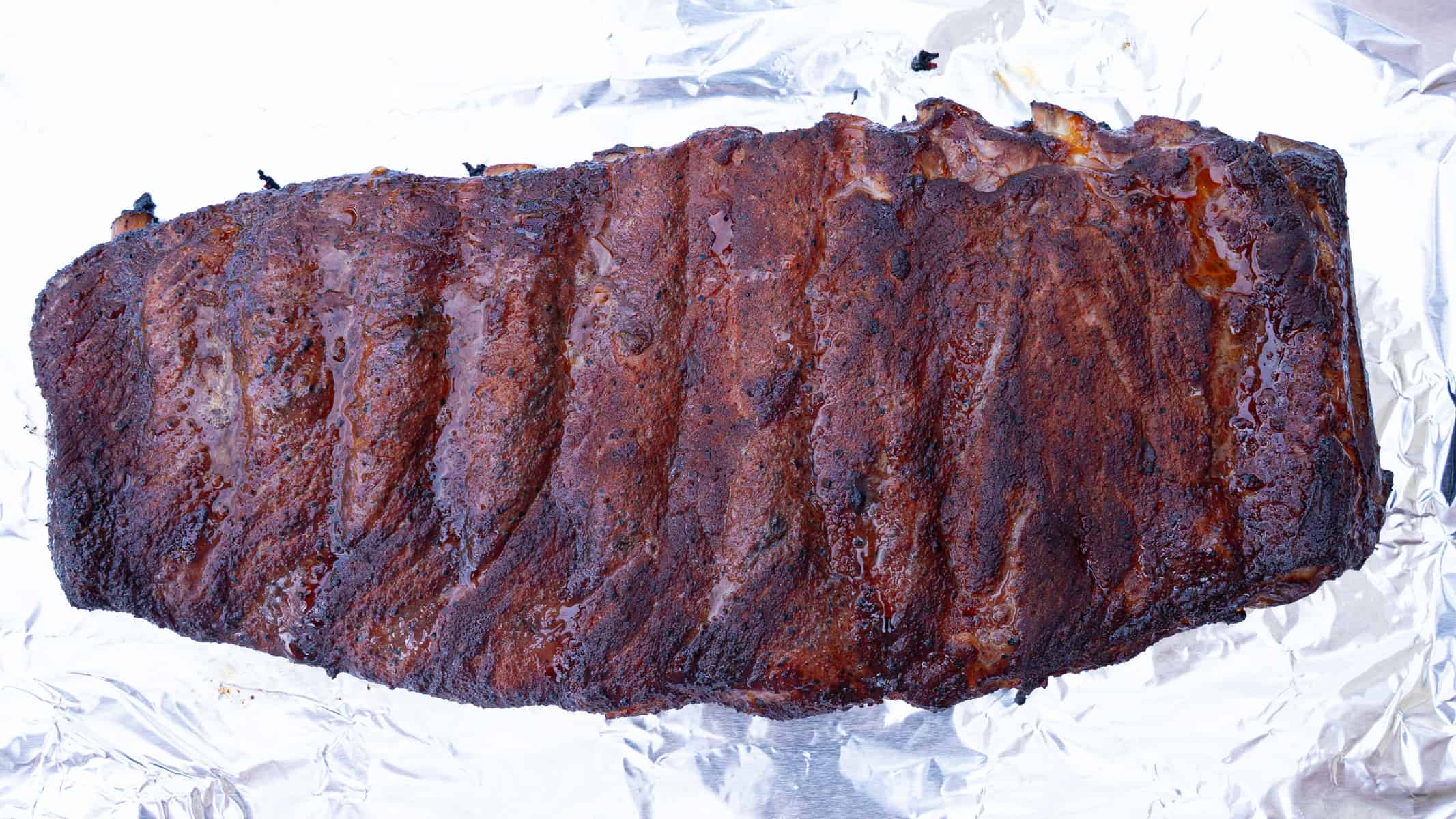
Once the bark has set, it's time to wrap. You'll wrap the ribs tightly in heavy-duty aluminum foil with about a ¼ cup of liquid—I used apple cider for this recipe, but you can use another liquid or fruit juice of your choice—and place them meat-side down. Sometimes I'll add butter and brown sugar as well, but for this method (and with my mustard-based sauce I use for this cook), I skip it.
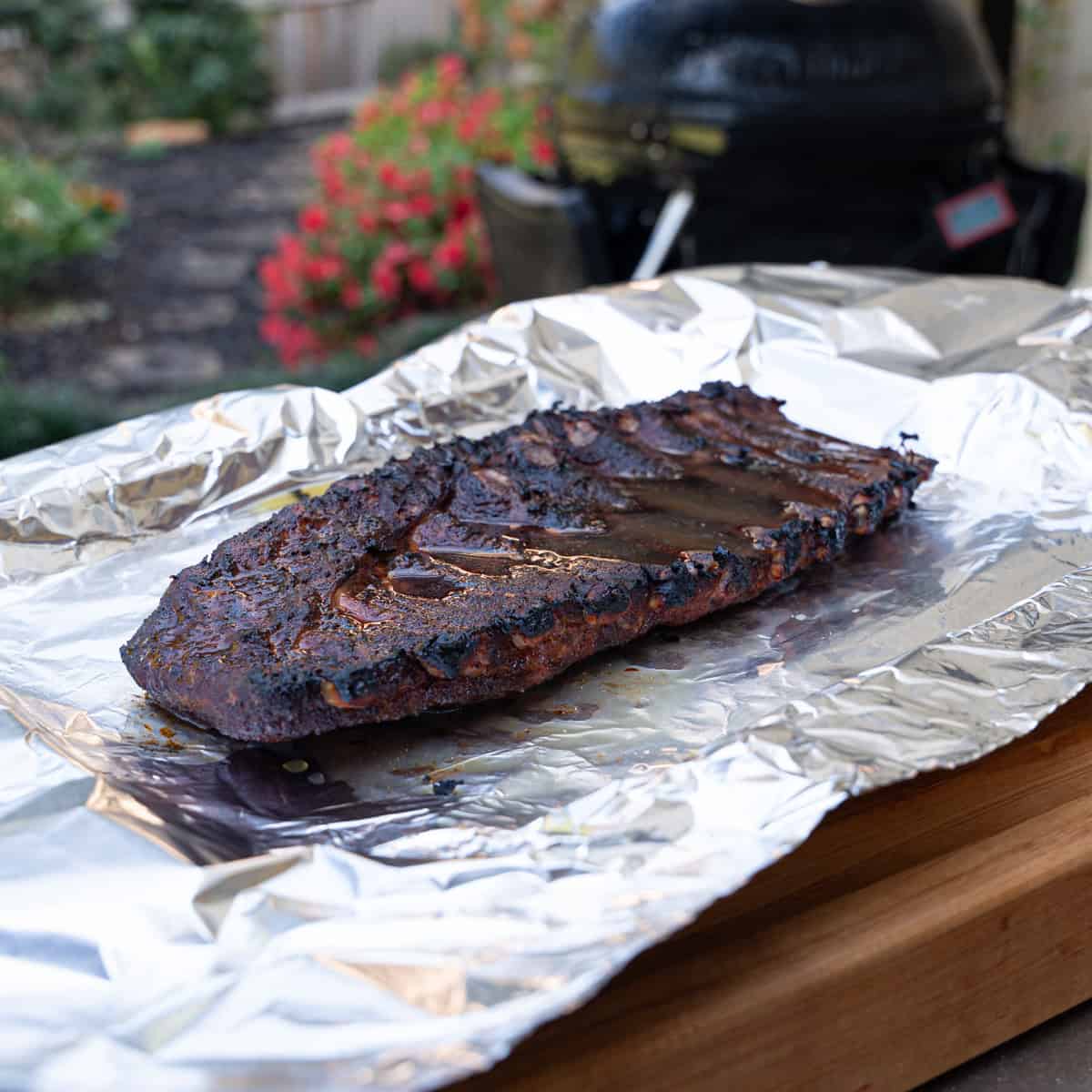
I don't think those additions are necessary or beneficial for cooking ribs this way, especially when it's paired with a tangy sauce like this. Either way, the purpose of this phase is to trap steam, break down connective tissue, and render the intramuscular fat, making the ribs tender and juicy.
Step 5: Check tenderness
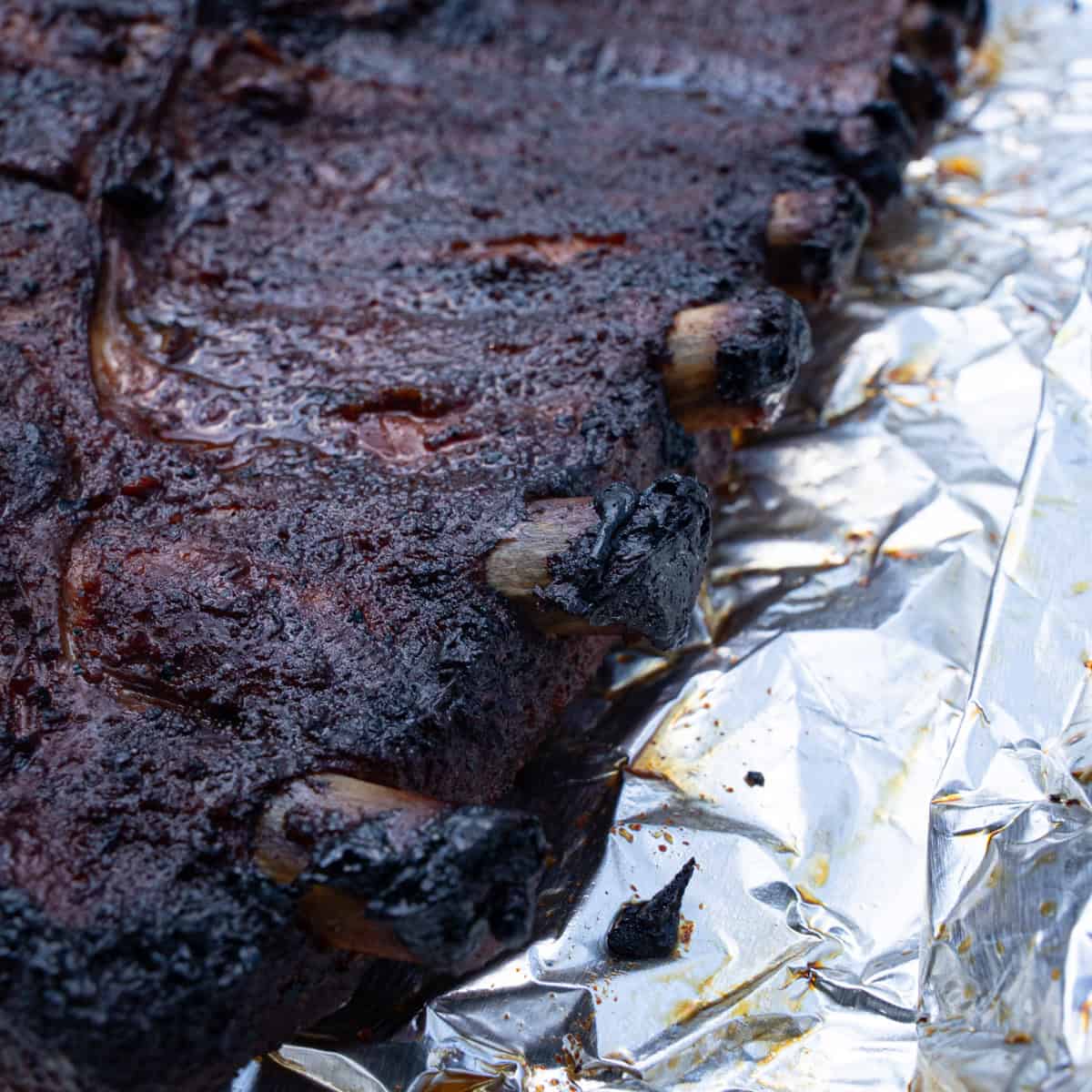
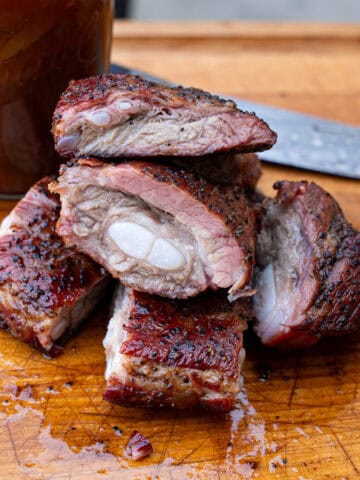
After 1 hour, open the foil and check for tenderness. The important sign to watch for at this phase is when the "teeth" start to show. This is when the bones begin to peek out about half an inch from the meat. By the time this happens, your ribs will actually be cooked through, and you should easily be able to lift the rack with tongs—the rack should be floppy (almost to the point of breaking but still staying intact) and bend easily. If the rack of ribs is still "stiff", meaning it doesn't have a lot of give to it, it needs to keep cooking (check back every 20-30 minutes if that's the case). That's one of those physical cues I mentioned — so important to pay attention to — and it may indicate when you need to adjust the timing of this cook to achieve the desired outcome.
Step 6: Sauce & finish
The last hour is just as important as the first five—and if you go into the cook with that in mind, it'll take your ribs over the top. After unwrapping the ribs, let them rest for about 20 minutes. Like I mentioned, by this point, your ribs are already fully cooked—you're just putting the finishing touches on them.
This rest allows the meat to reabsorb some of the juices pushed out during the wrap stage, helping keep the ribs moist and tender. I actually picked up this tip from Heath Riles, and it's been a big help to my rib cooks—whether I'm using the 2-1-1 method or not.
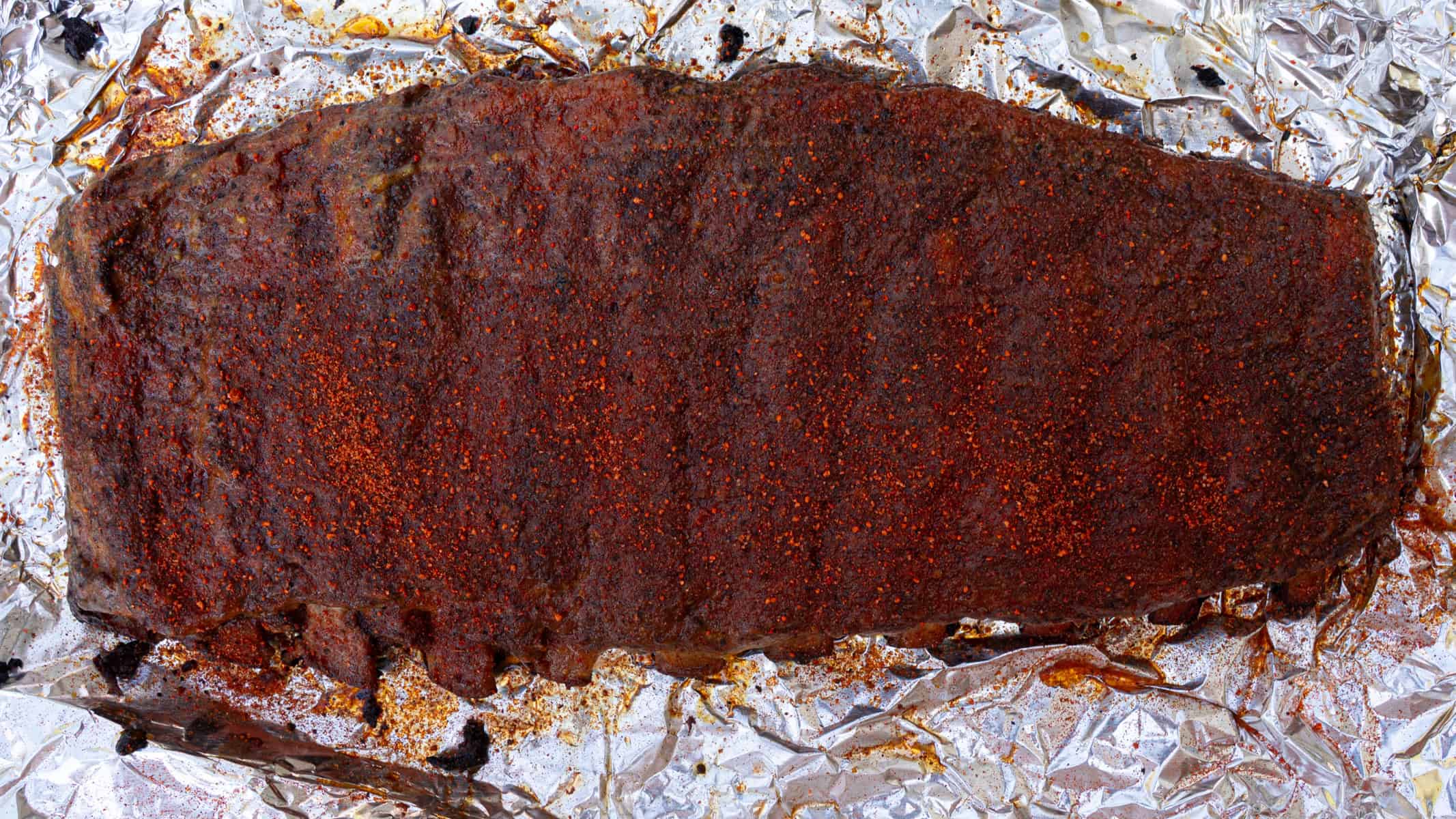
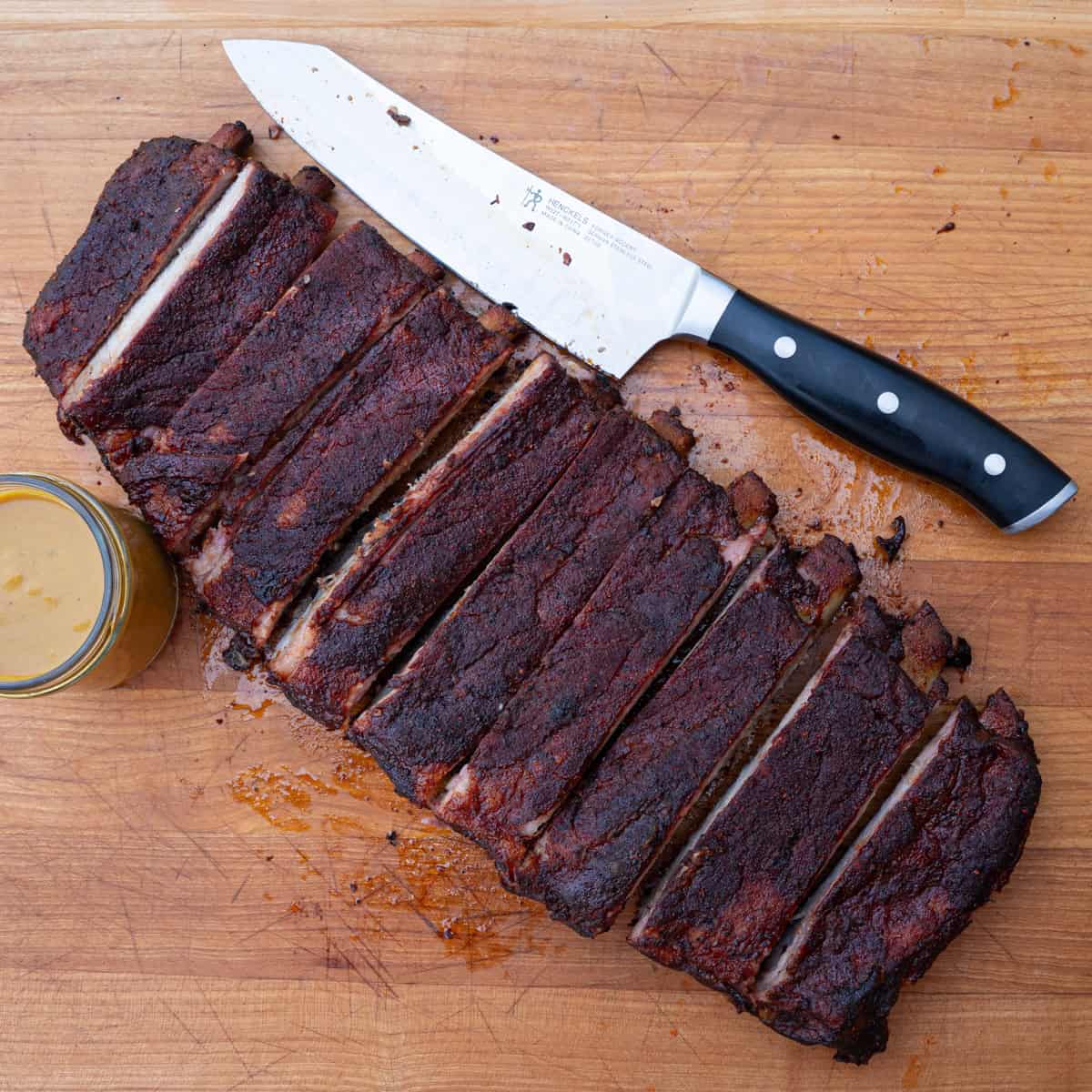
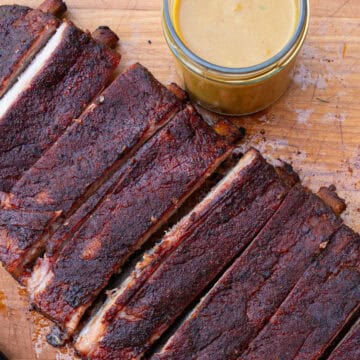
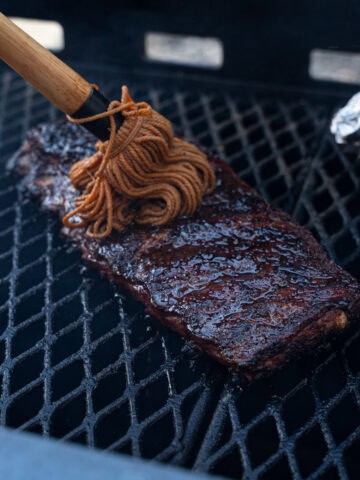
After the rest, brush on your sauce (if you'd prefer a sweeter option than the mustard sauce I'm going with here, check out my Cherry Molasses BBQ Sauce) and return the ribs to the smoker for about 20 minutes so the sauce can tack up. At 275°F, it won't take much more than 20 minutes. Once that glaze sets, pull the ribs off the smoker and let them rest again for another 20 minutes before slicing. Technically, the ribs are only back on the smoker for about half of this final hour—but the resting and glazing stages combined are what give you that rich, sticky, caramelized finish that really makes these ribs shine.
Troubleshooting Common Rib Issues (and How to Fix Them)
No cook is perfect every time, but most rib issues come down to a few simple tweaks. Here are a few troubleshooting tips that I've found can fix the most common problems:
- If your ribs turn out mushy, chances are you didn't let the bark set before wrapping, wrapped them too long, or used too much liquid. Next time, try letting the ribs cook uncovered for an extra 20–30 minutes before wrapping, or cut the wrap time down by 10–15 minutes—especially if you're cooking baby backs. It's a bit of a trial-and-error process, so trust your instincts, pay attention to texture, and adjust as you go.
- If your ribs come out dry, the smoker might've run a little hot, or you skipped the rest phase after unwrapping. Keep that temp steady at 275°F and let them sit at least 20 minutes before slicing.
- If your glaze is too runny, the sauce likely didn't have time to set. Give it a solid 20–30 minutes during the final unwrapped hour to make sure it has time to caramelize onto the meat.
Variations on the 2 1 1 Method
Like I mentioned, the 2-1-1 method is not the end-all, be-all of how to cook ribs the right way. In fact, it's far from it. Here are several different cooking approaches that I've used to make ribs, all of which I've really enjoyed the outcome:
- How to smoke St. Louis Style Ribs at 250 degrees
- Smoked Baby Back Ribs at 275 degrees
- Smoked St. Louis Style Ribs (Unwrapped the whole time)
- Party Style Ribs
- 3 2 1 Ribs for Beginners
Equipment You'll Need
- Smoker
- Heavy-duty aluminum foil
- Sheet Pan
- Large Spatula
- BBQ brush or mop
- Thermometer (optional)
- Prep bowls and measuring spoons
Storing & Reheating Ribs
If you have leftover ribs, wrap them tightly in foil or place them in an airtight container. Store in the fridge for up to 4 days. To reheat, wrap in foil and warm at 275°F in the oven or smoker for 15–20 minutes.
Recipe
How to Make 2-1-1 Smoked Ribs
Equipment
- Smoker
- Heavy-duty aluminum foil
- Sheet Pan
- Large Spatula
- BBQ brush or mop
- Thermometer (optional)
- Prep Bowls and Measuring Spoons
Ingredients
- 1 2-3 lbs. rack Spare ribs trimmed St. Louis style
- ¼ C Apple cider
- 1 T Worcestershire sauce
- BBQ seasoning as needed
- BBQ Sauce of Choice as needed
Instructions
- Preheat your grill or smoker to 275°F. While it comes up to temp, trim any excess fat from the ribs. Then, using a sharp, heavy knife, cut off the lower portion of the ribs—the strip of cartilage and small bones along the bottom edge. This section is known as the rib tips. If you're going for a more uniform, St. Louis-style rack, this step will square up the slab and help it cook more evenly.
- Once that section has been removed, peel off the membrane from the bone side of the ribs, apply a thin coat of Worcestershire sauce as a binder, and season both sides generously with your BBQ rub of choice. Once the smoker is preheated, add the ribs and smoke them untouched for 2 hours. At this point, remove the ribs from the grill.
- Place the ribs on a piece of heavy-duty aluminum foil, meat side down, and wrap tightly with the apple cider. Return the ribs to the grill (still meat side down).
- After 1 hour, check back in on the ribs. Once the bones start to show, they should be tender enough to continue. You can also pick them up with tongs to check their tenderness. If they have a nice bend to them when you pick them up – they’re good to go. If they’re still stiff, wrap them up and continue cooking for another 20 minutes before checking back in.
- Once the ribs are tender, pull them off of the smoker, unwrap them, and let them rest for ~20 minutes to allow the muscles to loosen up so the liquids can reabsorb back into the meat.
- Liberally apply BBQ sauce (here's the recipe for the mustard-based Georgia BBQ sauce I used) to both sides of the ribs, then follow up with a light dusting of rub to layer on even more flavor. Return the ribs to the smoker for about 20 minutes, just long enough for the sauce to tack up and set. Once the glaze is sticky and glossy, pull the ribs off, let them rest for about 20 minutes (or until cool enough to handle), then slice and serve. Enjoy!
Notes
- Choose the right ribs: The 2-1-1 method works best with baby backs or smaller St. Louis-style ribs. If you’re cooking big, meaty spare ribs, consider cooking ribs a different way such as with the 3-2-1 method.
- Temperature matters: This method is designed for slightly hotter cooks—around 275–300°F. At those temps, the fat renders faster and you’ll get a clean, competition-style bite.
- Watch for physical cues: Don’t rely on the clock alone. Look for bones pulling back ½ inch, a deep, set bark, and a nice bend when lifted with tongs.
- Wrapping tip: Use heavy-duty foil and add just a splash of apple cider or juice to help retain moisture. Too much liquid can soften the bark.
Leave a Reply