
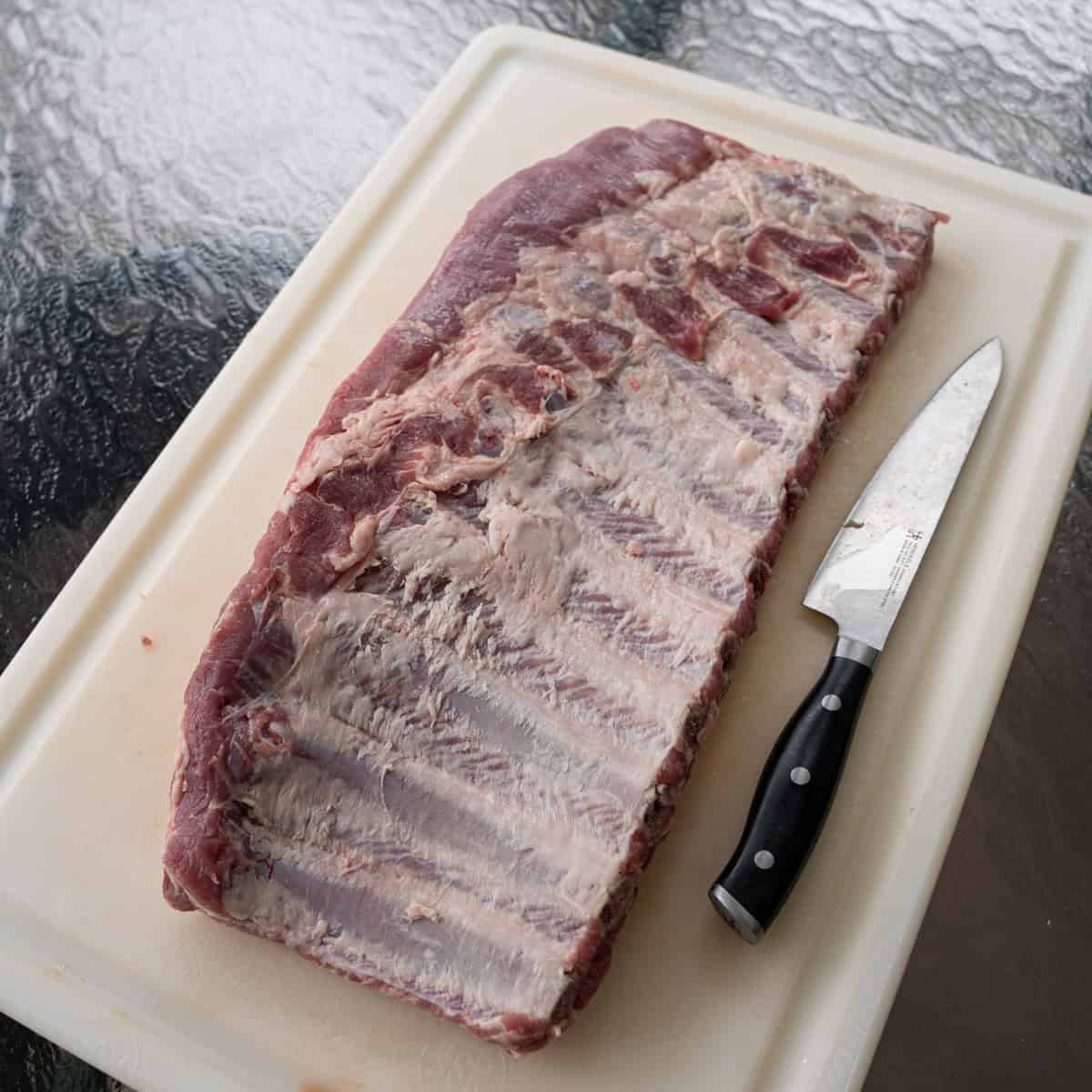
There is a lot of information on the internet on how to thaw ribs. That being said, there are right (and wrong) ways to do it. Below, I’ll walk you through how to thaw ribs the right way, without damaging texture or risking food safety, and I’ll make sure you know what methods you should avoid, too.
Jump to:
How to thaw ribs: The best way to thaw ribs is in the refrigerator for about 24 hours so they thaw evenly. If you’re short on time, you can use the cold water method—just keep them sealed and change the water every 30 minutes until they’re thawed (usually 2–3 hours). Don’t thaw ribs on the counter or in hot water—both can push the meat into the danger zone.
Best Way to Thaw Ribs
When it comes to properly thawing ribs, safety is a must. Whenever you’re working with raw meat, how you handle temperature plays an important role in the cooking process, not just in terms of flavor. If ribs sit too long in the danger zone (between 40°F and 140°F), they become a breeding ground for harmful bacteria including Salmonella or E. coli. The goal is to preserve the tenderness and moisture of your ribs while sticking to to USDA guidelines, which keeps the ribs in a safe temperature range during the thawing process. Listed below are the main ways I've found to thaw ribs properly that are most effective.
The Gold Standard: Refrigerator Method
This is the gold standard. Keep your ribs wrapped in plastic wrap or vacuum-sealed and place them on a tray in the fridge. It’s a slow process, taking about 24 hours for every 4–5 pounds of meat (so plan ahead), but it’s worth the wait. You get fully thawed, evenly chilled meat that’s ready to cook with minimal mess and no loss of flavor or texture.
Will Ribs Thaw Overnight in The Refrigerator?
The answer really depends on the situation and, to some degree, the packaging. Most ribs won’t fully thaw overnight in the refrigerator, especially if you’re working with a full rack. I’ve had success with smaller racks of ribs thawing overnight, but if I’m trying to thaw multiple ribs at once and have them stacked on top of each other (as I often have to do to save room), unfortunately, they won’t all thaw. That goes for multi-rib packages like you will find at Costco, too. When they are that close together, the middle racks just don’t tend to thaw as fast as the outside ones do.
If you’ve got the time, it’s better to give them a full day in the fridge so they thaw evenly and you’re not dealing with a frozen center when it’s time to cook.
How to Thaw Ribs Fast with Cold Water Method
If you’re on a tighter timeline, this is your next best option. Submerge the sealed ribs in cold water (in a sink or a large container, essentially a water bath for the ribs), changing the water every 30 minutes. Most racks will thaw in 2–3 hours this way. Just make sure the packaging doesn’t leak, and cook the ribs immediately after thawing.
Do You Have to Thaw Ribs Before Cooking?
You may also wonder: can you grill ribs if they are still frozen? Technically, yes—but it’s not something I’d ever recommend. Cooking frozen meat is generally unpredictable. It takes significantly more cooking time, and the internal temperature will be inconsistent; as a result, your rubs or glazes won’t adhere properly. Plus, the outside will cook significantly quicker than the inside, so you'll never achieve the finished product you're aiming for. The bottom line is this: If you want your ribs to cook evenly and come out tender, thaw them first.
What Note to Do When Thawing Ribs
Can You Thaw Ribs on The Counter at Room Temperature?
Ahh yes—the countertop method. I’d be lying if I said I haven’t done it before, but from a food safety standpoint, it’s not a good idea. When you leave ribs out at room temperature, they sit in the “danger zone” I referenced earlier, where bacteria grow quickly. The general rule is no more than 2 hours in that range—and after that, the risk of bacterial growth (i.e., the likelihood of you getting sick after eating said ribs) starts climbing fast. Even if the center is still frozen, the outside can warm up enough to become unsafe. If you’re planning ahead, the fridge is the better move.
Can You Thaw Ribs in Hot Water?
I highly recommend against thawing ribs (or any cut of meat, in fact) in hot water. I know it's tempting when you’re behind schedule, but it creates uneven thawing—cooking the outside while the inside stays frozen. That not only affects your final product but also puts the meat in the danger zone for bacterial growth, just as with the countertop method above. Look, I've been there before, and I understand the convenience, especially if you don't have much time to work with and are late thawing the meat—but doing so puts you (and your guests) at risk of getting sick. And nobody wants to come back and get more ribs from a cook who gave them food poisoning, so remember that.
Can You Refreeze Ribs After Thawing?
Yes—you can refreeze ribs after thawing, as long as you thaw them in the refrigerator and keep the ribs cold the entire time. That said, refreezing increases the risk of freezer burn and can affect texture. Each freeze-thaw cycle pulls moisture out of the meat, so the ribs may come out a little drier the next time around. If you know you’re not going to cook them right away, it’s best to wrap them tightly before refreezing—or better yet, just cook them and store the finished ribs instead.
Leave a Reply