
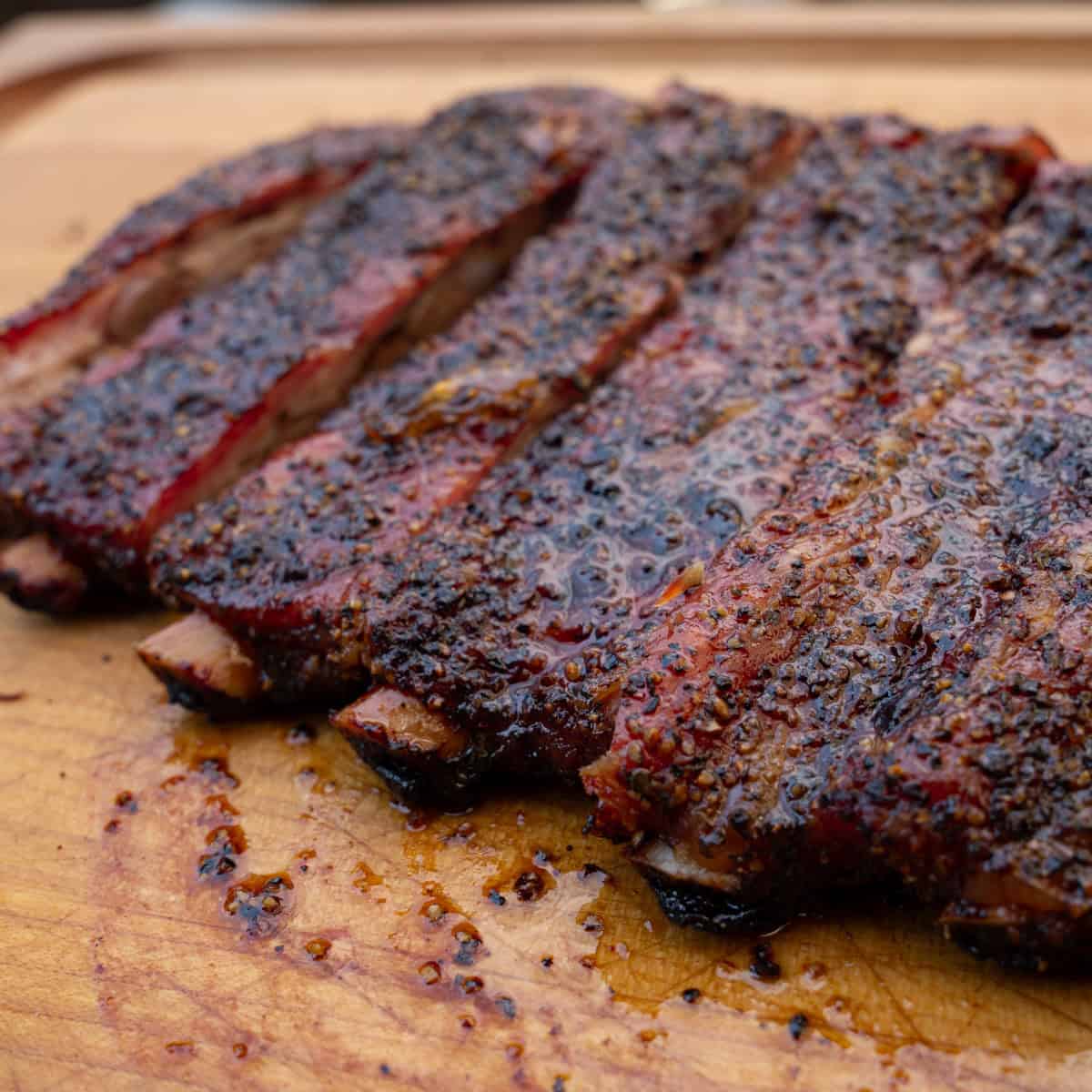
If you’re looking for a pork ribs sauces recipe that is not only simple and delicious but also packs some of that classic sweet-heat flavor, this is one of my personal favorites. These smoked ribs with apple habanero glaze provide a perfect balance that should appeal to the whole family. I've made these for our family on several occasions, whether at home or while spending time at the lake, and my kids (and nieces) always eat them up every time.
The ribs are smoked low and slow, then glazed and finished on the smoker until they’re bone tender. These aren't 3-2-1 style ribs. They're cooked unwrapped the whole time for a classic BBQ approach. If you haven't tried this more straightforward method, let this be the sign you need to get them on your menu. They're easier to make, have superior bark, and pack the same great flavor.
Whether it’s your first time smoking ribs or you’re just tired of the same bottled BBQ sauce, this easy recipe is a great option to add to your rotation. And if you’re making your own BBQ sauce for the first time, don’t worry—it comes together fast with simple ingredients and doesn’t require anything fancy.
In this post, I’ll walk you through the whole cooking process, how to tell when your ribs are done, how to store and reheat leftovers, and how to make that apple habanero glaze that everyone will love.
Jump to:
Why Apple Habanero Glaze Works
Pork and apples are a natural match—the sweetness of apple jelly pairs so well with pork. Add in the kick of heat from fresh habanero, and you’ve got a classic sauce that’s sweet, spicy, and just acidic enough to cut through the richness of the meat. This glaze is thinner than a Kansas City-style BBQ sauce but still gives you that tacky finish when brushed on hot ribs.
I try to keep my rib glazes simple for the most part -- I don't use a whole lot of ingredients. Truthfully, you don't need a lot of ingredients to make a sauce or glaze pair well with ribs -- a little sweet, a little heat, some fat for flavor and texture, plus something acidic is all you need to tie the ingredients together. And don’t let the habanero scare you. You can swap it out with jalapenos (a milder pepper) if you like, but the apple jelly and butter mellow it out, so you’re getting flavor with a kick, not a mouthful of fire.
What Kind of Ribs to Use
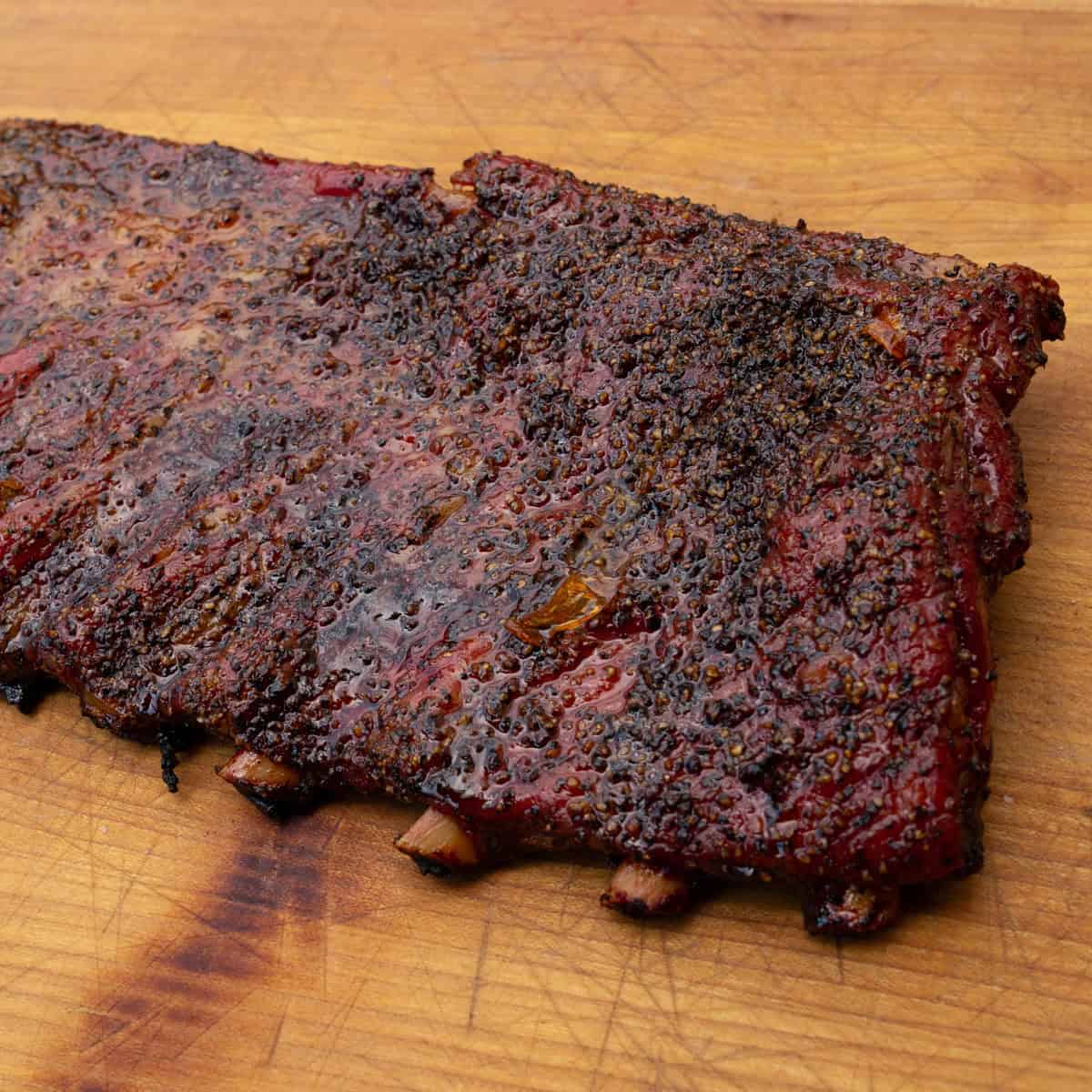
For this recipe, I stick with spareribs. They’re larger, meatier, and ideal for smoking. The extra fat content helps them stay juicy over longer smoke sessions, and they pair well with a glaze. If you like that hearty "bite" you often hear people refer to with ribs, these are the ribs you're going to want to go with.
That said, baby back ribs and St. Louis-style ribs are also great options. Baby backs are leaner and cook a bit faster, making them perfect if you're short on time or prefer a more tender, less fatty cut. St. Louis ribs are trimmed spare ribs, giving you a neat, rectangular rack that’s easier to slice and serve. The latter is a little more expensive at the store because it has been pre-trimmed, but it's worth it if you want to skip the extra trimming step.
Whatever style you use, the prep stays the same:
Trim excess fat to avoid flare-ups and greasy bites. This tends to be pretty minimal with ribs, but you've almost always got a flap of meat on the bone side of the ribs you need to remove, plus fatty pockets tend to creep up at either end of the rack. Often, I'll also trim the last bone off either side of my ribs because it tends to burn during the cooking process anyway. That part is either fatty or contains cartilage, which leads to a less-than-ideal bite of BBQ.
Next, remove the membrane from the back of the ribs. I've found the easiest way to do this is to start in the middle of the ribs by placing my finger underneath the membrane to loosen it. Next, I'll slowly insert my hand further into the membrane, then gently pull it off to ensure it doesn't rip. I highly recommend keeping paper towels nearby for this step, as they can significantly ease the process. If you've heard the phrase "practice makes perfect," it fits removing the membrane off the back of ribs perfectly. That being said, taking this step helps the smoke and seasoning penetrate more effectively, keeping the texture tender.
Depending on how you cook ribs, I don't think it's a hard and fast rule that must be followed every time (see my video on party-style ribs, where I discuss the reasoning behind it). However, I do think it's beneficial when slow cooking ribs.
Finally, season both sides with salt and black pepper or your favorite BBQ rub. No need to go heavy here—the glaze does the heavy lifting later on.
Spare ribs require a bit more cooking time than baby backs. If you're swapping cuts, adjust your total cooking time and check for doneness as needed.
Pork Ribs Sauces Recipe: Ingredient Highlights
Spare ribs – Ideal for low-and-slow smoking, they hold up well to glazing and long cooking times.
Salt and black pepper – Essential bases for most dry rub seasonings that build the flavor base before smoking.
Unsalted butter – Creates a rich base for the glaze and helps mellow the heat from the habanero.
Habanero pepper – Brings heat and fruity notes that balance the sweetness of the glaze.
Apple cider vinegar – This is an acid that I use in this recipe, serving as a flavor multiplier. It adds brightness and tang to balance the richness of the meat and glaze.
Apple jelly – Delivers the glaze's sticky texture and sweet apple flavor that pairs perfectly with pork.
Make sure to refer to the recipe card for a complete list of ingredients and quantities.
Step-by-Step Instructions
Step 1: Preheat & Prep
Preheat your smoker or charcoal grill to 275°F. That’s your target for medium-low heat and a good balance of smoke and cook time.
Trim the ribs, remove the membrane from the back, and season both sides with salt and pepper or your favorite BBQ seasoning.
Step 2: Make the Apple Habanero Glaze
In a medium saucepan over medium-high heat, melt the butter. Add chopped habanero and BBQ seasoning and sauté until the pepper softens.
Stir in the apple cider vinegar and apple jelly. Cook until the glaze thickens and coats the back of a spoon (i.e., spoon-thick consistency). Add a splash of water if you prefer a thinner consistency, but this is optional.
After that, let it cool slightly, but keep it warm enough to brush on easily. I'll usually keep the sauce in the pan I made it in, so I can reheat it quickly if needed, especially if I'm making the sauce a few hours before cooking the ribs.
Step 3: Smoke the Ribs
There are a lot of different ways to make ribs, and there's no one right way to make them -- there are just a lot of really good options! For this recipe, we're going unwrapped the whole time.
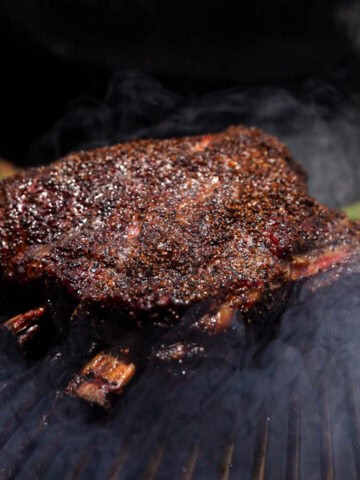
Place the ribs bone-side down and leave them alone for 2 to 3 hours. You want the spice rub to set and the bones to start showing.
Run your finger over the surface—if the rub stays put and doesn’t smudge, you’re ready to glaze. This typically occurs at temperatures ranging from 170 to 175 degrees.
Step 4: Glaze & Finish
Brush the glaze evenly over the ribs and continue smoking for an additional 30 to 60 minutes. You’re aiming for probe-tender ribs with a nice bend when lifted from the center; they should flop around nicely when they've reached an internal temperature of ~200-205 degrees. Finally, slather with more glaze just before pulling them off the grill if you like extra sauce.
Step 5: Rest & Serve
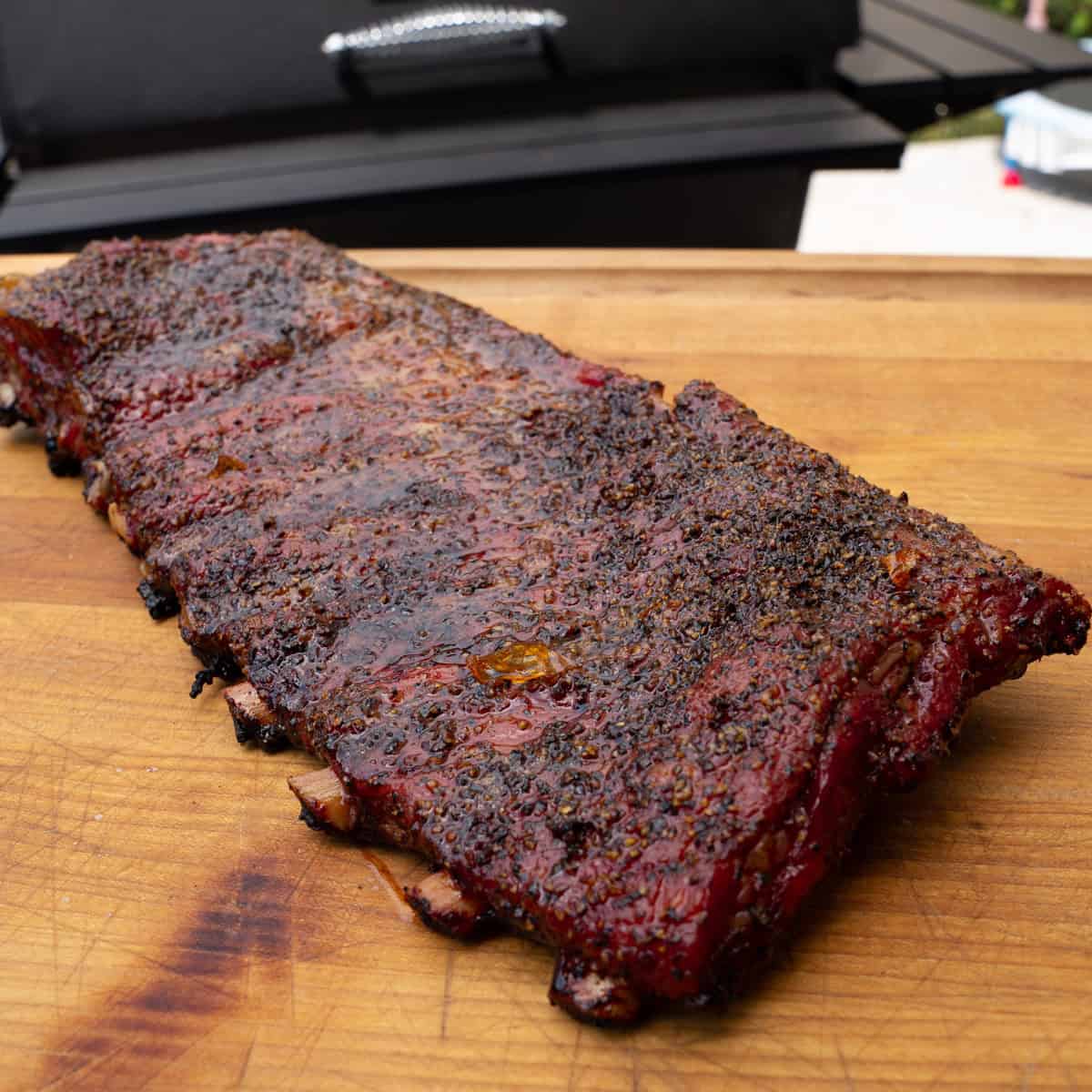
Let the finished ribs rest for 10 minutes. Then slice between the bones and serve hot with any leftover sauce on the side.
These pair well with grilled corn, mac and cheese, or a vinegary slaw—whatever your favorite side dish that brings some contrast to that sweet heat.
Pork Ribs Sauces Recipe: Variations
Want to customize this recipe? Try these ideas to tweak the overall flavor profile:
- Maple Bourbon Glaze – If you've tried my maple bourbon sauce, which I use on my party-style ribs, you know these pack a ton of flavor. That is a sweet sauce that pairs well with spareribs as well.
- Spicy Mustard adjustment – Add a tablespoon of yellow mustard and a dash of cayenne pepper to the apple glaze for a tangy, sharp kick.
- Apple Cinnamon Glaze – This is a minor adjustment, but it adds to the fall-style feel and is delicious. You can catch my full recipe here.
- Maple Syrup Only – Once you're almost ready to pull the ribs off the grill, glaze them with maple syrup. They'll be sweeter this way, but are still very good. Alternatively, you can use hot honey, molasses, or any other sweetener of your preference.
Pork Ribs Sauces Recipe: Substitutions
If you need to tailor this recipe to your taste or pantry, here are a few alternatives that will still yield flavorful results:
- Habanero – For milder heat, go with jalapeño or Fresno chile—still flavorful, just less intense.
- Apple jelly – Peach, apricot, or even pineapple jelly or preserves can provide a similar sweet glaze texture. This is a variable that you can easily substitute with what you have on hand.
- Apple cider vinegar – White wine vinegar or fresh lemon juice gives a similar tang with a slightly different edge.
How to Store & Reheat
Once the ribs are cooked and cooled, you’ll want to store them properly. Wrap any leftover ribs tightly in aluminum foil or place them in an airtight container to prevent them from drying out. In the fridge, they’ll last for 3 to 4 days. If you plan to save them for longer, toss them in the freezer—they'll hold up well for up to three months. For freezing, I recommend wrapping them first in plastic wrap, then foil, and placing them in a freezer-safe bag. Or, as I always like to mention, use a vacuum sealer before storing perishable food products in the freezer, as it's truly the best way to preserve any perishable food product.
When it's time to reheat, the oven method is your best bet. Wrap the ribs in foil and place them in a 300°F oven until they’re warmed through. This keeps the moisture in and prevents the meat from drying out. If you want to crisp up the bark again, open the foil during the last 5 to 10 minutes of cooking. Avoid microwaving if you can—it heats unevenly and tends to make the bark rubbery.
If you have any leftover sauce from the pork ribs sauces recipe, transfer the extra apple habanero glaze to a small bowl or a sealed jar and store it in the refrigerator. It’ll keep for about a week and makes an excellent topping for grilled chicken, pork chops, or even a dipping sauce for roasted potatoes.
Recipe
Smoked Ribs with Apple Habanero Glaze
Equipment
- tongs
- Sauce Mop or Brush
- instant read thermometer
- Grill/Smoker
- Food Safe Gloves
- Paper Towels
- knife
- cutting board
Ingredients
- 2-3 lbs. Rib rack
- 1:1 ratio Salt & Pepper as needed
- 4 T Unsalted butter
- 1 T BBQ seasoning
- 1 Habanero coarsely chopped
- 1 T Apple cider vinegar
- 1 8 oz. jar Apple jelly
Instructions
For the Apple Habanero Glaze:
- Melt the butter in a skillet over medium-high heat. Add the habanero and BBQ seasoning, and sauté until the peppers are tender. Pour in the vinegar and apple jelly, stirring until well combined and the sauce has reduced to a spoon-thick consistency. Add more water as needed for a thinner sauce if desired, or leave as is.
- Let cool at room temperature until ready to use. If needed, return the skillet to the heat to restore the glaze to a liquid consistency.
For the Ribs:
- Preheat the grill or smoker to 275°F. Meanwhile, trim the ribs of any excess fat and remove the last two bones on both ends. Next, remove the membrane and season both sides liberally with salt and pepper.
- Once the grill is preheated, add the ribs and smoke them untouched until the bones start to show, ~2-3 hours. At this point, rub a finger over the ribs. If the rub has set and does not come off, proceed with glazing the ribs. If the rub has not set yet, check back in 30 minutes and continue the process until it does. Allow the ribs to continue cooking until the glaze has set. Give the ribs a shake, holding them in the middle. Once they have a good bend to them, pull them off the grill.
To Finish:
- Slather your ribs one more time with the glaze (if desired), slice, and serve. Enjoy!
Notes
- Check the bark before glazing: Rub your finger gently over the ribs—if the seasoning doesn’t come off, it’s ready for glaze.
- Use a bend test for doneness: Grab the ribs from the middle and give them a slight shake. If they bend easily and crack slightly, they’re ready.
- Spare ribs are ideal for this method, but baby backs or St. Louis-style ribs can be substituted—just monitor cook time.
- The glaze can thicken fast as it cools. Warm it back up slightly before using if it’s too firm to brush on. If needed, add a splash of water to help thin it out.
Leave a Reply