I know beef grabs the spotlight in a lot of places across the country, but pork has always been my preference (it's actually what got me started in BBQ). Pork belly, in particular, is one of my favorite meats to smoke because it packs a ton of flavor and is super forgiving,making it a great option for both beginners and more experienced cooks as well.
If you’re new to pork belly, the first real hurdle is just finding the right slab. Whether you're searching online during your lunch break or trying to find it at your local store, sourcing fresh pork belly can be confusing if you don't know where to look. In this post, I'll help clear that hurdle by showing you exactly where to buy pork belly and what to look for so you can set yourself up for success at the next cookout.
Jump to:
You can buy pork belly for smoking and BBQ from local butcher shops, wholesalers like Costco or Sam’s Club, grocery store meat counters, Asian markets, and online meat suppliers like Wild Fork Foods or Snake River Farms. The best pork belly slabs have even thickness, balanced fat-to-meat marbling, and fresh pink color, making them ideal for smoked pork belly skewers, burnt ends, slices, or even bacon.
Where Can You Buy Pork Belly?
LOCAL BUTCHER
The local butcher is still the best source for fresh, high-quality pork belly. I'll ask for a whole pork belly slab with even fat marbling—and skin removed, unless I'm planning to use the skin to make cracklins (here's a great article if you're curious about what cracklins are). Most shops will trim or even cube it for you if you ask. They usually have pork belly available year-round, even if it's not on display, and if it's sold out, they'll be happy to order more. If you're near me in the Cumming, Georgia area, my favorite Butcher shops to go to are Leonard's Meat Market & Ferguson's Meat Market. If you're closer to downtown Atlanta, Buckhead Butcher Shop offers some phenomenal products, although they are on the pricier side.
The only downside is the price: you're paying more because the meat is fresher, higher quality, and commonly sourced from local farmers or reliable suppliers—it's not sitting in a warehouse for days, as is common for most big box retailers.
WAREHOUSE CLUBS (COSTCO/SAM'S)
Costco routinely carries whole pork belly slabs (skin-on and skin-off) at a solid price. Honestly, this is where I pick up most of my slabs because of the convenience—and the value. I paid $3.29/lb on a recent run. You'll trim it yourself, which I prefer for these skewers, mainly because you control the strip width. Wherever you shop, avoid pre-sliced packages unless you're planning to fry them in a pan; whole slabs offer more flexibility, whether you're making skewers, burnt ends, or smoking the pork belly whole.
LOCAL SUPERMARKETS
You can sometimes find pork belly at the regular grocery store, but it's hit or miss. The cuts tend to be smaller, pre-packaged, and pre-trimmed, which limits how you can prep and cook, and can affect how the pork belly renders. The price per pound is usually higher than at clubs or online, especially given the lower overall quantity of meat you receive. The upside: most meat counters will special-order a full slab if you ask, which is a decent fallback when you're planning and don't have easy access to a butcher or wholesale retailer.
ASIAN FOODS MARKET
Asian Food markets are truly a unique experience that I highly recommend checking out, provided you have one in your area. Before we moved to our new home, there was an H Mart a few miles down the street that I loved visiting for its wide selection of fresh meat, poultry, and seafood. However, when it comes to pork belly, they primarily sell only pre-cut slabs, so plan accordingly.
PORK BELLY ONLINE
If you're short on time or prefer shopping from the comfort of your web browser, you can opt for an online service that ships pork belly directly to your door, often packed with dry ice to keep it chilled and fresh. Look for sources that offer heritage pork or Duroc breeds, which tend to have better marbling and deeper flavor.
Personally, I've had great luck with Wild Fork Foods and Snake River Farms. Their pork belly typically arrives in excellent condition and is well packaged. That said, ordering online isn't without its risks. Since you're not selecting the cut in person, there's always a slight chance the slab may not meet your preferences. Occasionally, you may receive a thinner piece than expected, or a slab that has been over-trimmed by the butcher. It doesn't happen often, but it's part of the trade-off.
Also, be aware of delivery fees—some services charge extra if you don't purchase a specific volume or opt for a subscription.
What About Heritage Options?
Heritage breeds (Berkshire/Kurobuta, Duroc) are considered prize cuts because they have more marbling, render cleaner, and deliver richer flavor—all of which are highly desirable (and pricey). I'm a huge fan of these varieties, but they're better suited to special occasions than everyday purchases. Companies like Snake River Farms carry Kurobuta pork belly, and I've really enjoyed the quality of the product when I've purchased it from them.
Planning Ahead When Looking for Pork Belly
- If you are purchasing from a local grocery store, make sure to call ahead and ask them to hold a slab—especially before weekends and if you're short on time.
- Ask whether they can prepare the meat skin on/off, score, or portion it to your specifications.
- If you need volume, ask about case pricing or special orders. This likely won't come into play for the average backyard cook making this recipe, but if you're hosting a large event or catering, it's worth the call.
What to Look for When Buying Pork Belly
SKIN-OFF VS SKIN-ON
Pork belly with the skin-on can be incredible when blistered, but it adds steps (scoring, drying, or pricking). If you're interested in going that route, Chud's BBQ has a great video breaking down the entire process. Personally, I prefer skin-off cuts to minimize the preparation process. If you're new to cooking pork belly, I recommend the same approach until you get more comfortable with advanced techniques.
How to Remove the Skin
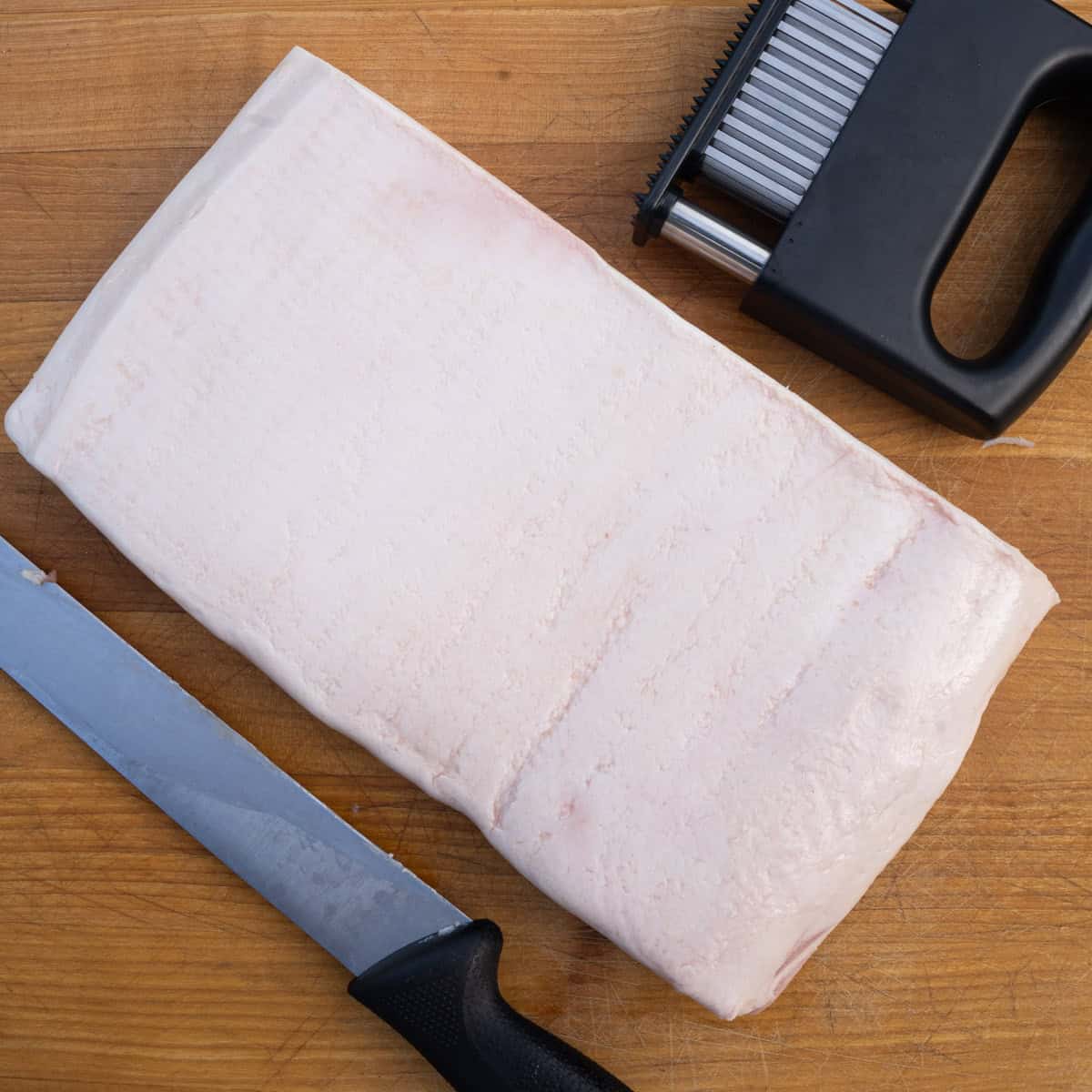
If you're taking the skin off, peel it off first using a sharp knife (I prefer a boning knife). Make sure to trim any thick, bulky spots so the slab appears relatively even before cutting it into strips.
THICKNESS & EVENNESS
Aim for the belly to be about 1 to 1½ inches thick from top to bottom—roughly two fingers—and try to keep that thickness the same across the whole piece.
Why Does Even Thickness Matter?
Even thickness means everything cooks at the same speed, the fat melts nicely, and your skewers finish together instead of some drying out while others are underdone. You’ll find out real quick what happens if you’ve got a thinner side, because they tend to dry out and overcook, or even worse, burn if it's thin enough.
FAT-TO-MEAT RATIO
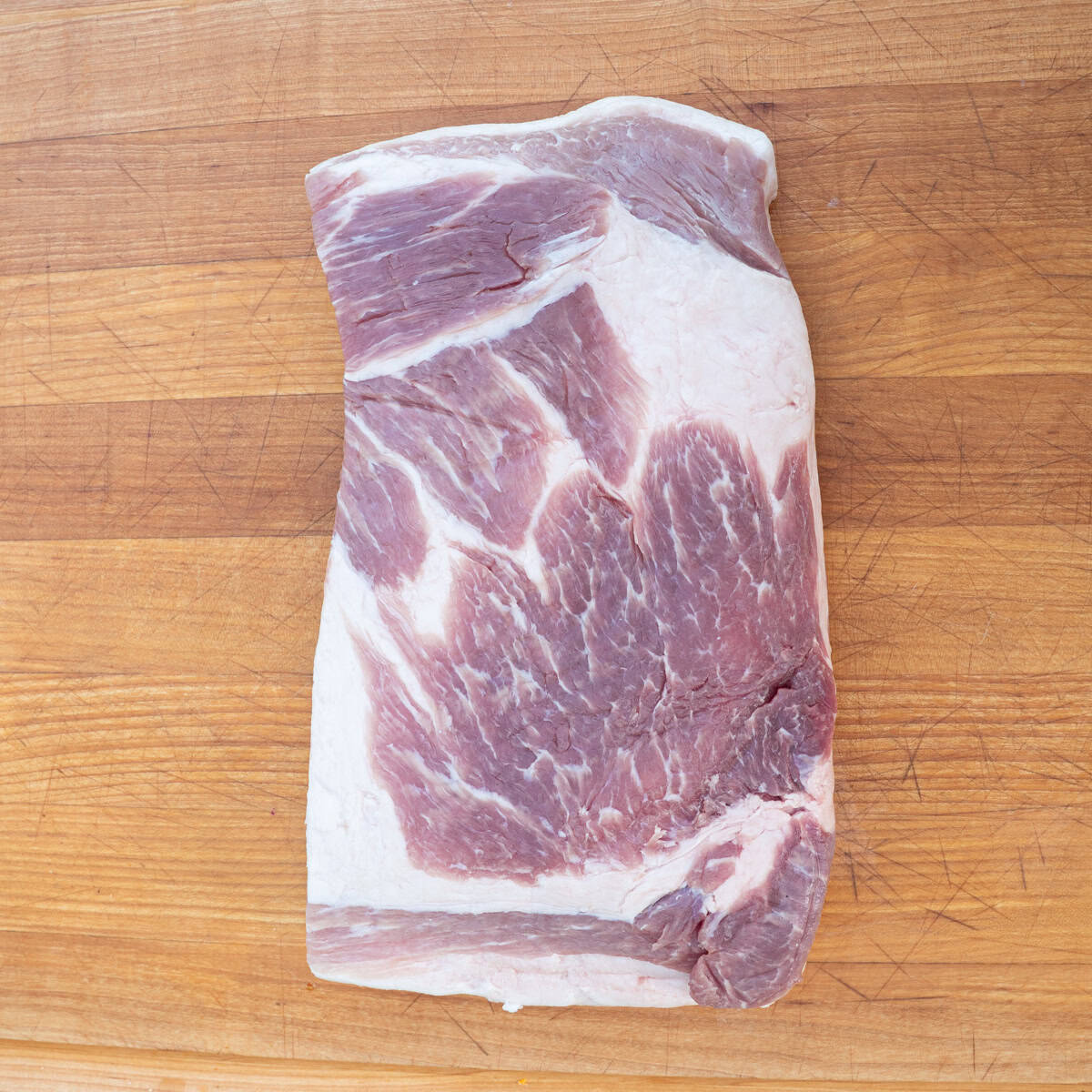
Look for balanced fat striations: essentially, you want to avoid slabs that are mostly fat or mostly lean—especially when you notice that occurring in big batches across the pork belly. Think of it like a steak; you want to see that marbling relatively consistent throughout.
COLOR, SMELL, AND SURFACE
At the store, look for pale pink to rosy meat with creamy white fat—you can usually judge this right through the packaging. Skip any slab that looks gray or brown or has yellowed fat. With a vacuum-sealed belly, you may not notice the odor until you open it, but it’s important to pay attention to it. Pork Belly should smell clean and mild—if it has a sour or "off" smell, don't use it. I hate to throw out a slab of meat, but it's better than getting you and anyone you're cooking for sick.
After you've removed it from the packaging, pat it dry; the surface should feel dry or lightly tacky, never slimy or sticky. I prefer to buy my pork belly vacuum-sealed—it tends to stay fresher longer and lowers the likelihood of liquid pooling in the packaging. If you notice a significant amount of liquid in the packaging, a swollen bag, or any tears or leaks, I recommend avoiding it and looking for an alternative option.
My Favorite Pork Belly Recipes
Now that you know where to buy pork belly and the signs to look for in a good product, here are a few recipes you can try out!
Leave a Reply