
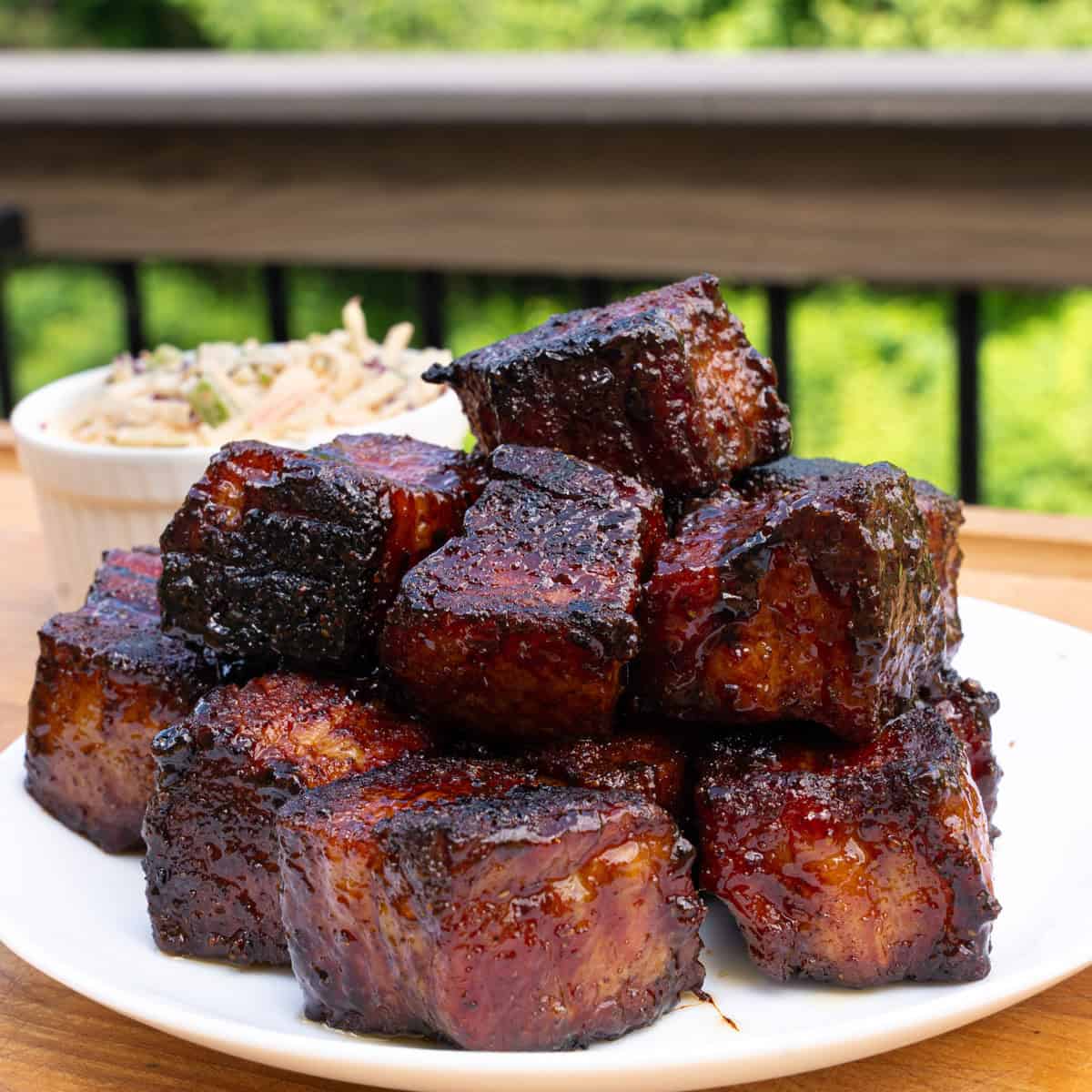
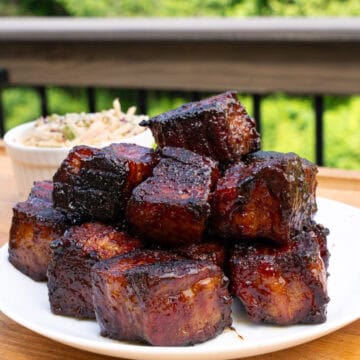
Crispy pork belly burnt ends are one of the richest, most flavorful bites you can make on a smoker. They’ve got everything you want in great barbecue—smoky flavor, rendered fat, crispy bark, and a sticky glaze that caramelizes onto every cube.
Most pork belly burnt ends recipes focus entirely on tenderness, but I wanted something with a little more texture. That’s why, for this recipe, I smoke these unwrapped, then finish them in a hot skillet to crisp the exterior and caramelize the fat. By going this route with your pork belly burnt ends, you still get the soft, buttery inside, but the crispier texture helps them hold up much better when serving, especially in tacos, sliders, or rice bowls. It’s just a better mouthfeel.
In this post, I’ll show you exactly how to make crispy pork belly burnt ends, how long to smoke them, what temperature works best, and a few tricks that help get the bark extra crispy without drying out the meat.
Jump to:
Crispy pork belly burnt ends are smoked pork belly cubes cooked until tender, then finished in a hot skillet with BBQ glaze for crispy, caramelized edges. This recipe shows how to make pork belly burnt ends at 275°F, how long they take to smoke, and how to get perfectly rendered pork belly with rich bark and buttery texture.
What are Pork Belly Burnt Ends?
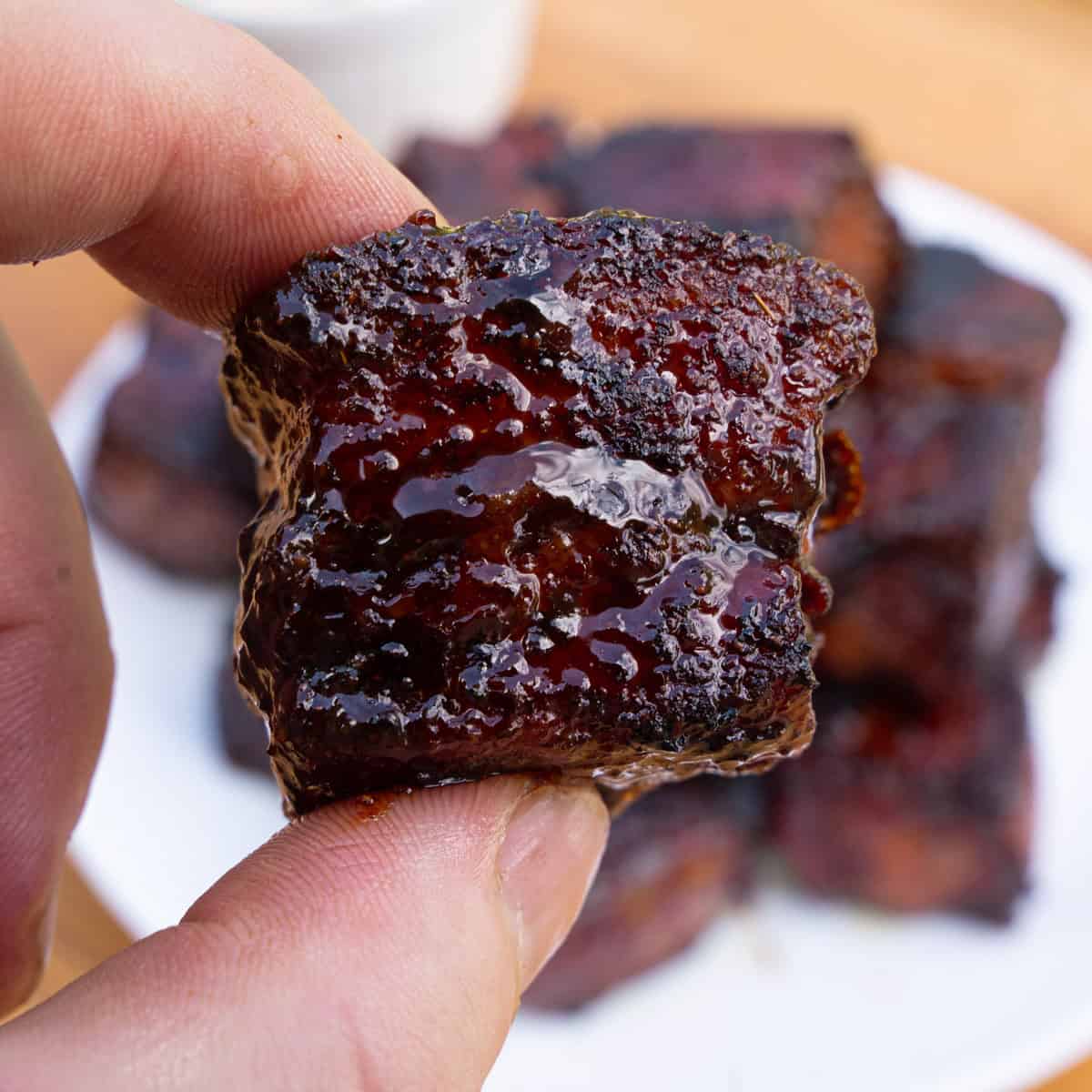
Pork belly burnt ends are cubes of pork belly smoked low and slow until the fat renders and the meat becomes tender. They’re similar to traditional brisket burnt ends but richer, softer, and more heavily marbled because they come from pork belly instead of brisket point. They are basically smoked bacon in cube form.
How to Get Smoked Pork Belly Burnt Ends Crispy
If you’ve ever cooked pork belly before, you know that crispy, fatty bites from the smoker can soften quickly and don’t always keep well, especially once they cool down or get reheated. That’s why I really like to crisp the cubes in a hot pan. It caramelizes the glaze, crisps the fat cap, and creates a more satisfying bite. You don’t have to do it, but it makes a noticeable difference, especially for next-day servings or when the pork belly is part of a larger dish.
Ingredient Highlights
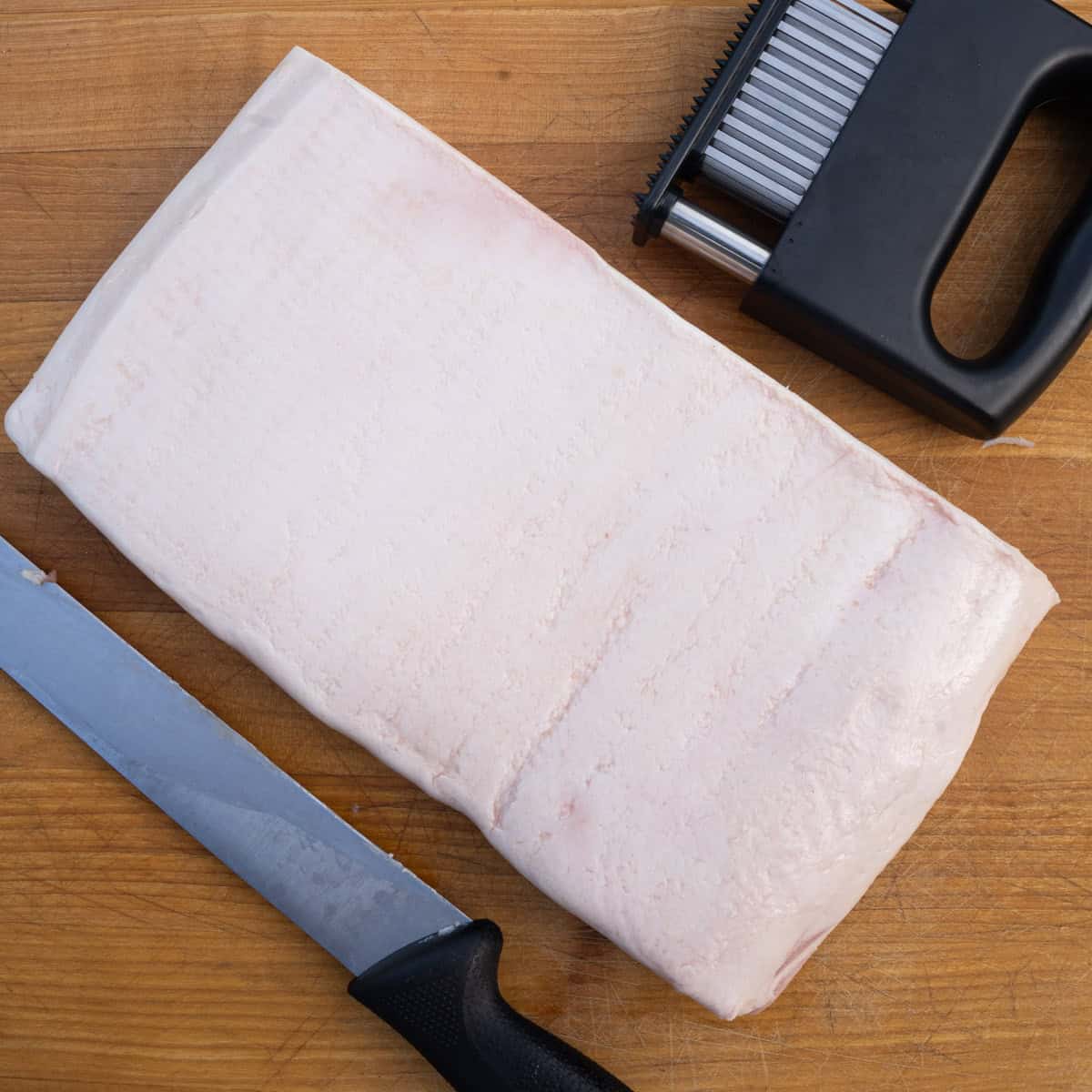
- Whole slab pork belly: If possible, choose a skin-off cut with consistent marbling. This ensures the cubes render correctly and give you that signature rich, melt-in-your-mouth texture. There are ways to make that happen with the skin on, but it's a more complex prep work and cooking process that I won't go into today.
- Brown sugar: Used in the sauce to add sweetness while helping caramelize the surface. I generally add this in some form or another to most of the glazes I make. It's a house staple for sure.
- BBQ rub: Choose one with sweet, smoky, and spicy flavors. It helps build a bark and adds extra flavor. I went with Meat Mitch's new Candied Jalapeno Rub and really liked it on these.
- Molasses: Provides a deep, slightly bitter-sweetness and a glossy finish in the glaze. This pairs really well with pork and adds a unique flavor.
- Bourbon: Adds warmth, depth, and a subtle smoky flavor that plays well with pork. You don't have to add it, but I enjoy the additional flavor.
- Apple cider vinegar: It cuts through the richness and rounds out the glaze with a bit of acidity, an essential quality for any glaze.
See the recipe card for a complete list of ingredients & quantities.
How to Make Crispy Pork Belly Burnt Ends
STEP 1: CUBE & SEASON
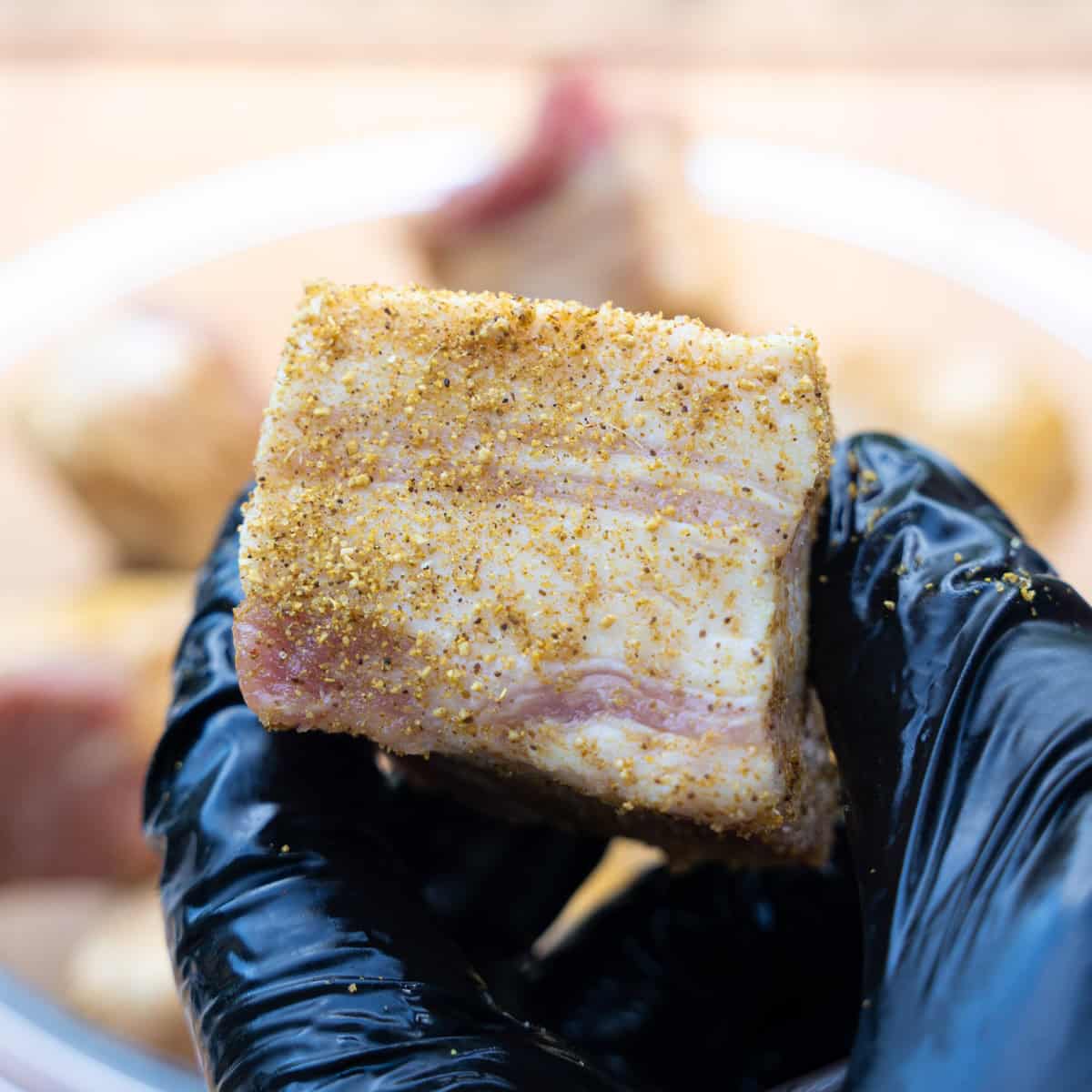
I started by using a Jaccard to poke tiny holes in the fatty side of the pork belly so it would crisp up during cooking. Next, trim your pork belly into 1.5-inch cubes with a sharp knife, then season generously with your favorite BBQ rub or a 1:1 salt-and-pepper mix. Let them rest at room temperature while the smoker comes to temperature.
STEP 2: SMOKE LOW & SLOW
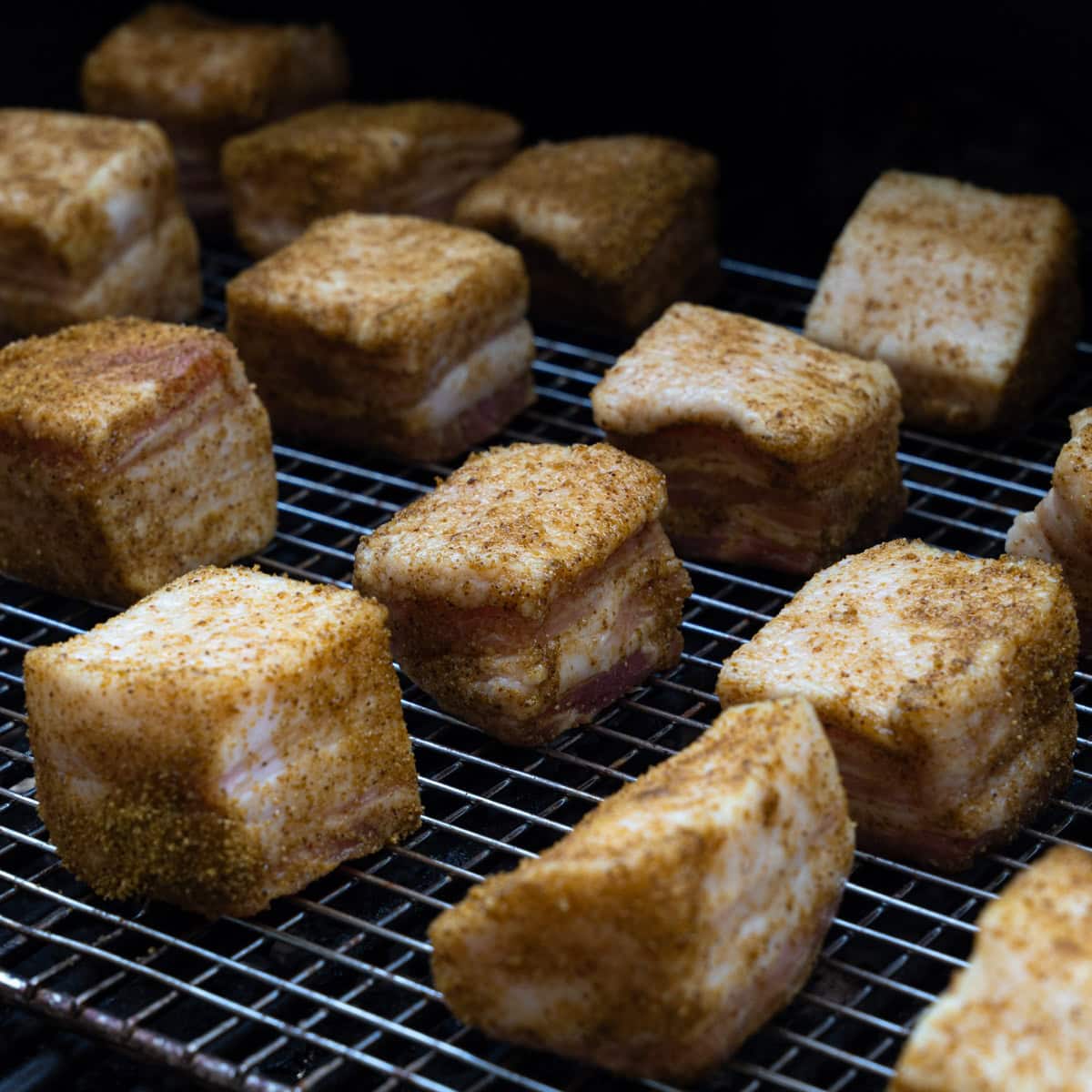
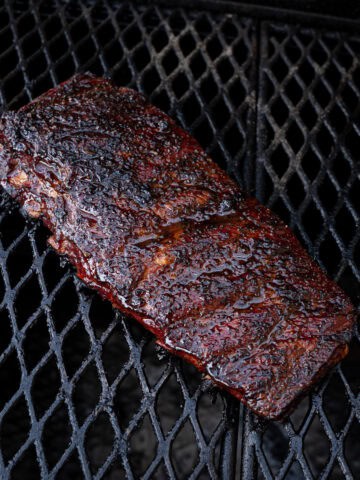
Set the smoker to 275°F. Arrange the cubes on a wire rack for easy transport and better airflow during cooking. Because they're cubed, a solid bark will form in 1 ½ - 2 hours.
BEST TEMPERATURE FOR PORK BELLY BURNT ENDS
I like to run my smoker at 275°F for most meats, especially pork belly. At that range, it does a really nice job of rendering the fat and crisping the exterior of the meat more than cooking at 225-250°F. At 275°F, they will take 3 ½-5 hours to cook.
STEP 3: MAKE THE GLAZE
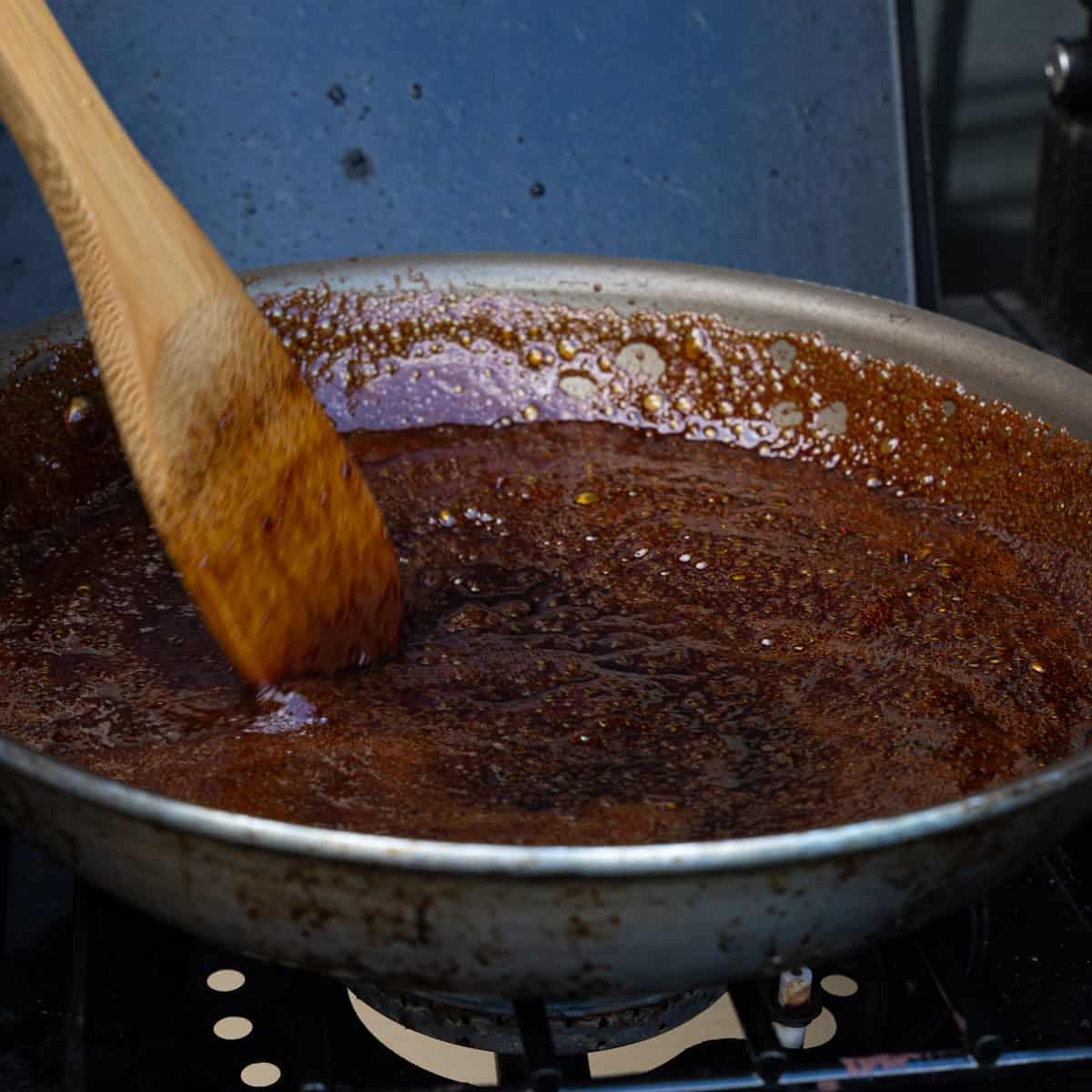
While the pork belly is smoking, make your glaze. To do so, combine molasses, bourbon, apple cider vinegar, Dijon Mustard, soy sauce, brown sugar, paprika, garlic powder, onion powder, cayenne pepper, and cinnamon in a pan over medium heat and bring to a simmer. Once this occurs, reduce the heat to low and simmer for ~5 minutes, until it reaches a spoon-thick consistency. Finally, stir in the butter off heat until well incorporated for extra flavor, then store the sauce in a mason jar until you're ready to use it. I'd recommend keeping it at room temperature if you use it shortly, so it's easier to apply to the pork belly.
STEP 4: GLAZE & SEAR
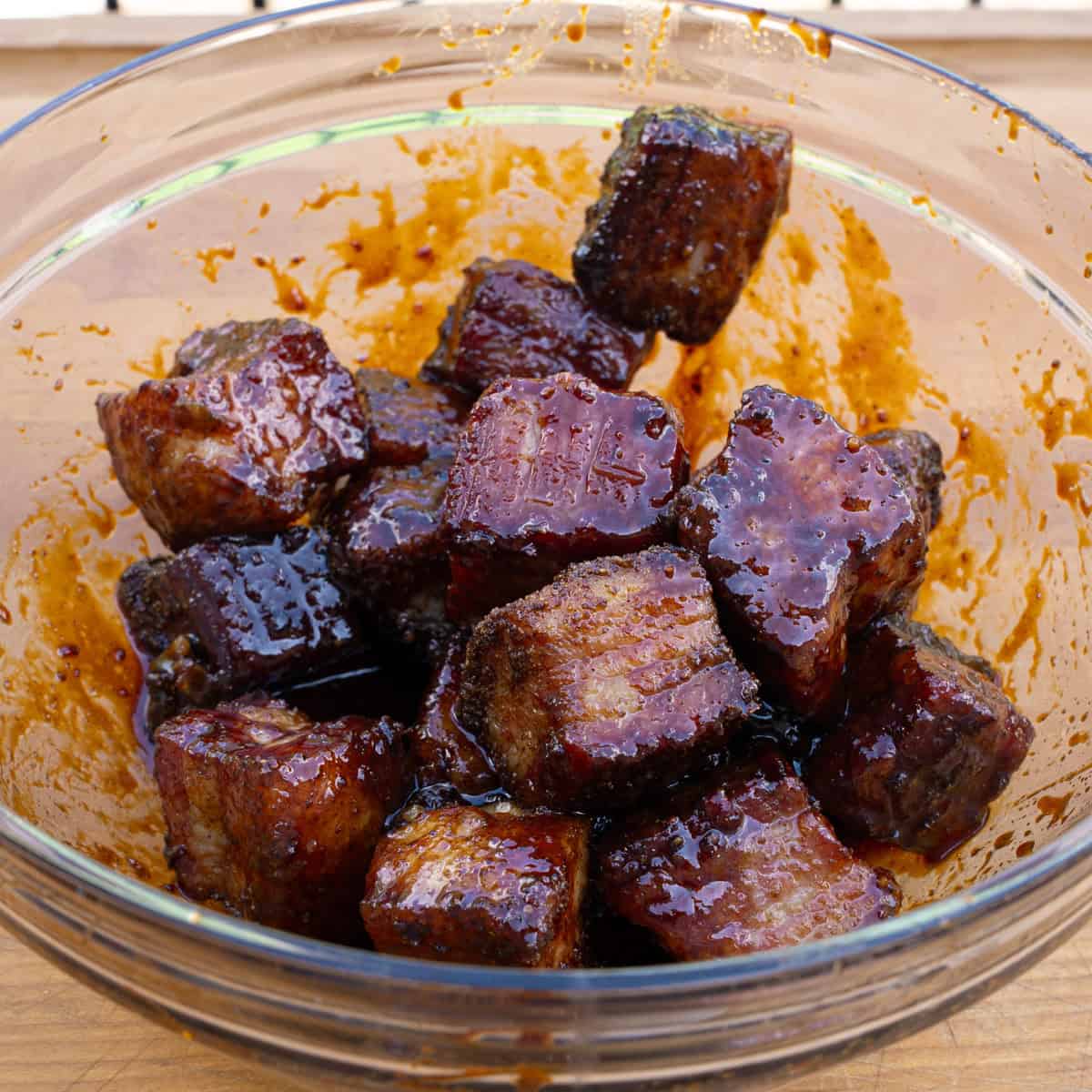
Here's where I did things a little unorthodox with smoked pork belly: allow the pork belly to cook through, unwrapped, until probe tender —generally ~200-210 degrees. Most of the time, I'd wrap them at 170-175 degrees to glaze them in the sauce and help them cook faster. However, I'm going for a crisper bark, so I let them go unwrapped the entire time (don't worry, they're still super tender and will melt in your mouth like butter).
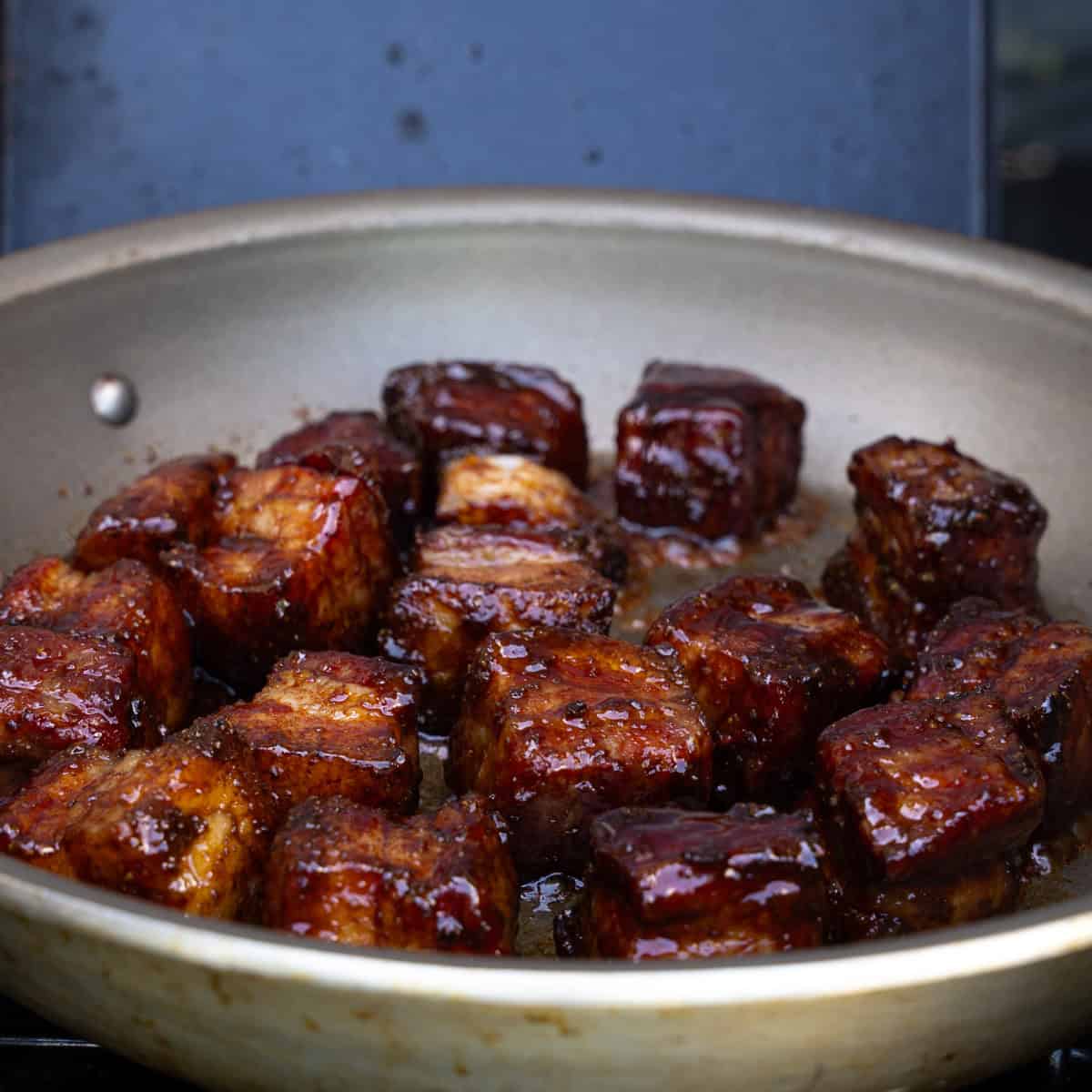
The next step is to toss them in the prepared glaze to ensure they are well coated. Then add them to a skillet over medium-high heat to crisp. Keep flipping the pork belly so no one side gets too much char. The idea is to crisp up the pork belly, especially the fatty side, without burning it. When done right, the glaze caramelizes nicely onto the pork belly and gives a great bite. Once this occurs, you can remove the pork belly from the pan, plate it, and dig in!
Other Ways to Get Pork Belly Crispy
By preparing the pork belly the way I've outlined in this recipe, it will come out plenty crispy. However, if you'd like to take it a step further, check out the options listed below:
Dry-Brine Overnight
Okay, so this one may not apply to this recipe, but it's definitely worth knowing, and I'm a big fan of it when cooking pork belly (and several other large cuts of meat) more traditionally. To do so, salt the exterior and rest the slab uncovered on a rack in the fridge overnight to dry the surface, improving flavor and texture. This method works great on skinless pork belly, but is even more critical if you're leaving the skin on. It will be rubbery if you don't.
Score the Fat
Light crosshatch scoring on the skin/fat increases the surface area, allowing the fat to render better and become crisper. When doing this, keep in mind that you only want to score the fat—not the meat. Shallow cuts are key here to get the desired outcome.
Looking for Other Sauce Ideas?
Looking to mix things up or tailor the dish to your taste? Here are a few flavorful alternatives:
- Korean-style: Use my korean-style BBQ sauce for a twist that brings a unique flavor.
- Apple Habanero glaze: Did you catch the apple habanero glazed ribs I posted? Yep, that glaze goes great on pork belly, too.
- Maple Bourbon Glaze: This is a slight adjustment, but this maple bourbon glaze is a great alternative.
Storage Tips
If you have leftovers (unlikely, but it happens), you’ll want to store them properly and reheat them to maximize flavor and texture. Once the pork belly has cooled completely, transfer the cubes to an airtight container and refrigerate for up to 4 days. This prevents excess moisture buildup, which can mess with the bark you worked so hard to build (even after crisping it up in a pan).
For more extended storage, freeze the glazed pork belly in vacuum-sealed or heavy-duty freezer bags. Squeeze out as much air as possible to avoid freezer burn—when appropriately packed, they’ll hold up for about two months.
When it’s time to reheat, set the oven or air fryer to 300°F and cover the pork with foil to keep the meat moist. For extra texture, finish them under the broiler for just a few seconds to help crisp them back up.
Recipe
Smoked Pork Belly w/ Molasses-Bourbon Glaze
Equipment
- Wire Rack
- instant read thermometer
- tongs
- Wooden Spoon
- saucepan
- Smoker, Oven, or Pellet Grill
- knife
- cutting board
- Measuring Spoons & Prep Bowls
- Jaccard (optional)
Ingredients
- 2-3 lbs. pork belly slab
- ½ C bbq rub + more to taste
- ½ C molasses
- ¼ C bourbon
- 3 T apple cider vinegar
- 2 T Dijon Mustard
- 2 T soy sauce
- ¼ C brown sugar
- 2 teaspoon paprika
- 1 teaspoon garlic powder
- ½ teaspoon onion powder
- ½ teaspoon cayenne pepper
- ¼ teaspoon cinnamon
- 2 T butter
Instructions
For the Pork Belly:
- Preheat the smoker to 275 degrees. Meanwhile, cut the pork belly slab into 1-2-inch cubes. Place in a bowl and season liberally with your favorite BBQ rub.
- Once the smoker has preheated, add the pork belly and let it smoke for ~ 1 ½ to 2 hours.
- For the Sauce: Combine the molasses and the following ten ingredients in a saucepan over medium heat and bring to a simmer. Allow it to reduce for ~5 minutes, then turn off the heat and stir in the butter. Adjust to taste, then pour into a mason jar.
- Once the pork belly registers ~190 degrees, remove it from the smoker and place it in a bowl. Slather the pork belly with the prepared sauce.
- Add the pork belly to a pan over medium-high heat and sear until crispy on all sides. Once this occurs, remove the pork belly from the pan.
To Finish:
- Plate the pork belly and serve as is. Enjoy!
Leave a Reply