
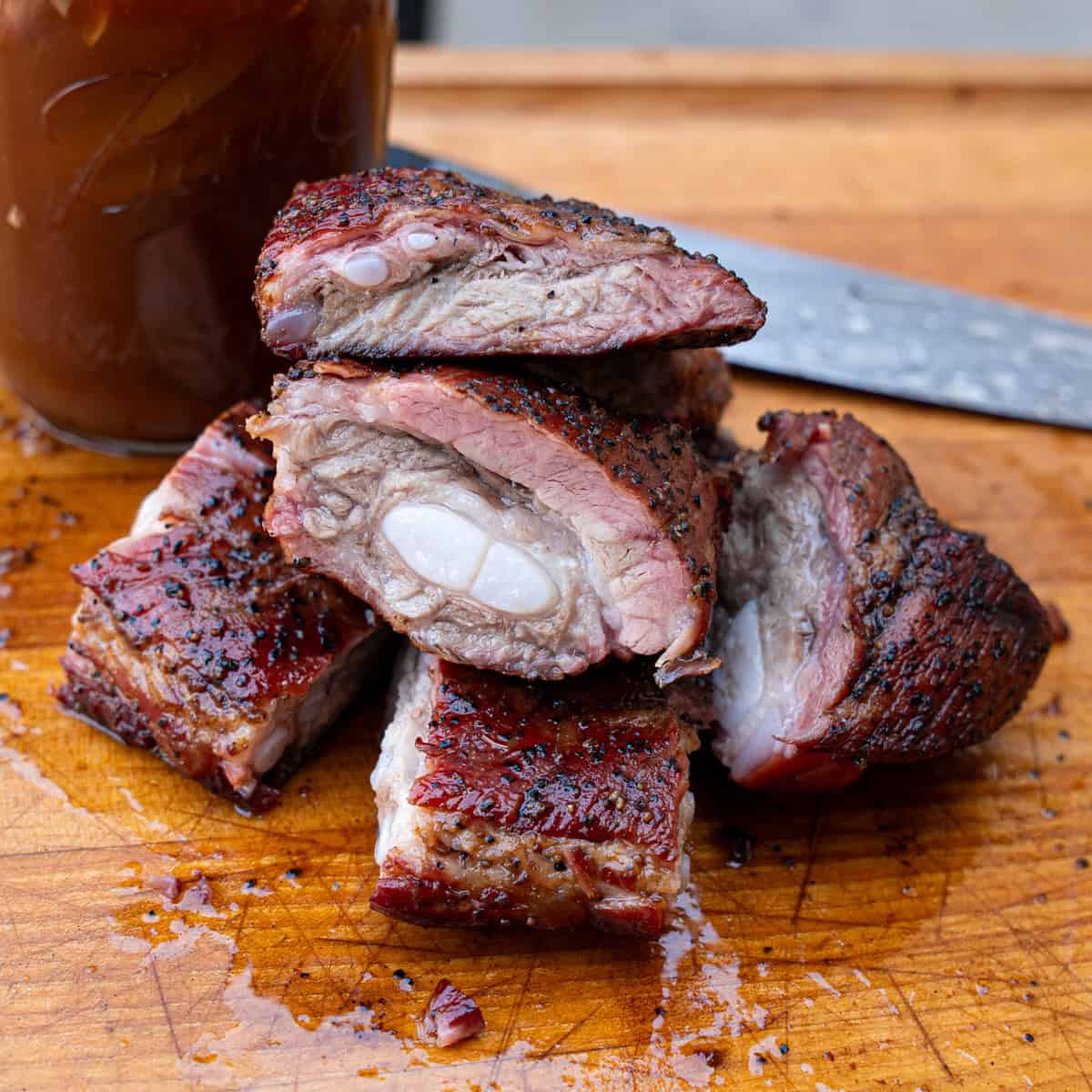
If you’ve been trimming your own pork spare ribs into St. Louis style racks, you already know rib tips aren’t scraps — they’re a built-in bonus. A lot of people freeze them for later or treat them like leftovers from the trimming process. Trust me — that’s a mistake.
I started paying more attention to rib tips about a year ago and began trying out different methods, and they’ve quickly become a cut I genuinely look forward to cooking. When prepared properly, smoked rib tips are rich and deeply flavorful, often more so than the rack itself, thanks to their higher fat content and natural marbling. They’re also a great way to test sauces or seasoning adjustments before committing to a full rack.
This method builds on the same direct-heat approach I’ve been using lately for ribs, running at 275–325°F rather than the traditional low-and-slow technique. In this post, I’ll walk you through exactly what rib tips are, why they cook differently than a standard rack, the temperature I recommend, and how to prepare them successfully at home.
Jump to:
What Are Smoked Rib Tips?
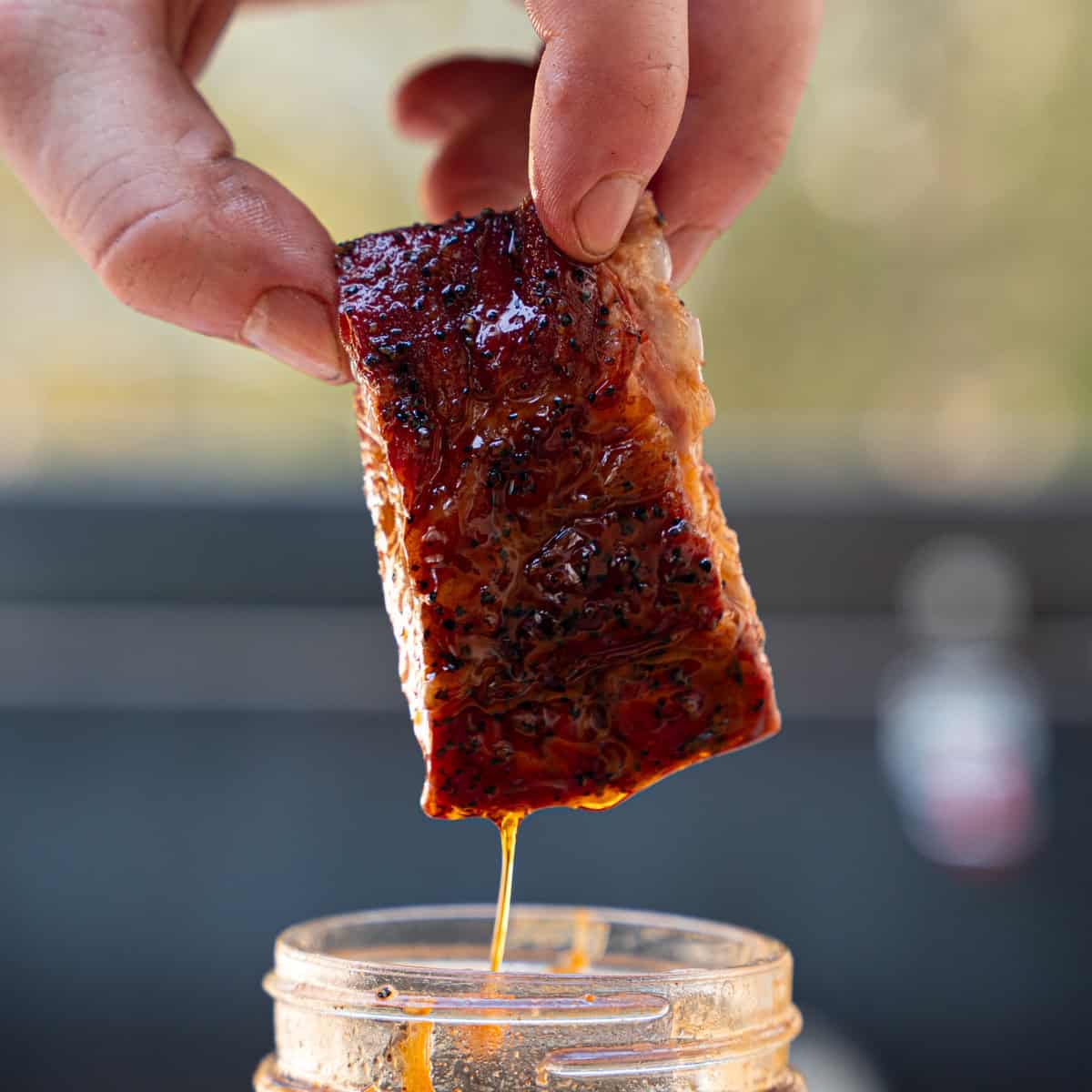
Rib tips are the lower strip removed when trimming a full rack of pork spare ribs into a St. Louis cut. They’re made up primarily of cartilage, connective tissue, small bone fragments, and rich, pork belly meat. They don’t come from the loin like baby back ribs. They come from the belly side of the pig.
Some people smoke the rib tips whole, or pre-slice them into chunks before smoking. Personally, I’ve found that smoking them whole providesa juicier end product that’s less likely to scorch or get rubbery, so that’s the way I prefer to make these.
Why Rib Tips Become a Favorite
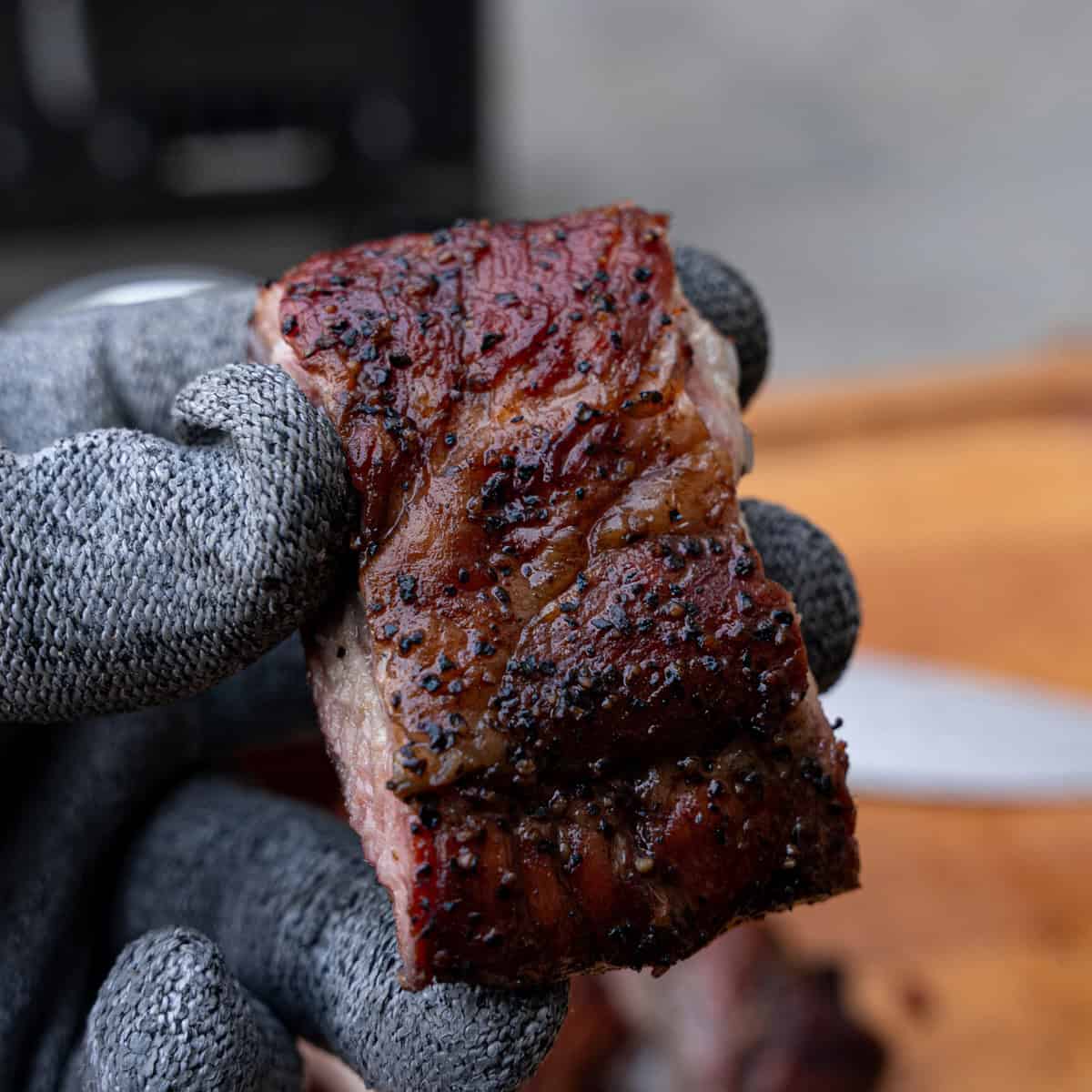
Rib tips have a lot going for them. First off, the value angle: if you’re trimming your own spare ribs, rib tips are essentially “free” (or at worst, a nice bonus). Also, buying pre-trimmed St. Louis racks costs more per pound. Trimming your own spare ribs gives you the rack and the rib tips — at a way lower price. For example, I grabbed spare ribs from the supermarket earlier this week; they were $1.59/lb, while the same ribs, cut St. Louis-style, were $4.59/lb. Not everything in BBQ is a value anymore, but rib tips certainly are.
Second, rib tips are extremely versatile and delicious. Because they come from the belly side of the pig, they have more intramuscular fat and connective tissue, creating a more tender end product when cooked right. Lastly, they’re easy to prepare and perfect for just about any setting — whether you want a bite-sized snack while the main rack finishes, something solid for a game-day tailgate, or chopped pieces to fold into baked beans.
What Temp and How Long to Smoke Rib Tips (And Why 300–325°F Works)
Because smoked rib tips contain more connective tissue than standard pork rib meat, they require proper heat and time to break down. Most smoked rib tips recipes run at 225–275°F. That method works, but it takes significantly longer and can leave the bark a little to be desired, especially if you prefer a direct-heat approach (see my latest rib post if you're curious about why I love direct heat cooking so much).
Because of that, I run rib tips at 275–325°F instead.
At this temperature:
- Fat still renders efficiently, and collagen breaks down faster.
- Bark develops sooner — because they are cooked directly over the heat source, you get nice caramelization and a better texture; you simply can’t achieve this with indirect heat.
- The total cook time shortens considerably.
For comparison, cooking at 225°F can take 3-4 hours (depending on the size of the rib tips). Running at 275–325°F typically finishes in about 2 to 2½ hours. I don’t mind those time savings one bit.
Ingredients
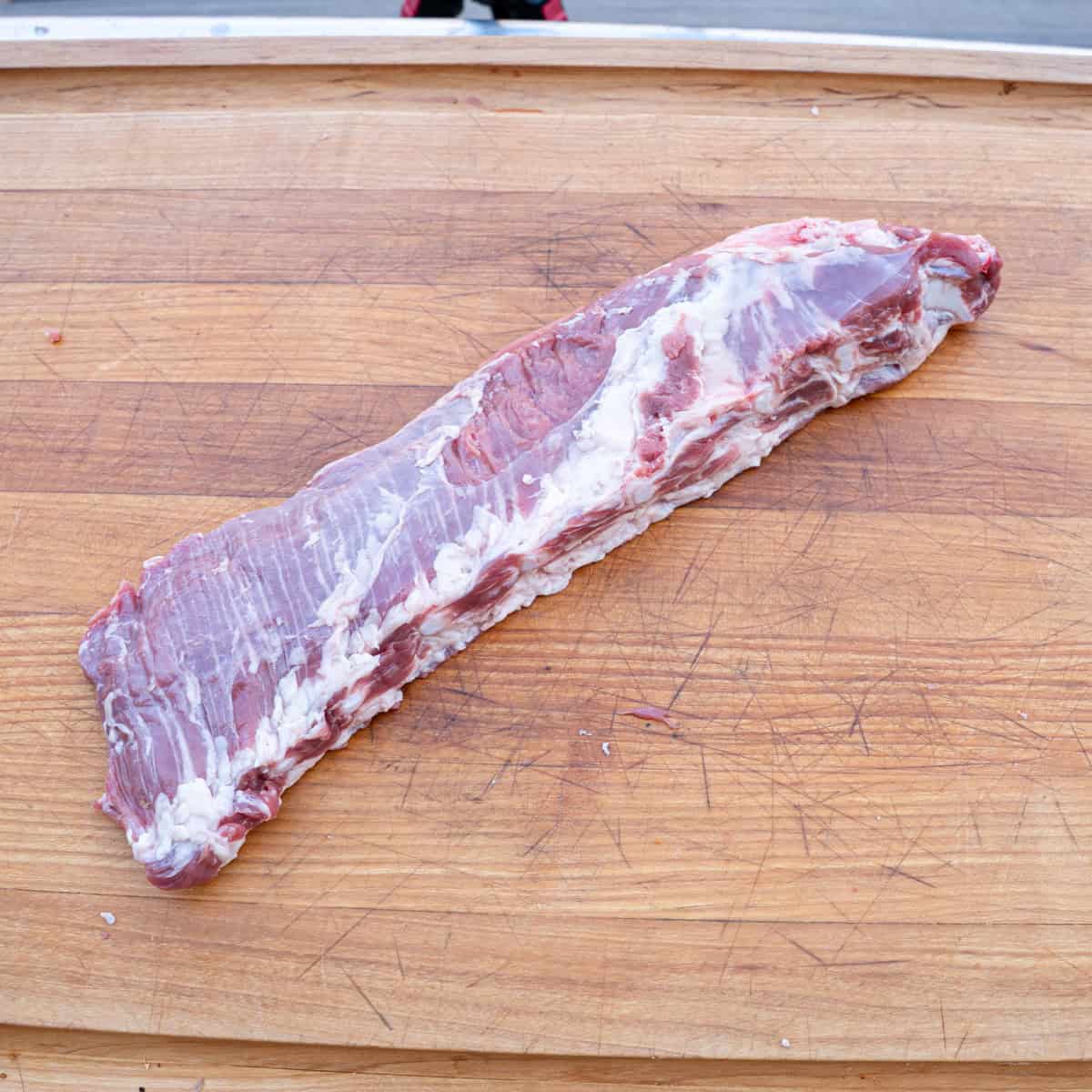
For this smoked rib tips recipe, you’ll need:
- Rib tips (trimmed from one package of pork spare ribs)
- Worcestershire sauce (as a binder if using)
- 1:1 salt and pepper mix (or your favorite BBQ rub)
- 2 cups prepared mop sauce — If you're new to mop sauce, it's a thin, tangy basting liquid used throughout the smoking process to keep meat moist, add flavor, and help the bark develop. Here’s a link to my mop sauce recipe that I used for these rib tips. I use it not only for basting but also to dip the rib tips in, too.
How to Smoke Rib Tips (Step-by-Step)
For this recipe, I prefer using a direct heat cooker like my 1904 Pitts trolley or an Oklahoma Joe's Marshall. Still, you can use either a standard charcoal or gas grill, or a dedicated smoker for this recipe—use what you have access to. The general principles will remain the same no matter the cooker being used.
Step 1: Prep the Rib Tips
Preheat your smoker or grill to 275–325°F. I like to give a range because it’s more realistic, and that way you don’t feel like you have to babysit every time there's a 5-degree temperature swing.
While the grill is preheating, take out your rib tips, trim any excess fat, and cut off any thin end pieces so you have one long, uniform shaped piece of meat (if you want to see how I fully break down a rack of spare ribs to get the rib tips, check out my post here). Making sure the rib tips are the same size throughout helps them cook evenly and prevents the ends from burning.
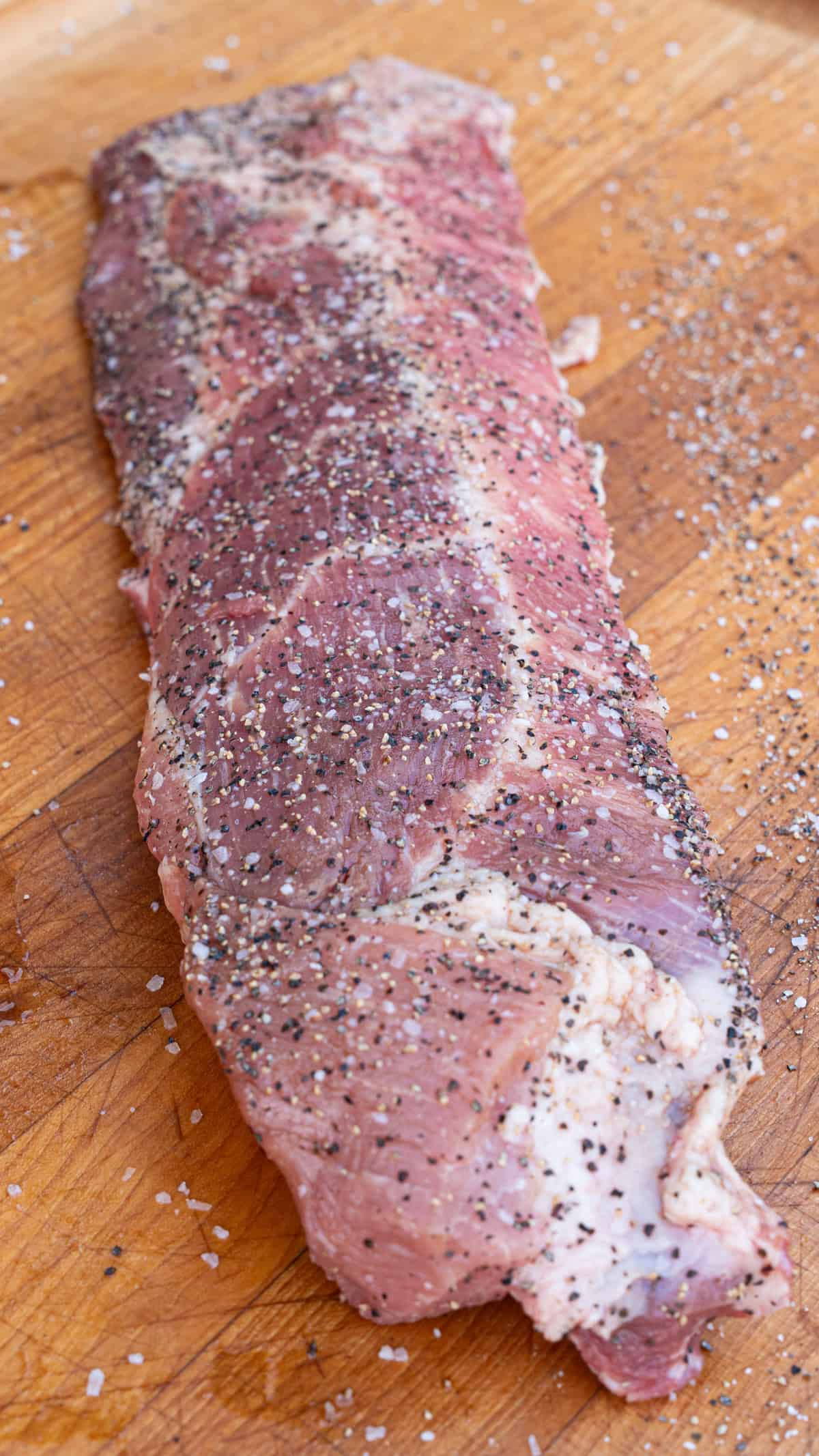
Next, lightly coat the rib tips with Worcestershire sauce as a binder and season liberally with either salt & pepper or your BBQ rub of choice. I’d recommend avoiding extra-sugary rubs because they scorch at higher temperatures, but otherwise feel free to use whatever you prefer.
Step 2: Smoke the Rib Tips
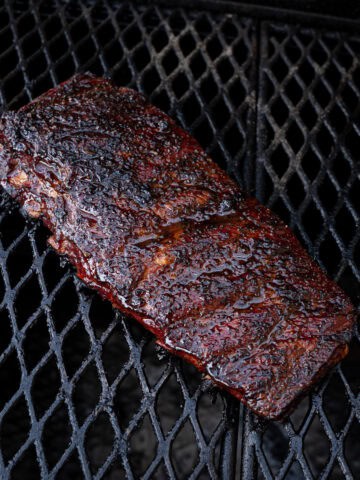
Place the rib tips directly on the cooking grates and cook, untouched, for 45 - 60 minutes. During this stage, the rib tips will begin to render fat, and the bark will begin to develop.
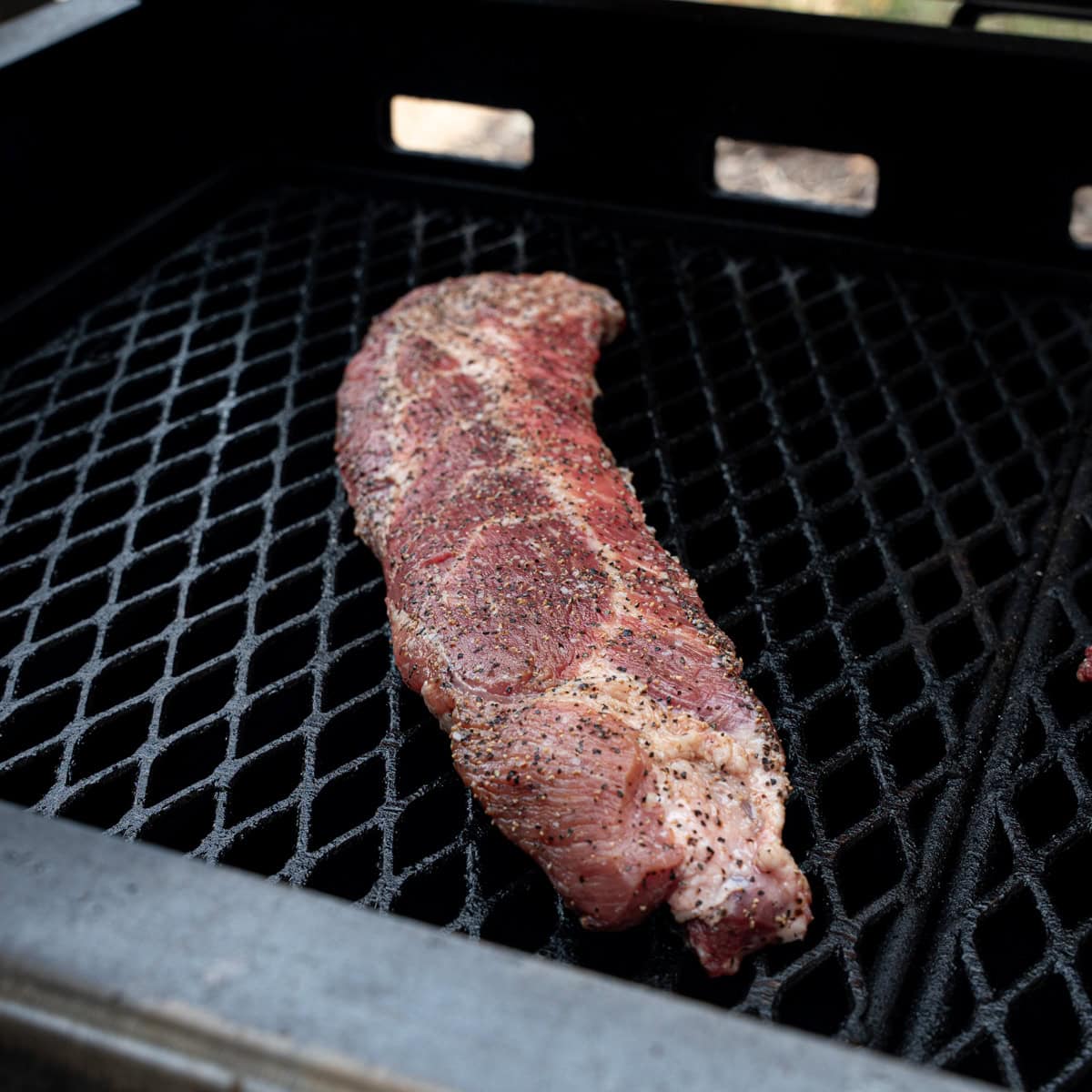
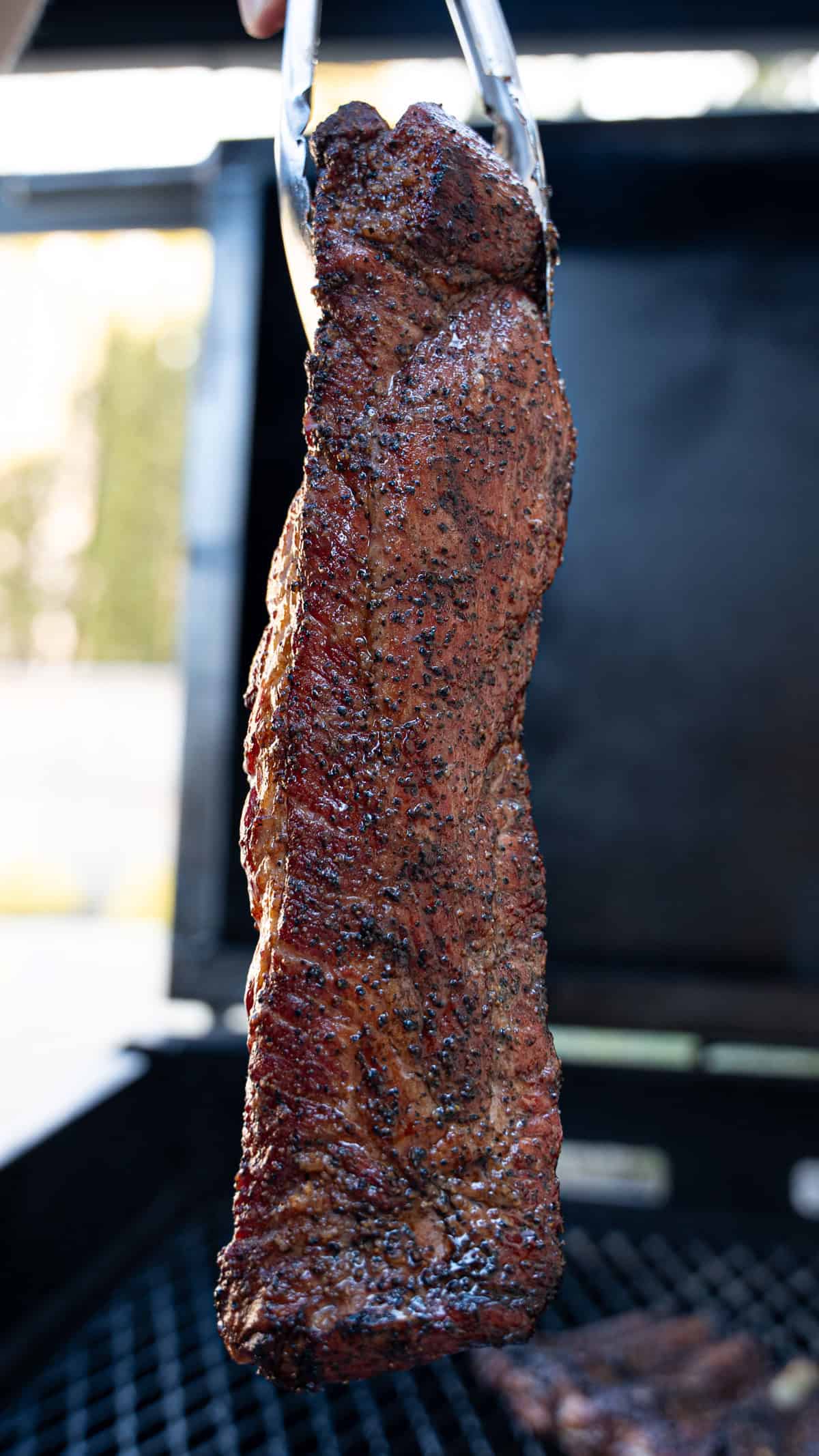
After that time, flip the rib tips and cook for 30 minutes. You’ll know the rib tips are progressing well when you see lightly charred edges and a deep mahogany color forming.
Step 3: Mop and Build Flavor
Once both sides develop a good exterior color, begin brushing with mop sauce every 20 minutes. You should be able to get 2-3 mops in before the wrap stage (when the internal temperature reaches around 180°F). At this stage, the bark is set, but the connective tissue hasn’t fully broken down yet.
Sauce Strategy
A vinegar-based mop sauce works best at higher cooking temperatures because it’s thinner and has minimal sugar, lessening the risk of burning at 325°F. If you prefer a thicker, sugary BBQ sauce, wait to apply it until the final 15-20 minutes of the cook to give it time to tack on without burning.
Step 4: Wrap and Finish
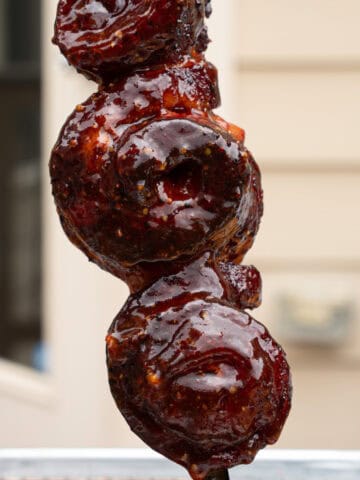
Once the rib tips register 180°F, remove them from the grill. This is where I like to lay them on a sheet of aluminum foil, apply one more coat of mop sauce, and wrap them up. After that, return the wrapped rib tips to the grill and cook until the internal temperature reaches 205°F and the pieces feel probe tender.
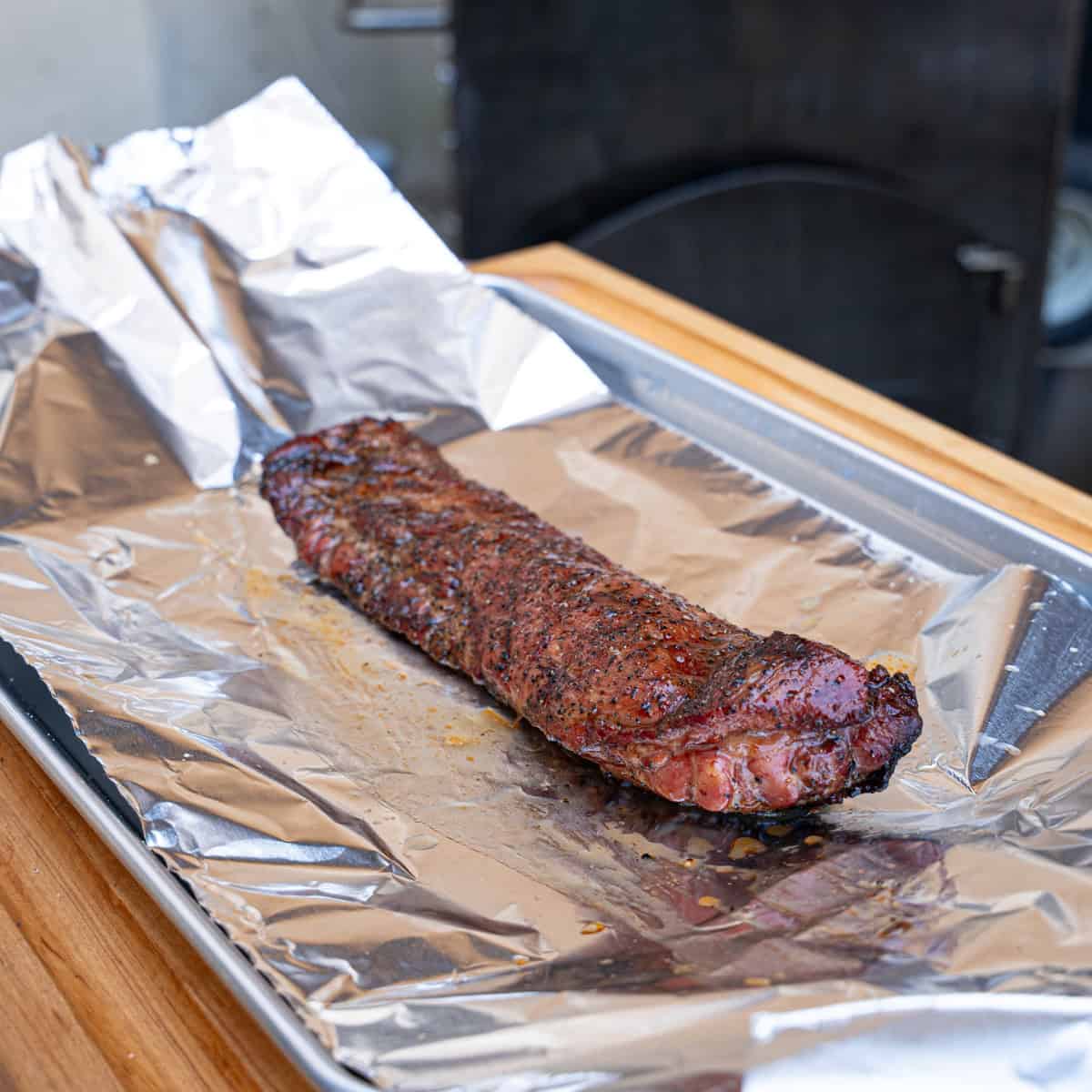
A note on probing: When checking temperature, insert your thermometer probe into the thickest portion of meat, aiming for the center and avoiding direct contact with cartilage or bone. This gives you a more accurate reading of the meat itself.
Why 205°F Matters
Rib tips contain significantly more cartilage and connective tissue than standard pork ribs. Cartilage doesn’t fully soften until collagen converts to gelatin, which occurs roughly between 195–205°F.
You’ll often see rib tips reach 180°F and still feel firm. That’s completely normal. The final push to around 205°F is what transforms them from chewy to melt-in-your-mouth tender. For a quick touch test, insert a meat probe or skewer into the rib tips—if it slides in with little resistance, like warm butter, you’ve hit the perfect doneness. You want to use both temperature and tactile cues to guide you, especially until you really get comfortable with making these (and using your thermometer). For those curious, my go-to thermometer is the ThermoWorks Thermapen.
Step 5: Rest
This is one step people often skip, but it can make a huge difference. Let rib tips rest in foil for at least 15–20 minutes before slicing them — and that’s on the short end. Whether it’s rib tips, ribs, brisket, you name it — the rest helps to continue breaking down connective tissue, and rendered fat redistributes through the meat instead of spilling out when sliced.
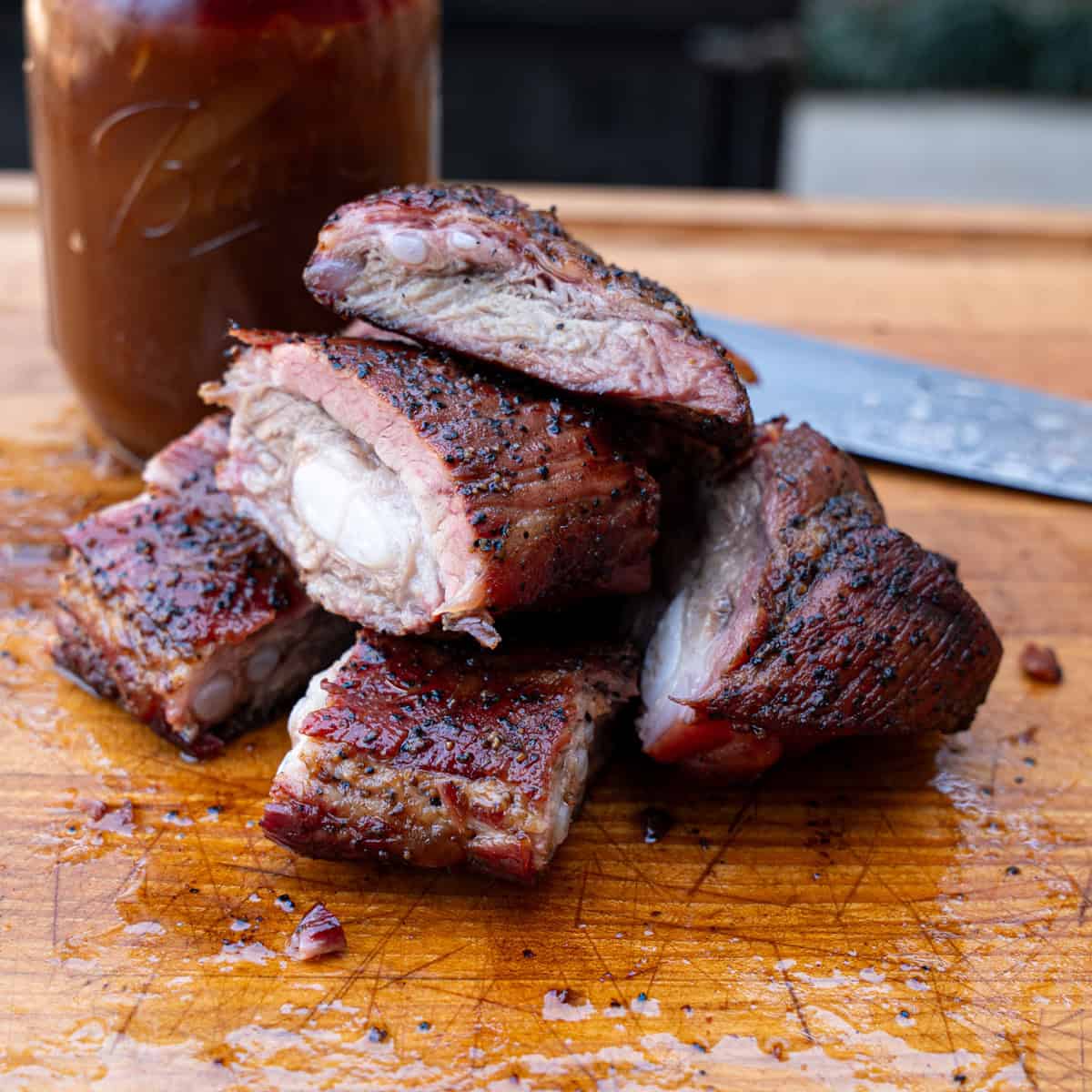
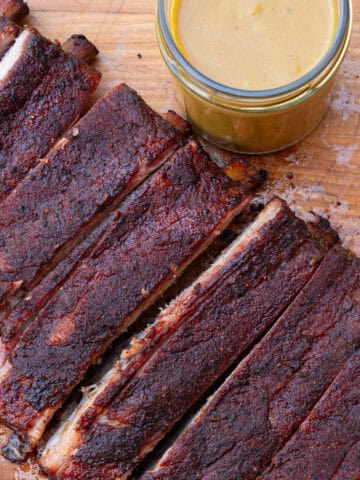
The sweet spot is allowing meat to rest until the 140–160°F threshold. There, it's had enough time to continue rendering fat and collagen, and is still warm enough to taste fresh and delicious for your guests. Once they’ve rested, simply take them out of the foil, slice them, and serve with more mop sauce for everyone to enjoy.
What Perfect Smoked Rib Tips Should Feel Like
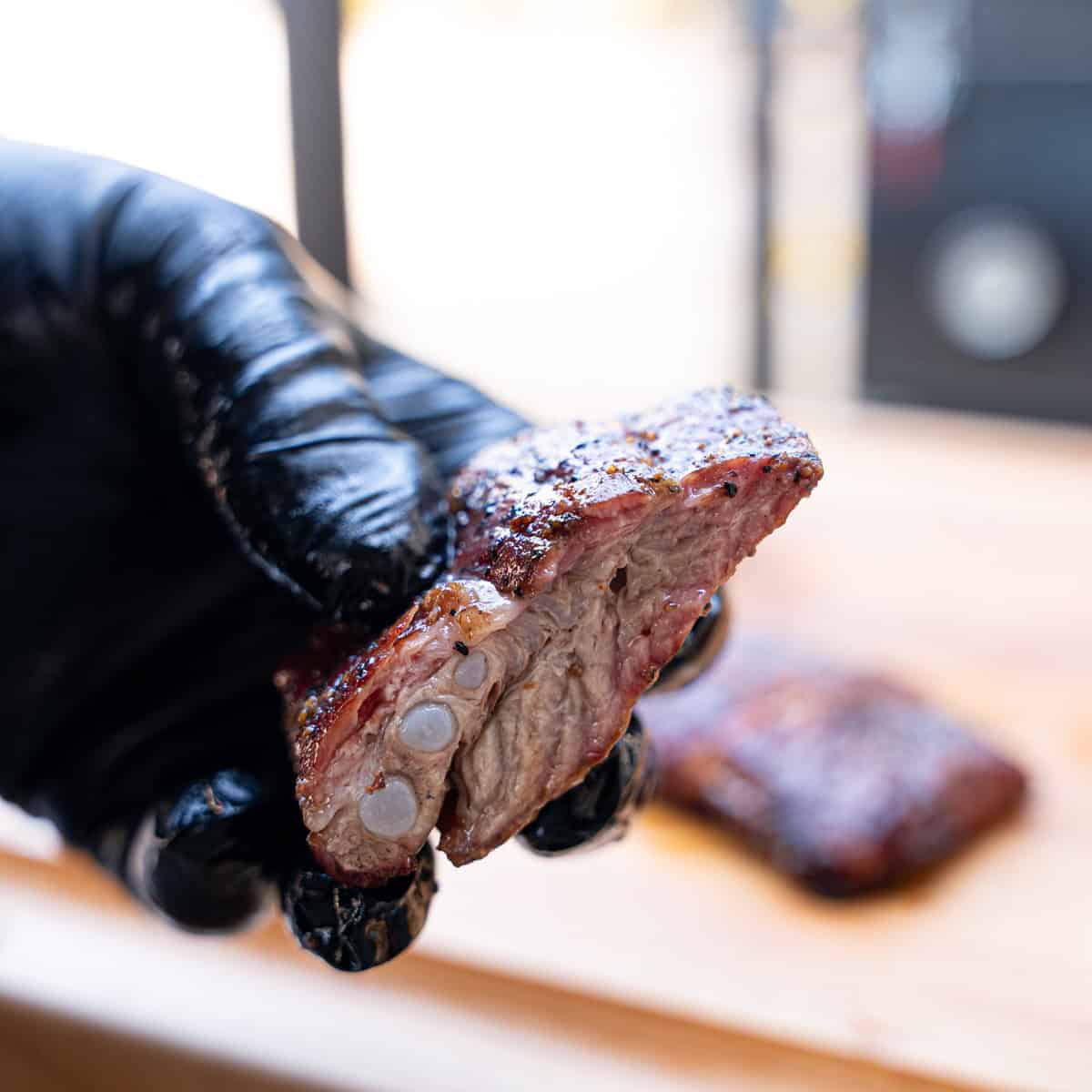
When rib tips are done right, you’ll know it as soon as you take a bite. They should be tender with some structure — not falling apart, but not fighting you either. There’s usually a slight chew to them, which is normal because of the cartilage, but they should not feel tough. If you can bite through cleanly without tugging or shredding the whole piece apart, you’re in the sweet spot.
Troubleshooting: What Went Wrong and How Do I Fix It?
If your smoked rib tips didn’t come out exactly how you want them, that's totally fine — there’s always a learning process. That being said, here are a few quick cues that can help you with this (or the next cook):
- Too tough? Wrap in foil with a splash of mop sauce, return to indirect heat for 15-20 minutes, and test for tenderness again. Repeat this process until they’re probe tender, even if that takes you upwards of 195–205°F. Every piece of meat is different, so no one set temperature is guaranteed to be done.
- Too soft or mushy? They likely overcooked. Next time, check the temperature and tenderness earlier, and pull them off sooner.
If you slightly overcook your ribs, you can chop them up and add them to beans or to collards. They are great as fillers in side dishes.
How to Reheat Smoked Rib Tips
Smoked rib tips reheat well if you take your time with them. Store any leftovers in an airtight container in the refrigerator for up to four days.
When you’re ready to warm them back up, aim for gentle heat. Wrap the rib tips in foil, add a small splash of mop sauce or water to create some steam, and heat them in a 350°F oven or air fryer until they reach an internal temperature of at least 165°F. That keeps them safe to eat while helping preserve the texture you worked to get right the first time.
I like to avoid reheating them in the microwave. Fast, inconsistent heat, as they provide, can tighten the cartilage and dry out the rendered fat, making them feel tougher than they should.
For longer storage, wrap them tightly (or vacuum-seal if you can) and freeze for up to 3 months. Let them thaw overnight in the refrigerator before reheating.
Recipe
Direct Heat Smoked Rib Tips
Equipment
- Direct heat cooker (although a gas grill, kamado-style grill, or traditional charcoal grill can be substituted)
- tongs
- Boning Knife
- Chef's Knife
- Aluminum Foil
- saucepan
- Basting Mop
- Wooden Spoon
- instant read thermometer
- Measuring cups & prep bowls
Ingredients
- 3-4 lbs. (1 package) spare ribs
- ¼ C salt & pepper mix 1:1 ratio plus more as needed
- Worcestershire sauce as needed for the binder
- 2 C Prepared Mop Sauce
Instructions
- Preheat your grill or smoker to 300-325°F. While it comes up to temp, trim any excess fat from the ribs. Then, using a sharp, heavy knife, cut off the lower portion of the ribs—the strip of cartilage and small bones along the top edge. This section is known as the rib tips. See this post to see how I cook the trimmed ribs, but for this recipe, we will be focusing on the rib tips.
- Trim any remaining excess fat from the rib tips and cut off any thin pieces of meat, especially on the ends. Then, apply a thin coat of Worcestershire sauce as a binder, and season both sides generously with salt and pepper or your BBQ rub of choice. Once the smoker is preheated, add the rib tips and smoke them untouched for 1 hour. At this point, flip the ribs and cook for another hour.
- Once each side begins to get a nice, charred exterior, begin to baste the rib tips with the mop sauce, reapplying the sauce every 20 minutes or so.
- Allow the rib tips to continue cooking until the skin has turned a deep mahogany color, and the internal temperature registers ~180 degrees. Once these cues occur, remove the rib tips from the grill.
- Apply the mop sauce one more time and wrap the ribs in aluminum foil.
- Place the rib tips back on the grill until they register ~205 degrees or are probe tender, then remove them from the grill. Allow them to rest for ~15-20 minutes, then remove them from the wrap, slice them up, and serve with more mop sauce. Enjoy!
Notes
- What Rib Tips Are: Rib tips come from the breastbone section trimmed off spare ribs when creating St. Louis style racks. They contain more cartilage and fat, which makes them rich and flavorful when cooked properly.
- Thermometer Tip: Insert the probe into the thickest portion of meat, avoiding direct contact with cartilage for an accurate reading.
Leave a Reply