
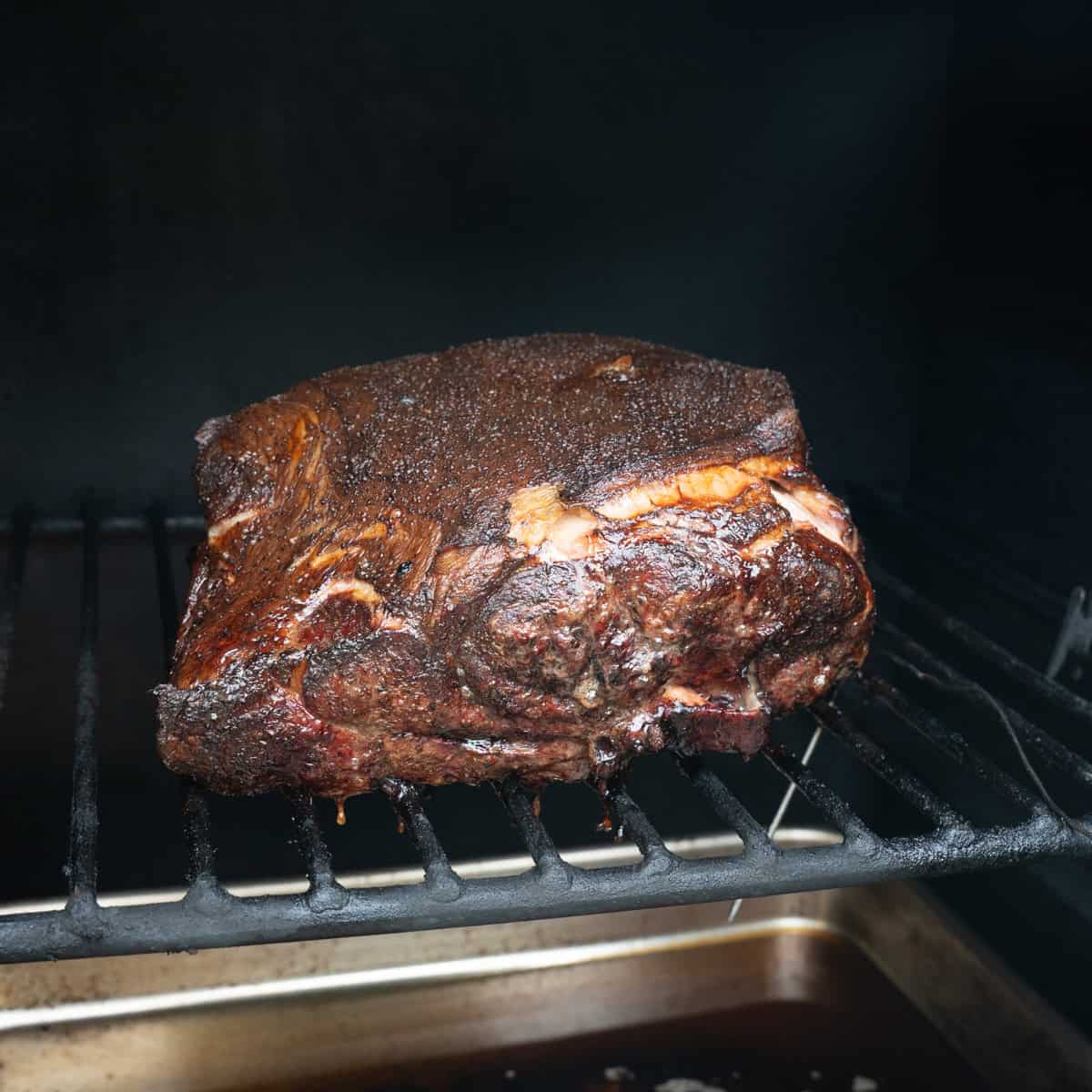
Chances are that if you’ve ever smoked a pork butt, you’ve probably heard people say that you need to pull a pork butt at a specific temperature range, most typically between 203–205°F. And while that's good advice as a starting point, the reality is that the internal temperature of pork butt is important, but it is not the end-all be-all for determining when the meat is properly cooked.
A pork shoulder can hit the “right” number and still feel tough, while another pork butt might finish lower or higher depending on a variety of factors such as fat content, cooking temperature, and how connective tissue breaks down during the cook. Learning how to use internal temperature in conjunction with physical cues as well is what will help you turn a good pork butt into a great one. I’ll break down everything you need to know in this post to do just that.
Jump to:
- What Is an Internal Temperature?
- What Internal Temperature Is Pork Butt Done?
- How to Check Internal Temp for Pork Butt
- What Happens to Pork Butt at Different Temperatures During the Cooking Process?
- Where to Probe Pork Butt to Make Sure it Is Actually “Probe Tender”
- How Cooking Temperature Affects Pork Butt Internal Temp
- Resting Pork Butt After Cooking
The ideal internal temp for pork butt is usually between 203–212°F. Most pulled pork finishes around 205 degrees once the meat becomes probe tender and easy to shred. Temperature gets you close, but tenderness determines when pork shoulder is actually done.
What Is an Internal Temperature?
Internal temperature is the temperature at the center of the meat. When smoking pork butt, the internal temperature tells you how far the cooking process has progressed inside the pork shoulder itself. Unlike surface temperature or the temperature inside the smoker, internal temperature measures what’s happening deep inside the meat where fat, collagen, and connective tissue are breaking down. That matters because pork butt is loaded with muscle fibers and connective tissue that need time and heat to soften.
Why Internal Temperature Matters for Pork Butt
That’s why using a meat thermometer to monitor the internal temperature of pork butt is so important — it allows you to accurately judge the doneness of not only pork shoulder, but any meat you smoke. Doing so removes much of the uncertainty and guesswork from the cooking process, helping you produce more consistent results every time you fire up the smoker.
That’s especially important with a pork butt because it cooks very differently from leaner cuts like pork chops or pork tenderloin, which are usually cooked just until they reach a safe eating temperature. Pork butt may technically be safe to eat long before it’s actually tender enough for pulled pork. The connective tissue and fat still need additional time to break down properly, which transforms the meat from tough and chewy into tender, juicy pork that pulls apart easily.
What Internal Temperature Is Pork Butt Done?
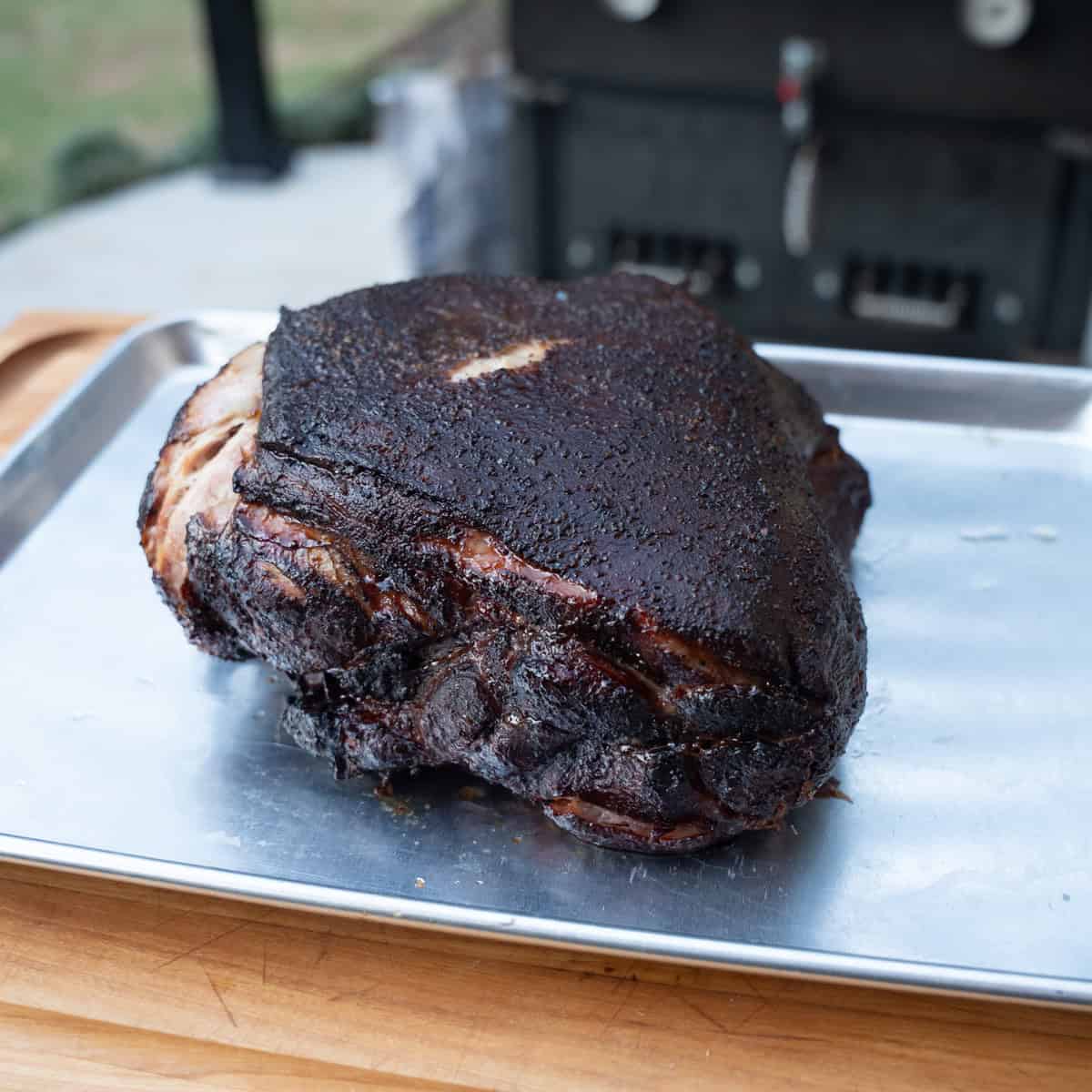
A lot of people will tell you that Most pork butts finish at 195–205°F, with the ideal range for pulled pork usually around 200–203°F. But after cooking pork butt a countless number of times, I’ve got to say that I highly disagree with those numbers.
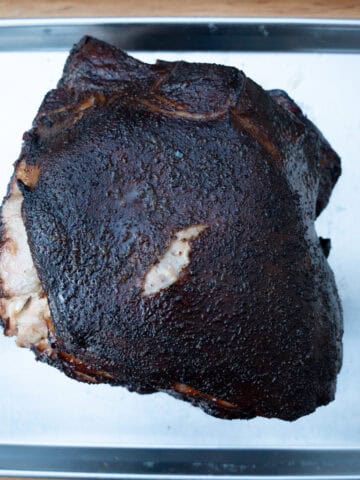
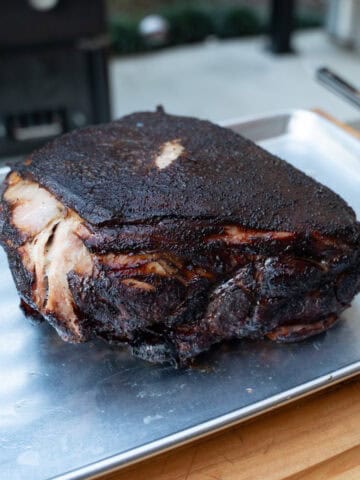
What I have found is that if you are truly going for a probe tender, fall-apart pork butt, it typically finishes in the 203–212°F range. This is typically the point at which enough collagen and connective tissue have broken down for the meat to become tender, juicy, and easy to shred, while still retaining moisture and a good bark. If you pull a pork butt before that, you’ll still end up with a half-decent product most of the time, but make no mistake, it will not be as tender as letting it cook on the smoker just a little bit longer to 203–212°F. Trust me, it’ll make a big difference.
What Does Probe Tender Mean?
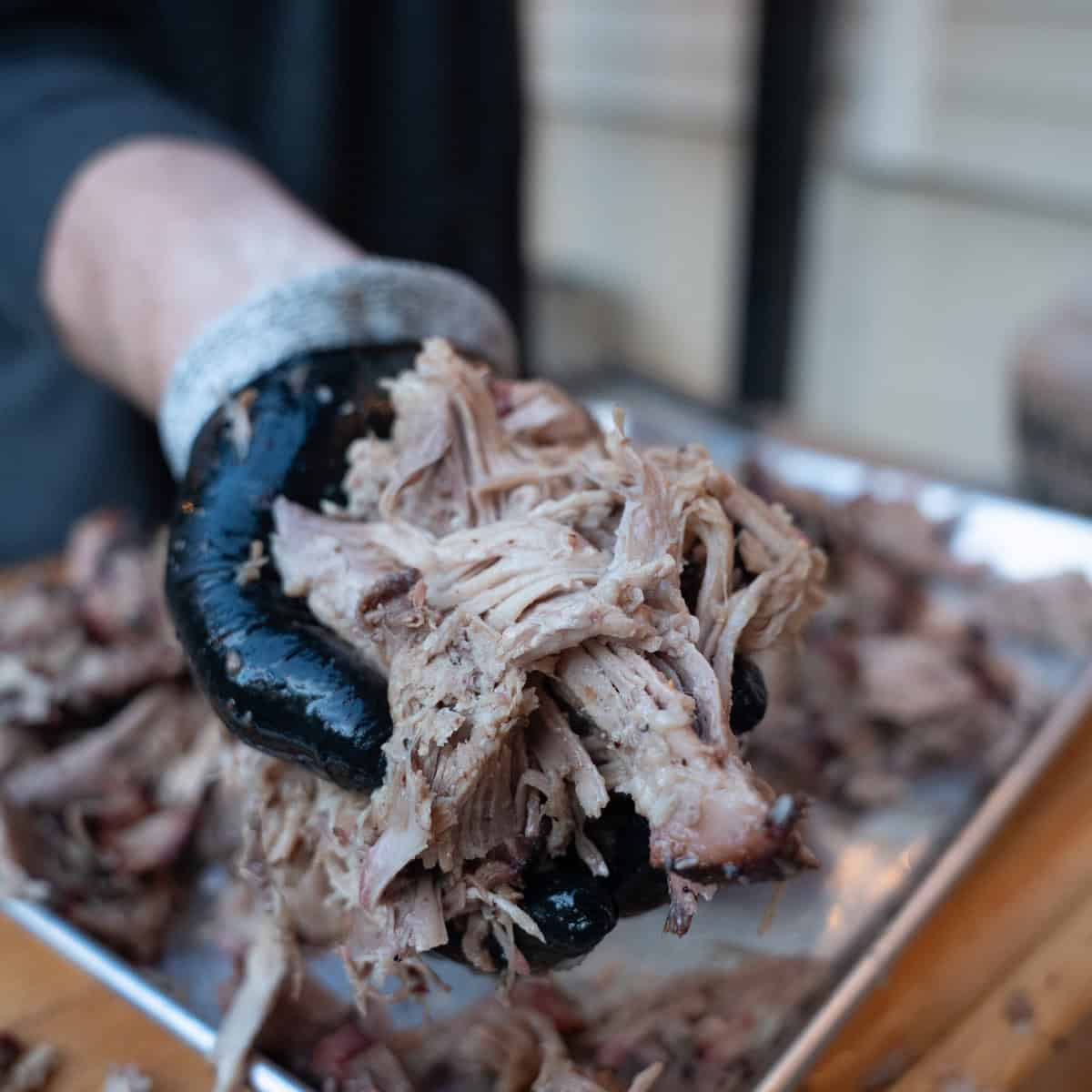
Probe tenderness is the number one physical cue of when a pork butt is actually done and is a much better indicator of doneness than temperature alone. When a thermometer or probe slides into the pork butt with very little resistance, the connective tissue has usually broken down enough for the pork to pull apart properly. The common phrase you’ll hear is if the probe slides in like butter, it’s done — and that holds true. If there is still a little resistance, it needs a little bit longer to cook. It’s one of those things that may take a few tries to learn, but once you feel it, you know it, and it’s easy to replicate after that.
Another great indicator after the cooking process that will tell you if you smoked the pork butt long enough is how easily the bone slides out (if you’re using a bone-in pork butt). If you can slide the bone out and little to no meat hangs on, you cooked it long enough. If not, chances are the pork butt needed a little more time.
Why 203-205°F Became the Popular Pork Butt Number
You’ll constantly hear people say pork butt is done at 203-205°F, and that number became popular because many pork shoulders naturally finish around that temperature range. But 203-205°F isn’t a hard rule — it’s more of a guideline.
The reality is that every pork butt cooks differently depending on conditions such as fat content, size, whether it is bone-in or boneless, smoker airflow, cooking temperature, stall duration and even resting time afterward. Some pork shoulders become fully tender closer to 200–203°F, while others may have to climb to 210–212°F or slightly higher before the connective tissue fully breaks down.
That’s why it’s so important to focus on both physical cues (mainly probe tenderness) and internal temperature.
How to Check Internal Temp for Pork Butt
The best way to monitor pork's internal temperature is with a reliable meat thermometer. There are two common types you will find: your classic leave-in thermometer and an instant-read thermometer. I highly recommend the latter. It takes readings more quickly and accurately, which is important when you’re trying to nail the perfect internal temperature of a pork butt. There are many great products to choose from, but I believe investing in a ThermaPen from ThermoWorks is the best option. Most people consider this the gold standard in instant-read thermometers.
What Happens to Pork Butt at Different Temperatures During the Cooking Process?
Now I want to dive even deeper into internal temperature ranges so you can fully understand how much a pork butt changes throughout the cooking process. Knowing what is happening during these ranges will help you better manage your pork butt during cooking.
140–160°F
The pork shoulder begins heating through the center. Fat starts to soften, but connective tissue remains tough. This is the stage where many beginners mistakenly think the pork butt is ready to eat because they approach it like cooking a steak. Don’t fall for that logic — yes, a pork butt would technically be safe to eat at 145°F, but it still has a long way to go before it becomes tender.
160–175°F
This is usually where the stall happens, which always causes a lot of stress and confusion. And I get it, if you don’t know how to manage it, you can think something terrible is happening, whether it’s a malfunctioning thermometer or just a bad cut of pork. Fortunately, I’ve put together an entire post on when to wrap a pork butt to nail the stall, which you can find here if interested.
175–190°F
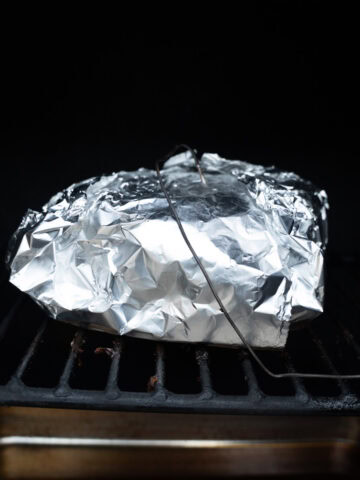
This is the stage where the pork butt pushes through the stall, softens noticeably, and cooks much more rapidly, but it still isn’t fully tender and may resist pulling apart. You’re getting close, but the pork butt likely still needs another 45 minutes to an hour before it reaches full tenderness.
190–203°F
This is where it gets tricky. At this point, the pork feels close to done, but more likely than not, it still needs another 30ish minutes. You can pull it at this range, but if you take it a smidge further, it’ll be at the sweet spot.
203-212°F
Like I’ve previously mentioned — to me, this is the ideal range for a pork shoulder. In this range, the thermometer will slide in and out of the meat in several spots, not just one, like butter, and be ready to remove from the smoker to rest.
Can Pork Butt Overcook?
It can, but honestly, it’s pretty hard to do. While pork butt is one of the more forgiving cuts of meat you can smoke, leaving it on the smoker too long — especially unwrapped — can dry out the bark and cause the meat to lose too much moisture. In some cases, the rendered fat can become excessive, making the pulled pork taste greasy rather than rich and juicy.
Where to Probe Pork Butt to Make Sure it Is Actually “Probe Tender”
When you probe a pork butt, you want to probe it in the thickest part of the meat. This is really important for getting an accurate reading, and I've found that inserting a thermometer directly in the center from the top down is the best way, as that part of the pork shoulder takes the longest to tenderize.
Note: Make sure the tip of the thermometer isn’t touching the bone, because it can give you a false reading.
How Cooking Temperature Affects Pork Butt Internal Temp
The temperature at which you cook a pork butt affects how quickly the pork shoulder reaches full tenderness.
Typical “Low-and-slow” barbecue is when you keep the smoker somewhere between 225°F and 275°F. At lower smoker temperatures, the pork butt takes longer to finish cooking, but the meat spends more time exposed to smoke, resulting in better flavor and bark. On the other hand, higher cooking temperatures help the pork shoulder finish faster, render fat more efficiently, and develop a darker bark sooner in the cook. It’s a classic give-and-take argument.
Personally, I prefer to smoke pulled pork overnight (you can grab my full recipe here), which is very easy to do with a pellet or gravity-fed smoker, or with a temperature control device like a FireBoard that you can attach to a drum or kamado-style smoker. That way, you can essentially roll past the stall while you’re sleeping and finish the butt by lunch, so you’re not stressing about whether it’ll be ready for your planned meal on time.
That said, I realize some people may not have that option or simply prefer the end product from cooking pulled pork in a single day, so I’ve also put together a guide on how I smoke pulled pork at 275°F. Both ways are solid options; it really just boils down to how much time you have to pay attention to the smoker.
Resting Pork Butt After Cooking
Once pork butt finishes cooking, I highly recommend resting it for at least 1–2 hours before pulling it if you have the time. Resting gives the rendered juices time to redistribute throughout the meat while the connective tissue continues to relax, resulting in noticeably juicier, more tender pulled pork. I’ve actually written a full in-depth guide on resting pork butt if you want a deeper breakdown of timing, temperatures, and the best holding methods.
Leave a Reply