
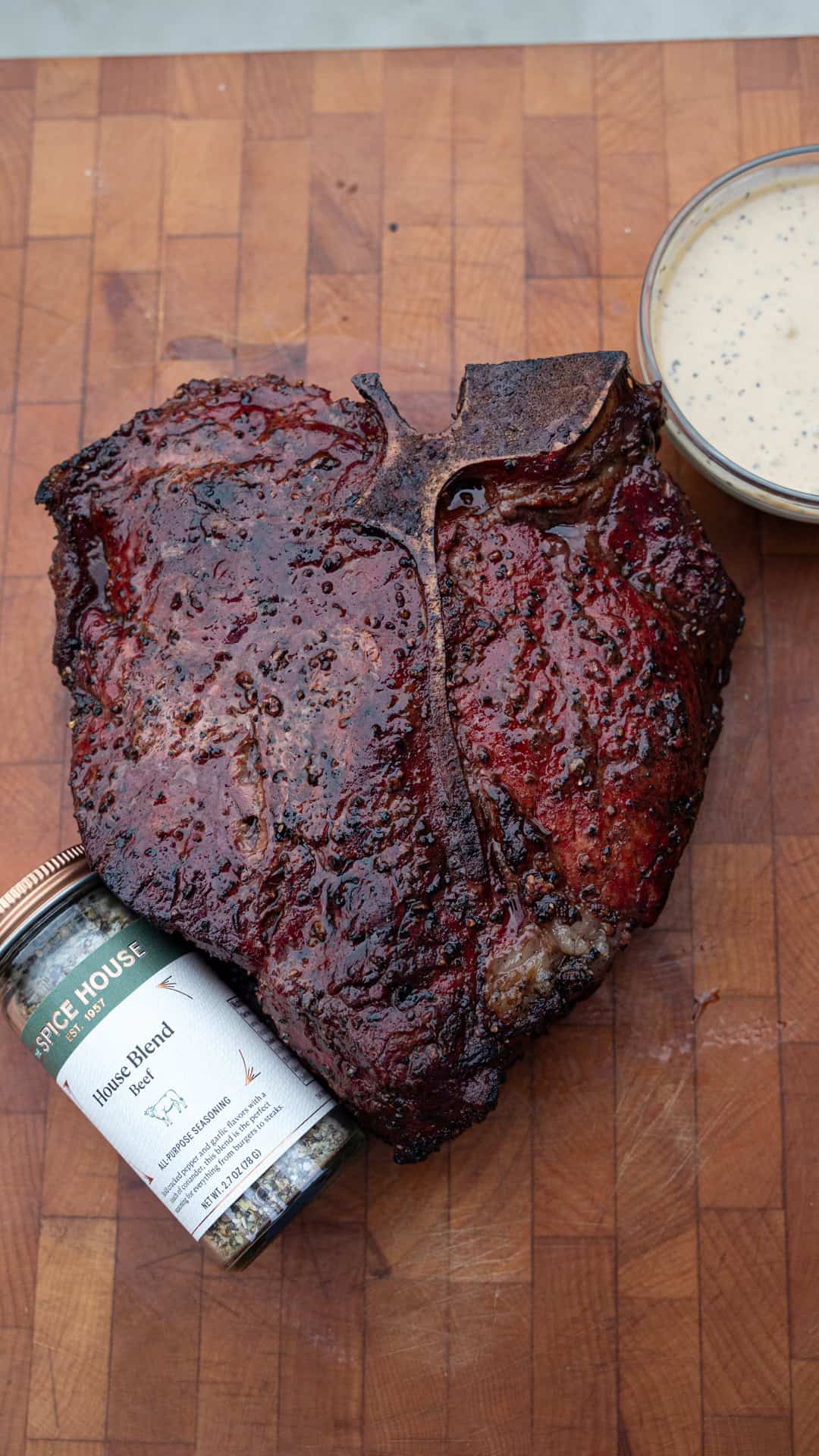
If you’ve been searching for exactly how to grill a porterhouse steak without making the process complicated, this is the method I prefer. A thick-cut porterhouse steak already brings massive flavor to the dish—you just need the right heat, a little patience, and a good sear to bring everything together.
I cook my porterhouse steaks using a modified reverse-sear method, starting at a moderate temperature before finishing over high heat for that dark, caramelized crust. It gives you the best of both worlds: a perfectly even cook from edge to edge with a steakhouse-quality finish on the outside.
In this post, I’ll cover everything you need to know so you can feel comfortable knowing how to grill a porterhouse steak in your own home.
Jump to:
Learn how to grill porterhouse steak using a simple reverse-sear method that delivers a perfectly juicy center and a crispy, steakhouse-quality crust. This guide covers the best grill temperature for porterhouse steak, exact cook times for rare through well-done, and tips for achieving the perfect sear every time.
What Temperature Should You Grill Porterhouse Steak?
The best way to grill the perfect porterhouse steak is to use the reverse-sear method, which utilizes a two-zone setup. This method gives you more control and helps prevent overcooking such a thick, expensive cut of beef.
I start the steak at 300°F over indirect heat until it slowly comes up to temperature, then finish it over direct high heat at 400°F+ for the final crust. I say “400°F+” because, really, you just want your heat source set to a high setting, but you’ve got some flexibility to get a great crust as long as it is over 400 degrees.
How Long Does It Take to Grill a Porterhouse Steak?
The total cook time depends on a few factors, including thickness, grill temperature, and your target doneness, but for a thick-cut porterhouse steak, here’s a good general guide using my modified reverse-sear method:
| Rare | 105°F | 120–125°F | 30–45 minutes |
| Medium Rare | 110–115°F | 125–130°F | 35–50 minutes |
| Medium | 120°F | 135–140°F | 40–55 minutes |
| Well Done | 130°F+ | 150°F+ | 45-60+ minutes |
The biggest key? Cook to temperature, not just by time. A good instant-read thermometer will save you every single time. Here’s the one I like to use for those in the market.
Ingredients
- Porterhouse steak — A porterhouse steak gives you the best of both worlds: a tender filet on one side and a rich, beefy strip steak on the other. Because of its size and marbling, it’s one of the best steaks for grilling low and slow before finishing over high heat.
- Salt and pepper — I keep the seasoning simple here. Kosher salt and freshly cracked black pepper are all you really need to let the beef stand out.
- Unsalted butter — Butter adds richness, helps build color during the sear, and takes the flavor over the top. I like using grass-fed butter for the extra richness and clean flavor.
See recipe card for exact quantities.
Equipment
For this recipe, you will need:
- Grill — I recommend using either a gas grill, charcoal grill, or pellet grill. The reverse-sear method works beautifully on all three.
- Instant-read thermometer
- Tongs
- Prep bowls
- Paper towels
- Sharp knife
- Cutting board
How to Cook a Porterhouse Steak on The Grill
Step 1: Prepping the Steak
First, trim any excess fat from the porterhouse steak to help prevent flare-ups on the grill, then season all sides generously with salt and pepper. Let the steak rest at room temperature for about 15 minutes before cooking so the seasoning has time to adhere and the steak cooks more evenly.
Pro Tip: For maximum flavor, dry-brine the steak by salting it 1–2 hours in advance. Trust me, you’ll thank me later.
Step 2: Setting Up the Grill
Preheat your grill to 300°F and set it up for two-zone cooking with both indirect and direct heat. This reverse-sear method helps the porterhouse cook evenly while developing a better crust later. Place the steak over indirect heat and cook until the internal temperature reaches 110–115°F, which typically takes 45–60 minutes, depending on the steak's thickness.
Pro Tip: Many people swear by starting their steak at 225–250°F. While that method works great, I’ve found that starting at 300°F saves time without affecting the final result.
Step 3: Sear the Steak
Remove the steak from the grill and increase the heat to at least 400°F for the searing stage. Once the grill is hot, place the porterhouse directly over the heat and flip it every 2–3 minutes until the steak reaches your preferred doneness, around 125–130°F for medium-rare.
Pro Tip: During the last few flips, baste the steak with a few teaspoons of grass-fed butter to create a perfectly caramelized crust and boost its flavor.
Step 4: Bringing everything together
After cooking, let the porterhouse steak rest for about 15 minutes so the juices can redistribute throughout the meat. Once rested, slice the steak against the grain for maximum tenderness, then serve it hot with a generous spoonful of melted butter over the top for an extra rich finish.
What to Serve With Porterhouse Steak
A grilled porterhouse steak pairs perfectly with rich, savory sides that can stand up to the bold flavor of the beef. Some of my favorites are:
- Crispy Pommes Anna potatoes
- Three Cheese Grits
- Mac and cheese
- Spicy Creamed Corn
- Bacon-Infused Brussel Sprouts
Storage & Reheating Tips
Storage
Store leftover cooked porterhouse steak in an airtight container in the refrigerator for up to 2–3 days. For the best texture and juiciness, I recommend leaving the steak whole and slicing it only when you're ready to reheat or serve it.
Freezing
Cooked porterhouse steak can be frozen for up to 3 months. I like to wrap individual portions tightly before freezing so they’re easier to thaw and reheat later.
Reheating
When reheating porterhouse steak, low and slow is the way to go. I usually warm slices in a skillet over low heat with a little butter or place the steak in a 250°F oven until just heated through. This helps keep the meat tender without overcooking it. If possible, avoid using the microwave since it tends to soften the crust and dry the steak out quickly.
Recipe
Reverse Seared Porterhouse Steak
Equipment
- gas, pellet, charcoal, or electric grill
- tongs
- instant read thermometer
- prep bowls
- chef's or carving knife
- Oven
Ingredients
- 1-3 lbs. porterhouse steak or your preferred cut, like flat iron steak or ribeyes
- Salt and pepper to taste
- Grass-fed butter as needed
(Optional) Garlic-Parmesan-Herb Compound Butter
- 1 head garlic
- 2 sticks unsalted butter softened
- ½ lemon juiced
- 1 teaspoon olive oil
- ¼ C parmesan cheese
- 1 teaspoon red pepper flakes
- Pinch of salt
- Pinch of black pepper
- ½ bunch parsley chopped
Instructions
Step 1: Prepping the Steak
- Trim the steak: Remove any excess fat to avoid flare-ups on the grill.
- Season generously: Sprinkle salt and pepper liberally on all sides of the steak. Let it rest at room temperature for 15 minutes to allow the seasoning to adhere.
Step 2: Setting Up the Grill
- Preheat your grill to 300°F and set it up for two-zone cooking (indirect and direct heat). This method ensures a juicy steak with a beautifully caramelized crust.
- Place the steak on the grill over indirect heat and cook until the internal temperature reaches 110-115°F (about 45-60 minutes, depending on the thickness of your steak).
Step 3: The Perfect Sear
- Remove the steak from the grill and increase the heat to at least 400°F.
- Place the steak over direct heat, flipping every 2-3 minutes, until the internal temperature reaches your desired doneness (125-130°F for medium-rare).
Step 4: Bring It All Together
- After resting the steak for about 15 minutes, slice it against the grain to ensure maximum tenderness. Plate it up and top generously with melted butter for a rich, satisfying finish.
Optional Step for The Compound Butter
- Preheat an oven to 375 degrees. Meanwhile, slice the top of the garlic off just enough to expose the cloves, leaving the stem side intact. Season with olive oil, then wrap tightly in aluminum foil. Place the garlic in the oven and cook until soft, roughly 1 – 1 ½ hours (place the butter out at room temperature while the garlic is cooking to allow it to soften).
- Add the butter, roasted garlic, parmesan cheese, lemon juice, salt, red pepper, and parsley in a bowl and mix until well combined.
- Place the butter on a piece of plastic wrap and roll tight. Refrigerate until ready to use.
Notes
- For maximum flavor, dry brine the steak by salting it 1-2 hours in advance. Trust me, you’ll thank me later!
- Many people swear by starting their steak at 225-250°F, and while that method works great, I’ve found that starting at 300°F saves time without compromising the final result.
- During the last few flips, baste the steak with a few teaspoons of grass-fed butter to create a perfectly caramelized crust and enhance its flavor.
Leave a Reply