
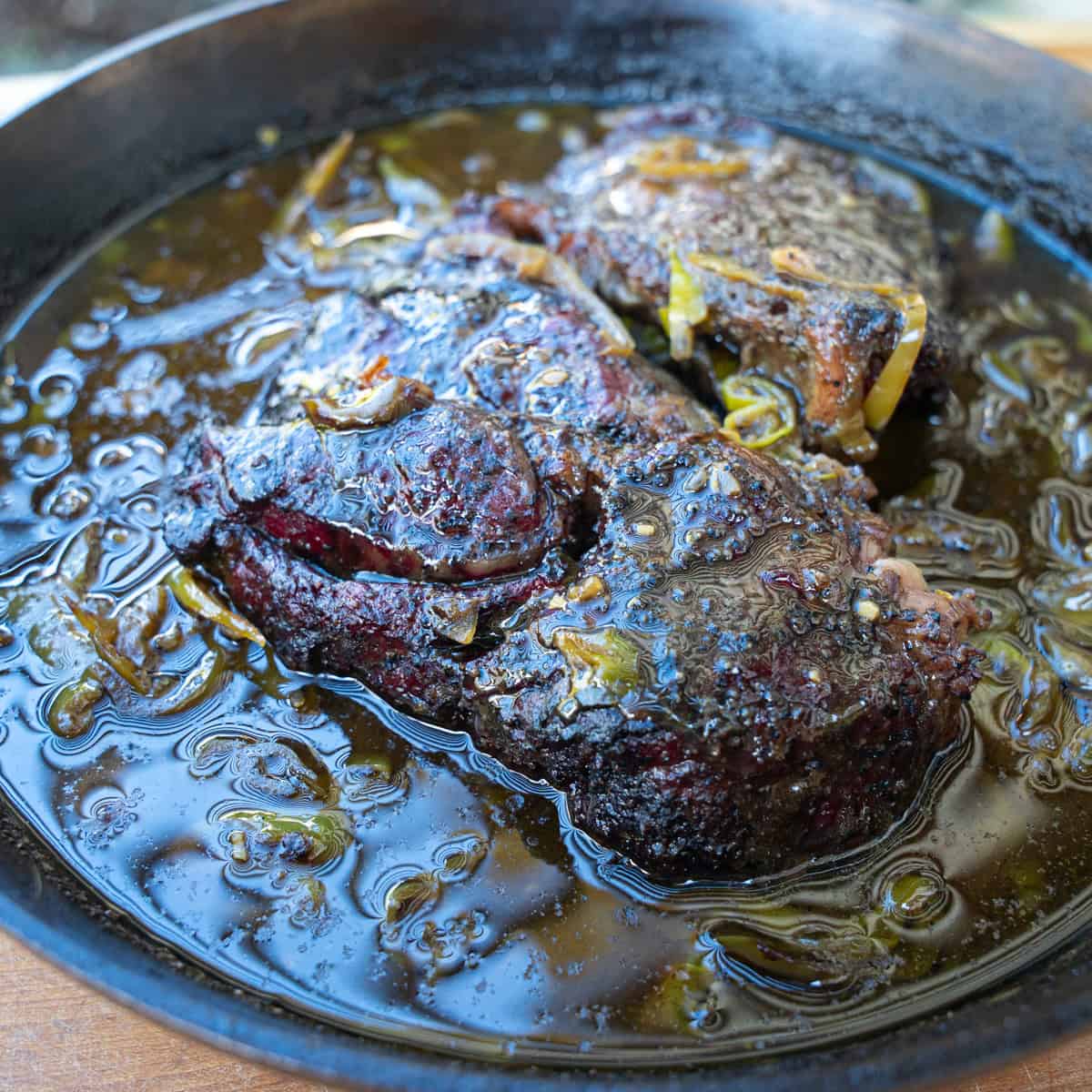
The first time I had Mississippi pot roast, I was in college. Our fraternity house mom made it one afternoon, and I remember thinking it was absolutely unreal. Funny enough, I’d grown up in Alabama and had never even heard of it before.
What I noticed right away was how simple it was—very few ingredients, but a ton of unique flavors. My mom made a classic pot roast recipe when I was growing up, but this was something completely different. Rich, tangy, buttery, a little spicy from the pepperoncini peppers—just a really different flavor from any roast I’d had before.
These days, smoked Mississippi pot roast is firmly in the cold-weather comfort food rotation at our house. It’s a big cut of meat that easily feeds a family of 4–6 (if not more), fills the house—and yard—with delicious smells, and makes some of the best leftover sandwiches you’ll ever eat.
In this post, I’ll walk you through what a Mississippi pot roast is, what goes into it, and exactly how to make my smoked version on the grill. I’ll also give you a few pointers on how to cook it indoors if you prefer that route, while still getting that unique flavor and tender, fall-apart beef.
Jump to:
- What Is Mississippi Pot Roast?
- What Goes in a Smoked Mississippi Pot Roast?
- Tips for the Best Smoked Mississippi Pot Roast
- How to Make Mississippi Pot Roast on a Smoker
- Can You Make a Mississippi Pot Roast in the Oven, Slow Cooker, or Instant Pot?
- Substitutions and Adjustments
- Equipment You’ll Need
- Storage Best Practices
- Recipe
What Is Mississippi Pot Roast?
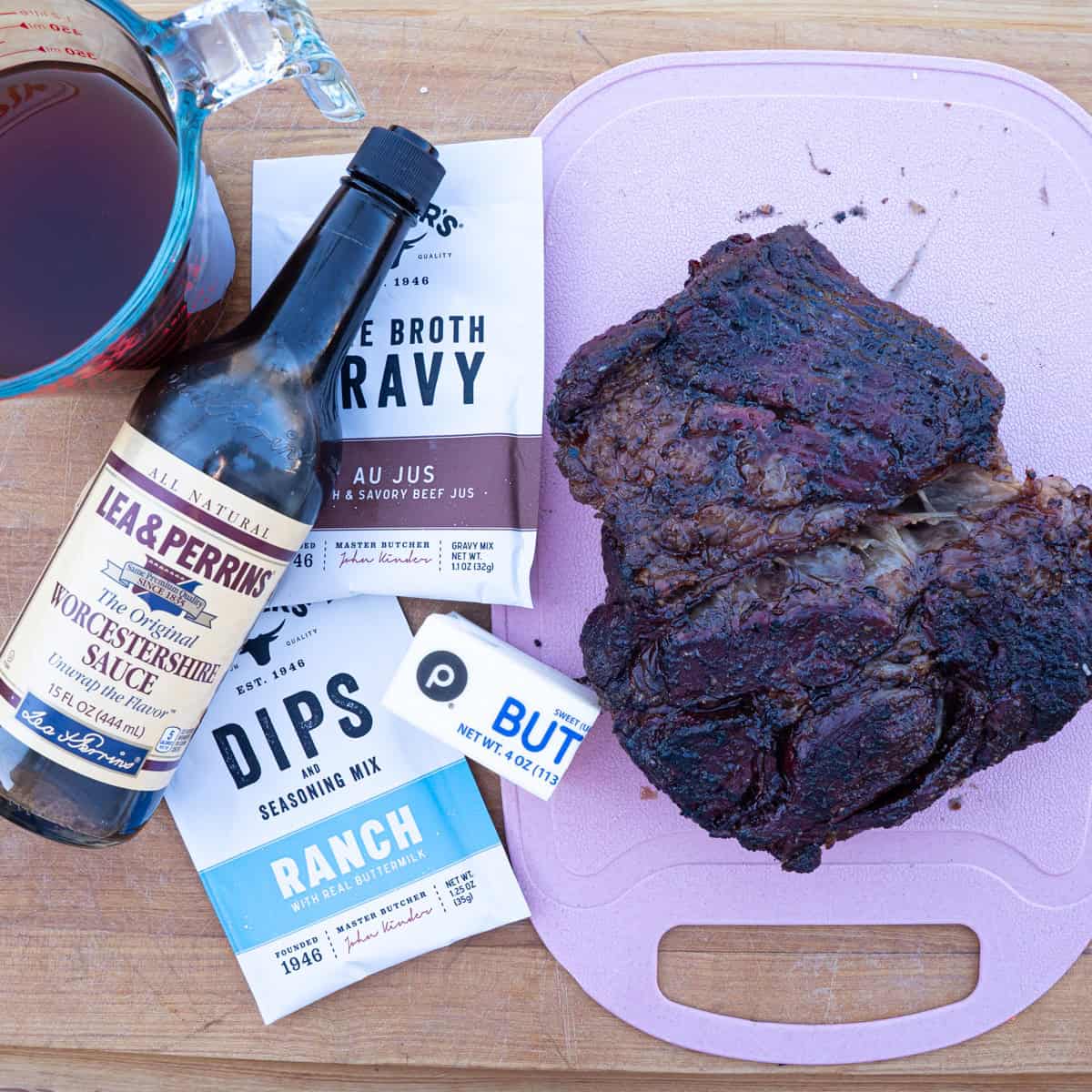
A classic Mississippi pot roast is usually built in a slow cooker or Dutch oven with just a few very basic supermarket staples that tend to be widely available, at least here in the Southeast:
- Chuck roast
- A packet of ranch seasoning
- A packet of au jus or brown gravy mix
- A stick of butter
- A container of pepperoncini peppers
I build on this by adding a few other ingredients I’ll go into in just a minute, plus I cook mine on the smoker for some additional flavor, usually from a combination of oak, hickory, and/or pecan wood. Hickory wood is my favorite, but it just depends on what I can get locally.
Why Is It Called Mississippi Pot Roast?
Like a lot of recipes like this, it’s hard to pin down precisely who made the Mississippi pot roast first, but credit is given to Robin Chapman, a home cook in Mississippi who helped spread the popularity of this dinner meal in the early 200’s. The recipe was eventually shared through church cookbooks and is now commonly found on just about any social media platform you can think of. The name stuck because it’s simple, Southern, and really freaking tasty.
What Goes in a Smoked Mississippi Pot Roast?
I covered the basics in the last section, but there are a few additions that I would like to make that I believe make it even better:
My Core Ingredients
- Chuck roast (2–3 lbs) is the ideal beef cut for any good pot roast recipe. That’s mainly because it has significantly more intramuscular fat (or marbling) than a leaner cut like bottom round or rump roast. This makes the chuck roast much more tender, as the fat and connective tissue melt down and shred beautifully.
- Salt & pepper (1:1 mix) – Over the years, I’ve learned that if I’m putting meat on the smoker, especially beef, an equal parts mix of coarse salt and pepper is my favorite way to go because it seasons the meat well without dominating it.
- Ranch seasoning packet (about ¾ packet) – Brings that signature tangy, herby flavor without masking the smoke. If you want a little less ranch flavor, using half a packet is fine, too.
- Au jus gravy mix packet (1 packet) – This helps enhance the beef flavor, plus helps to thicken up the consistency of the beef stock. Trust me, it’s excellent for dipping sandwiches in.
- Unsalted Butter (½ stick)
- Pepperoncini peppers (1 container, plus some brine) – This is one of the truly unique ingredients in a Mississippi pot roast. The peppers add gentle heat and acidity that cut through the richness. The additional brine, if you add it as I do in my recipe, increases the tang and heat. These are different varieties, but I tend to go with the medium heat version.
- Beef stock (about 1½ cups or more as needed) – Helps form the braising liquid; you want the liquid to come about halfway up the side of the chuck roast.
- Worcestershire sauce (1 tablespoon) – I haven’t found many recipes yet that Worcestershire sauce doesn’t improve. In this recipe, it further adds umami and depth to the gravy.
A Note on Salt
Classic Mississippi pot roast is salty by design, thanks to the ranch, au jus, and pepperoncini brine. If you're salt-sensitive or serving people who are, there are several adjustments you can make. You can reduce the ranch and au jus packets to ½–¾ of their original amounts and/or add an extra ½–1 cup of low-sodium beef stock or water to dilute the saltiness. Just like any other recipe, though, always taste the gravy before serving, and adjust the seasoning as needed to suit your preferences.
Tips for the Best Smoked Mississippi Pot Roast
Before we jump into the recipe itself, here are a few quick tips that I’ve found over the years that help get the most out of this cook:
- When selecting a chuck roast, look for a cut with the most thin white webs of marbling, rather than thick seams. There will be several options at the store, but they are not all created equal. More marbling makes certain that the roast will be juicier and more tender, resulting in shredded beef with a richer pot roast flavor.
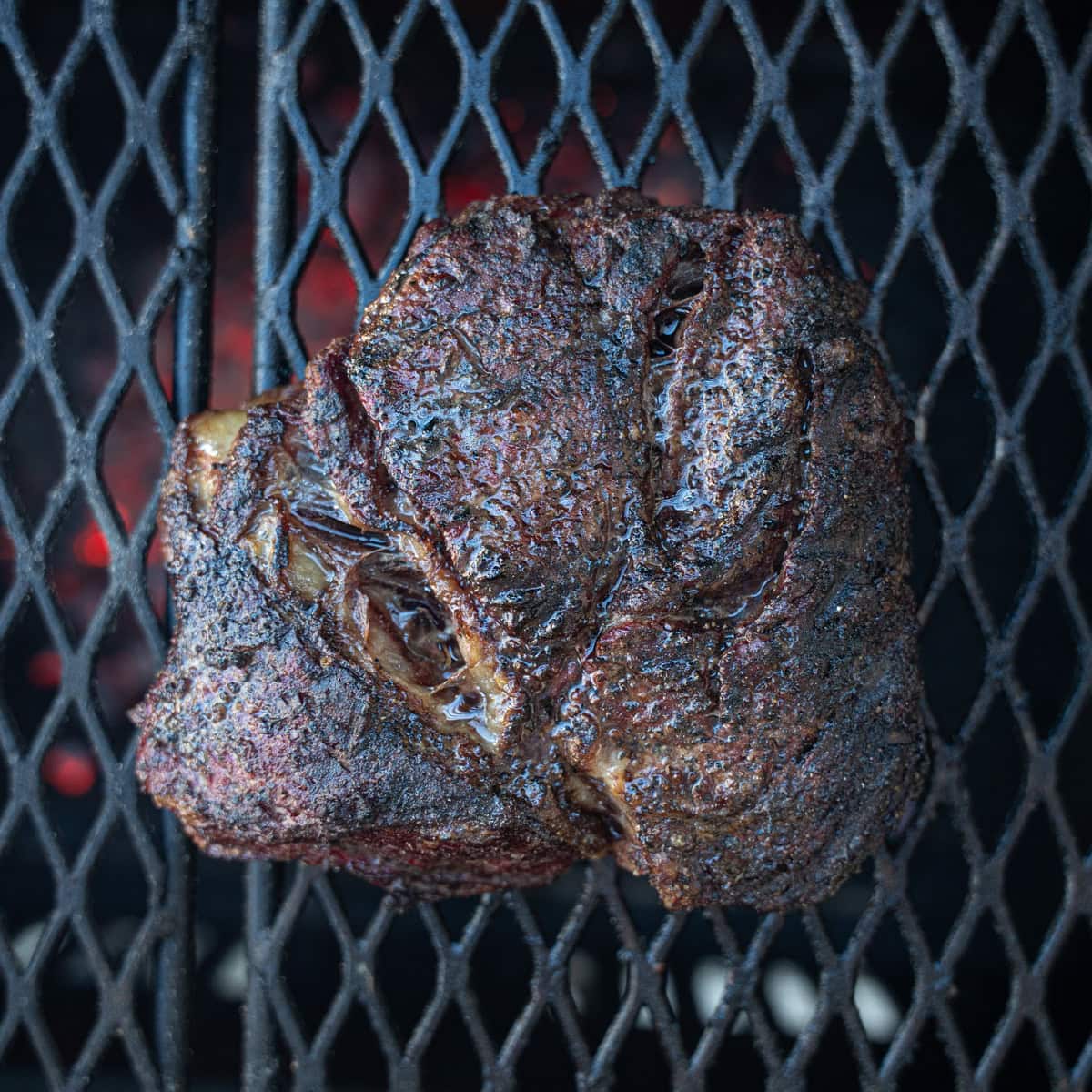
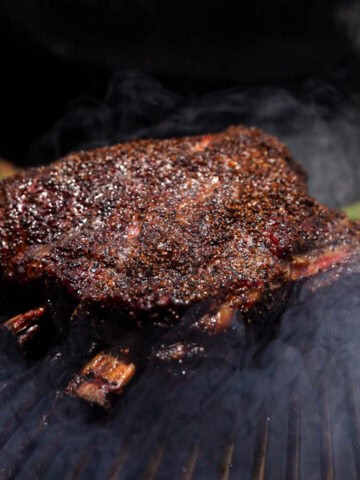
- Let the bark develop. This is like any other cook on the smoker — you don’t want to pull the meat before the bark has set. That’s one of the best parts! I know it’s tempting to throw all the ingredients in a pot from the beginning, but you don’t get the full effect you do by letting the meat smoke first. Let the chuck roast take on that smoky flavor for a while and build bark, THEN throw it into the braising liquid. You’ll know it’s ready to go in the braise when it turns a mahogany color and no rub comes off when you run a finger over the meat.
- Go by tenderness, not just temp. People always say to smoke beef until it reaches 205°F, but use that as a guide. Don't pull it until a probe slides in with almost no resistance. Imagine the feel of butter-soft resistance, where the probe slips in effortlessly; that’s what you’re going for. Christie from Girls Can Grill does a great job breaking down exactly what probe tender means if you want to explore a deeper dive.
How to Make Mississippi Pot Roast on a Smoker
This recipe is written for any smoker or pellet grill, but the method is flexible enough to adapt to almost any setup.
Step One: Preheat the Smoker
Set your smoker to 275°F-300°F. This is my favorite temperature range for smoking beef because it helps manage total cook time while still allowing the chuck roast to absorb smoke, develop bark, and yield a tender end product.
Step Two: Season the Chuck Roast
While the grill preheats, pat your chuck roast dry, then season all sides liberally with the 1:1 salt-and-pepper mix. It’s a thick cut of meat, so you want good coverage here. You can even do this a few hours in advance if you want — doing so will give the salt more time to absorb into the meat, adding flavor from the inside while also tenderizing it.
Step Three: Smoke to Build Bark
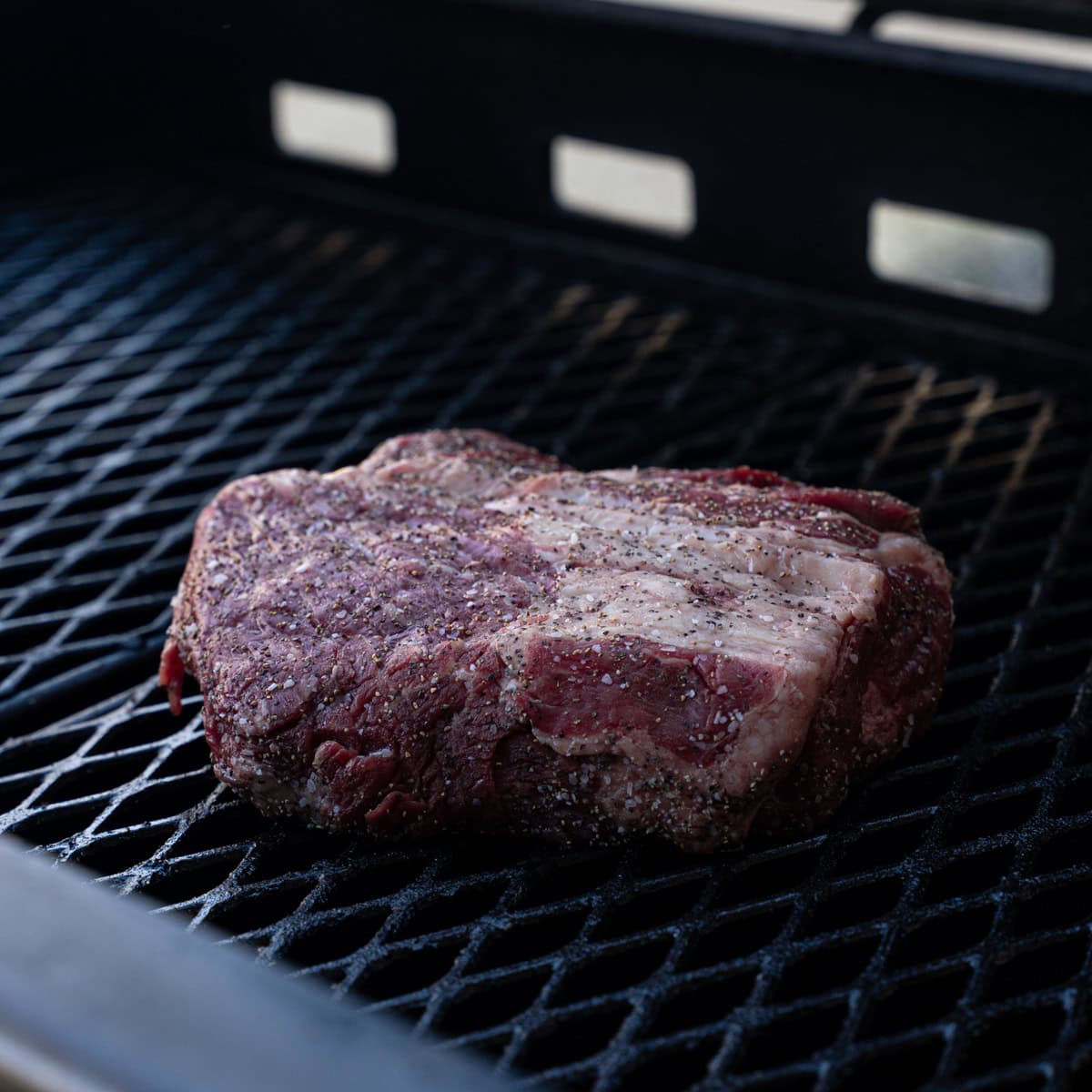
Place the seasoned chuck directly on the cooking grates. Smoke until the internal temperature hits around 165°F, or until you’ve developed a nice bark on the outside.
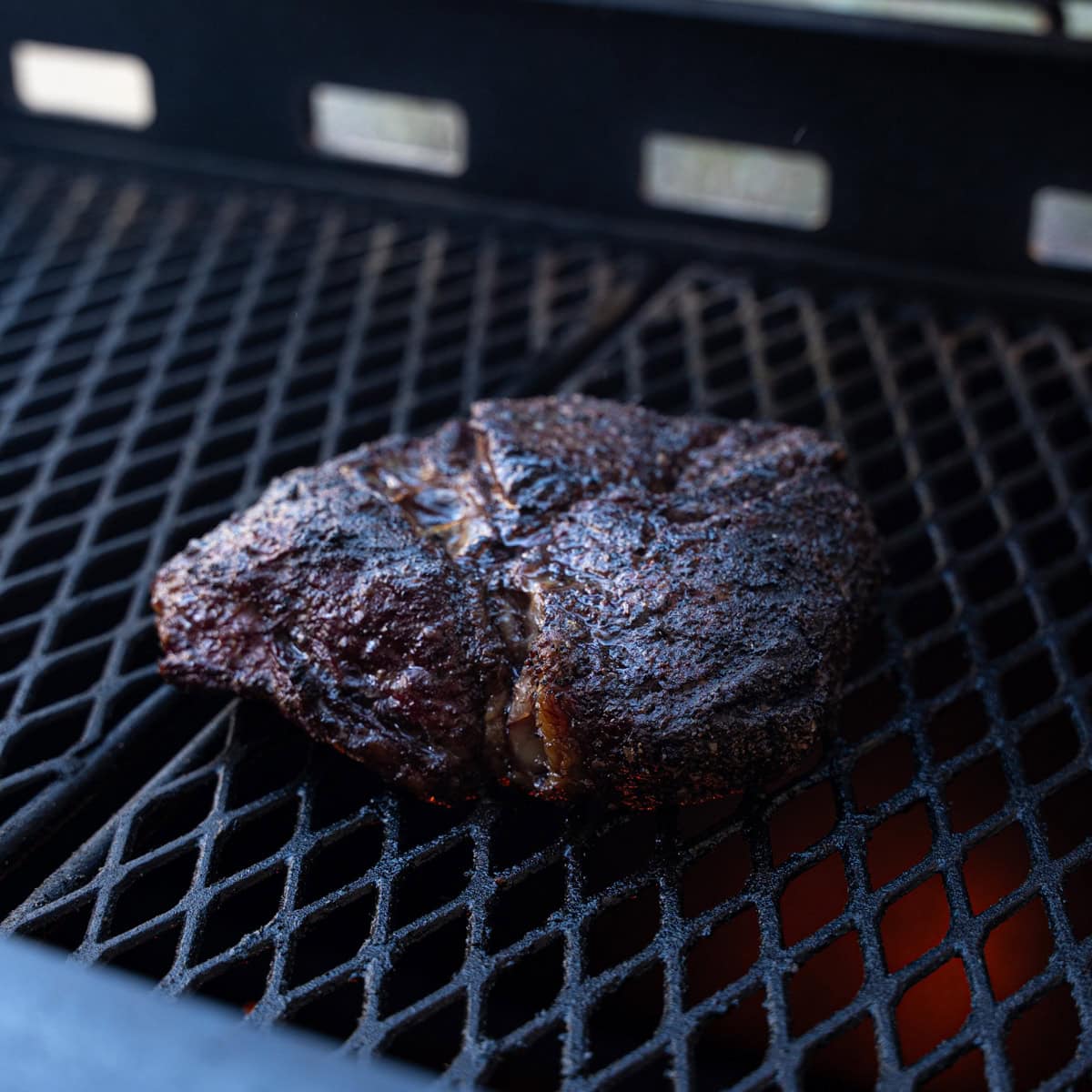
Depending on the size of your roast and your cooker, this can take roughly 2–3 hours, but don't get too hung up on time. Focus on color and bark as I outlined in the last section. Once it looks good and hits that mid-range internal temp, you're ready for the braise.
Step Four: Build the Mississippi Pot Roast Braise
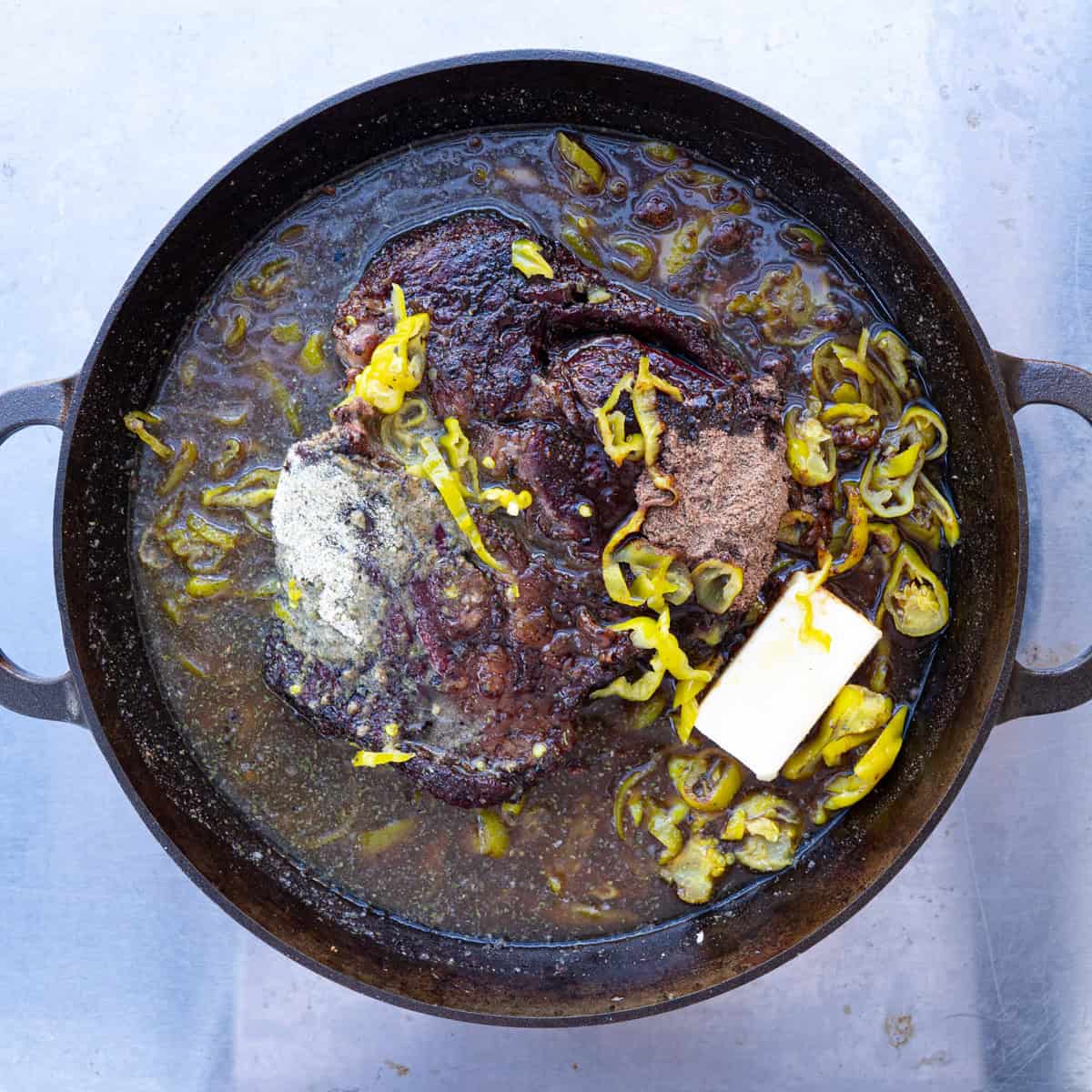
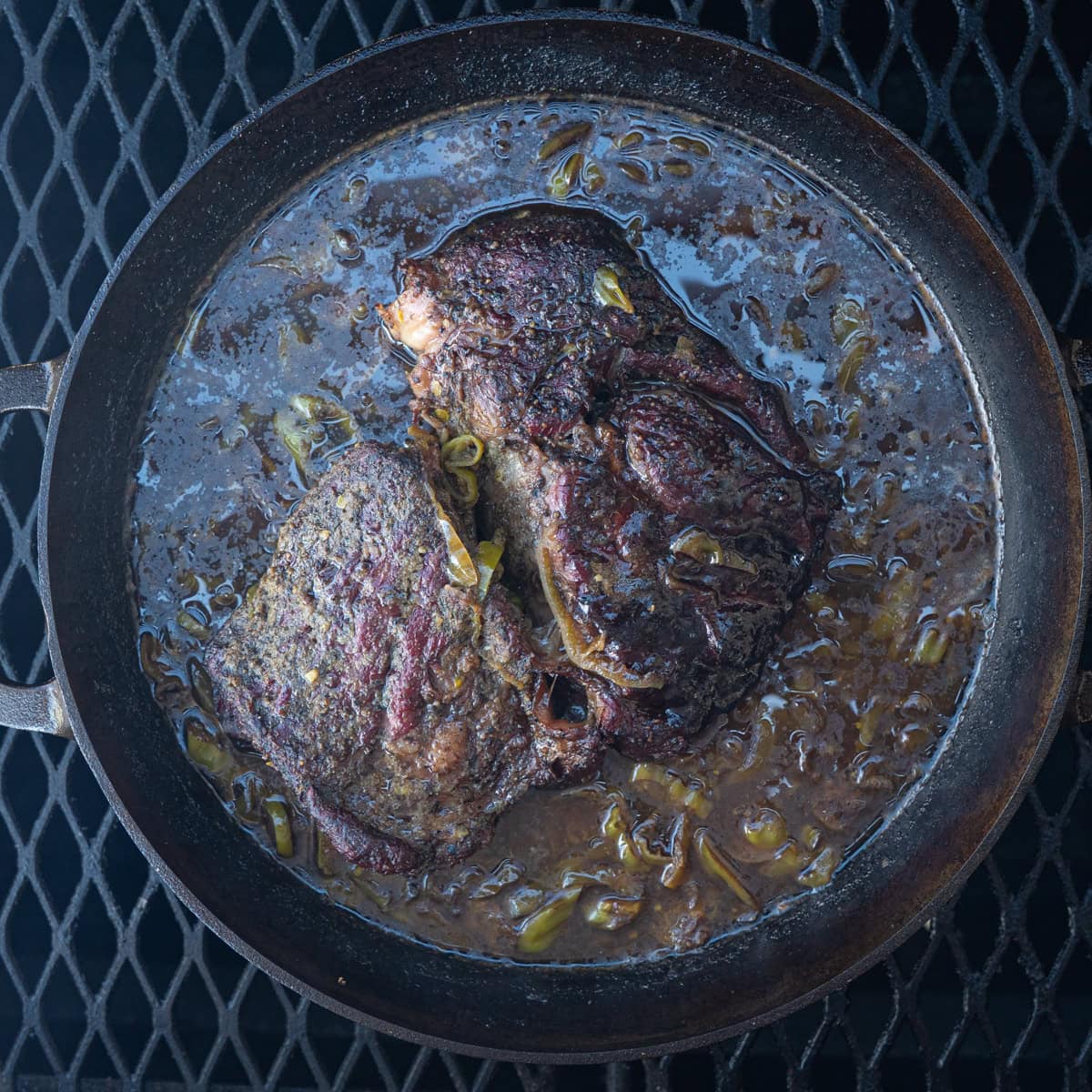
Transfer the smoked chuck roast to a pan or Dutch oven, then add the packet of ranch seasoning, the packet of au jus gravy mix, butter, a container of pepperoncini peppers, beef stock, and Worcestershire sauce.
Pour in enough beef stock so the liquid comes about halfway up the roast—you want the meat partially submerged but not fully covered. Cover the pan tightly with foil (or a lid) and place it back on the smoker.
Want veggies?
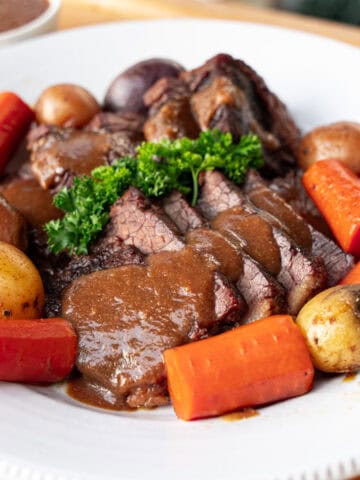
I don’t add them to mine, but if you wanted to add traditional vegetables like baby potatoes, carrot chunks, and onion wedges, this would be the perfect time to do so. Just make sure you cut the vegetables thick, aiming for roughly 1 to 1.5-inch chunks to ensure even cooking and prevent them from breaking down too quickly. The vegetables will soak up the Mississippi braising liquid as they cook.
Step Five: How Long Do You Cook a Mississippi Pot Roast?
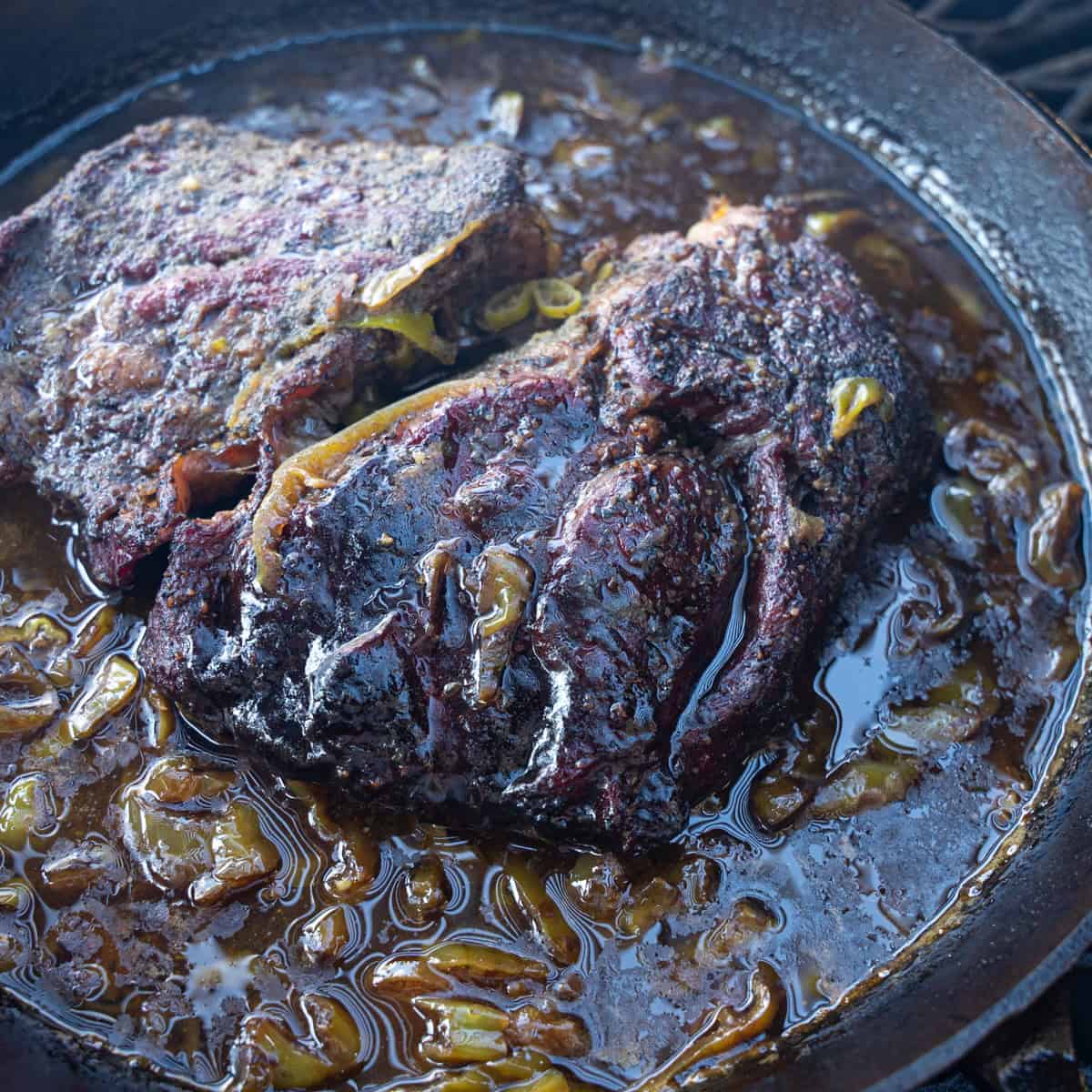
Continue cooking at 275°F until the beef is probe tender as I previously outlined. Plan on a total cook time of about 6 hours for a 2–3 lb chuck roast, with roughly half the time spent building bark and the other half spent braising.
Step Six: Rest, Shred, and Serve
Once the roast is ready to come off the smoker, allow it to rest for about 30 minutes. This resting period is important because it allows the liquids to be reabsorbed into the meat, ensuring maximum flavor and preventing the roast from making your buns too greasy when serving. It’ll also be easier to handle. Finally, shred up the beef, and you’ll be good to go!
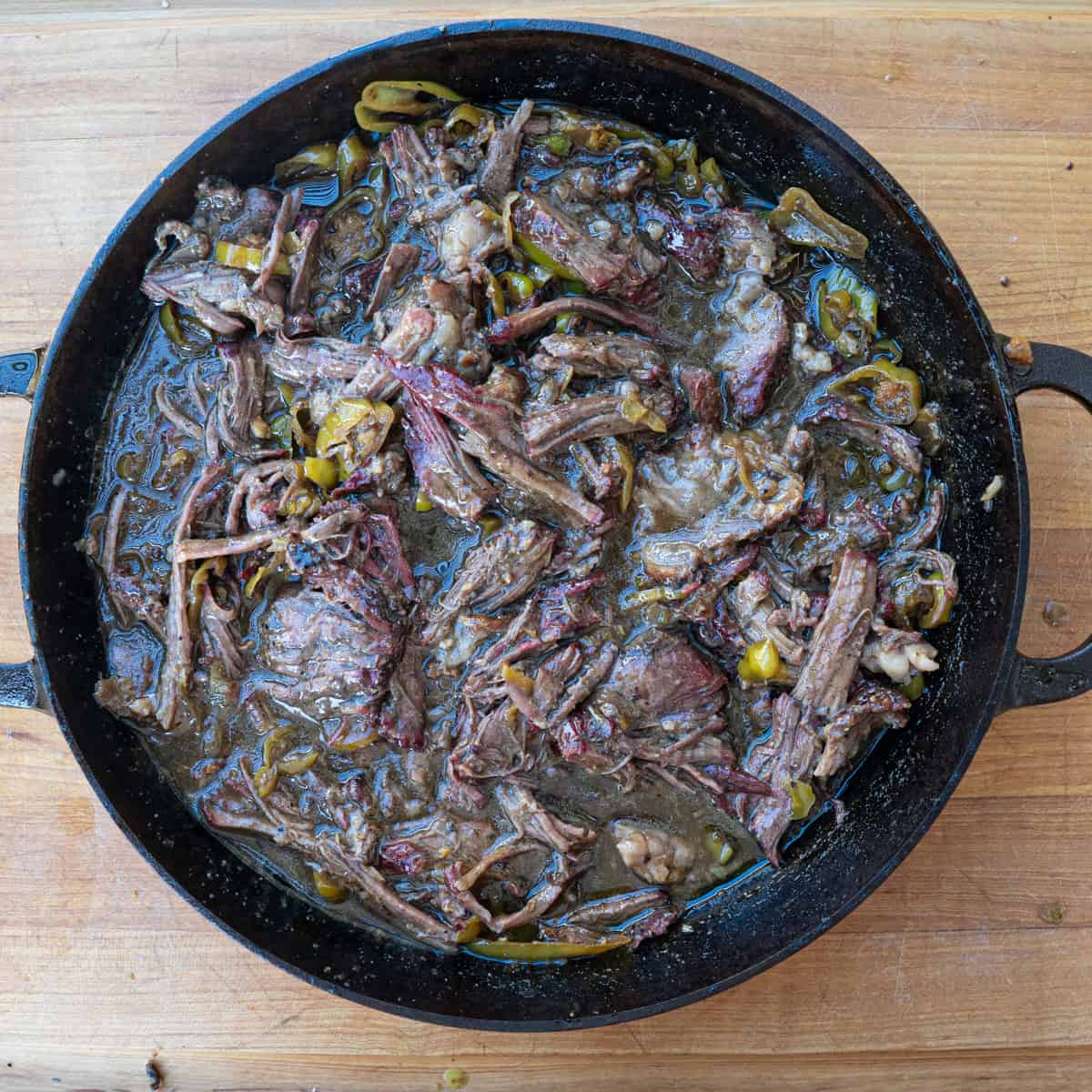
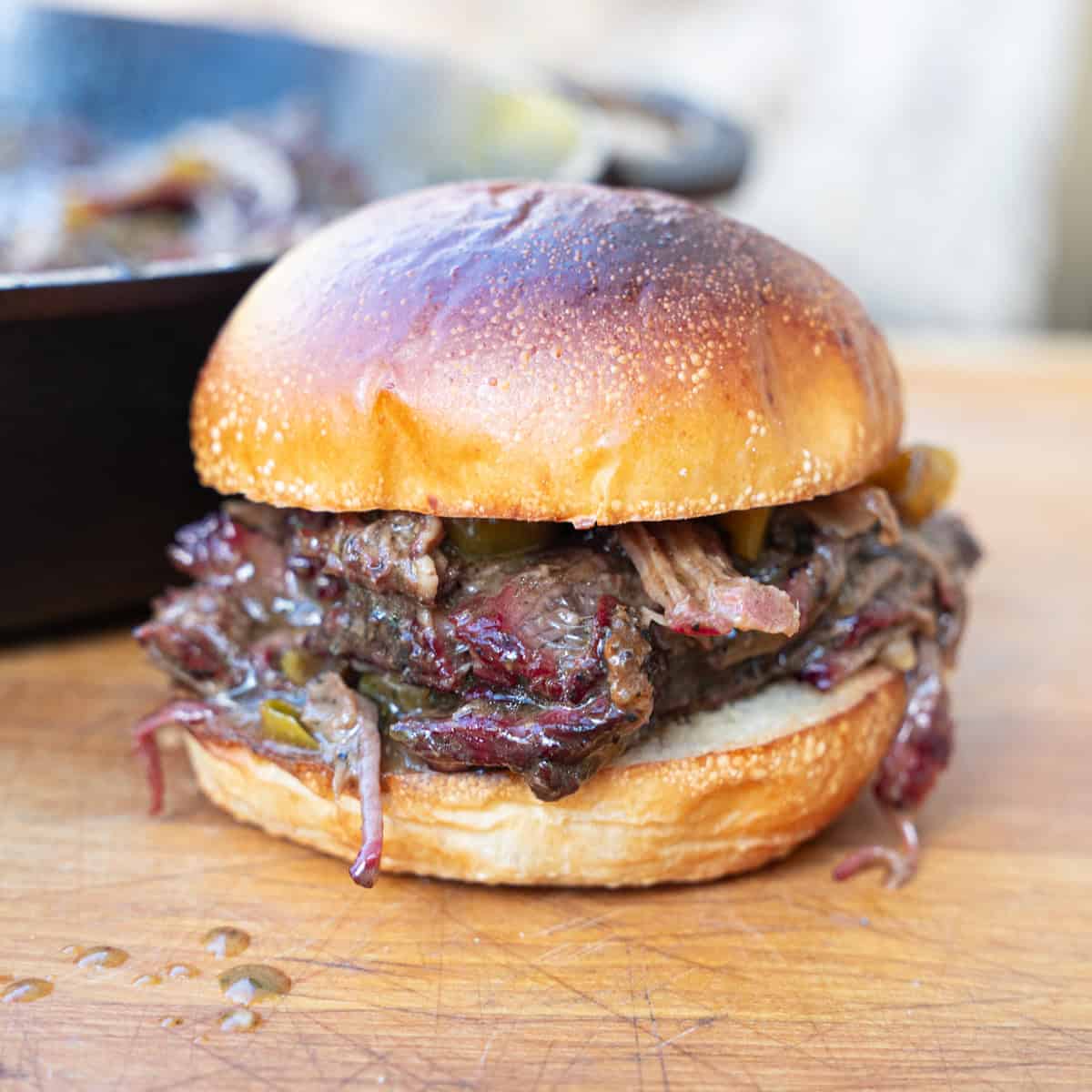
If you’re making sandwiches with the prepared beef, I recommend toasting your buns, piling on the shredded smoked Mississippi pot roast, adding some peppers on top, and spooning a little extra gravy over the meat. I like to serve with a side of the cooking liquid as a dipping sauce—kind of like a poor man’s French dip.
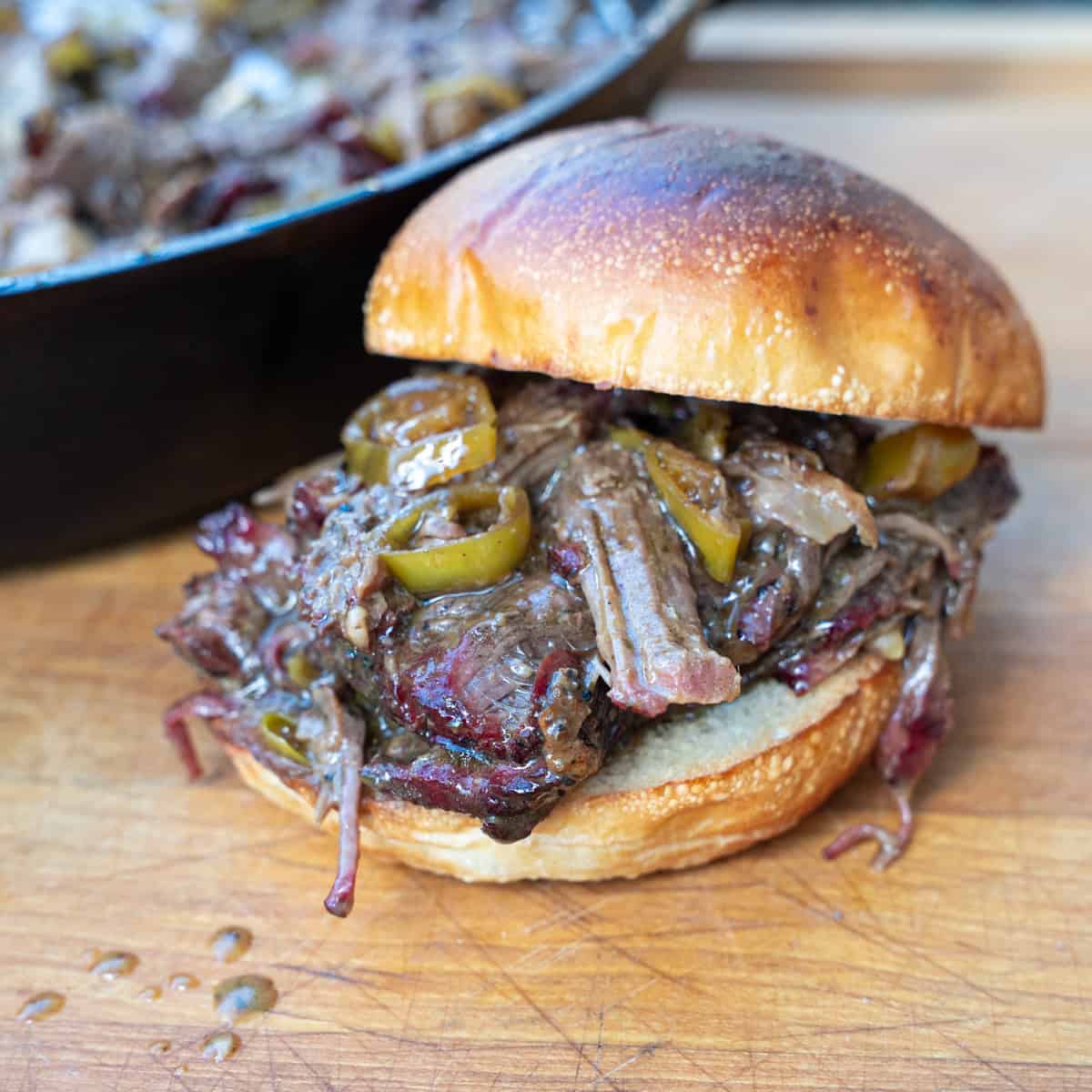
Note
If you want to dial back the flavor on a sandwich, I like to mix about 1 tablespoon of mayonnaise + 1 tablespoon of prepared horseradish and slather that on the bottom of the bun. It does a fantastic job of mellowing out the flavor.
Can You Make a Mississippi Pot Roast in the Oven, Slow Cooker, or Instant Pot?
You can absolutely make Mississippi pot roast without a smoker, and here are two easy ways that I would go about making it if I were going to cook this recipe indoors:
Oven Method
- Preheat oven to 275°F.
- Season and, if you like, sear the chuck roast in a Dutch oven on the stovetop.
- Once the chuck roast is nicely browned, add the same ingredients listed in the original recipe to the pan with the meat.
- Cover with a lid and cook for about 3–4 hours, or until the roast is fall-apart tender.
Slow Cooker Method
- Add all the same ingredients to the crockpot, cook on LOW for 8–9 hours or HIGH for 4–5 hours, until the beef shreds easily.
Instant Pot Method
- Sear the roast on the Sauté setting, then add the remaining ingredients and pressure-cook for 60–80 minutes, or until the beef is tender.
You won’t get the same bark with these methods that you do from a smoker, but you will still get plenty of flavor and a very tender end product. Basically, these are good “rainy day” options.
Substitutions and Adjustments
If you need to tweak this roast recipe, here are some easy options:
- Meat: Chuck roast is the typical choice, but you can also experiment with several other roast cuts. However, my other favorite meat to use for this meal is beef cheeks. They take a little prep time, but they are even more tender than chuck roast, and a great option if you can find some at the store.
- Gravy mix: Swap au jus for brown gravy mix or onion soup mix; you know it’ll slightly change the flavor, but they’re both great alternatives.
- Peppers: Use fewer pepperoncini for a milder flavor, or, if you prefer a spicier dish, grab a “hot” container of pepperoncini peppers.
Equipment You’ll Need
- Smoker, pellet grill, oven, or slow cooker
- Foil pan, large skillet, or Dutch oven
- Instant-read thermometer
- Tongs
- Sharp Knife
Storage Best Practices
Leftovers
If you have leftovers, store the Mississippi pot roast in an airtight container in the fridge for 3-5 days. If you wish to keep it for longer and freeze it, do so in portions, adding a little of the cooking liquid to keep the meat moist. I like to vacuum-seal meat in the freezer because I’ve found it keeps the longest, but at a minimum, make sure you’ve got some freezer-safe bags to prevent freezer burn.
Leftovers are perfect for sandwiches, baked potatoes, melts, tacos, or just about anything else you could think of.
Reheating
You can reheat the pot roast a few different ways: warm it gently on the stovetop with a splash of stock, reheat it covered in a 300°F oven until hot, or use the microwave in short bursts, stirring between rounds to heat evenly.
Make-Ahead Tip
You can smoke and braise the roast a day ahead if you want to get a jump on things. Leave the chuck roast whole in the braising liquid, let it cool, then cover and refrigerate overnight. When you’re ready to serve, reheat it gently (covered) in the oven or on the grill until it’s hot all the way through, then shred the meat right in the pan. This works especially well for parties—transport the roast in its pan (or pot), reheat if needed, then you can shred and serve on-site.
Recipe
Smoked Mississippi Pot Roast
Equipment
- Smoker, pellet grill, oven, or slow cooker
- knife
- Foil pan, large skillet, or Dutch oven
- instant read thermometer
- tongs
Ingredients
- 2-3 lbs. chuck roast
- 1:1 ratio salt & pepper mix as needed
- ¾ packet ranch seasoning mix
- 1 packet au jus gravy mix
- ½ stick butter unsalted
- 1 (16 oz.) container pepperoncini peppers medium heat
- 1 ½ C beef stock
- 1 T Worcestershire sauce
- Buns as needed
Instructions
- Preheat smoker to 275 degrees. Meanwhile, take out the chuck roast and season with the salt and pepper mix. Add the meat to the smoker.
- Allow the chuck roast to cook until the internal temperature registers ~165 degrees, or when the bark begins to form. At this point, place the meat in a pan with the ranch mix plus the next 5 ingredients, making sure the beef broth covers the meat halfway. Wrap the pan in foil and place back on the grill.
- Allow the beef mixture to braise in the smoker until probe tender, ~205 degrees. Once this occurs, remove the pan from the smoker and take off the foil, allowing the mixture to cool. After about 30 minutes, shred the beef.
- Place the shredded beef and pepperoncini peppers onto a toasted bun and serve immediately. Enjoy!
- Note: Make sure to save some of the liquid – it makes for a great dipping sauce!
Notes
- Veggie add-ins: For a full pot roast-style dinner, add baby potatoes, carrot chunks, and onion wedges around the roast when you start the braise. They’ll soak up the Mississippi jus and cook right alongside the beef.
- Make-ahead: You can smoke and braise the roast a day in advance. Leave it whole in the braising liquid, let it cool, cover, and refrigerate. Reheat gently (covered) in the oven or on the grill until hot throughout, then shred and serve. Great for parties and game days.
- Serving ideas: Serve on toasted buns with pepperoncini and plenty of jus for dipping, or spoon the shredded beef and gravy over mashed potatoes, rice, or cauliflower mash.
Leave a Reply