
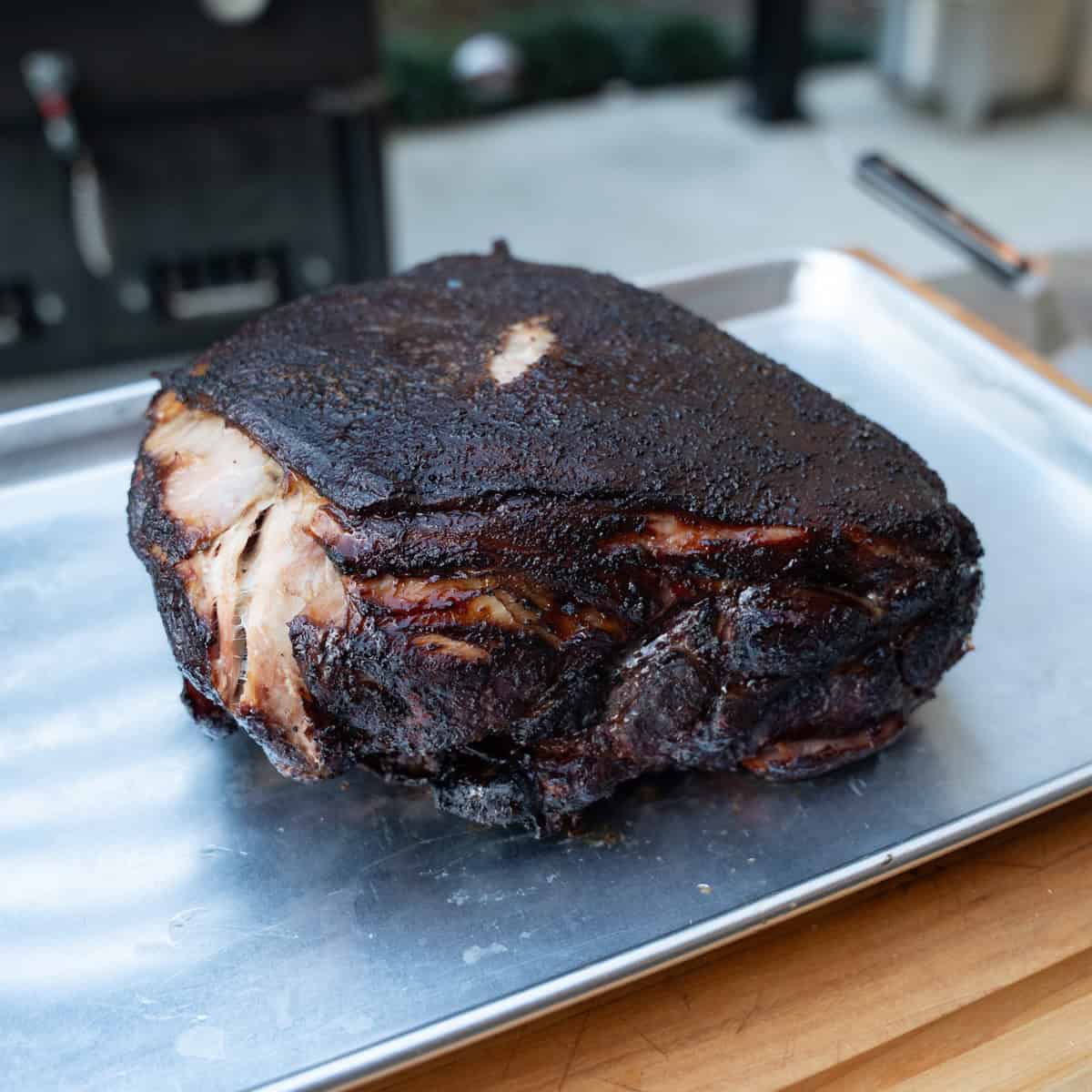
Cooking a smoked pork butt shouldn’t feel like an all-day guessing game. And more times than not, that’s exactly what I see it turn into because people try to smoke a whole pork butt at 225°F instead of increasing the cooking temperature. Cooking at that temperature gives you excellent results with pulled pork — no question — but it also takes a lot longer to smoke, and makes it nearly impossible to have dinner on the table on time if that’s your goal.
That’s why I prefer to smoke pulled pork at 275°F; it still gives you a perfectly formed bark and plenty of smoke flavor, and tender pulled pork that practically melts when you shred it, all without stretching the cook deep into the night.
If I’m not smoking a pulled pork overnight, I highly recommend smoking it at 275°F, and I’m going to walk you through exactly how to do that in this guide.
Jump to:
For smoked pulled pork butt at 275°F, smoke a pork shoulder (i.e., Boston butt) until the internal temperature reaches 203–212°F and the meat probes like soft butter. Most pork butt cooks at that temperature for 8-10 hours, depending on size. Pull when tender, not by time alone, and rest before shredding for some incredibly juicy pulled pork.
Why Smoke Pork Butt at 275°F?
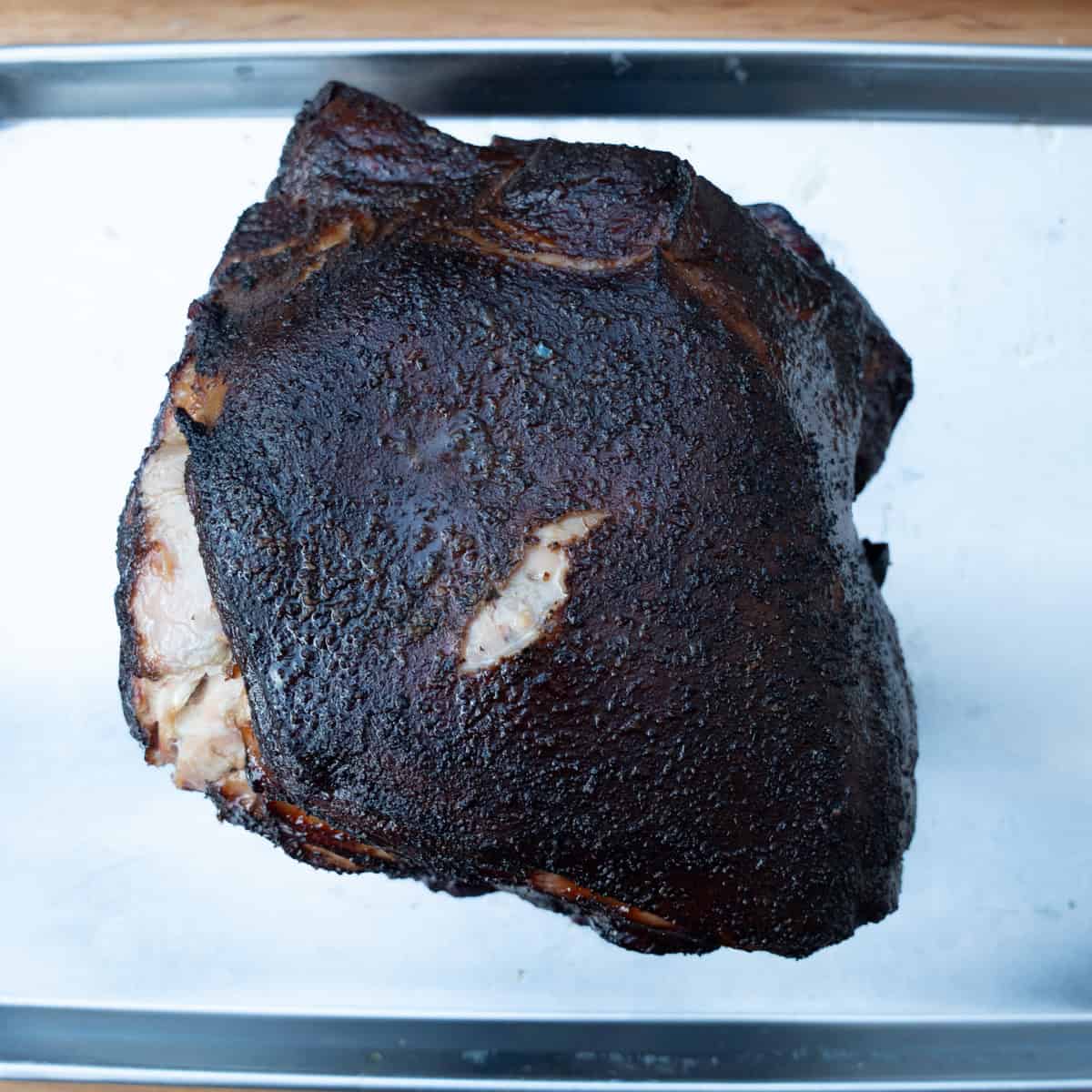
A pork butt recipe cooked at 275°F sits in the sweet spot between traditional low-and-slow barbecue and practical backyard cooking. A lot of smoked pork recipes lean heavily on 225°F, and while that temperature absolutely works, it often turns into an all-day commitment that, honestly, I just don’t have time for most days. Over the years, I’ve also found that I consistently get better overall results cooking pork butt at 275°F.
That slightly higher cooking temperature helps render fat and break down collagen more efficiently, while still giving the meat plenty of time to absorb smoke flavor. On a well-marbled cut like pork shoulder, that’s exactly what you want. Cooking at 275°F also helps develop a darker bark more quickly and pushes the pork through the stall faster, making it especially useful for weekend cooks or when guests are coming over. You still end up with rich smoke flavor and tender pulled pork, but you’re not stuck staring at the smoker at midnight waiting for the pork butt to finish.
Honestly, I prefer smoking almost all meats indirectly around 275°F for these reasons, especially pork shoulder.
How Long to Smoke Pulled Pork Shoulder at 275°F?
This is a question that depends on. how big the pork shoulder is, how fatty it is, and if it is bone-in or boneless. That said, I tend to buy 8-10 lbs. bone-in pork butts more often than not, and they tend to take 8-10 h to cook at 275°F. Now keep in mind if you’re using a smaller pork butt in the 4-6 lbs. range, it’ll cook faster, most likely 4-6 hours. My biggest piece of advice, though, is to always plan for extra time. That way, you can rest the pork butt longer if you need it, but you won’t be running behind.
Ingredients
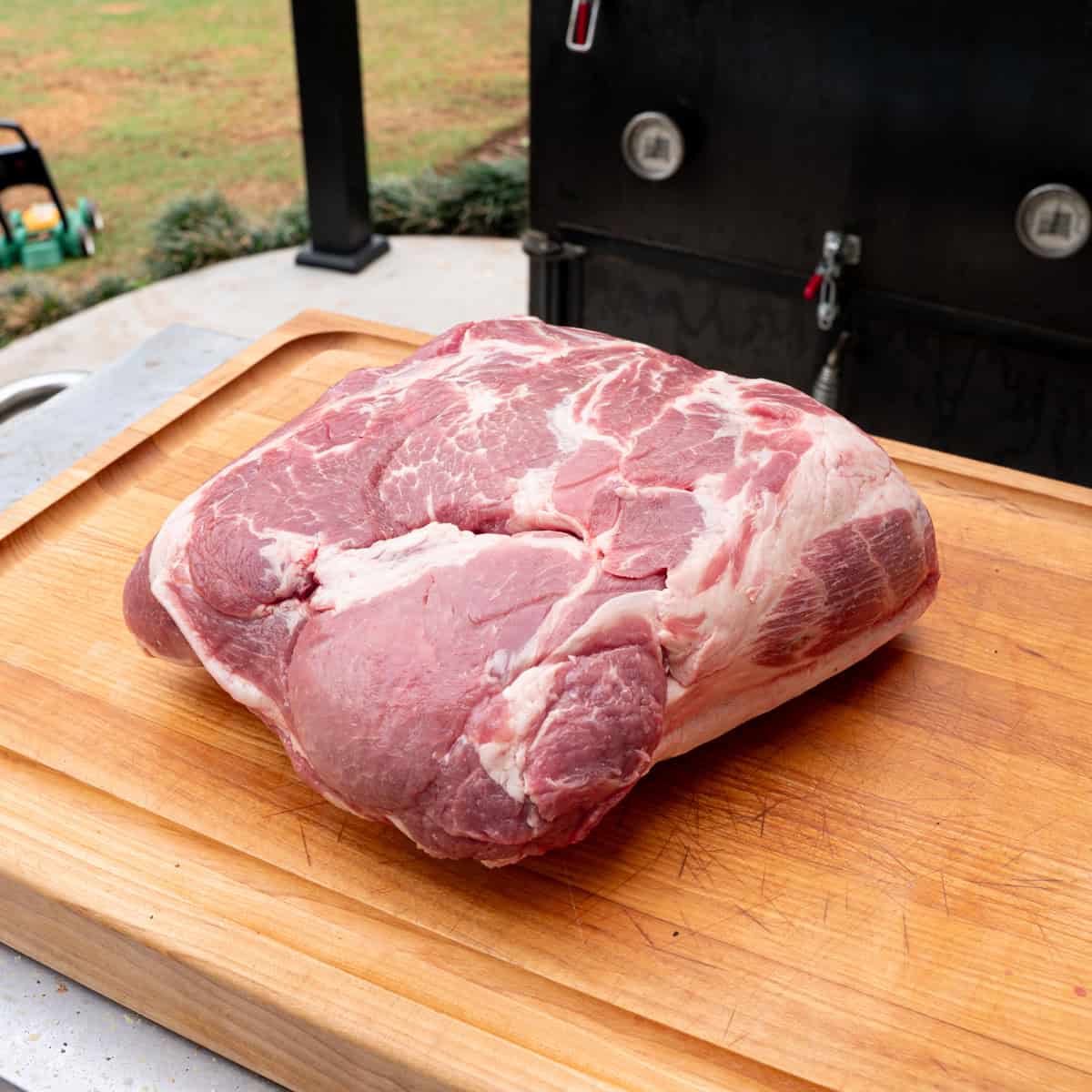
- 8–10 pound bone-in pork butt
- Worcestershire sauce — My preferred binder
- BBQ rub of choice — I go sweeter for pulled pork. My go-to is "The BBQ Rub" from Malcolm Reed's seasoning line.
- ½ stick butter, sliced thin
- Apple juice — just a little bit to help the pork butt braise faster in the wrap. You can sub this out for any liquid you like (or have on hand).
- BBQ Sauce — You can go homemade or storebought. My Cherry Molasses BBQ Sauce is my favorite for pulled pork, but I love Blue’s Hog’s line of products too if I don’t make my own.
How to Make Smoked Pulled Pork Shoulder
Step 1: Preheat your smoker
Set smoker temperature to 275°F. If you're using wood as fuel, fruit woods and oak work especially well with pork-smoked recipes. Some of my favorite wood pairings for pork include apple and hickory for a mix of sweetness and deeper smoke, or cherry and oak for a rich, balanced flavor. I’ve written a full blog post that dives deep into choosing the best wood for pulled pork, which you can check out here if interested.
Step 2: Prep the pork butt
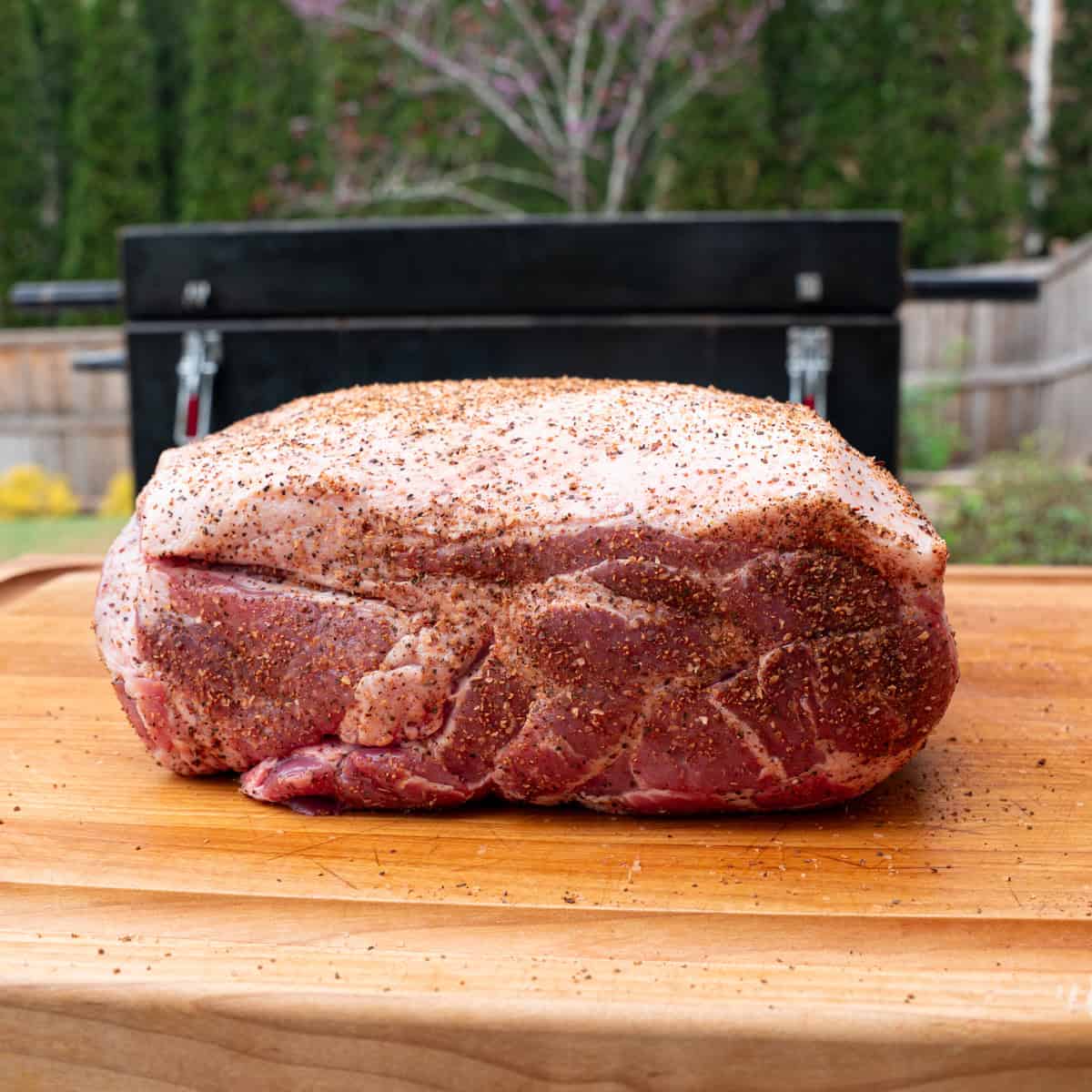
I’m going to be honest, for a backyard cook, there’s very little reason to make an aggressive trim on a pork butt. Some of the time, I don’t even trim it at all. If I do, I will remove any excess fat and scour the fat cap to help it crisp up during the cook. After that, I will use Worcestershire sauce as a binder and liberally coat the meat with BBQ Rub.
Step 3: Smoke unwrapped
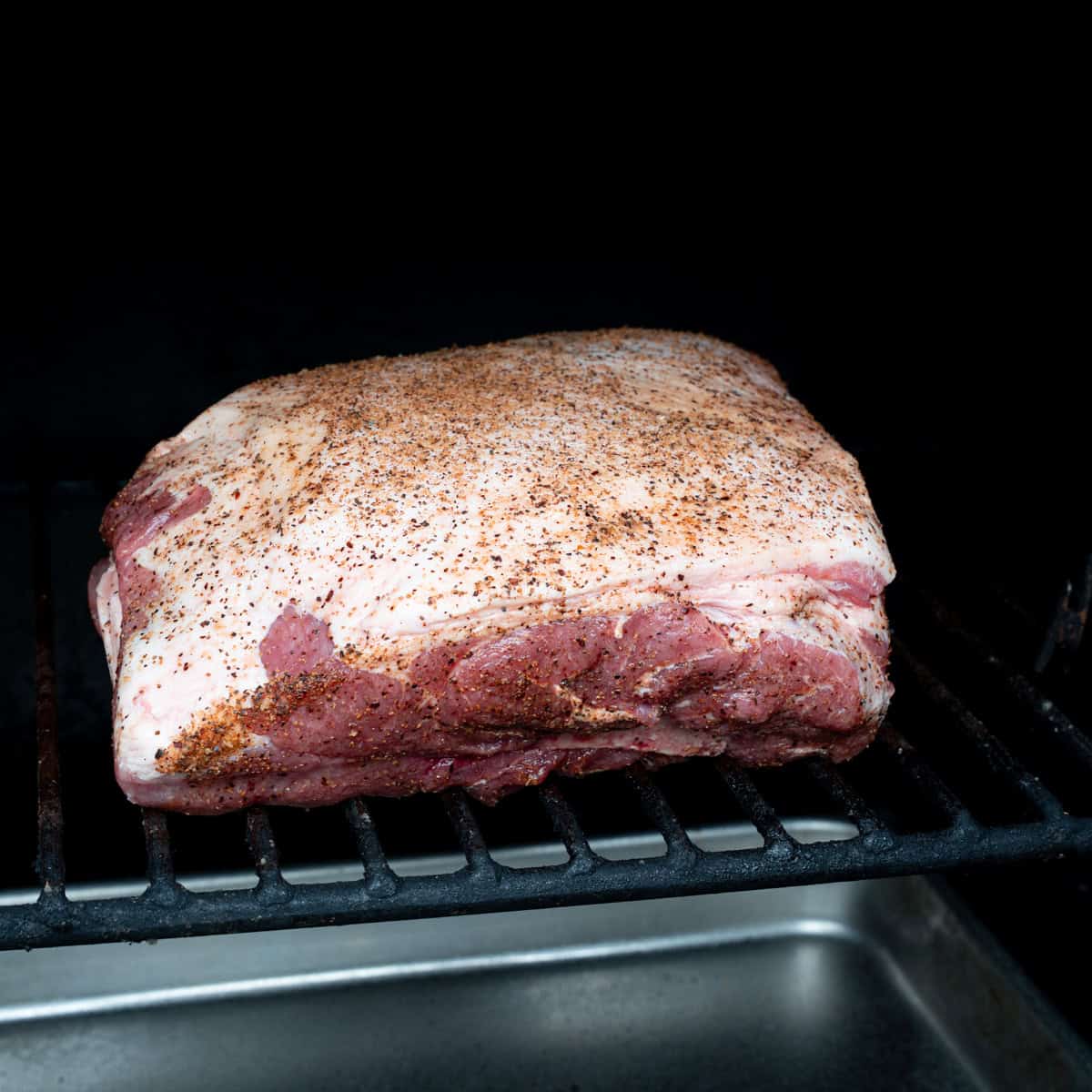
Once you have seasoned the pork butt and the smoker has reached temperature, place the meat directly on the grates and smoke for 4–5 hours. Keep in mind the time will vary — pay more attention to the internal temperature. You want to let the pork butt smoke until it's just past the stall and in the 170–180°F range.
Do You Smoke Pork Butt Fat Side Up or Down?
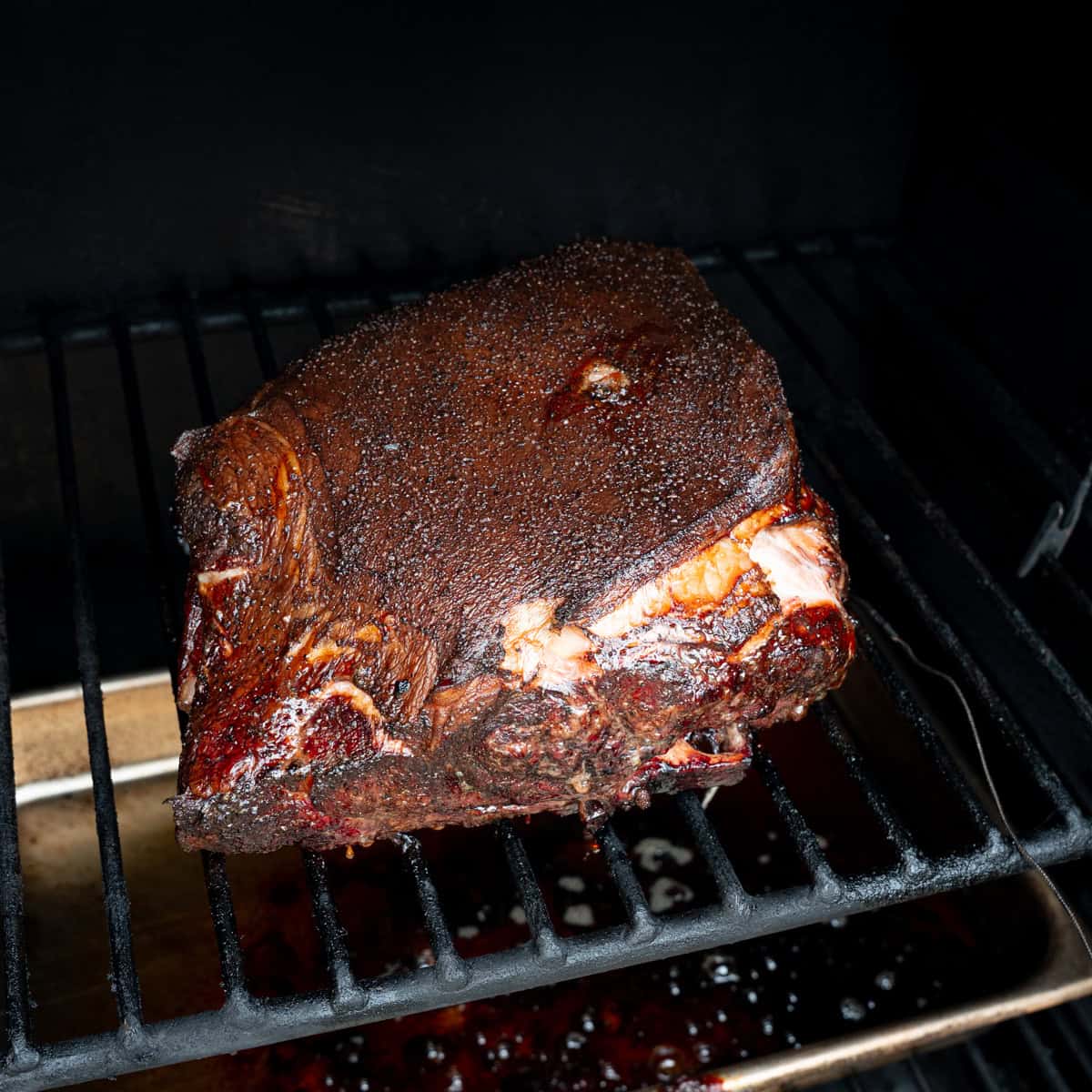
This is one of those topics that gets hotly debated, but I find that it’s a pretty minor deal for a pork butt. I’ve cooked them fat-side up and fat-side down, and had good results with both. That being said, I tend to go fat side up because a) it gives a better presentation and b) it helps crisp up the fat cap better.
Step 4: Wrap after bark sets
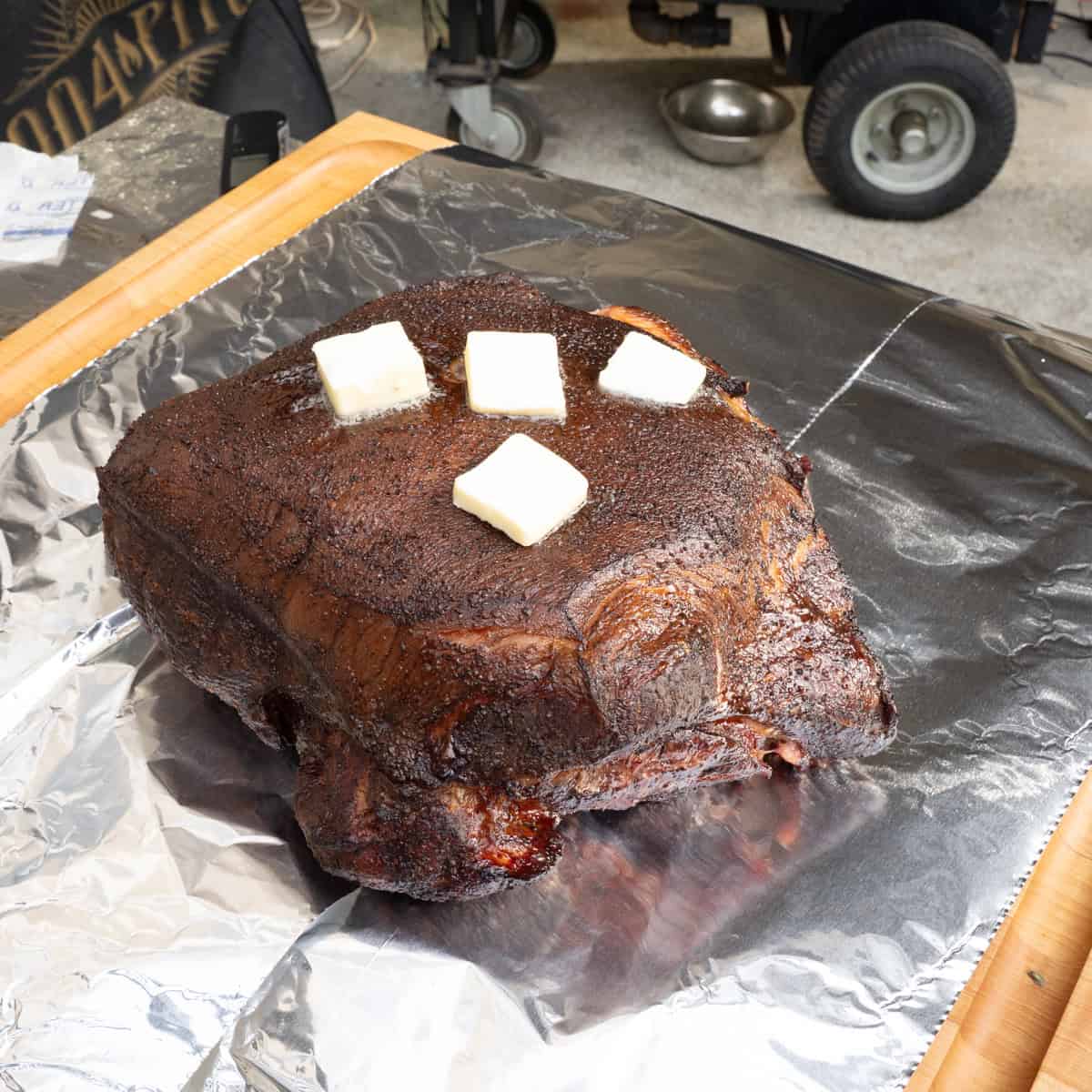
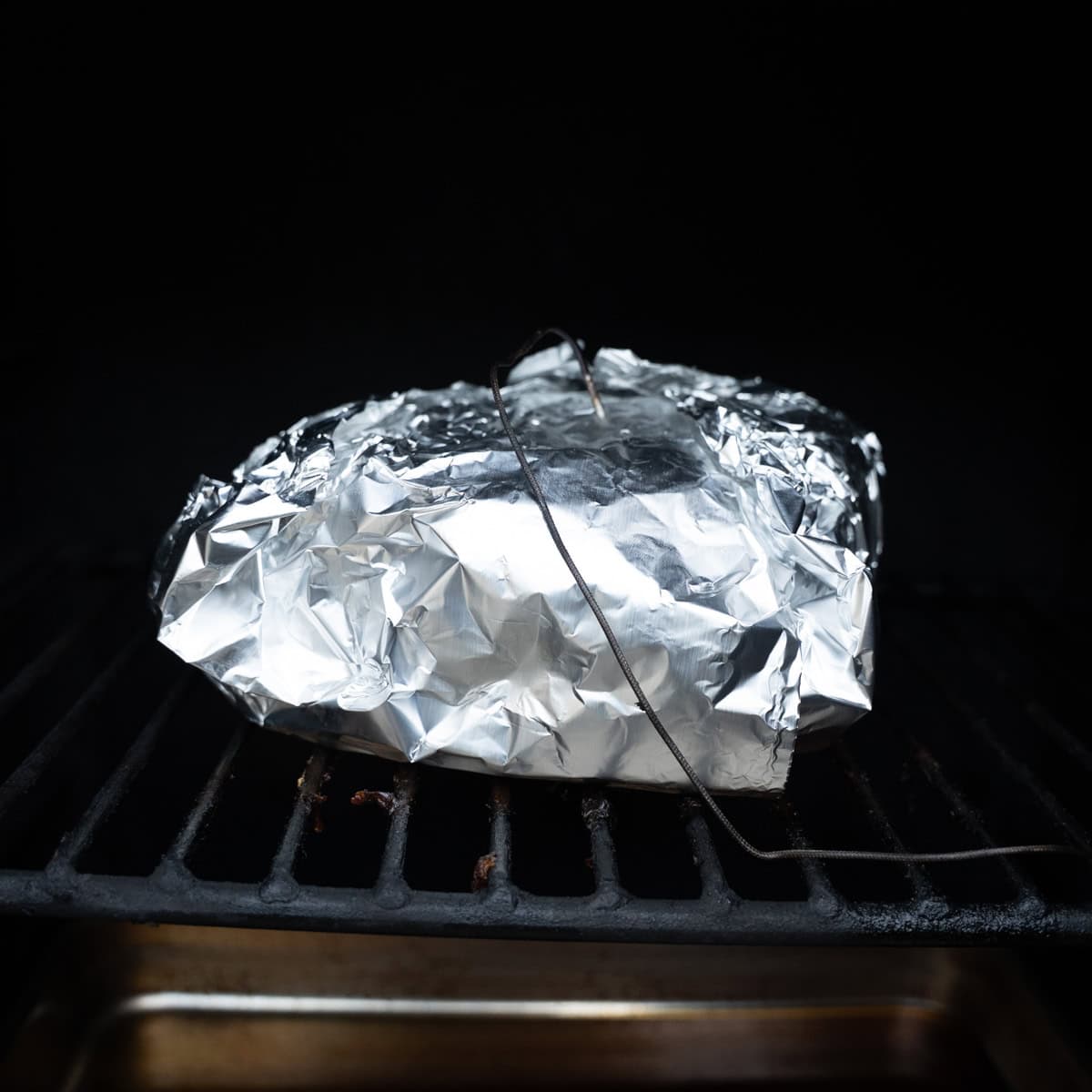
When bark reaches a dark mahogany color around 170–180°F internal, wrap in aluminum foil with butter. If you’re going to add liquid, now is the time. Just make sure that the wrap folds at the top so you don’t have any liquid leaking out of the bottom, and try not to add too much liquid — you don’t want to wash away all of that bark you just spent hours building.
Why Does Pork Butt Stall Around 165°F?
If your pork butt suddenly stops climbing in temperature around 160–170°F, don't panic. This is completely normal, and it’s called the stall. I’ve written an entire article on wrapping pork butt and why I like to wait until just past the stall to do so, which you can check out here.
To summarize, though, as moisture evaporates from the meat surface, it cools the pork at nearly the same rate as heat is entering. At 275°F, you'll still experience a stall, but it usually passes faster than at lower temperatures.
Step 5: Finish smoking until probe tender
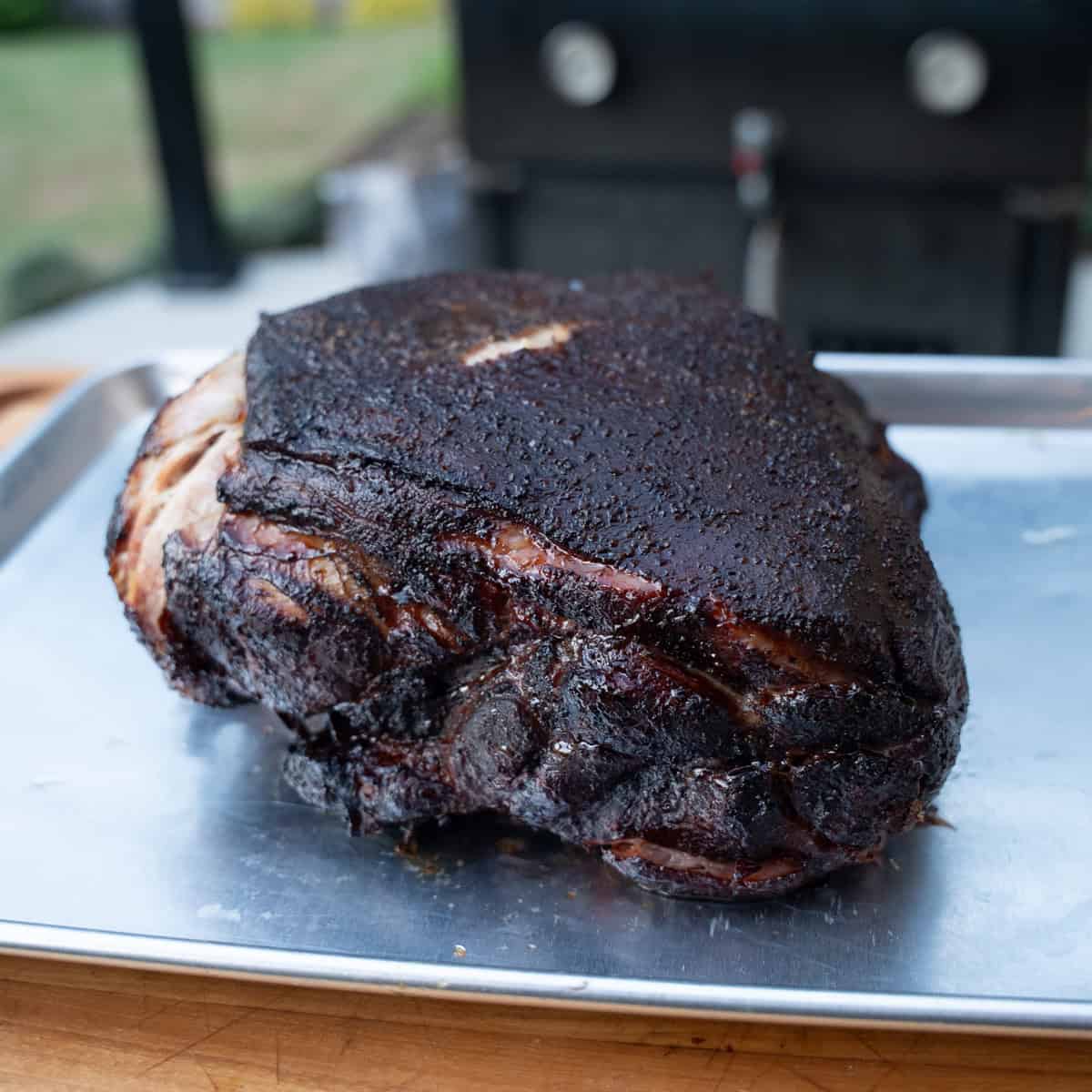
Continue smoking until the thermometer reads between 203–212°F. I’ve found that this is the ideal range when a pork butt is fall-apart tender. I walk through that logic in depth in this blog post.
Step 6: Rest and pull
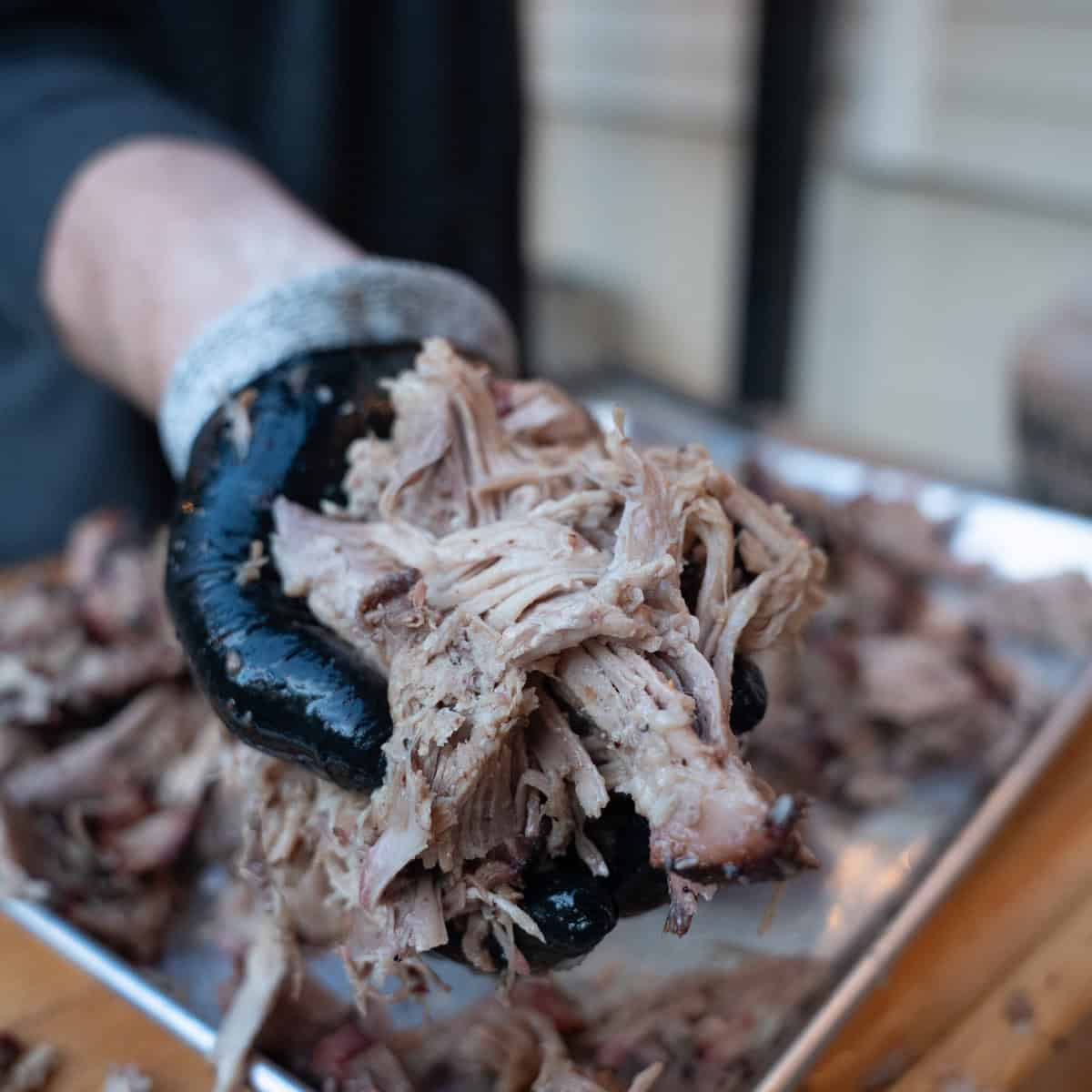
Rest for at least 45–60 minutes, ideally at least 2-4 hours(see my article on resting a pork butt to learn why). It really all boils down to how much time you have before dinner is supposed to be on the table, but the longer it can rest before dropping to 140°F, the better the pork will come out.
How to properly finish a pork butt
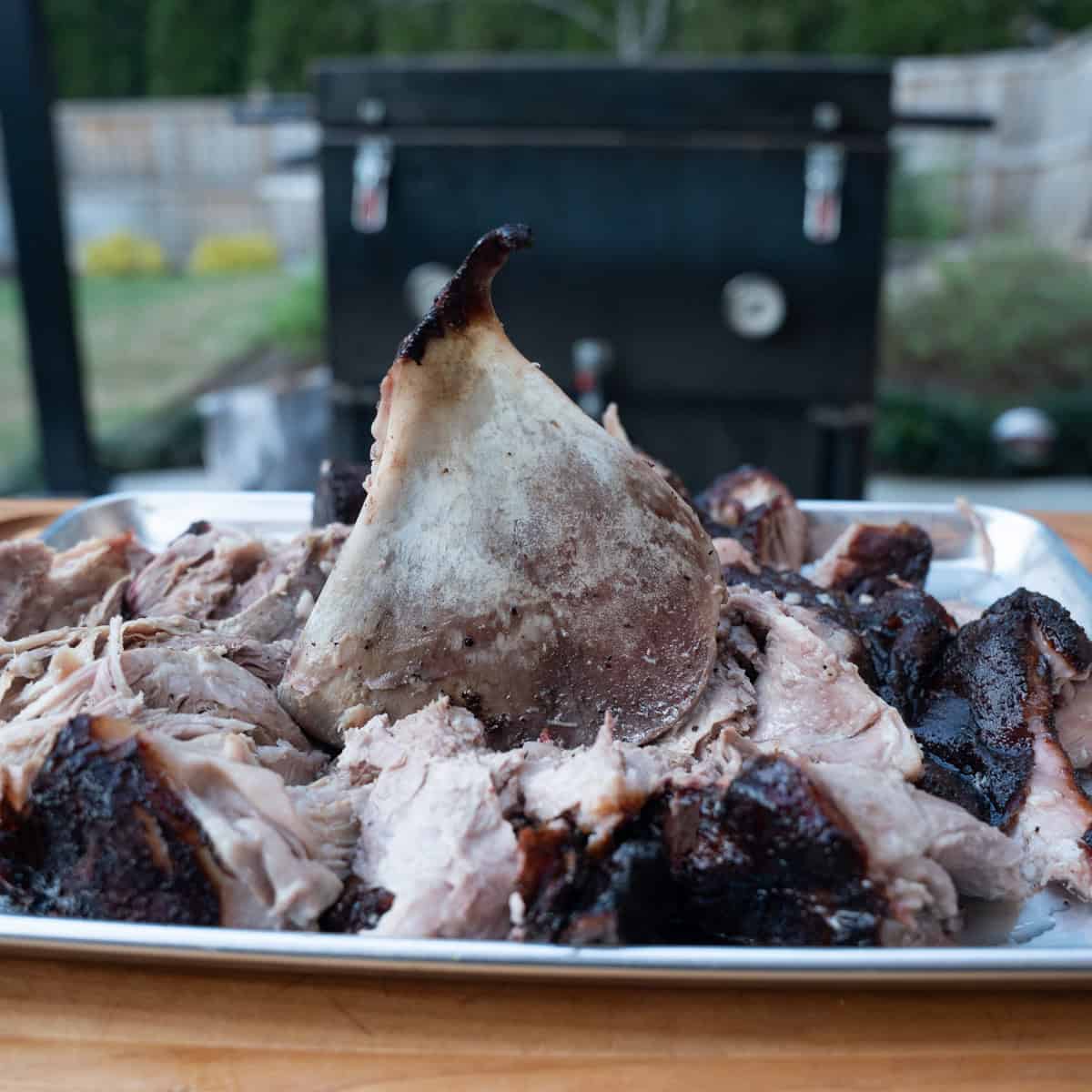
After that, shred up the pulled pork, but you’re not quite done yet. This next step is what makes a good pulled pork great. After the pork butt has been shredded and while it’s still hot, give it another hit of the BBQ rub you seasoned it with (ideally one with a generous amount of salt). You’ve seasoned the outside, but the inside still needs a hit to pull out the natural flavors the pork butt took on in the smoker from the wood products that you used. Next, slather with BBQ sauce — you don’t need to overdo it, but if you add the sauce while the pork is still warm, it will caramelize onto the meat and truly become pork candy. Those two additions will take your pork butt to another level flavor-wise.
Different Sauce Ideas
If you want to try different styles of BBQ sauce to serve with the pulled pork instead of my Cherry Molasses BBQ sauce, here are a few of my other favorites:
Equipment
- Smoker (pellet grill, gravity-fed smoker, offset, or kamado-style grill, preferably)
- Thermometer
- Aluminum foil
- Sheet pan
- Heat-resistant gloves
- Aluminum tray (or bowl) for serving
Storage and Reheating
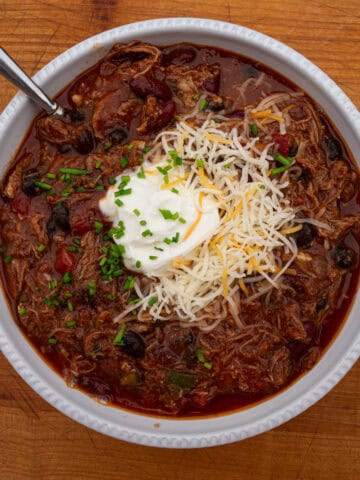
One of the biggest perks of smoking a full pork butt is the leftovers. Honestly, pulled pork often tastes even better the next day once the juices have had time to settle back into the meat. It’s also incredibly versatile for easy meals throughout the week, whether you’re making sandwiches, tacos, nachos, or something like my smoked pulled pork chili recipe.
Refrigerating
After the pork cools slightly, store it in airtight containers with a few spoonfuls of reserved juices, BBQ sauce, or drippings mixed back into the meat to help retain moisture. Properly stored pulled pork will usually last about 3–4 days in the refrigerator.
Freezing
If you want to freeze it for the long term, portion the pork into meal-sized freezer bags or containers and remove as much air as possible before sealing. I personally recommend vacuum sealing if you have the equipment, especially for longer freezer storage, because it does the best job of preventing freezer burn. Flattening freezer bags also helps the pork thaw more quickly later on. Properly frozen pulled pork will generally keep well for up to 3 months.
Reheating
When reheating, avoid blasting pulled pork in the microwave uncovered if possible, since high heat can dry it out surprisingly quickly. Instead, add a splash of BBQ sauce or reserved drippings, cover the pork tightly, and warm it slowly in a 300°F oven until heated through.
Recipe
Smoked Pork Butt at 275 degrees
Equipment
- Smoker pellet grill, gravity-fed smoker, offset, or kamado-style grill, preferably
- Thermometer
- Aluminum Foil
- Sheet Pan
- Heat-resistant gloves
- Aluminum Tray (or bowl) for serving
Ingredients
- 1 8-10 lbs. Pork Shoulder Bone-In
- Worcestershire sauce for the binder
- BBQ Seasoning as needed
- 4 T butter unsalted
- BBQ Sauce as needed
- ½ C apple juice optional
Instructions
- Preheat a smoker to 275 degrees. Meanwhile, take out your pork butt and pat it dry. Next, remove any excessive fat (if desired), slather with Worcestershire sauce, and season liberally on all sides with your favorite BBQ rub.
- Place the pork butt on the smoker and allow it to smoke until the bark is formed and it registers between 170-180 degrees Fahrenheit. Remove the butt from the smoker.
- Add the butter to the pork shoulder and wrap it with aluminum foil. If you’re using apple juice, add it now, too. Return the butt to the smoker to finish. Once it registers 203-212 degrees, remove the pork shoulder from the smoker.
- Let the pork shoulder rest for at least an hour, then shred. Immediately season the pulled pork with a few shakes of BBQ rub and add in a liberal amount of BBQ sauce.
- Set the pork aside until ready to use. Then serve & enjoy!
Notes
- I typically cook pork butt fat-side up because it helps crisp the fat cap and gives the pork a better presentation.
- I prefer wrapping pork butt once the bark fully sets and the internal temperature reaches roughly 170–180°F.
- Rest the pork butt for at least 45–60 minutes before shredding, though a 2–4 hour hot hold usually produces even better pulled pork.
Leave a Reply