
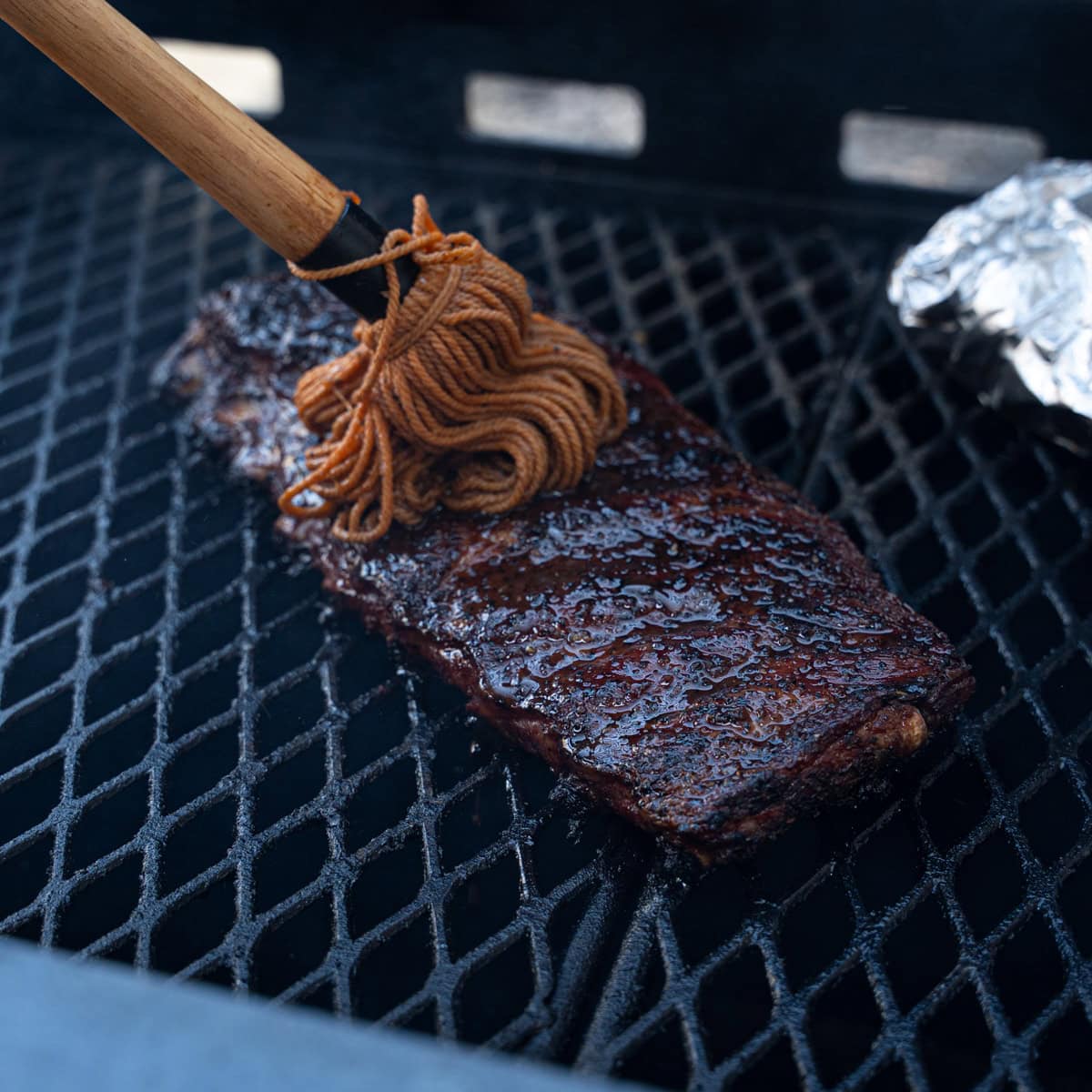
If you’ve been following along with my spare rib trimming guide, my direct heat barbecue ribs on the grill method, or my smoked rib tips recipe, you’ve probably noticed something consistent: I don’t rely on thick barbecue sauce during that style of cook. Instead, I use a mop sauce for ribs.
Part of that comes down to personal preference — I’ve always leaned toward vinegar-heavy sauces with less sweetness. But it’s also about functionality. Mop sauces shine anytime you’re cooking barbecue, especially pork or chicken, and they become even more valuable when you’re running higher temperatures in the 275–350°F range. At those temps, thick, sugary sauces can burn quickly. A well-balanced, vinegar-based mop handles heat better while still building flavor.
In this post, I’ll break down what a mop sauce is, why it works so well at higher cooking temperatures, how to make it, and exactly when to apply it for the best results.
Jump to:
What Is A Mop Sauce for Ribs?
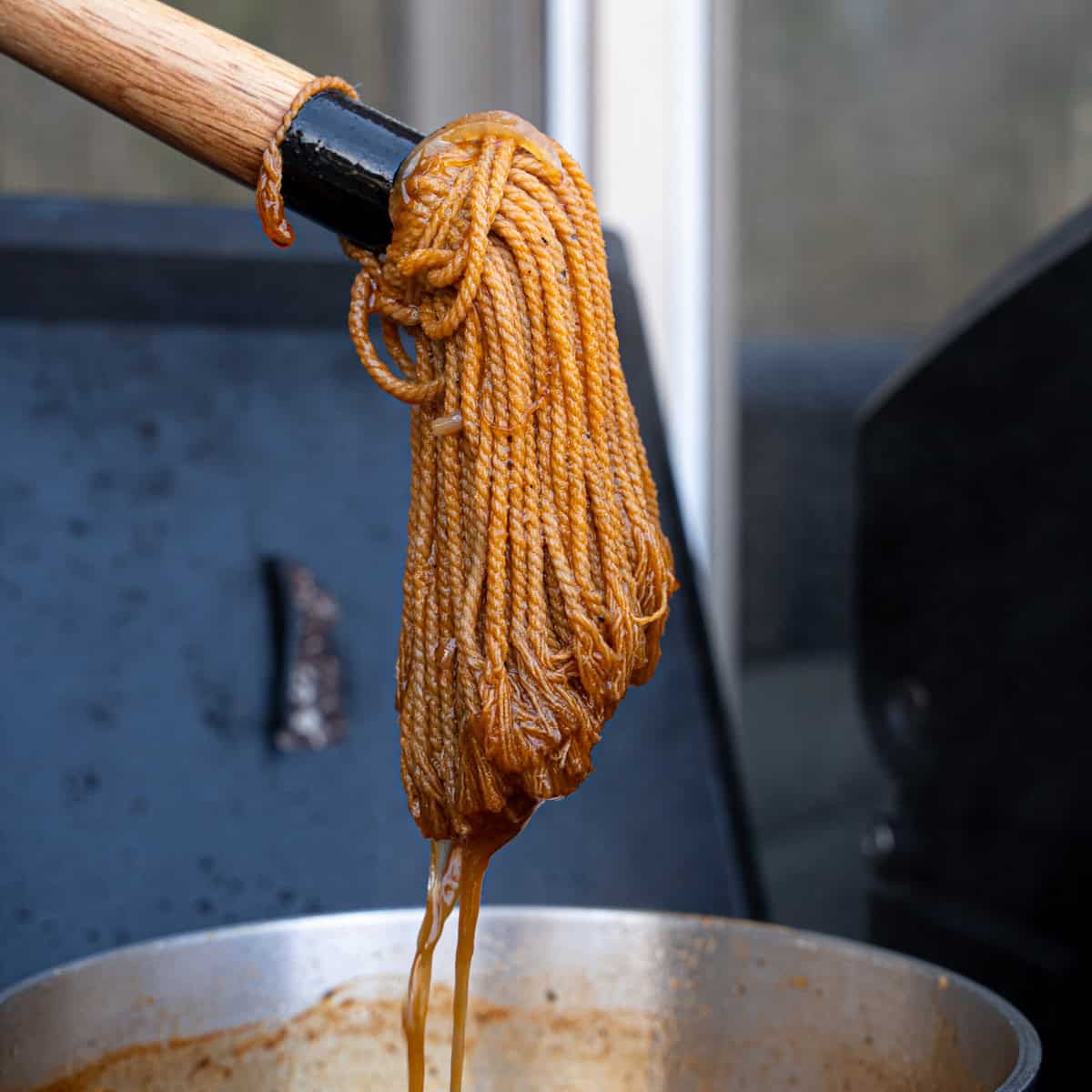
A mop sauce (sometimes called a bbq mop or mopping sauce) is a thin, flavorful liquid brushed onto ribs while they cook. Traditional mop sauce recipes originated in whole-hog and classic Southern barbecue, particularly in the Carolinas and Tennessee, where vinegar-based sauces have strong historical roots (that method spread down into South Georgia, too, where I first experienced it). These sauces were integral to barbecue traditions that involved slow-cooking large cuts of pork over wood or charcoal, often for extended periods.
Unlike thick barbecue sauce, a simple mop sauce:
- Is thinner
- Contains more vinegar
- Has less sugar
- It is applied multiple times during cooking.
The purpose isn’t necessarily to glaze the ribs. Instead, it’s more purposeful. A good mop sauce supports maintaining surface moisture on the meat and tenderizes it at the same time due to its acidity. Plus, since it has minimal sugar content, you can add it earlier in the cooking and in multiple rounds to help layer flavor over time. It’s also great to help tone down the edges on ribs or chicken that look like they are starting to get a little too crispy faster than you’d like.
When to Use a Mop Sauce on Ribs
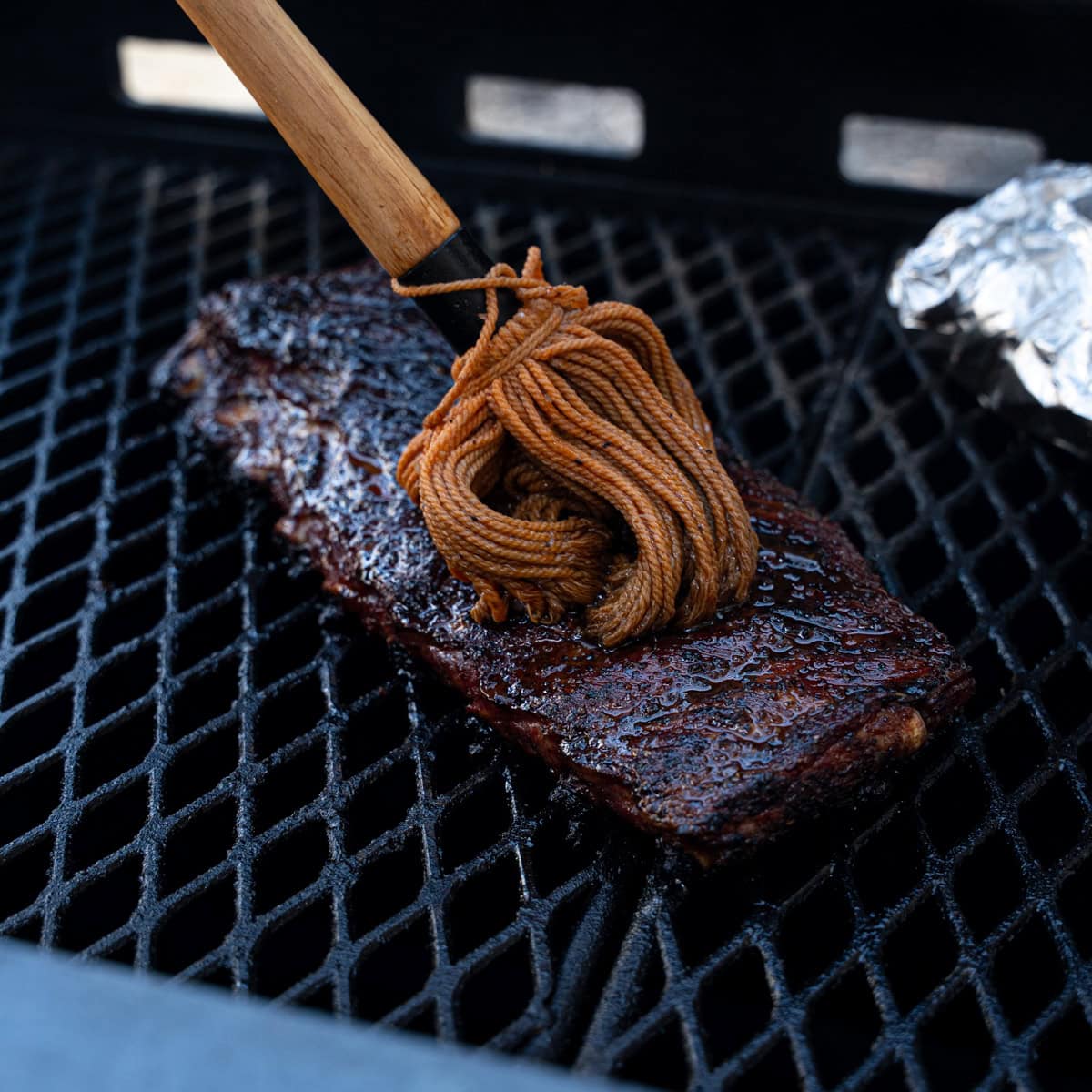
Timing is really important with a mop sauce. If you mop too early or too aggressively, you can wash the seasoning off and delay the bark formation. But get it just right, and it makes the perfect addition to bbq ribs.
I begin mopping once the bark starts to form. The bark is set when the surface appears dry rather than wet, with a noticeable reddish-brown color and a firm feel when gently tapped with a finger. It should not be sticky or soft, and the seasoning will appear set into the meat rather than powdery. My favorite cue is using the finger test. If I can drag my finger over the ribs with moderate pressure and no rub comes off, you’re safe to mop the ribs.
For ribs such as the ones I used in this batch, use this quick guide for mopping intervals: at 300–325°F, mop every 20 minutes once the bark has formed (generally after 1 ½ - 2 hours); at 250°F, mop every 30–45 minutes after bark formation (after 2-3 hours).
What Happens if I Overmop the Meat?
When using a mop sauce, use just enough to coat the surface lightly. A thin layer is all you need. Too much moisture can soften bark and create a mushy exterior. If you find that your bark gets soft, you can recover it by increasing the heat slightly for a short period to firm up the exterior, or by letting the ribs rest uncovered for several minutes. Both approaches will help the surface dry out and restore texture without overcooking the meat.
Mop Sauce vs Spritzing: What’s the Difference?
Spritzing ribs, usually with juice, water, vinegar, or some combination of those ingredients, is primarily used to add moisture, not flavor. A mop sauce does more than hydrate — it layers flavor throughout the cook. It uses acidity to balance fat and tenderize the meat, sweetness to round things out, seasoning to reinforce the rub and add a bit of color, aromatics for additional flavor and smells, and fat to help everything adhere and develop properly. Basically, using a mop sauce is like using a supercharged spritz that can actually make a difference in tenderness and flavor.
Ingredients
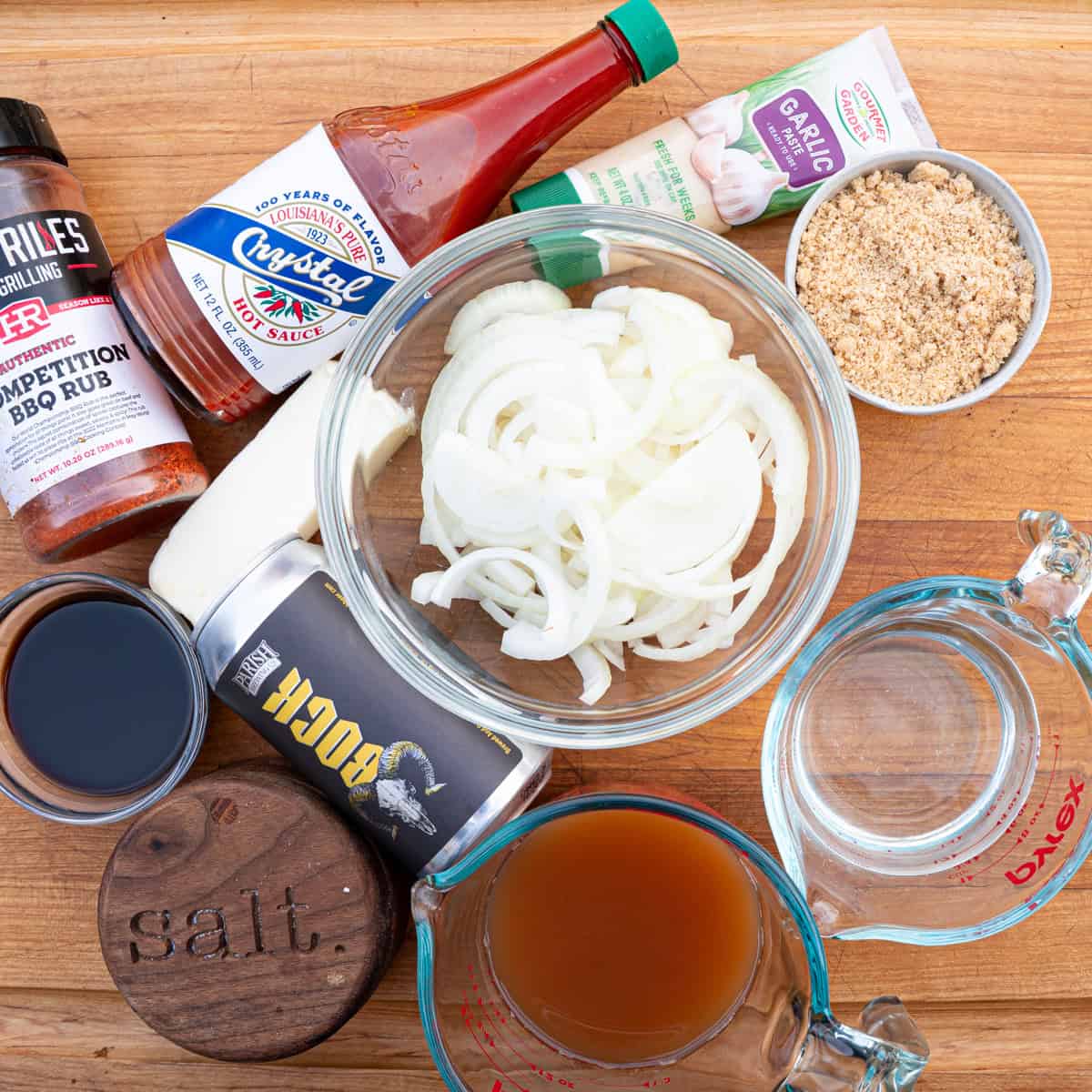
There are many ways to make a mop sauce, but I prefer a more complex flavor. I got this idea from Bradley Robinson of Chud’s BBQ, who really put me on to the direct-heat style of cooking, where it is so often used. For my mop sauce, you’ll need:
- Butter
- small sweet onion, sliced
- garlic paste
- Apple cider vinegar
- Distilled white vinegar
- Worcestershire sauce
- hot sauce
- BBQ rub
- Brown sugar
- Lemon
- Amber or dark lager
- Kosher salt to taste
How to Make a Mop Sauce
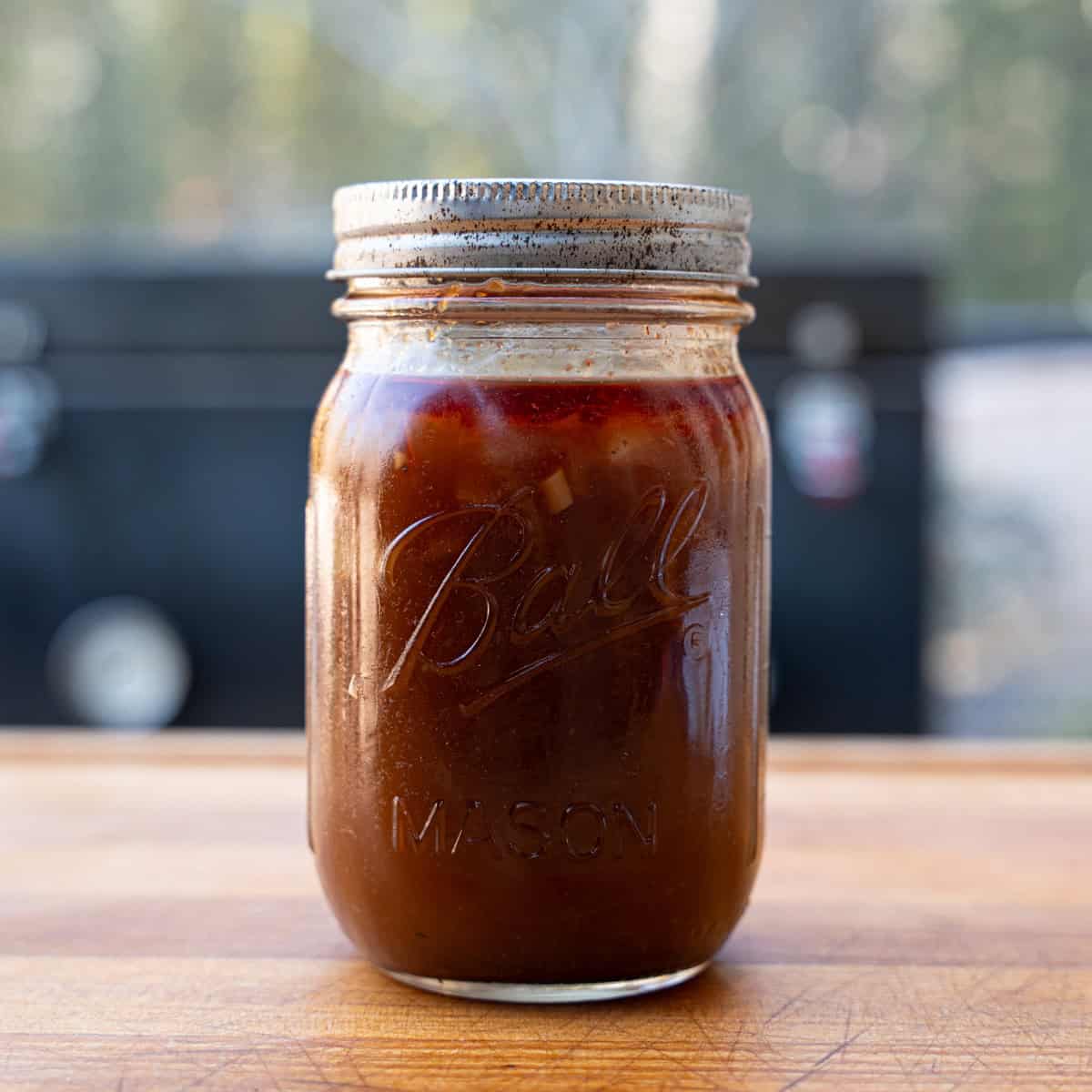
Before you start, gather and measure out all your ingredients. There’s not too much to this process, but having everything ready to go will make your life much easier.
Step 1: Build the Flavor Base
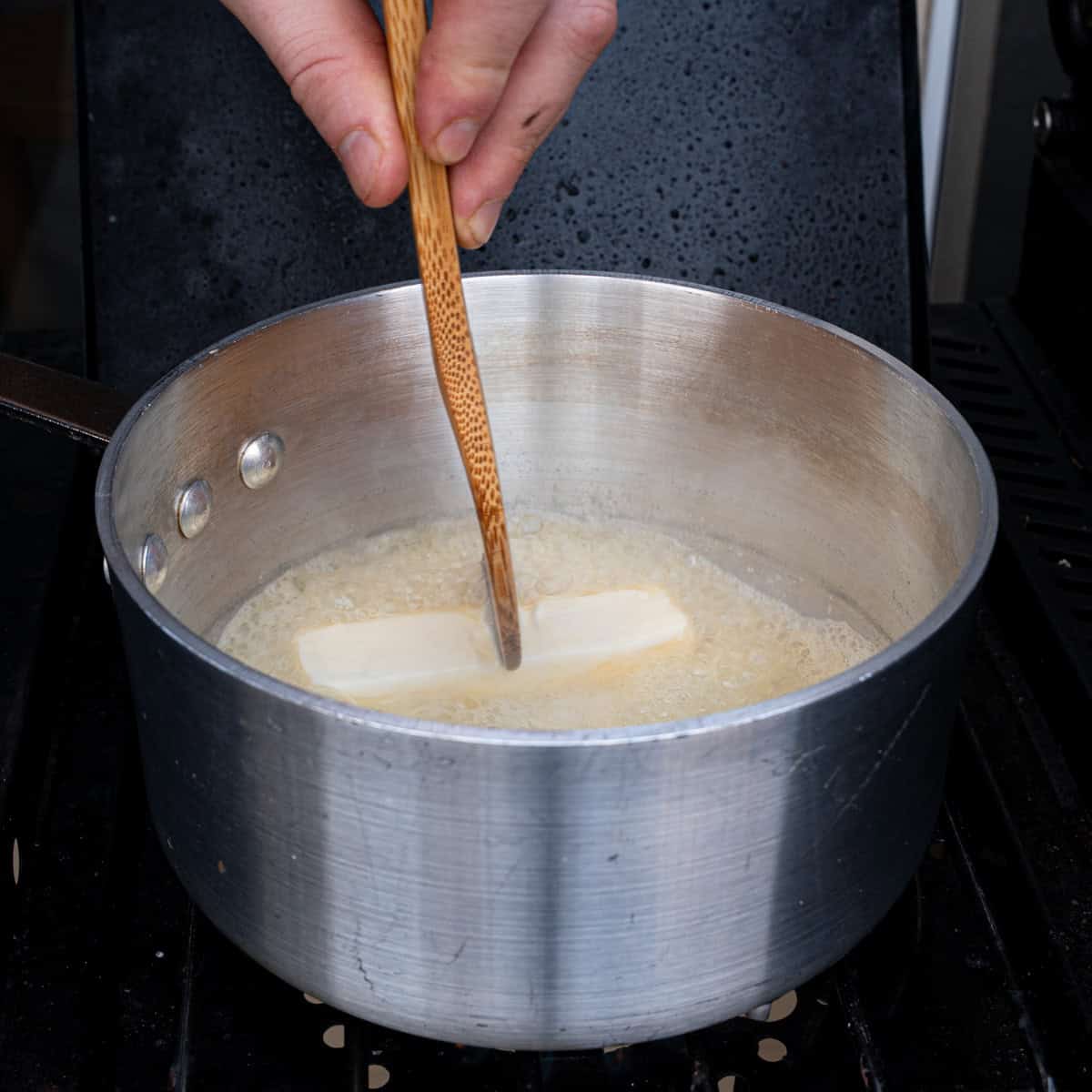
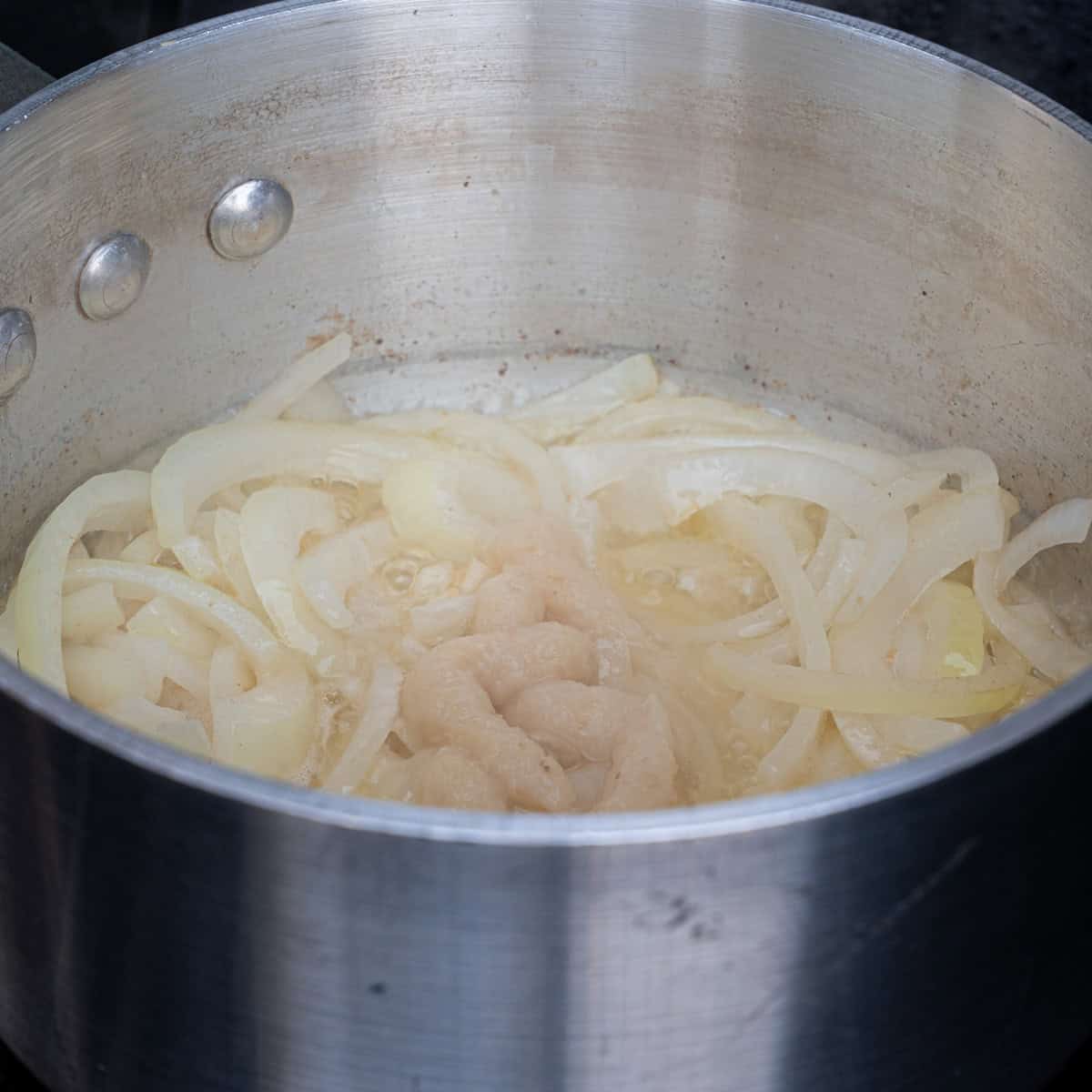
In a saucepan over medium heat, melt the butter. Once melted, add the sliced onion and cook until tender and slightly translucent. You’re not going for caramelization here; you want the onions to sweat. After that, add garlic paste and stir until fragrant.
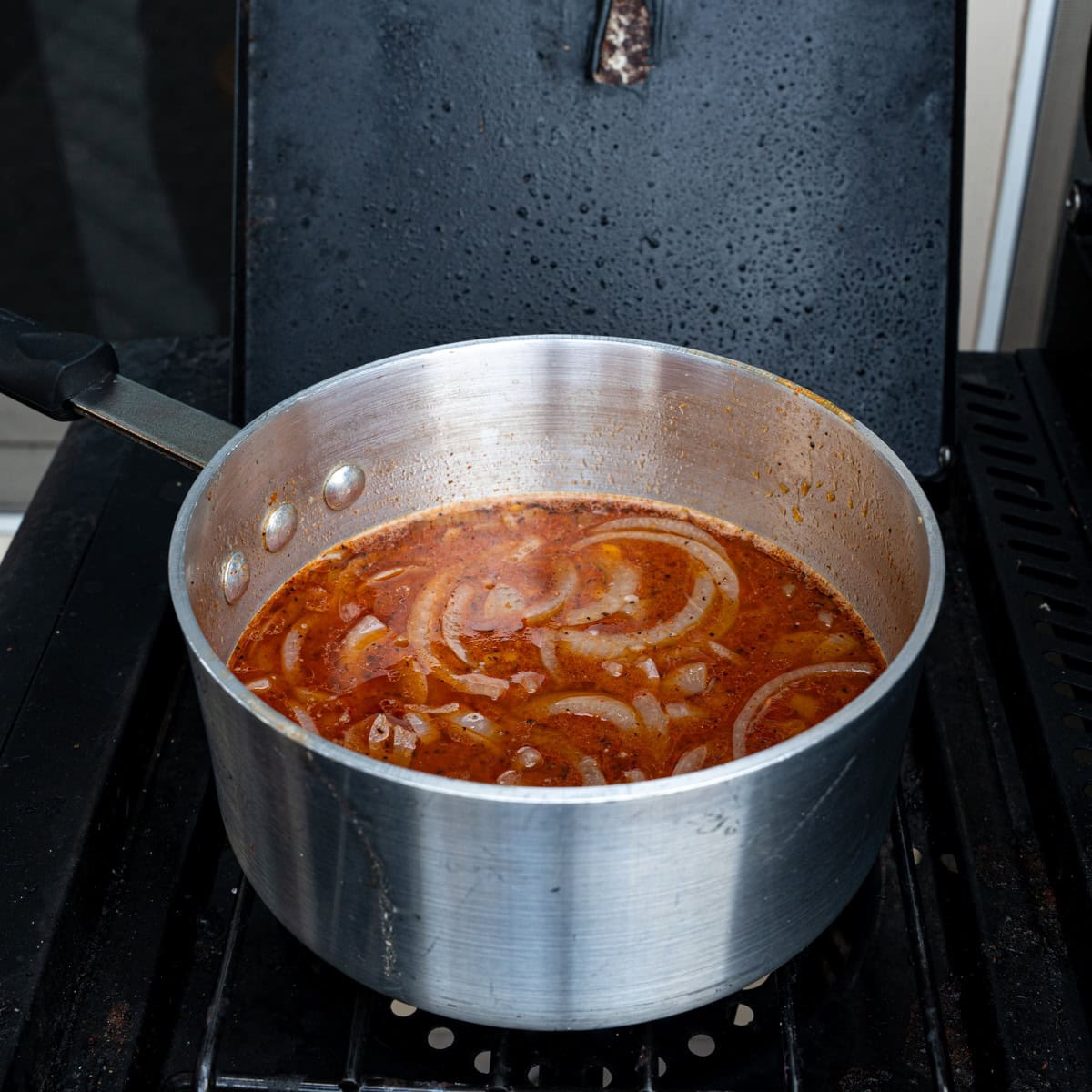
Next, add all of the remaining ingredients to the saucepan.
Step 2: Simmer and Reduce
Let the mixture simmer until reduced by about one-third in volume, which usually takes 15 to 20 minutes over medium heat.
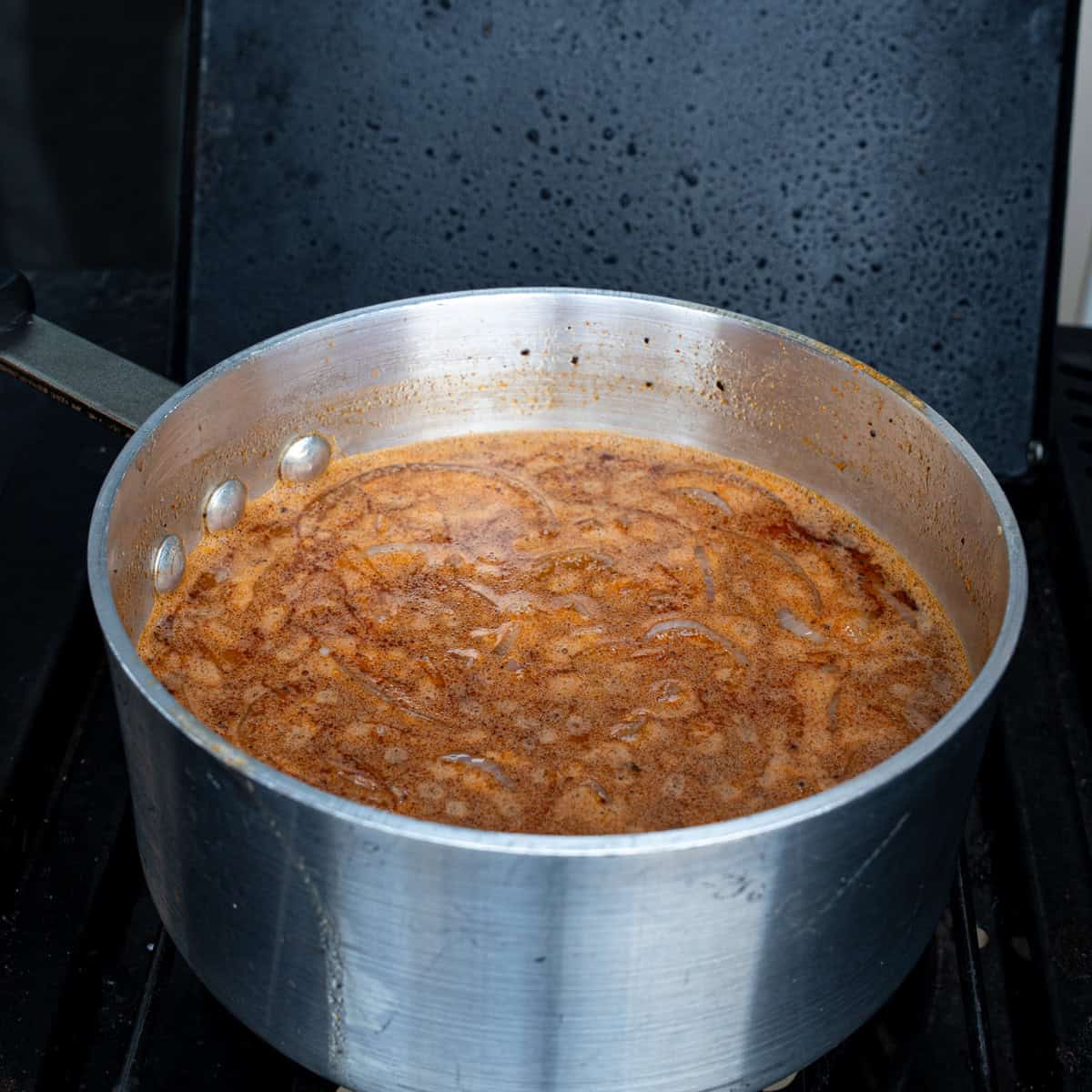
There’s no exact measure here because the goal isn’t a thick sauce. You really want to give all of those flavors time to gel together with a minimal reduction. Once that happens, taste and adjust flavors as needed.
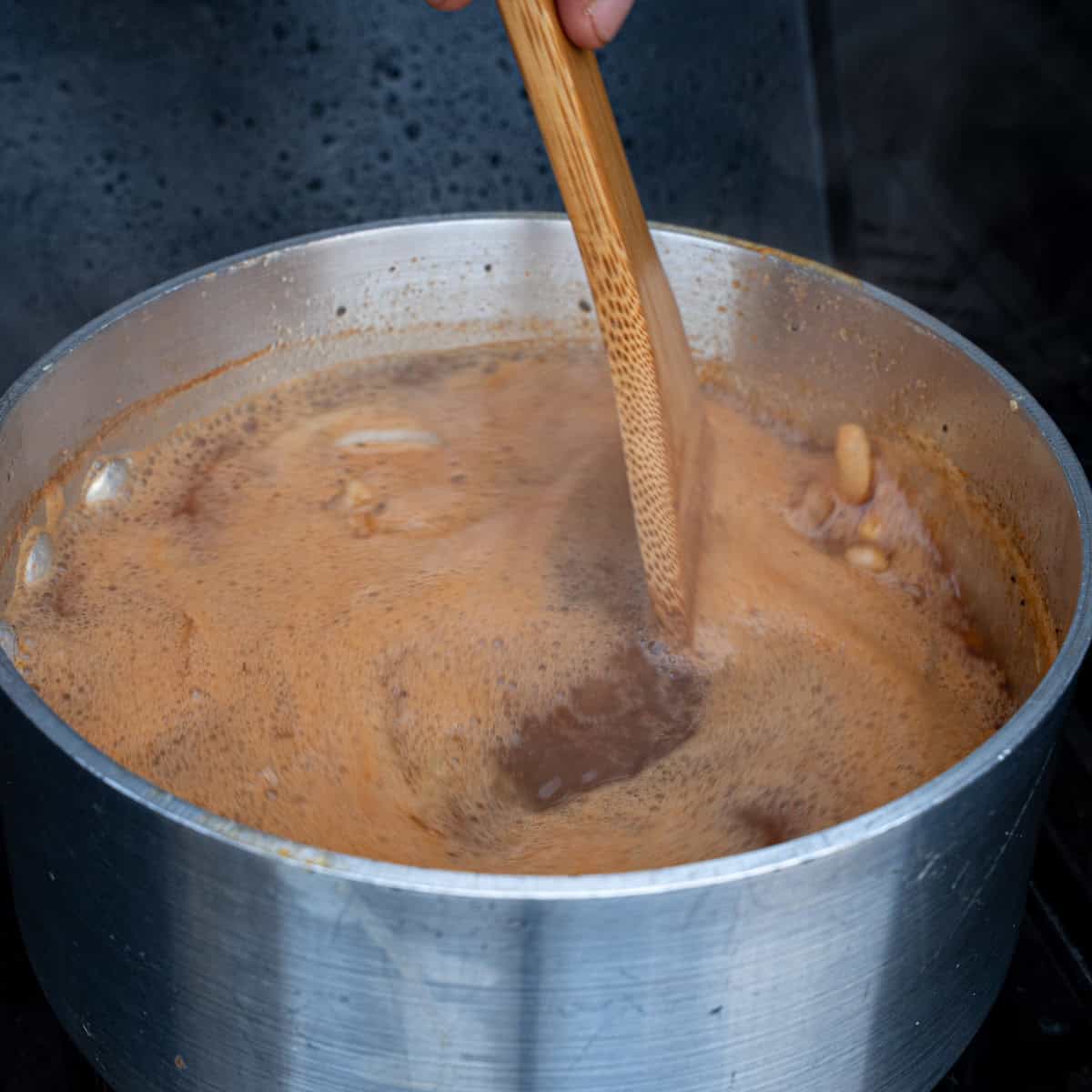
When it’s ready to go, remove the saucepan from the heat, let it cool at room temperature, then store it until ready to use or for up to 2 weeks.
A Few Tips on Adjusting to Taste
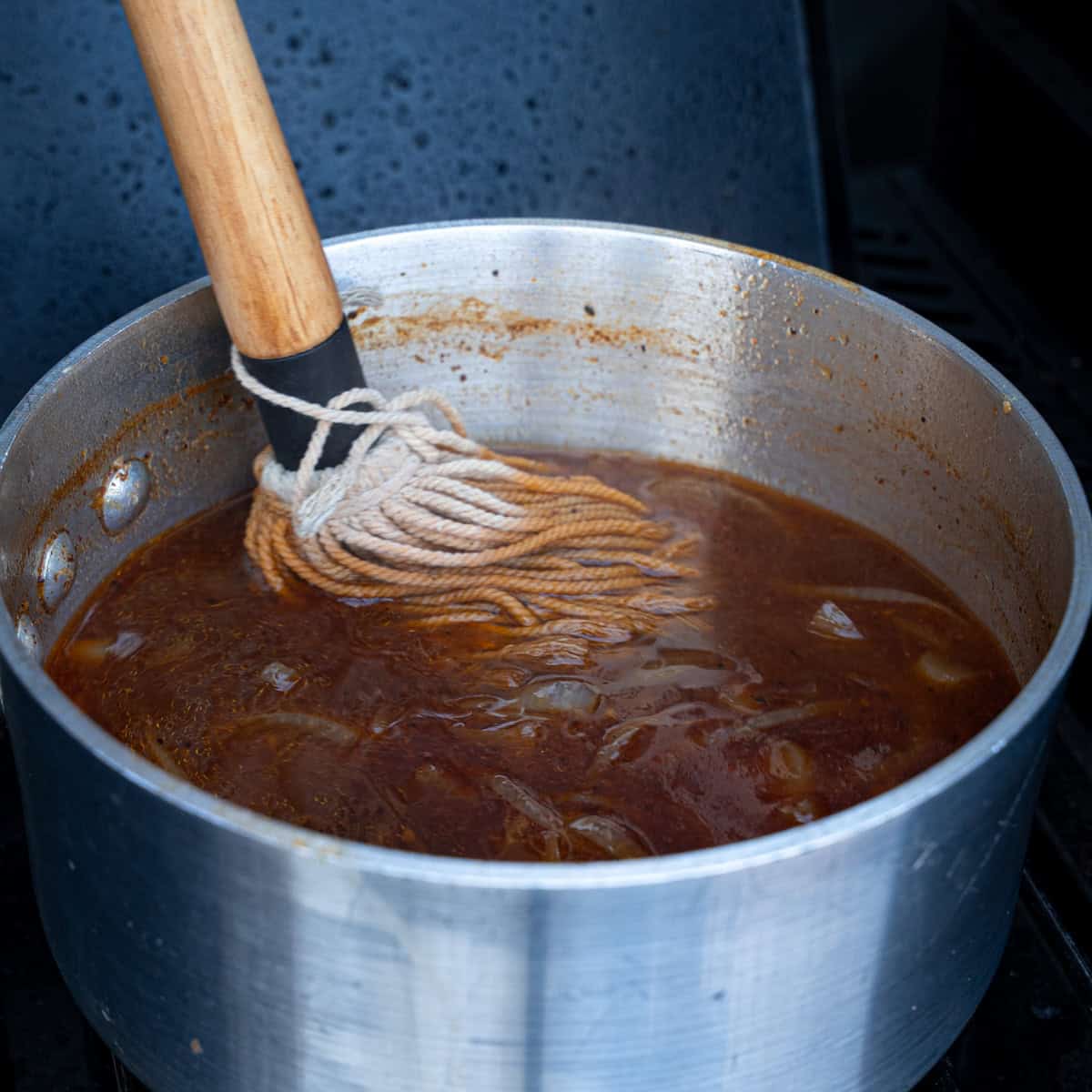
Everyone always says “adjust to taste”, but I find that means something different depending on who you ask, and most people understandably don’t know the basic principles. Start by adding a pinch of salt, or more vinegar (though it is unnecessary here since the mop sauce already uses a lot of vinegar). Salt and acids amplify other flavors, so start with them first. If there’s more tang than you would like, add a little fat to the sauce (e.g., butter in this recipe) to help dull it down. Keep in mind, though, it’s all about balance. It’s ok for this sauce to be heavily acidic if you’re cooking pork, because it’s a fattier protein, it will balance out those flavors once combined. In contrast, if you’re using this on chicken, a lighter vinegar flavor profile using more butter might be preferred.
Substitutions
The great thing about a mop sauce is that it is extremely flexible. It’s kind of like one of those soda drinks you’d make as a kid, where you combine all of the different flavors from a fountain machine. There are so many ways you can go with this, but here are a few substitutes I will make from time to time:
- No amber beer? Substitute chicken broth, beef broth, juice, or even a soda. The liquid adds some flavor but is mostly used to give the mop sauce body.
- Want bourbon notes? Replace half the beer with bourbon.
- Want more heat? Increase pepper or hot sauce. I’ve even added in a jalapeno and habanero jellies and glazes before, and they work well.
Equipment
You’ll need:
- Saucepan
- Whisk or wooden spoon
- Mop brush or basting brush
- Airtight storage container
Storage
If you have any leftover mop sauce, store it in an airtight container in the refrigerator for up to 2 weeks. Thanks to its vinegar base and reduced nature, it holds up well and maintains its flavor over time. If you’d like to keep it longer, you can freeze it. Just pour the sauce into a freezer-safe container, leaving a little room at the top for expansion, and freeze for up to three months. When you’re ready to use it, thaw it overnight in the refrigerator.
Because the sauce contains butter, it may separate or firm up once chilled. That’s normal. Warm it gently on the stovetop and stir until everything comes back together. Just avoid boiling it when reheating — you want to warm it only enough to re-emulsify.
Recipe
Vinegar-Based Mop Sauce
Equipment
- saucepan
- Whisk or wooden spoon
- Mop brush or basting brush
- Airtight storage container
Ingredients
- 8 T (1 stick) butter unsalted
- 1 small sweet onion sliced
- 2 T garlic paste
- 1 cup apple cider vinegar
- ¾ C distilled white vinegar
- ¼ C Worcestershire sauce
- 2 T hot sauce
- 2 T BBQ rub of choice
- ½ C brown sugar
- 2 T hot sauce
- ½ lemon juiced
- 1 12 oz. amber or dark lager
- Kosher salt to taste
Instructions
- Add the butter to a saucepan over medium heat. Once melted, add in the onions and sauté until tender. Add the garlic paste and mx in until fragrant.
- Add in the remaining ingredients and simmer. Allow the mixture to cook until reduced by ~⅓, stirring as needed making sure that all the sugar has dissolved.
- Set the mop sauce aside to use immediately. Or let the sauce cool to room temperature, store in an airtight container, and refrigerate for up to 2 weeks.
Notes
- When to Use Mop Sauce: Begin mopping once the bark has started to set, usually after the first hour of cooking. Apply lightly every 20–45 minutes depending on grill temperature.
- Best Cooking Temperatures: This mop sauce works especially well when cooking ribs at 275–325°F. Its vinegar base handles higher heat better than thick, sugar-heavy barbecue sauces.
Leave a Reply