
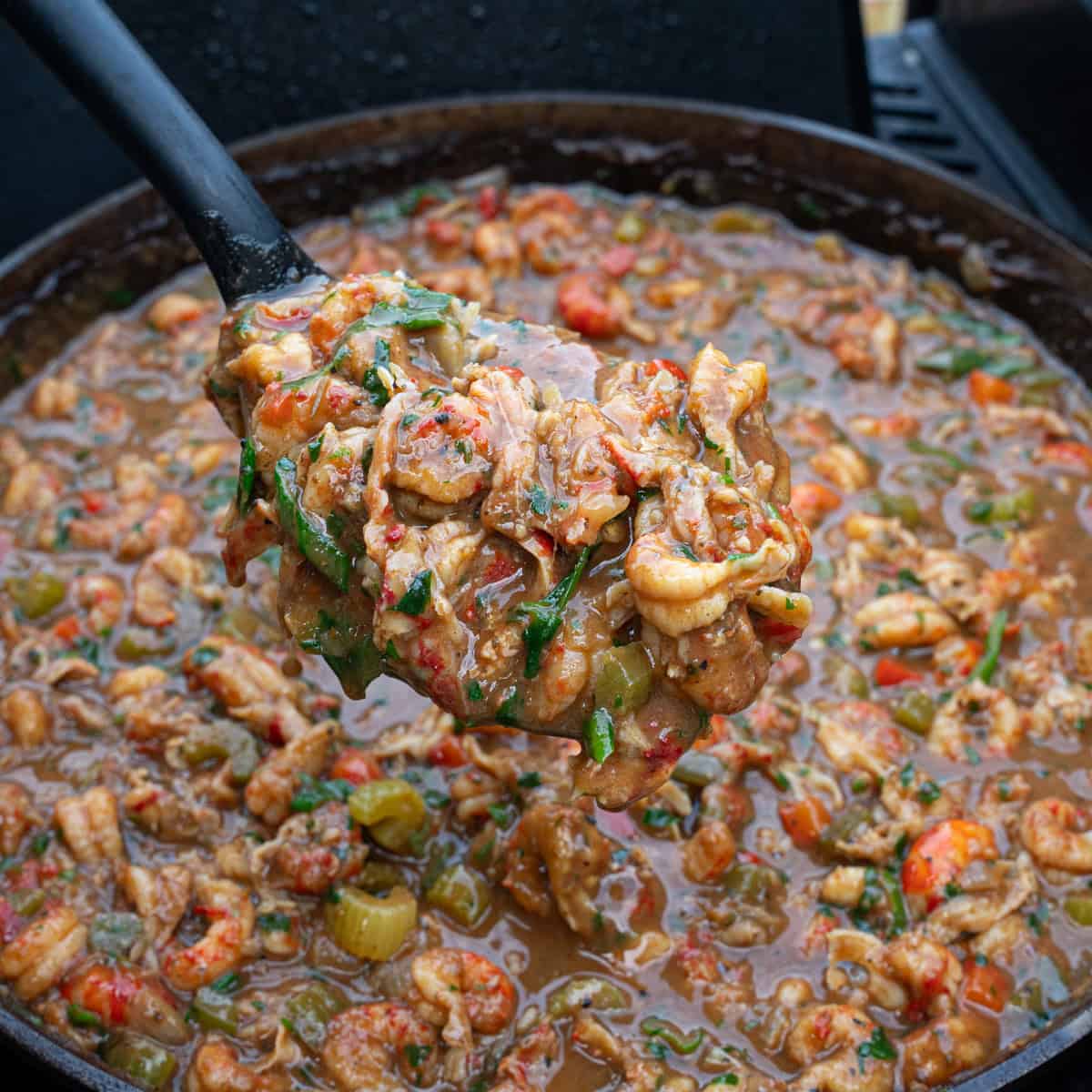
If you’ve ever had a bowl of cajun crawfish etouffee in southern Louisiana, you know just how special this dish is. Etouffee is the kind of dish that hits you with buttery depth, just enough spice, and a thick, velvety sauce served over rice that pairs perfectly with crawfish tails.
I was first introduced to crawfish etouffee during a summer trip to New Orleans with my dad while I was in high school. It set a standard I didn’t fully appreciate at the time. Luckily, Birmingham, Alabama—where he lived—had a few surprisingly solid Cajun restaurants, so I started ordering it more often when we got back home. But none quite matched what I had experienced in Louisiana.
After plenty of trial and error, I landed on this version of cajun crawfish etouffee, and I think it’s pretty dang close to the real deal. In this post, I’ll walk you through everything you need to know—from what the dish actually is and where it comes from, to how to make a proper etouffee recipe crawfish lovers will want to bookmark and pass down.
Jump to:
- What is Crawfish Etouffee?
- Is Crawfish Etouffee Cajun or Creole?
- Ingredients for Cajun Crawfish Etouffee
- How to Make Cajun Crawfish Etouffee
- Equipment You’ll Need
- Need to Adjust for Taste, Ingredient Availability, or Spice Level? Try One of These Easy Swaps
- Storage and Reheating Tips
- If You Liked This, You’ll Love Some of My Other Recipes!
- Recipe
What is Crawfish Etouffee?
Crawfish etouffee is a classic Louisiana dish that originates from the blending of French culinary techniques and the rustic traditions of Cajun culture. Most people don’t know this, but the dish’s roots trace back to the descendants of French-speaking Acadian exiles who settled in Louisiana, adapting French methods such as the creation of a roux (more on this in a moment) to the ingredients available in the bayous. The name “étouffée,” which means “smothered” in French, reflects both the method and the cultural heritage: crawfish are smothered in a deeply flavored, roux-based gravy enriched with local aromatics, then served over rice—a nod to both French cooking and Louisiana's agricultural practices.
This dish has become a staple of Southern cooking, especially during crawfish season. It’s the perfect blend of comfort, flavor, and tradition that makes for some incredible comfort food.
Is Crawfish Etouffee Cajun or Creole?
This is one of the most common questions — and an incredibly polarizing topic depending on who you ask (trust me, I’ve experienced this firsthand on more than one occasion). The line between Cajun and Creole can get blurry, and honestly, I really enjoy both. But if we’re talking tradition, here’s the quick breakdown:
Cajun crawfish etouffee
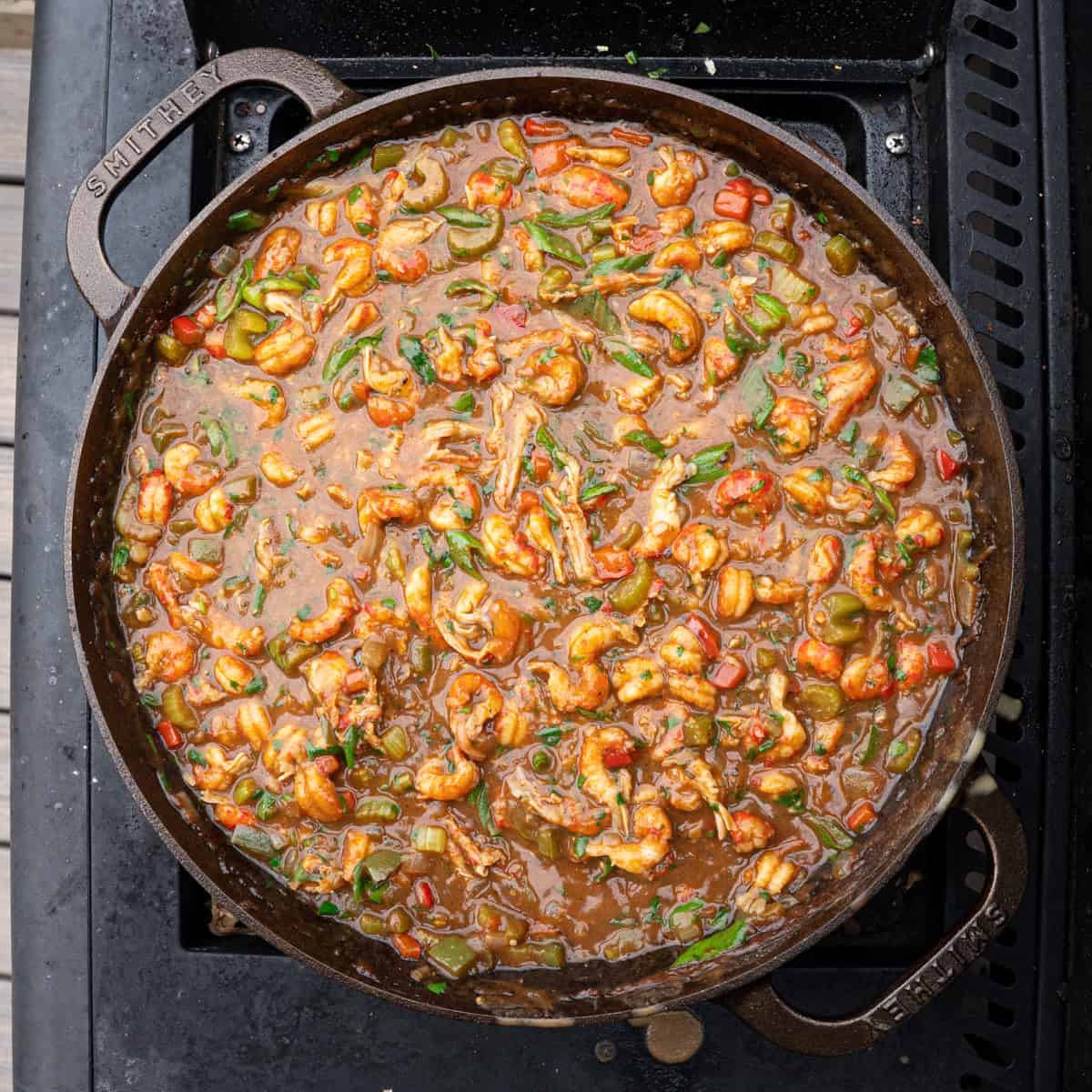
Cajun crawfish etouffee is defined by a few key characteristics that distinguish it from other regional variations. Most notably, traditional Cajun preparations exclude tomatoes, resulting in a sauce that highlights other foundational elements. The dish relies on a butter-based roux—created by cooking butter and flour together—which serves as both a thickening agent and a primary source of flavor, imparting significant depth to the finished etouffee. Another hallmark is the inclusion of the 'holy trinity' of Cajun cuisine: diced onion, celery, and bell pepper. This combination of vegetables forms the aromatic base in many Louisiana dishes and is essential to the unique flavor of Cajun etouffee. These elements reflect the dish’s origins in rural French Acadian cooking, emphasizing hearty, rustic flavors and an authentic connection to bayou culture. The recipe I share in this post follows this traditional Cajun approach.
Creole crawfish etouffee
Creole crawfish etouffee typically includes tomatoes—whether diced, crushed, or in the form of tomato sauce—which give the dish a slightly redder hue and a brighter, tangier flavor. It’s more common in New Orleans and is shaped by Creole cuisine’s blend of French, Spanish, Caribbean, and African influences. Creole-style food epitomizes what makes New Orleans' “melting pot” food culture so great.
In Creole versions, the roux is often made with oil instead of butter, which can lend a slightly different mouthfeel and deepen the color more quickly. You might also find bell peppers in different ratios or additional herbs like thyme and bay leaf to build complexity in the dish. Overall, Creole-style etouffee tends to be more layered in flavor, sometimes a touch sweeter or more acidic, and often reflects a more city-style, restaurant-driven approach. Personally, I love Creole-style food, and while it’s not how I’m making this crawfish etouffee, it is how I prefer to make my gumbo.
Ingredients for Cajun Crawfish Etouffee
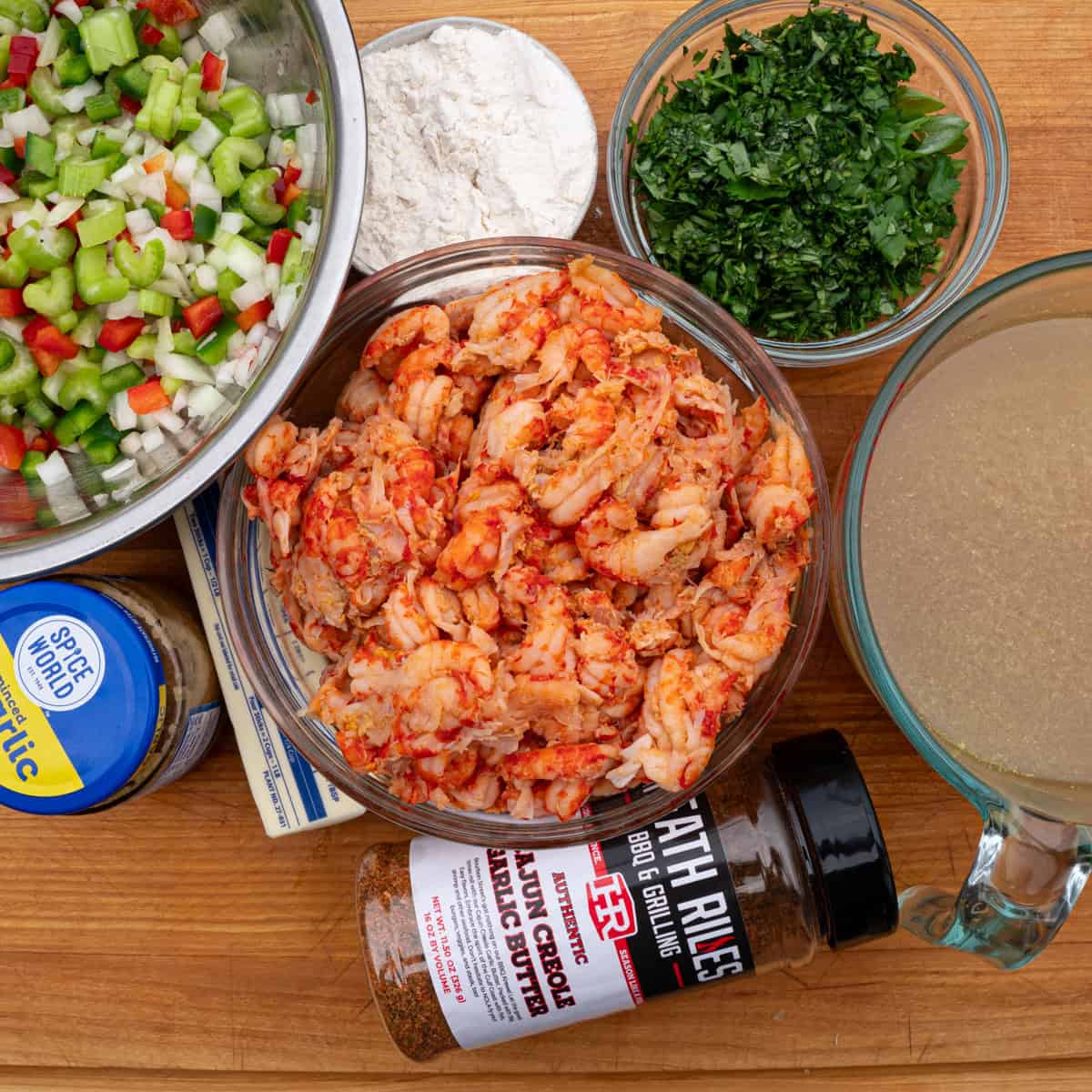
- Equal parts unsalted butter and All-purpose flour — for the roux
- Sweet onion, Red and green bell peppers, and Celery hearts — making our holy trinity
- Fresh Garlic
- Crawfish tail meat
- Chicken broth — I used chicken broth for this recipe because it’s what we tend to have on hand at home, but chicken stock is a great option too; it provides a slightly richer flavor and a thicker consistency due to its higher gelatin content.
- Cajun seasoning — Traditionally, I tend to use Tony Chachere's products, but recently I came across Heath Riles' Cajun Creole Garlic Butter Rub and absolutely love it!
- 1:1 ratio salt and pepper mix
- Green onions
- Fresh parsley
- Cooked White Rice — Use a 2:1 ratio of water to long-grain white rice. Bring 2 cups of salted water to a boil, then stir in 1 cup of rice. Cover and simmer for 15 minutes. Once done, remove from heat and let it rest—still covered—for 10 minutes. This method yields perfectly cooked, fluffy rice that pairs beautifully with etouffee.
Pro Tip
Use Louisiana crawfish tails if you can find them. Their quality is generally higher due to the specific freshwater habitats and diets in Louisiana, which contribute to a sweeter flavor and a more tender texture than imported crawfish. I didn’t realize what a big difference they make until I recently did a taste comparison after my local butcher shop manager recommended them. The local products are hands down the better option. Frozen imported tails work well, too (this is what you tend to see at big box grocery stores), and are a good bit cheaper—just make sure they are fully thawed and drained before use.
I get mine from my local butcher, who sources them directly from Louisiana, but ordering online from specialty retailers like Louisiana Crawfish Co. is an excellent option if you don’t have access to them in your area. Companies like them often provide high-quality, authentic Louisiana crawfish tails, making it easier for you to replicate the authentic taste of Cajun etouffee.
How to Make Cajun Crawfish Etouffee
Step 1: Make the Roux
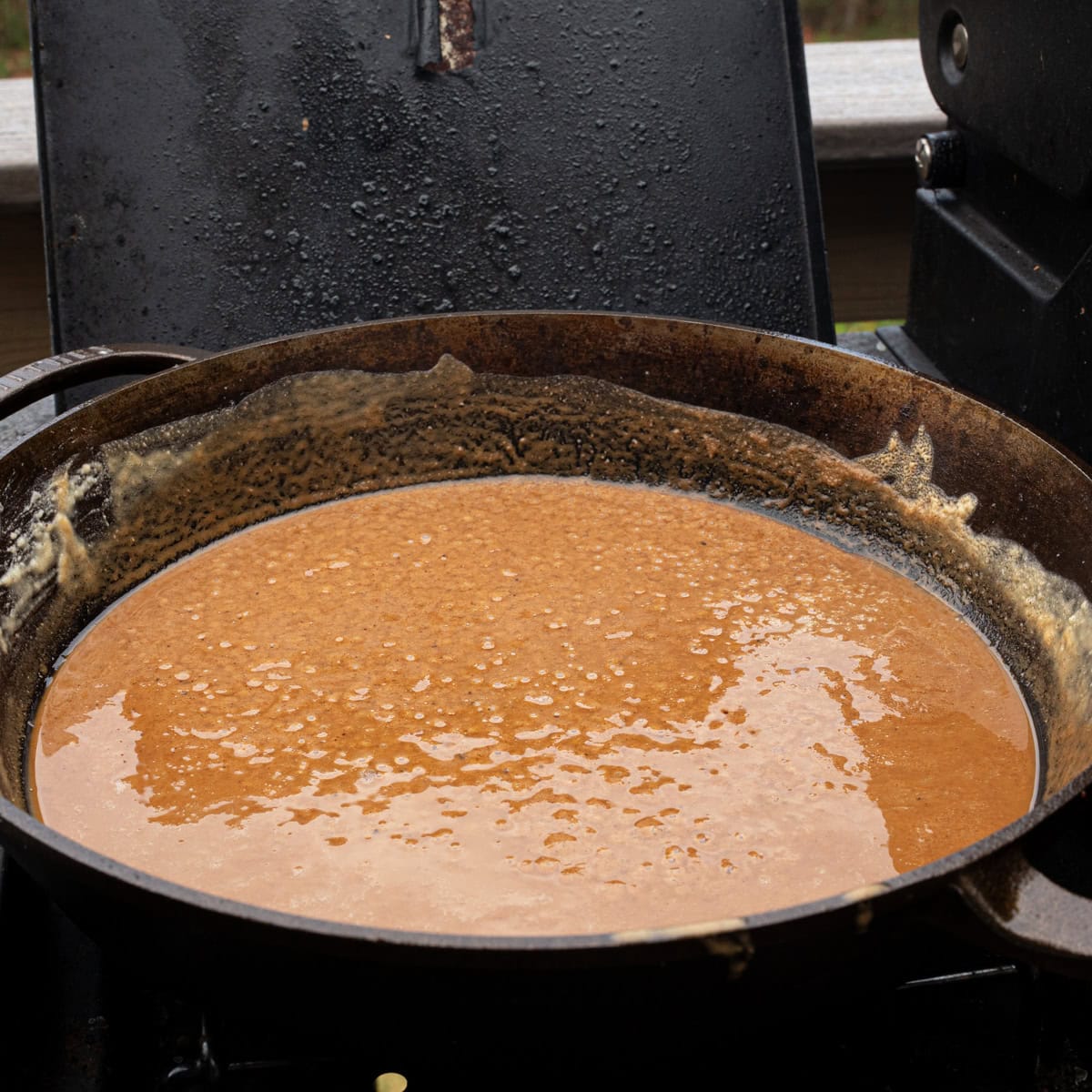
In a large skillet over medium heat, melt the butter — I tend to use a whole stick. Add in your flour in batches and whisk constantly until the roux darkens to a deep caramel or peanut butter shade—10 to 15 minutes. It’s essential to add the flour in batches so it doesn’t clump and burn in your pan, and this step is crucial for building flavor.
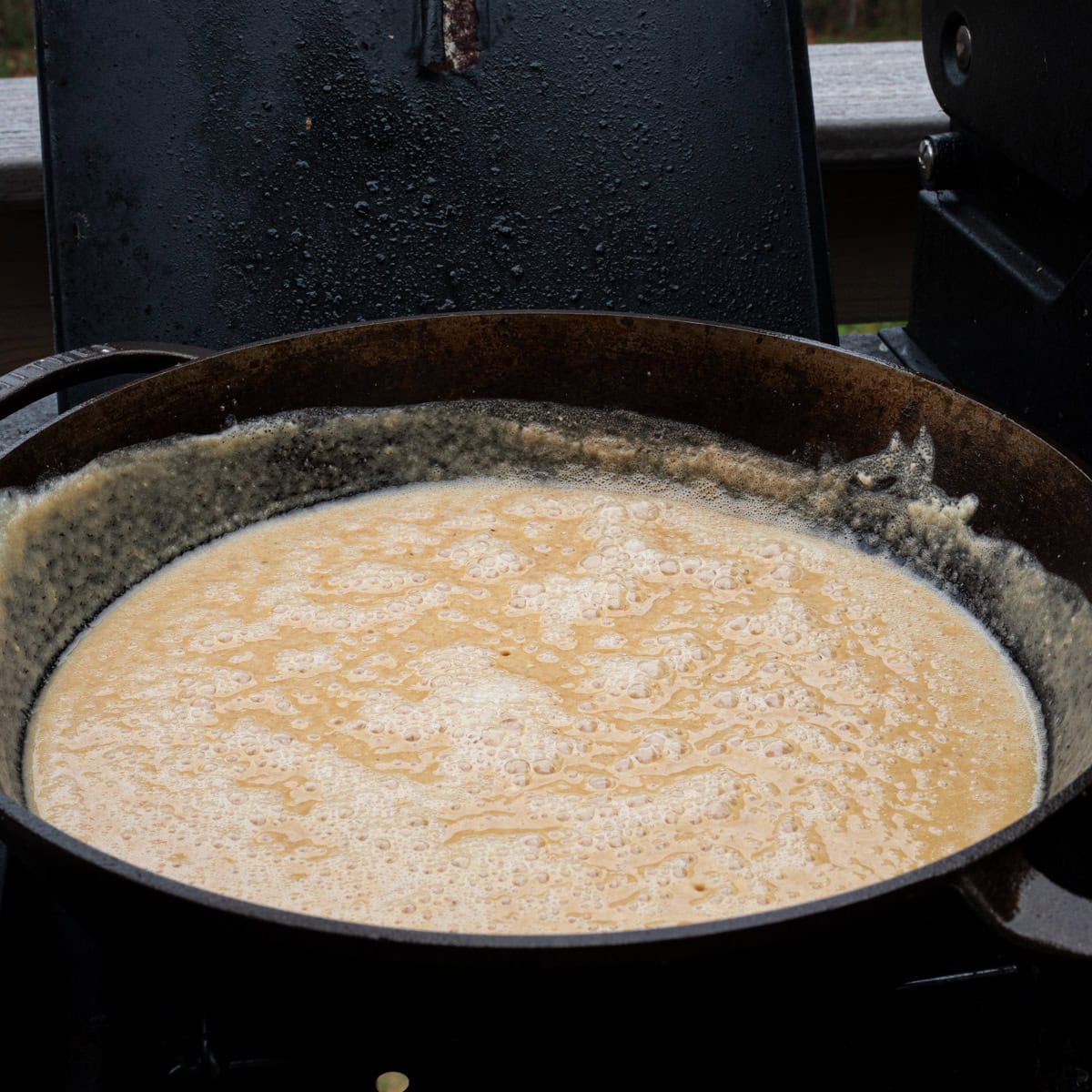
I prefer a darker roux for this dish because it adds a nuttier, deeper flavor, while a lighter one yields a milder sauce. Keep that in mind if you do want a milder-tasting sauce.
Step 2: Sauté the Aromatics
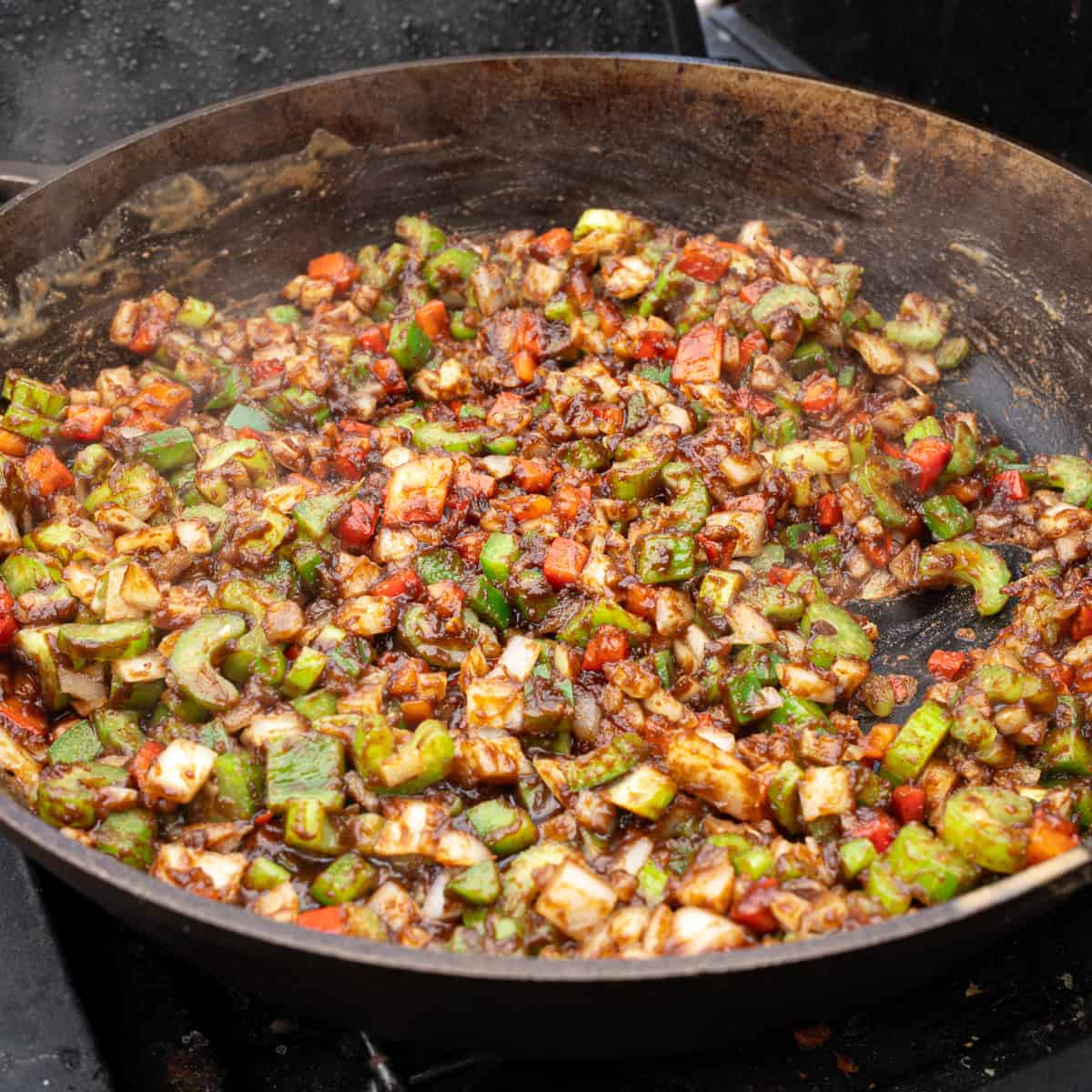
Stir in the diced onion, peppers, and celery. These ingredients are known as the Cajun holy trinity, and they’re the flavor base of just about every classic Louisiana dish. Let them soften for about 5 minutes, then add in the garlic and cook until fragrant — it’ll only take about half a minute.
Step 3: Build the Sauce
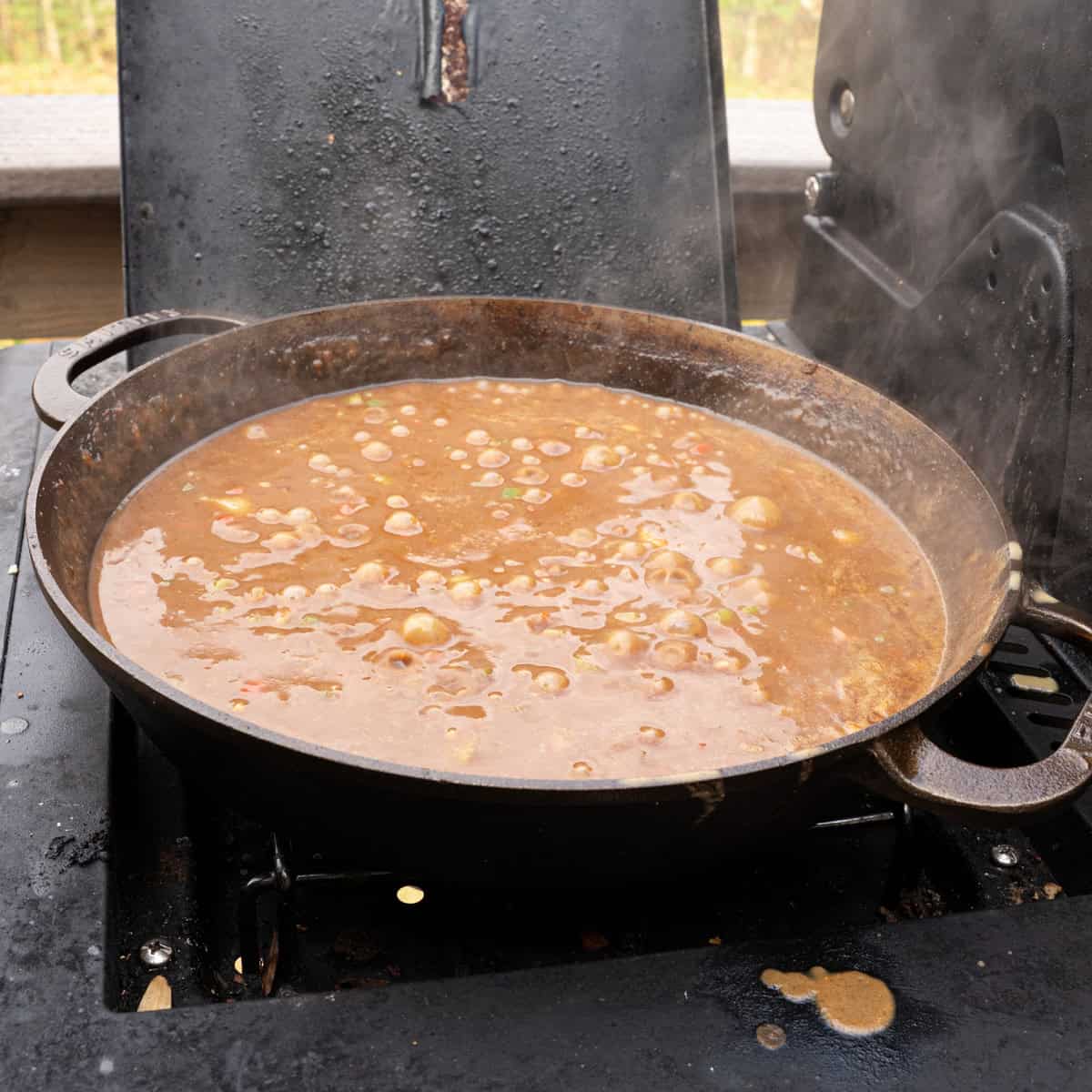
Pour in the chicken broth gradually, stirring to incorporate the roux. Add the Cajun seasoning and your salt-and-pepper mix. Let the sauce come to a gentle boil, then reduce the heat and simmer, uncovered, for 15 to 20 minutes. You’ll know it's ready when the bubbles slow down, and the sauce thickens enough to coat the back of a spoon. This is where everything starts to come together, becoming rich, creamy, and packed with flavor.
Step 4: Add the Crawfish
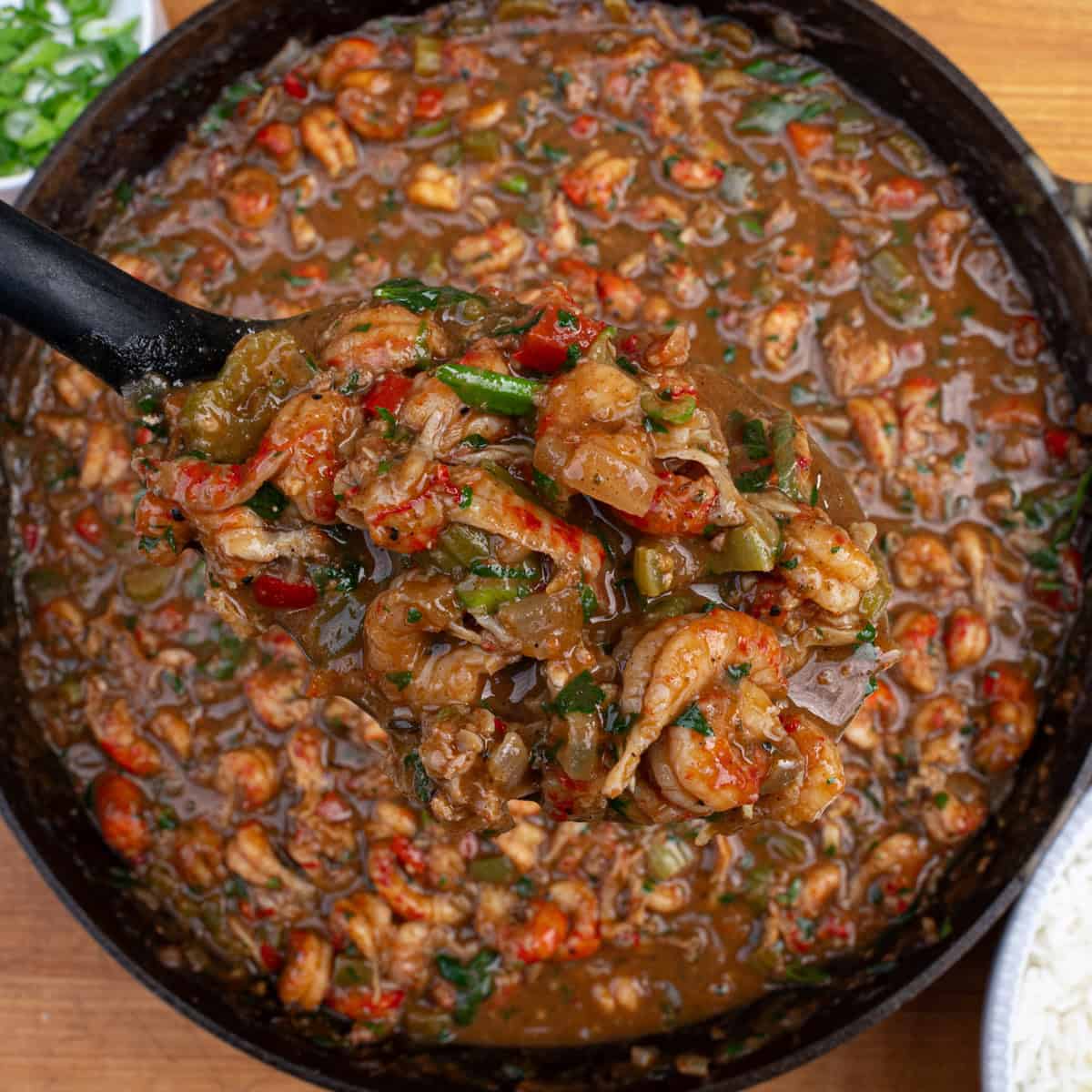
Fold in the crawfish tails, green onions, and parsley. Remember, since the crawfish tails are pre-cooked, we are only mixing them in and warming them up — no need to cook them, or they will just become rubbery.
Step 5: Serve It Up
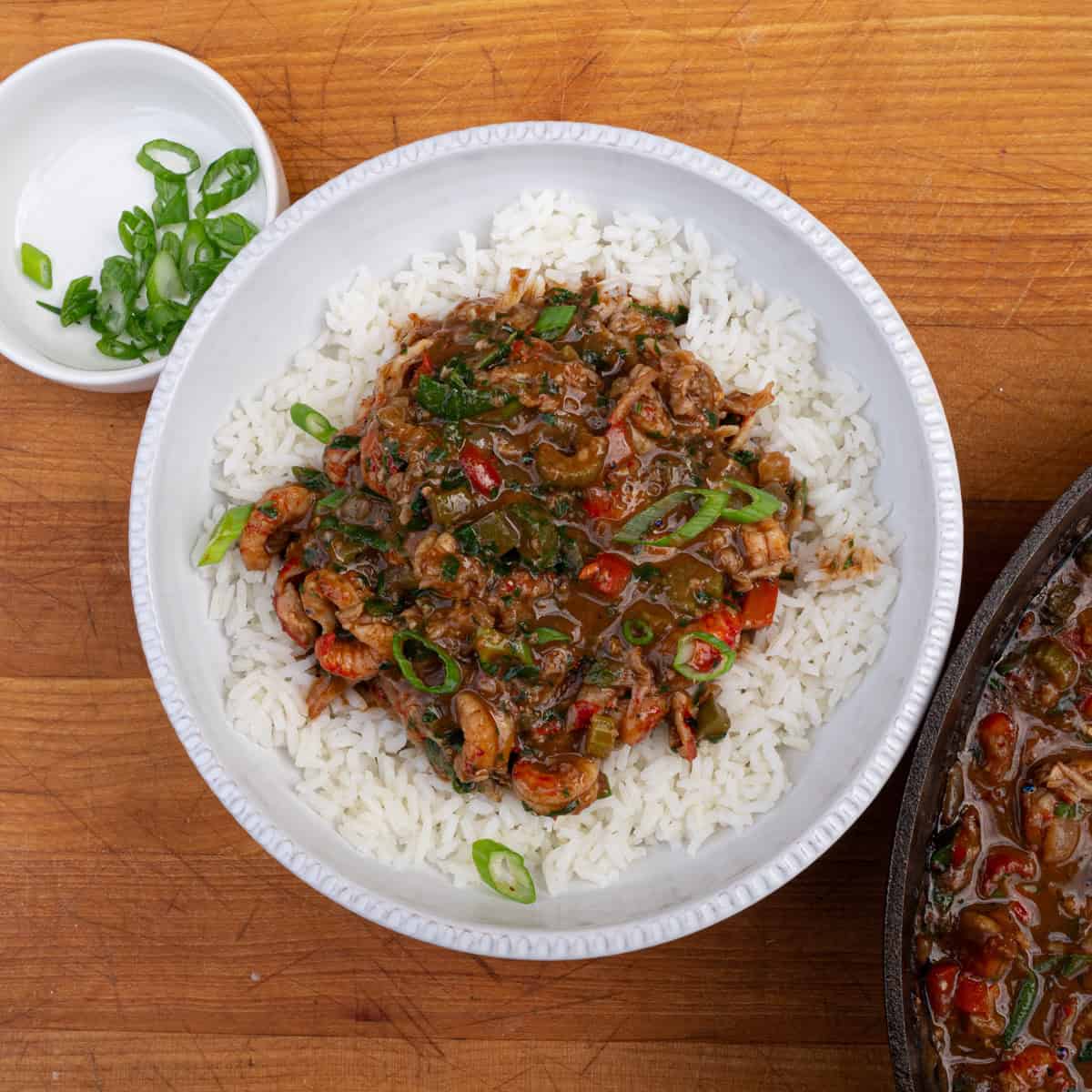
Ladle the etouffee over about a half-cup to three-quarters cup of warm, pre-cooked rice per person. Garnish with extra parsley and green onion if you want, or leave it off. Either way, you can serve it up and enjoy!
Serving Size & Scaling
This recipe serves 4–6 people, depending on portion size. It’s perfect for a family dinner or a small gathering. If you want to double the recipe (which I love to do so I can freeze leftovers for a rainy-day meal), it doubles easily—use a larger pot or Dutch oven to accommodate the extra volume. If you go this route, don’t forget to make sure you have enough rice cooked for everyone!
Equipment You’ll Need
- Large cast-iron skillet or Dutch oven
- Wooden spoon
- Ladle
- Sharp knife
- Measuring cups & prep bowls
- Stovetop or grill
Need to Adjust for Taste, Ingredient Availability, or Spice Level? Try One of These Easy Swaps
- Seafood Substitute – If you can’t find crawfish tails, go with shrimp. Frozen Louisiana crawfish tails are ideal, but shrimp is a solid backup and is more widely available. I like to use medium-to-large shrimp for this dish, like a 21-30 count variety.
- Broth Base – You can easily swap chicken broth or stock with seafood stock in this dish. I actually prefer it, but it's harder to come by, so I’ve always focused on chicken broth/stock varieties since they’re more widely available.
- Gluten-Free Roux – Use a gluten-free flour blend to keep things wheat-free. King Arthur and Bob’s Red Mill both offer products that are widely available and solid substitutes.
- How Spicy Is It? – This cajun crawfish etouffee has a moderate kick from Cajun seasoning that I don’t consider overly spicy, but you can adjust:
- Mild: Cut the Cajun spice in half.
- Medium: Follow the recipe as written.
- Hot: Add more cayenne, a diced jalapeno (seeds in), or add a few splashes of your favorite hot sauce.
Storage and Reheating Tips
Etouffee is a dish that benefits from time, with flavors that continue to develop after it’s made. Honestly, it’s very similar to chili, where it tastes even better the next day. Leftovers reheat well, too, making this an excellent recipe to prepare in advance. If you plan to do so, hold off on adding the crawfish until reheating to prevent them from drying out or becoming rubbery.
If you plan to make extras, allow the etouffee to cool completely at room temperature before storing. You can then transfer it to an airtight container and refrigerate for up to three days. For more extended storage, the dish can be frozen once thoroughly cooled and placed in a freezer-safe container. Properly stored, it will keep for 2 to 3 months.
To reheat, here are two easy steps:
- Stovetop: If frozen, thaw overnight in the refrigerator. Reheat gently in a saucepan over medium-low heat, adding a small amount of chicken broth or water as needed to loosen the sauce. Stir occasionally and avoid boiling, as excessive heat can negatively affect the texture of the crawfish. This is the best way to reheat the crawfish etouffee; it just takes a little more time.
- Microwave: I always include this option because it’s quick and convenient, but the stovetop method will yield results closer to the original dish. To microwave, reheat in short intervals, stirring between each, and cover loosely to retain moisture.
Don’t be afraid to repurpose leftover etouffee, either! It can also be used in other meals, such as served over grits, folded into an omelet, or spooned over a baked potato for an easy next-day option.
If You Liked This, You’ll Love Some of My Other Recipes!
- Blackened Grouper Sandwich
- Shrimp Po’boys with Cajun Remoulade
- Shrimp and Grits Empanadas
- Creole Tartar Sauce
- Shrimp-Stuffed Salmon
Recipe
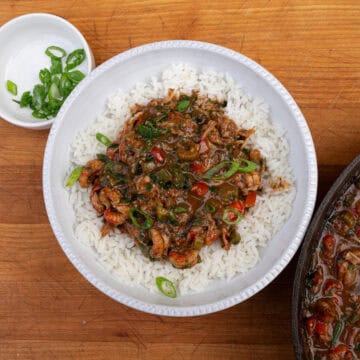
Easy Homemade Cajun Crawfish Etouffée
Equipment
- Large cast-iron skillet or Dutch oven
- Wooden Spoon
- Ladle
- Sharp knife
- Measuring cups & prep bowls
- Stovetop or Grill
Ingredients
- 5 T (just over half of a stick) unsalted butter
- ¼ cup all-purpose flour
- ½ sweet onion diced
- 2 bell peppers mix of red and green, diced
- 3-4 celery hearts diced
- 2 tablespoon minced garlic
- 1½ lbs crawfish tails precooked
- 2 cups chicken broth
- 2 teaspoon Cajun seasoning plus more as needed
- 1 teaspoon salt and pepper mix 1:1 ratio
- 2 T green onions sliced
- 2 T parsley chopped (plus more for garnish)
- 2 cups Cooked rice for serving
Instructions
- Make the Roux: In a large skillet over medium heat, melt the butter. Add the flour and whisk constantly until the roux turns a deep caramel or peanut butter color (about 10–15 minutes). Keep stirring to prevent burning.
- Cook the Aromatics: Add onion, bell peppers, and celery to the roux. Sauté until softened, about 5 minutes. Add garlic and cook another 30 seconds until fragrant.
- Build the Sauce: Slowly pour in the chicken stock while stirring to incorporate the roux. Add Cajun seasoning and salt/pepper mix. Bring to a gentle boil, then reduce to low and simmer uncovered for 15–20 minutes, until the sauce thickens.
- Add Crawfish: Stir in the crawfish tails, green onions, and parsley. Simmer another 5 minutes just to heat through—avoid overcooking so the crawfish stay tender.
- Serve: Spoon over warm cooked rice and garnish with extra parsley and green onions. Serve immediately.
Notes
- Crawfish Tails: Use frozen Louisiana crawfish tails if available. If substituting with shrimp, add them at the end and cook just until pink and opaque.
- Roux Tips: Stir continuously while making the roux to avoid burning.
- Make Ahead: Prepare the base ahead of time, but add the crawfish just before serving to keep them tender.
- Rice: Use a 2:1 water-to-rice ratio. Simmer for 15 minutes, then let it rest covered off heat for 10 minutes before fluffing.
Leave a Reply