
If you’ve ever smoked a pork butt and watched the internal temperature stall for hours, chances are you’ve wondered when you’re actually supposed to wrap it — and whether wrapping even makes a difference in the first place. And trust me, I get it. Wrap too early, and you risk softening the bark you worked so hard to build, but wait too long, and you may be sitting around well past supper waiting for the pork to finally finish cooking.
Figuring out the right time to wrap can feel confusing at first, but once you understand the temperature and texture cues to look for, it becomes much easier. The key is realizing that wrapping isn’t just about hitting a certain internal temperature. It’s also about bark color, texture, moisture retention, and how you want the finished pork to turn out. In this post, I’m going to break all of that down so you can confidently decide if and when to wrap your next pork butt — while still ending up with great bark, tender pulled pork, and a cook that finishes on time.
Jump to:
Most pork butts should be wrapped once the bark—the flavorful, textured crust that forms on the surface of the meat during smoking—is fully set and the internal temperature reaches around 170–180°F. Wrapping helps push through the stall, retain moisture, and shorten total cooking time while still producing tender pulled pork.
Why You Should Wrap Pork Shoulder
For pulled pork, wrapping can often be the difference between a 14-hour cook and a 9-hour cook. As a pork butt smokes, moisture slowly evaporates from the surface of the meat. Once the internal temperature reaches roughly 150–170°F, evaporation can cool the pork almost as quickly as the smoker heats it. This is what’s known as the stall.
Chances are, if you’re reading this post, you’re familiar with it at this point. You begin wondering whether the smoker temperature is too low, whether the meat has stopped cooking altogether, or whether dinner will be delayed by several hours. Wrapping helps push the pork through this phase by trapping heat and moisture around the meat, allowing the internal temperature to continue rising more efficiently instead of sitting in the stall for hours.
Beyond speeding up the cooking and retaining moisture, wrapping can also help you preserve the bark — assuming you wrap at the right time. Timing matters because wrapping too early can soften the exterior before the bark has fully developed.
The Argument Against Wrapping
That said, not everyone agrees that you should wrap a pork butt. Traditionalists will tell you that smoking them unwrapped is better because it creates thicker bark and a slightly firmer exterior texture. And I will say, if there’s one cut you can truly get away with not wrapping, it’s a pork butt because of how fatty it is. That being said, I’ve made pork butt this way, and I truly prefer wrapping them, because I’ve found that even though it gives you a great bark, unwrapped pork butts do come out much drier in comparison.
What Temperature to Wrap Pork Butt
I’ve read so many articles and seen countless videos over the years, and more often than not, the internal temperature recommendation for wrapping a pork shoulder is 165°F. I’m here to tell you that it is dead wrong. I’ve found the perfect wrapping temperature to be between 170°F - 180°F.
At the end of the day, it always boils down to the particular pork butt you’re working with that particular day, but more often than not, I’ve found that if you actually wrap a pork shoulder at 165°F, the bark isn’t quite formed enough yet, and you wind up with a mushy end product. Not a bad end product, mind you — but one without the bark you are likely looking for. By waiting to wrap until 170°F-180°F, you’re just past the stall, the bark has formed nicely, and you can still reap the benefits of the wrap for a faster cook. It’s the best of both worlds.
What Other Cues Should You Look for When It’s Time to Wrap?
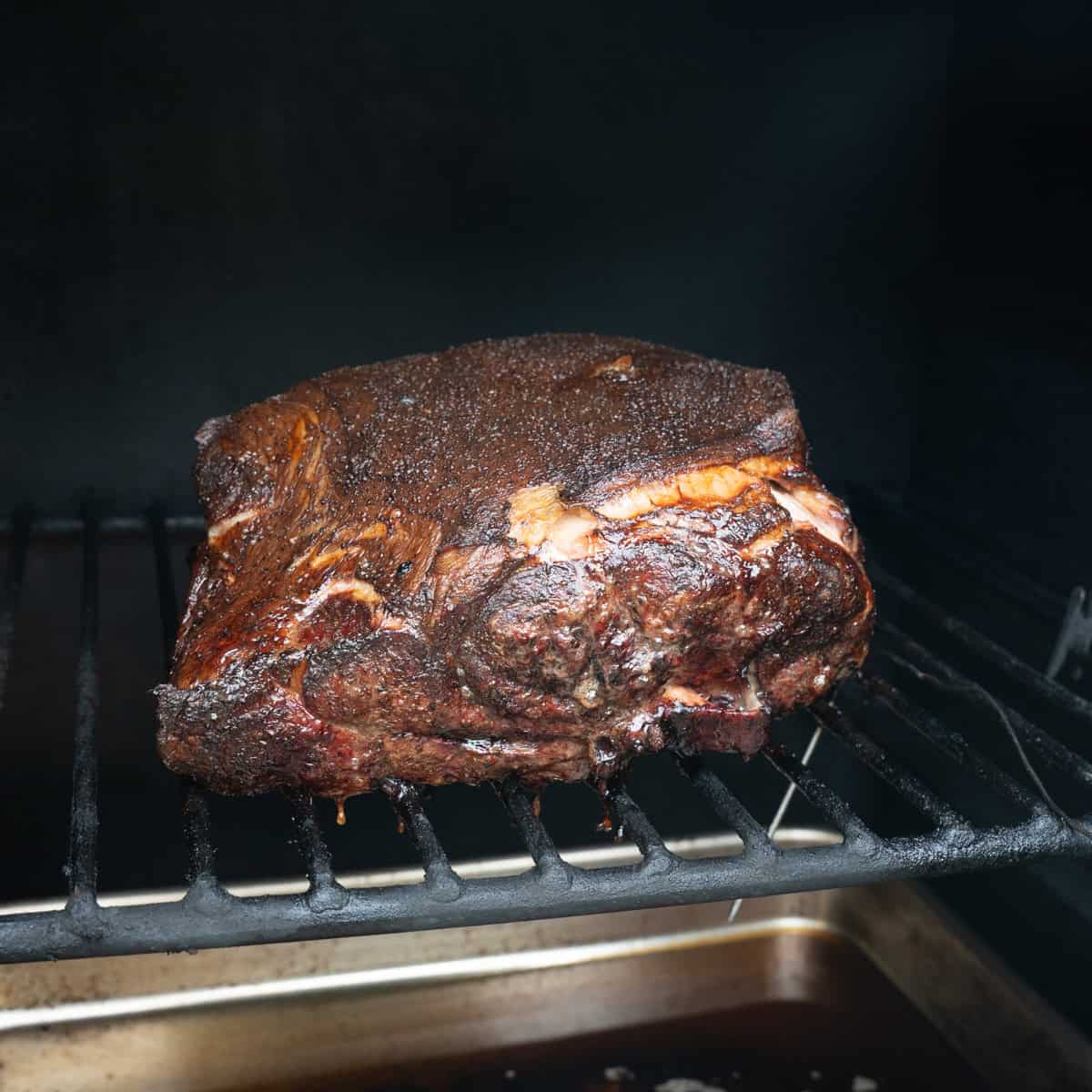
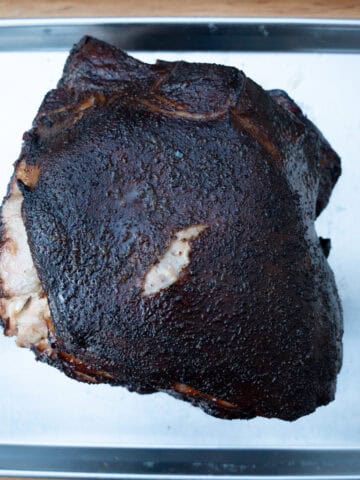
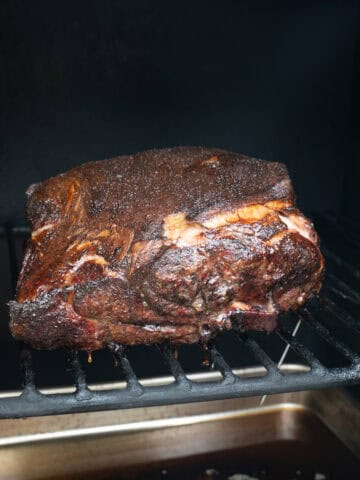
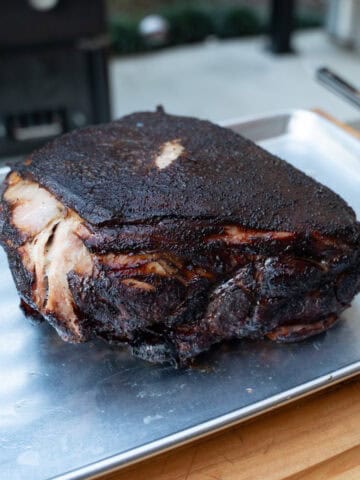
That being said, temperature alone doesn’t tell the whole story. The better indicator is bark development. Before wrapping, the outside of the pork shoulder should look:
- Dark red or mahogany brown
- HDry on the surface instead of glossy
- Textured with bark beginning to crust
- Slightly rendered around fatty sections
- “Set” enough that the rub doesn’t wipe away easily (this is the easiest indicator that it’s time to wrap, in my opinion)
For most pork butt smoking cooks running between 250–275°F, this bark stage usually happens around the 4–6 hour mark.
On most 8–10 pound pork butts cooking at 275°F, I usually end up wrapping around the 5 or 6-hour mark once the bark fully sets and the fat starts rendering across the surface. But keep in mind, time is the least reliable factor for wrapping a pork butt — focus more on the physical cues and internal temperature.
Should You Wrap Pork Butt with Aluminum Foil or Butcher Paper?
This really comes down to two options: aluminum foil and butcher paper. This always seems to be a heated debate in BBQ circles that, quite honestly, I find to be more of a regional preference than anything else. Both are great options and will get the job done, and I’ll walk you through both (plus when not to wrap) below.
Aluminum Foil
Aluminum foil traps almost all the heat and moisture around the pork butt, creating a more braising effect that helps the meat cook much faster. This is the method I personally use most often, especially when I’m trying to speed up the cooking process. Because foil holds in so much moisture, it produces extremely juicy pulled pork and also makes cleanup easier afterward. The trade-off is that the bark softens more quickly than with butcher paper.
When To Use Aluminum Foil
If you’re running behind schedule, want a softer bark, or simply need the fastest cook possible while maximizing moisture retention, wrapping in foil is usually the better option.
Butcher Paper
Butcher paper works differently from aluminum foil because it’s breathable. Instead of fully trapping steam like foil, it allows some moisture to escape while still protecting the pork shoulder from drying out. This helps preserve the bark better and creates a slightly firmer, more “Texas Style” bark while still retaining plenty of moisture. Pink butcher paper has become especially popular for smoking brisket and pork butt because it strikes a good balance between bark development and moisture retention.
When To Use Butcher Paper
If bark is your top priority, butcher paper is the way to go. That said, I think it’s better for beginners to start with aluminum foil, then transition to butcher paper once they are comfortable with the technique, since wrapping meat in butcher paper is slightly more nuanced.
How to Wrap a Pork Butt
Step 1: Prepare your wrapping material
Lay out two overlapping sheets of either heavy-duty aluminum foil or unwaxed pink butcher paper large enough to fully wrap the pork butt. Note that if you are using butcher paper, I find it helps to spritz it with liquid before adding the meat so it's more pliable and doesn’t roll up on you.
Step 2: Place the pork butt in the center
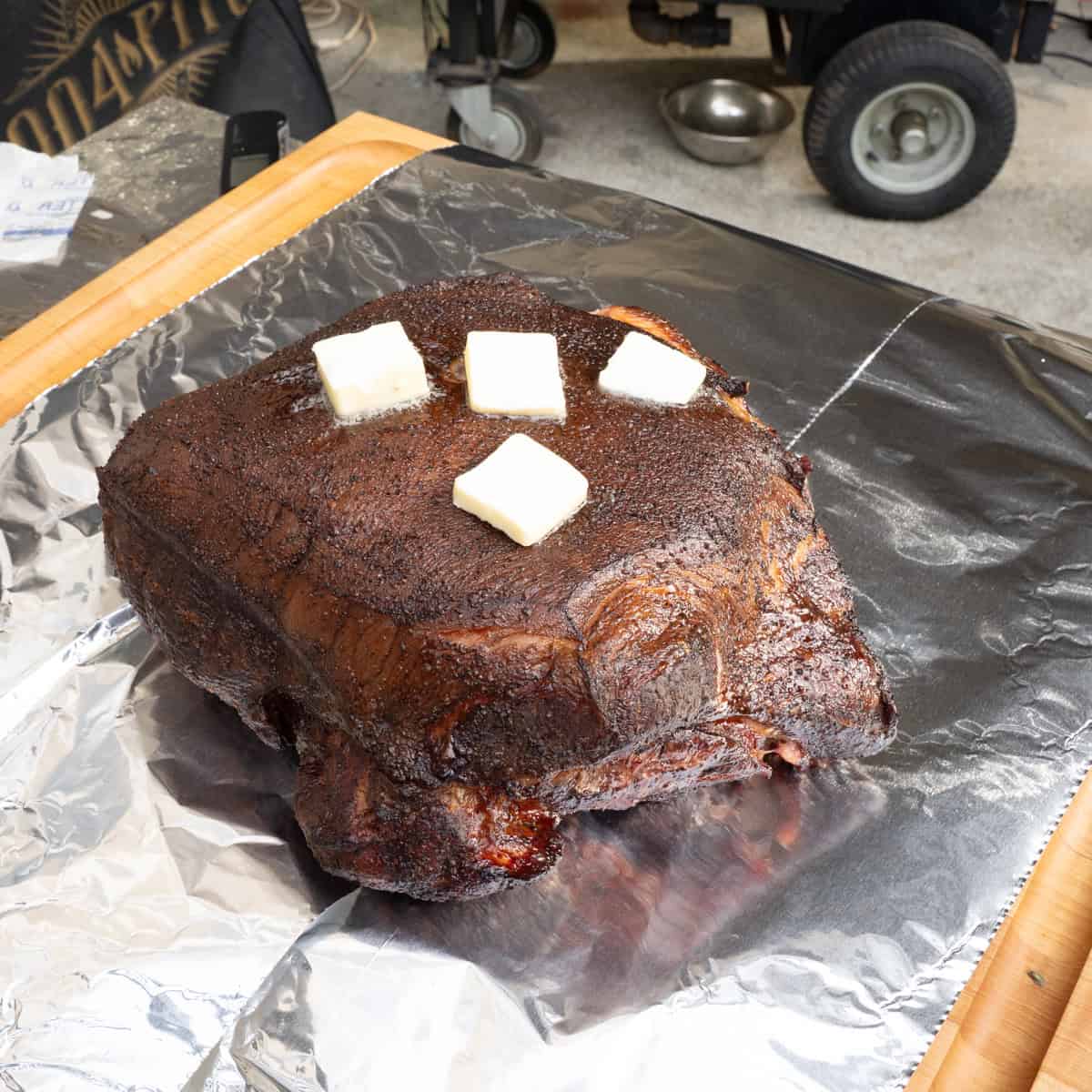
Set the pork shoulder in the middle of the wrapping material with the fat cap facing up. This helps keep the fat rendering down on the meat as it continues to cook.
Adding liquid with foil (optional)
If you’re wrapping with aluminum foil, you can add a small amount of liquid like apple juice, apple cider vinegar, or even water plus butter, BBQ sauce, or brown sugar before sealing the wrap. Really, there are a lot of different ways you can go with it, so you can be as fancy as you want or as simple as you like. Since aluminum foil isn’t porous like butcher paper, the liquid will stay in the foil, helping expedite the cooking process and tenderize the meat.
Step 3: Wrap tightly
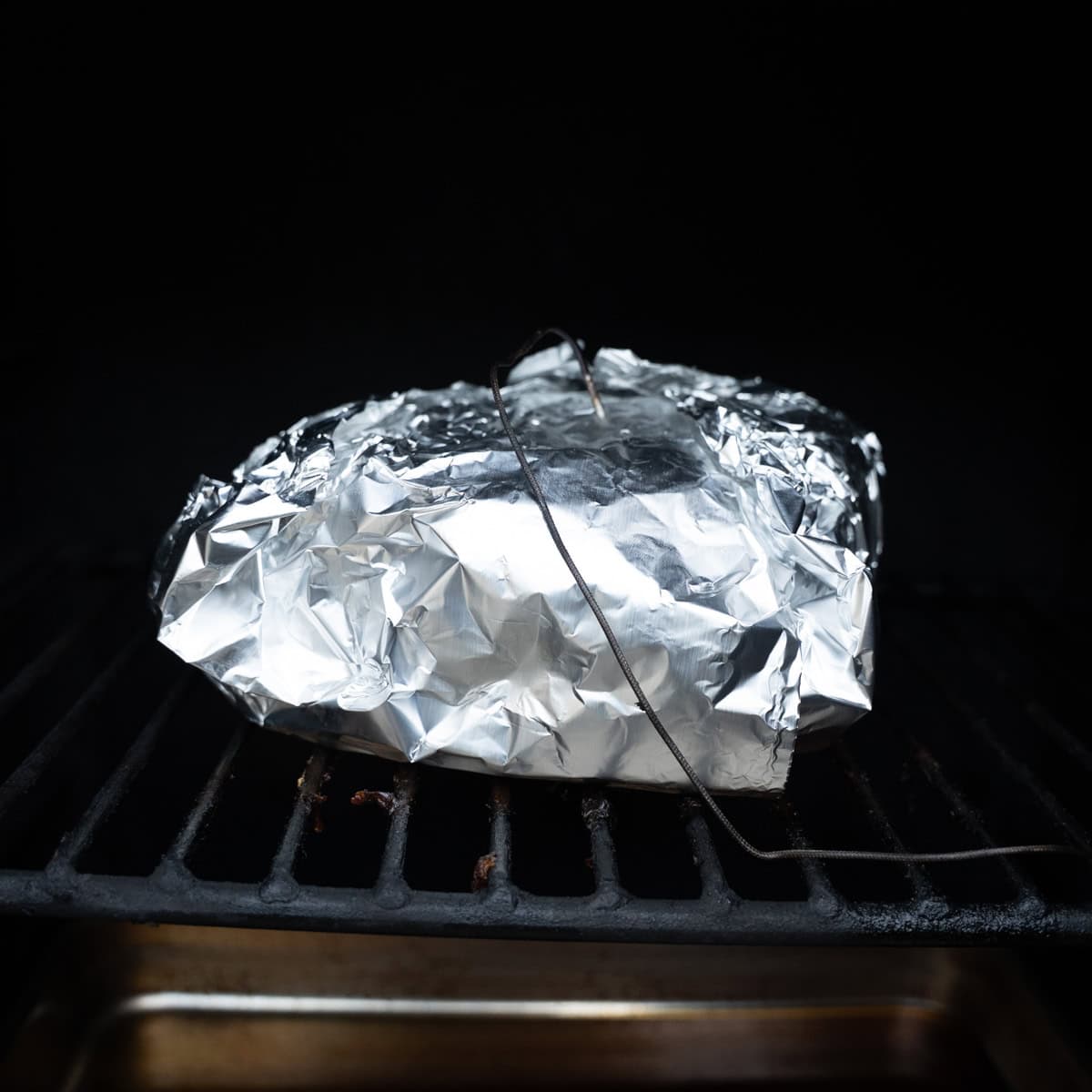
Fold the sides inward and wrap the pork butt tightly, fully enclosing it. I always like to make sure the wrap's opening faces upwards so that if I am using any liquid in the wrap, it doesn’t spill out the bottom.
Step 4: Return to the smoker
Place the wrapped pork butt back onto the smoker and continue cooking until it becomes probe tender, which usually occurs at an internal temperature of 203–212°F. You can check out my article here for an in-depth overview of why I prefer taking a pork butt to this high a temperature range.
How Long Does Pork Butt Take After Wrapping?
Once wrapped, pork butt usually finishes cooking much faster because the wrap traps heat and moisture around the meat. Do note, though, that you will likely notice the temperature decrease for a few minutes once you place the wrapped pork butt back on the smoker. This happens because:
- You removed the meat from the smoker, which lowered the internal temperature, and now the pork butt needs to restabilize
- If you add liquid, it will slightly cool the pork butt until the smoker heats the liquid enough to continue braising the pork.
Once the temperature stabilizes, though, it will start to rise much more rapidly than before. Depending on the size of the pork shoulder and your smoker temperature, most pork butts take another 2–4 hours after wrapping. At higher temperatures like 275-300°F, the pork typically moves through the stall fairly quickly, whereas at lower temperatures like 225°F, it can still take several additional hours.
Keep in mind that every pork butt cooks a little differently depending on reasons like size, fat content and airflow inside the smoker, so it’s important not to rely strictly on time alone. Internal temperature is a useful guideline, but tenderness is ultimately the real indicator of doneness.
Should You Rest Wrapped Pork Butt?
If you have the time, I highly recommend resting pork butt once it’s finished cooking. I’m such a big believer in the rest that I have written a full blog post on why it is so important, which you can find here.
Resting meat does a few things:
- It gives the rendered juices time to redistribute through the meat.
- It allows collagen and muscle fibers to continue breaking down, making the meat even more tender, since you’re pulling it from the smoker at ~203-212°F.
- The rest gives you time to yourself, whether that’s family time or getting the plates, sides, and condiments ready for guests.
I like to rest a pork butt for a few hours at minimum if possible, since the ideal time to shred and serve it is when it drops to close to 140°F. If I’m in a hurry, I’ll just let it rest on the counter in a food-safe container, or I’ll hot hold it in a cooler wrapped in a towel if I need to hold it for a longer period.
Leave a Reply