
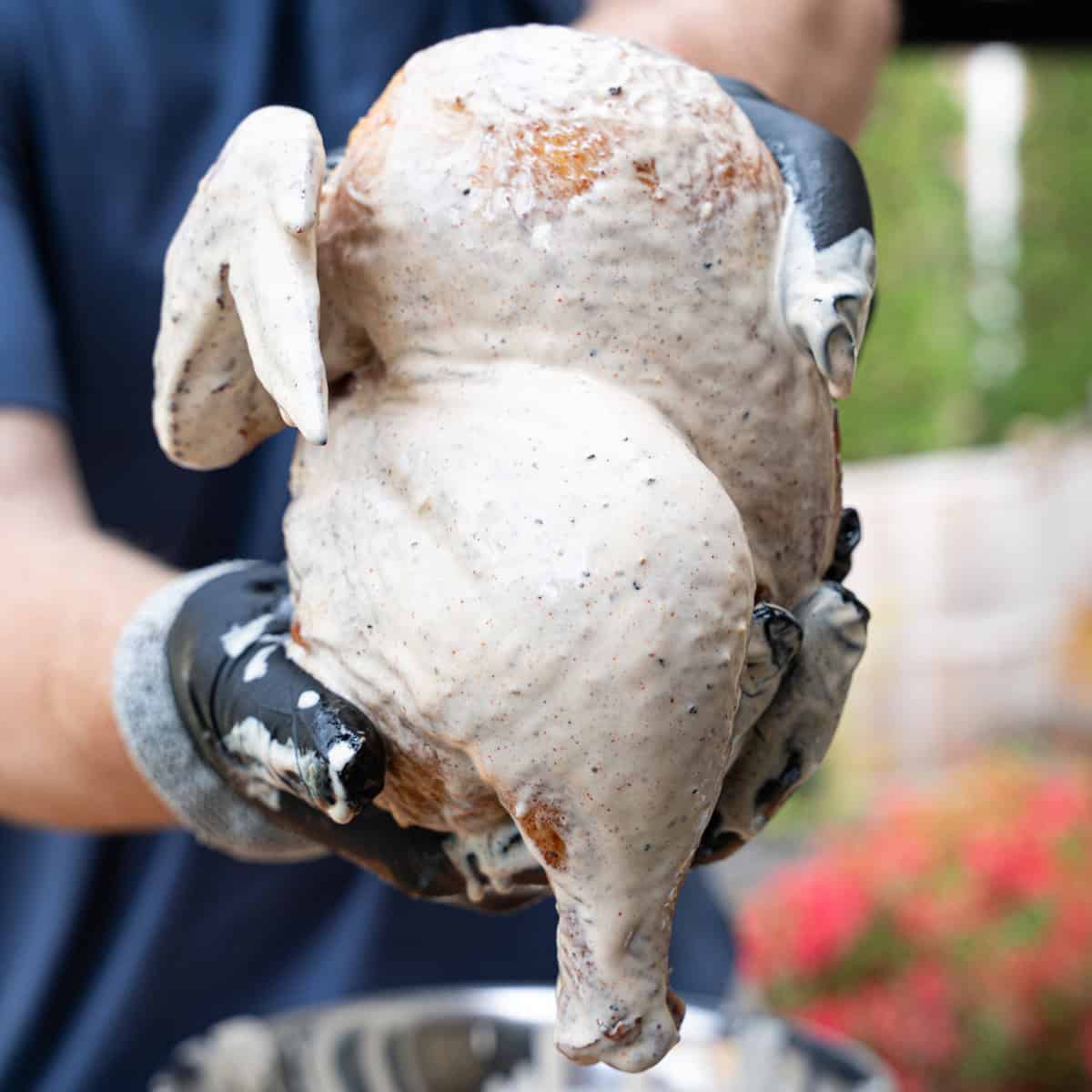
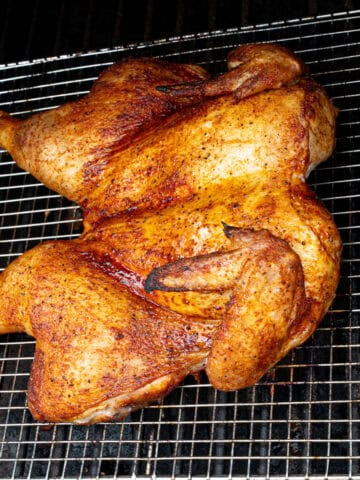
If there’s one thing I never get tired of, it’s smoked chicken halves. Smoked chicken halves are one of the easiest ways to get juicy meat, crispy skin, and excellent BBQ flavor, all in an extremely simple cook. That's partly because splitting a whole chicken into halves helps it cook more evenly, gives you better control over temperature, and is perfect for a pellet grill or smoker.
If you’ve ever struggled with rubbery skin or dry chicken, this method fixes both. In this smoked chicken recipe, I’ll show you exactly how I cook chicken halves so they come out tender and flavorful every time, and I’ll share an easy sauce recipe to pair with them. Beyond that, I’ll also cover cooking temps and timing so you can easily replicate this recipe at home.
Jump to:
- WHY COOK CHICKEN HALVES INSTEAD OF A WHOLE CHICKEN?
- WHAT TEMP TO SMOKE CHICKEN HALVES
- INGREDIENTS
- INSTRUCTIONS
- EXTRA TIPS FOR CRISPING THE SKIN ON SMOKED SPATCHCOCK CHICKEN
- Equipment
- Other BBQ Sauces to Try with Smoked Chicken Halves
- STORAGE TIPS FOR BEST RESULTS
- THE RIGHT WAY TO REHEAT SMOKED CHICKEN
- Recipe
WHY COOK CHICKEN HALVES INSTEAD OF A WHOLE CHICKEN?
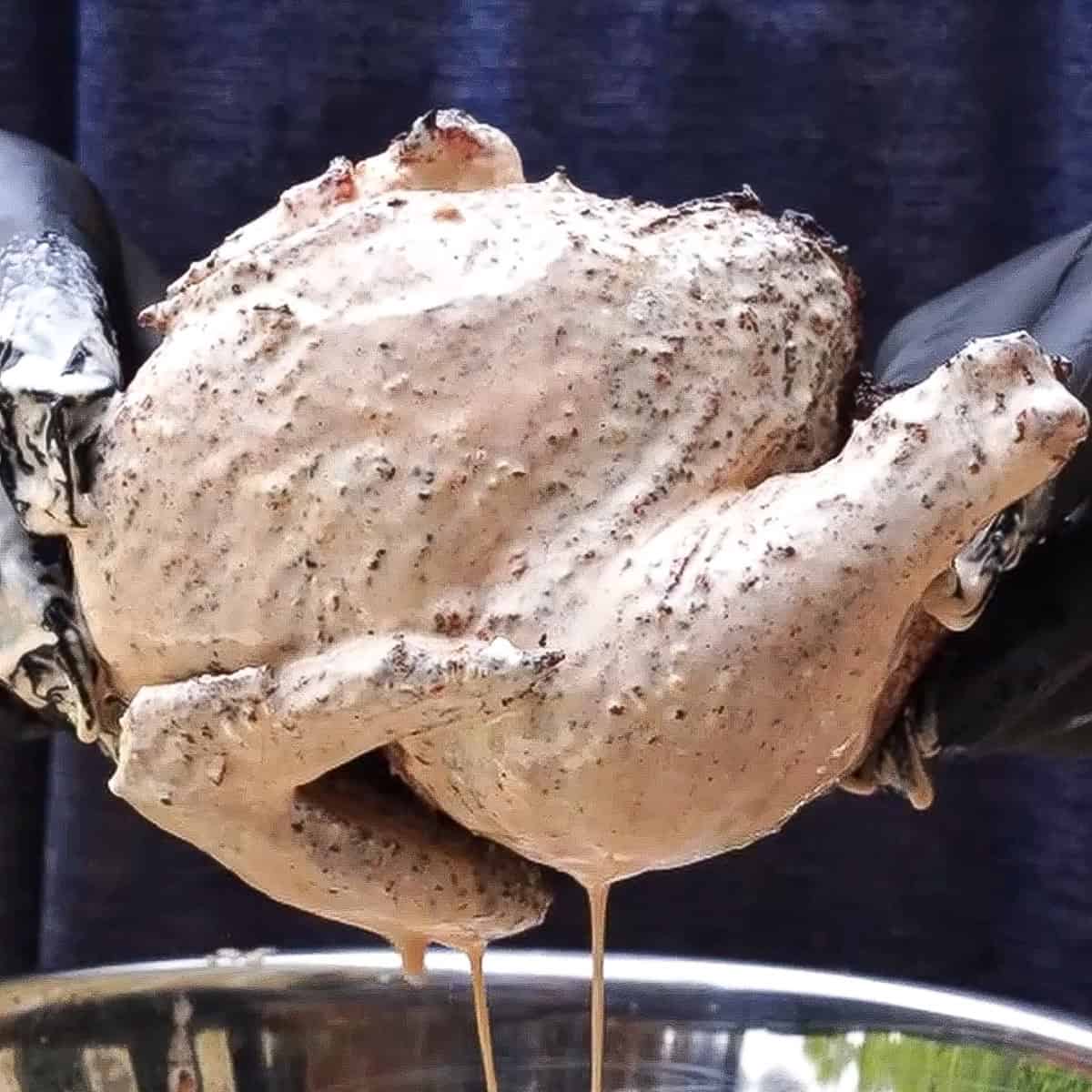
If you’ve ever struggled to cook a whole chicken evenly, switching to chicken halves makes things much easier. When you cook a whole chicken, the breast and dark meat don’t finish at the same time because each section has varying degrees of thickness. As I have covered before, that usually leads to either dry breast meat or undercooked thighs if you don’t cook the chicken properly.
With smoked chicken halves, you get:
- More even cooking across the entire bird because chicken halves are more uniform in size.
- Faster cook times since there is less overall chicken.
- Better control over crispy skin since the entire skin side is facing upwards, taking on heat instead of partially touching the grates, which can create some sogginess or a more moist texture.
- Easier seasoning and handling, since the chicken halves lie flat when placed bone-side down.
I still cook whole chickens from time to time, but when I want consistent results—especially with my BBQ chicken—I tend to gravitate towards chicken halves.
WHAT TEMP TO SMOKE CHICKEN HALVES
Temperature is everything when cooking smoked chicken halves. And the thing is, in my opinion, most people try smoking chicken the wrong way. That’s because most people tend to treat chicken like a pork shoulder or a brisket, but they are entirely different cuts of meat. Chicken is much leaner and lacks the intramuscular fat that pork or beef has, so it doesn't need as long on the smoker, and it can benefit from higher temperatures since there’s less collagen to break down. Plus, those higher temperatures help get a crispier skin. I’ll provide a quick breakdown including temperatures and my thoughts below:
- 225-275°F: More smoke, but tends to create rubbery skin. I try to avoid this temperature range whenever possible with chicken halves.
- 300-350°F: If you’re cooking on a classic smoker or charcoal-style grill, this is the sweet spot for smoked chicken in my opinion. Chicken benefits from a more “hot and fast” BBQ approach, and on charcoal and wood-burning grills, I’ve found that this range provides the perfect balance of smoke flavor and crispy skin.
- 350-400°F: When I’m cooking on a pellet smoker, I tend to gravitate towards this range. That’s because pellet grills don't quite do as good a job of crisping chicken, so I’ve found that increasing the temperature, while sacrificing some smoky flavor, is the best way to go when cooking on a pellet grill.
HOW LONG TO SMOKE CHICKEN HALVES
All that being said, here’s a general window when you can expect the chicken to be done, given the ranges I listed above. Just remember, these are guidelines, not hard-and-fast rules. There are a number of factors, including the size of the chicken halves, grill type, temperature, humidity, etc., that will affect this. Use this guide as a starting point and adjust from there based on the chicken and grill that you will be cooking it on:
- 225°F: 1.5–2 hours
- 250-275°F: 1.25–1.5 hours
- 300-350°F: 60-75 minutes
- 350-400°F: 45–60 minutes
INGREDIENTS
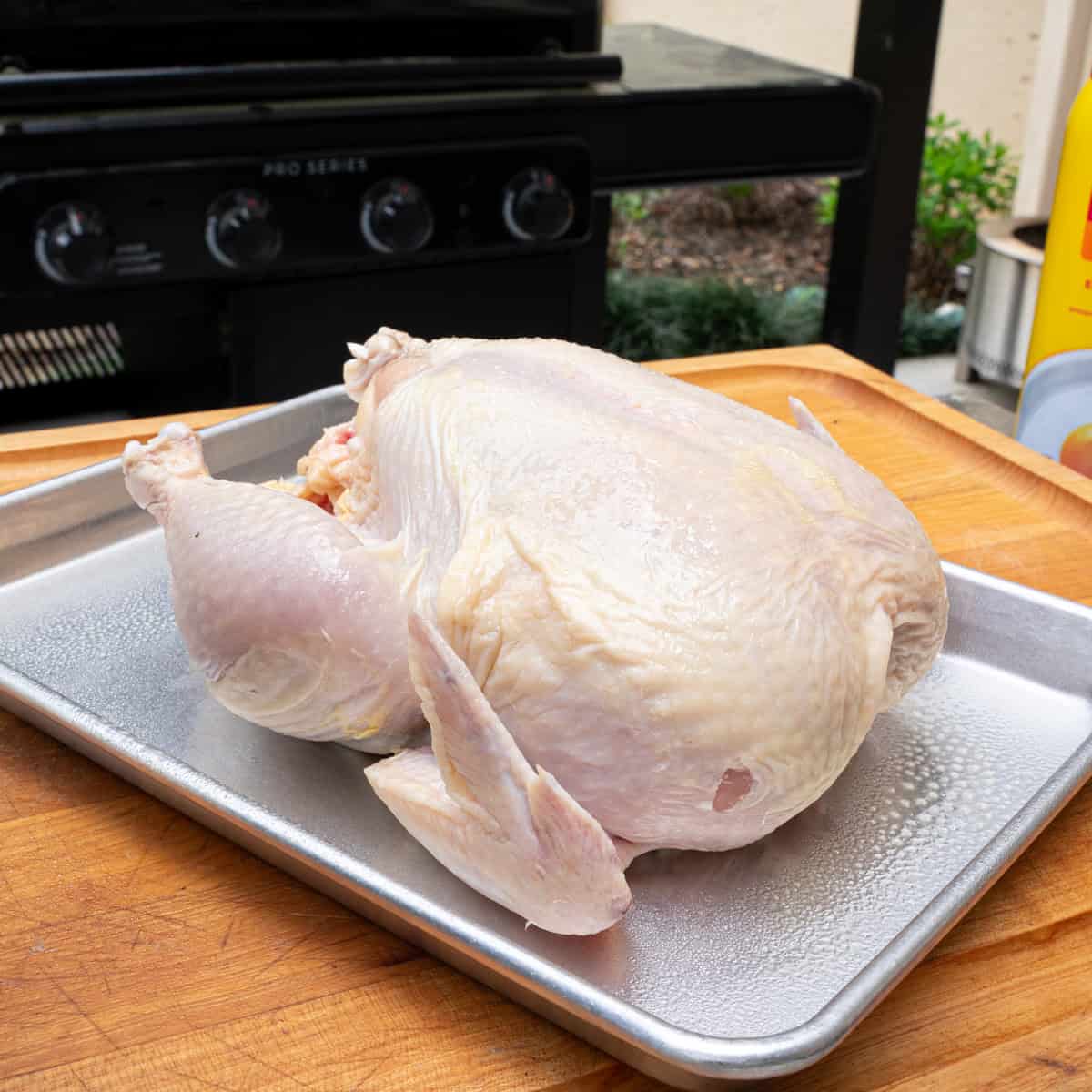
Whole Chicken: For this recipe, I spatchcocked and halved the chicken to ensure even cooking and faster cooking time. Provides a good balance of white and dark meat, with crispy, seasoned skin. And while this shouldn't be a major consideration most of the time, it definitely gives an excellent presentation this way, too.
BBQ Rub: Typically, I use salt and pepper when smoking meats, but when I make chicken, especially with this sauce, I opted for Brad Prose's new seasoning "Sedona Sand" because it has great flavor, color, and a little spice, all of which pair well with chicken, especially when paired with this Georgia white sauce. As with any BBQ rub, the key is to use light sugar unless you're cooking at low temperatures, which is what we're doing here.
BBQ Sauce: You can go just about any way you like, but for this cook, I made what I’m coining the Georgia White Sauce. I happened upon this when I was actually going to make the traditional Alabama white sauce, but I realized I was out of a few key ingredients, and so I improvised. I have this version in the recipe card at the bottom of the page, and I also list my classic Alabama white sauce recipe at the bottom of the blog post.
INSTRUCTIONS
STEP 1: MAKE YOUR SAUCE
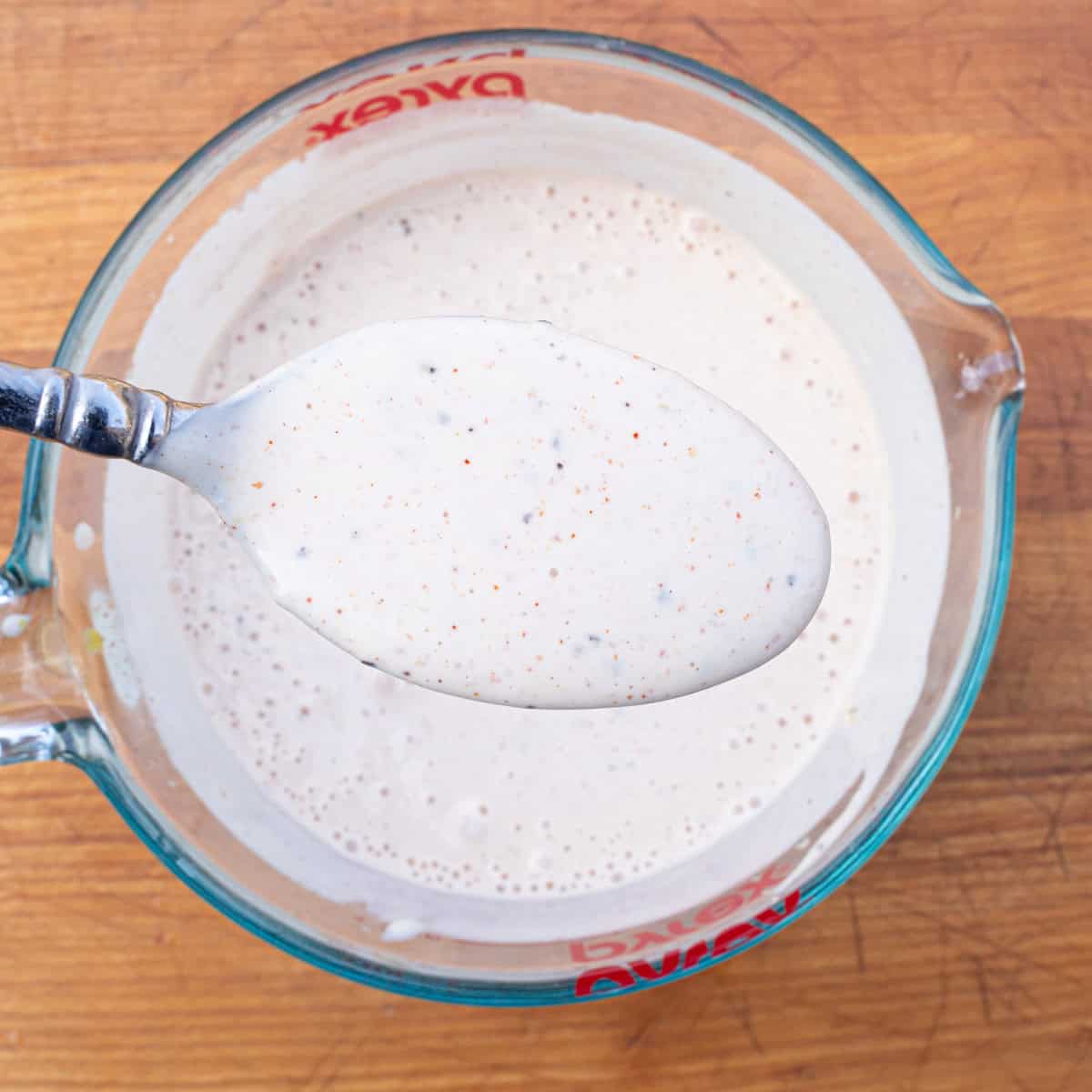
Combine all of the ingredients listed on the recipe card in a mixing bowl. Stir until thoroughly blended and smooth. Taste and adjust salt as needed. Chill in the fridge while the chicken cooks -- it's that easy.
STEP 2: PREP THE CHICKEN
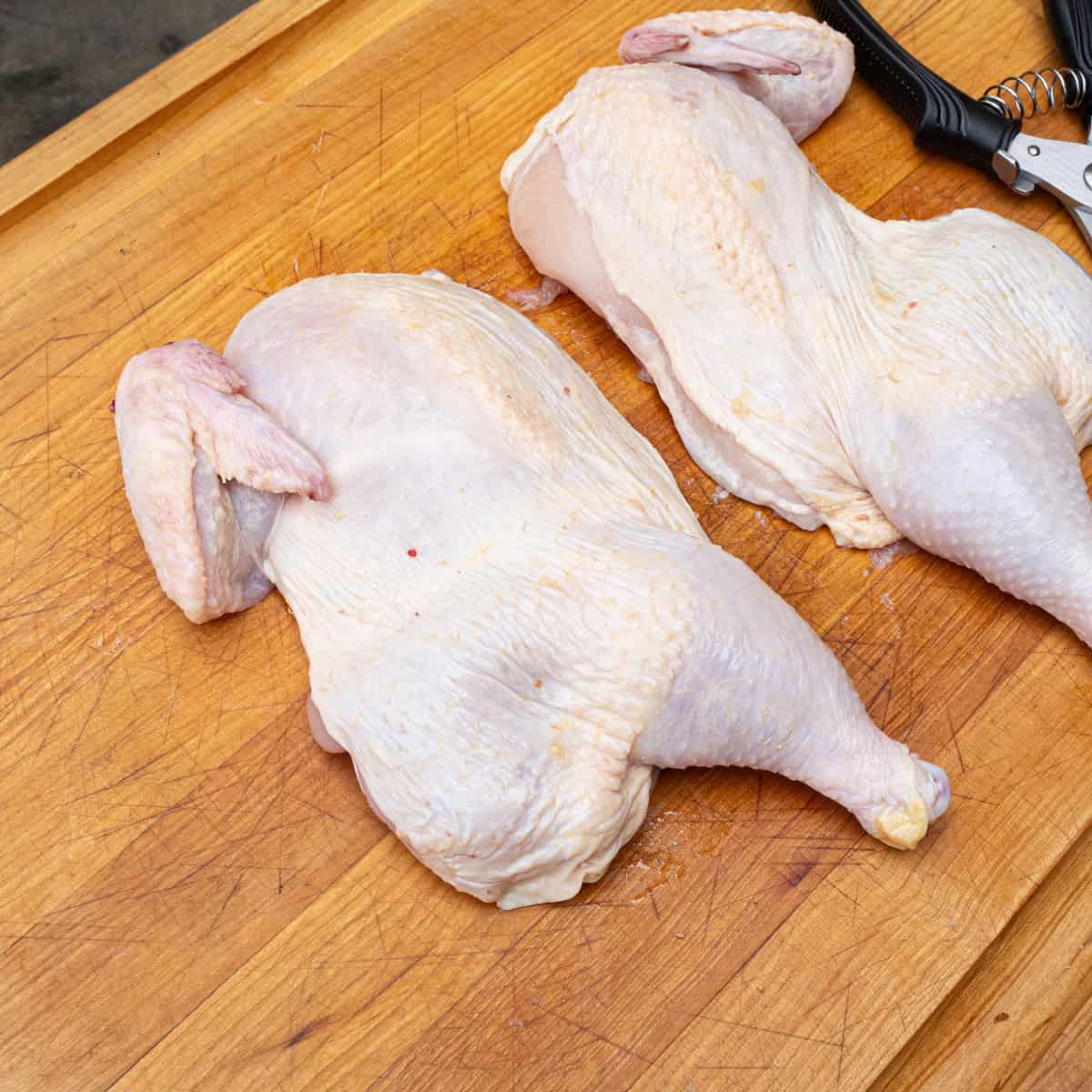
Take a whole chicken and use kitchen shears to cut along both sides of the backbone to remove it completely. Flip the bird breast-side up and press down firmly to flatten it—that’s your spatchcock (I’ve got a whole guide on this process if you’re interested in getting into the details). From there, cut straight down the center of the breast to split the chicken into two halves. Check the inside and remove any leftover organs or bits. Then pat the chicken dry with paper towels—moisture is the enemy of crispy skin.
STEP 3: SEASON THE CHICKEN
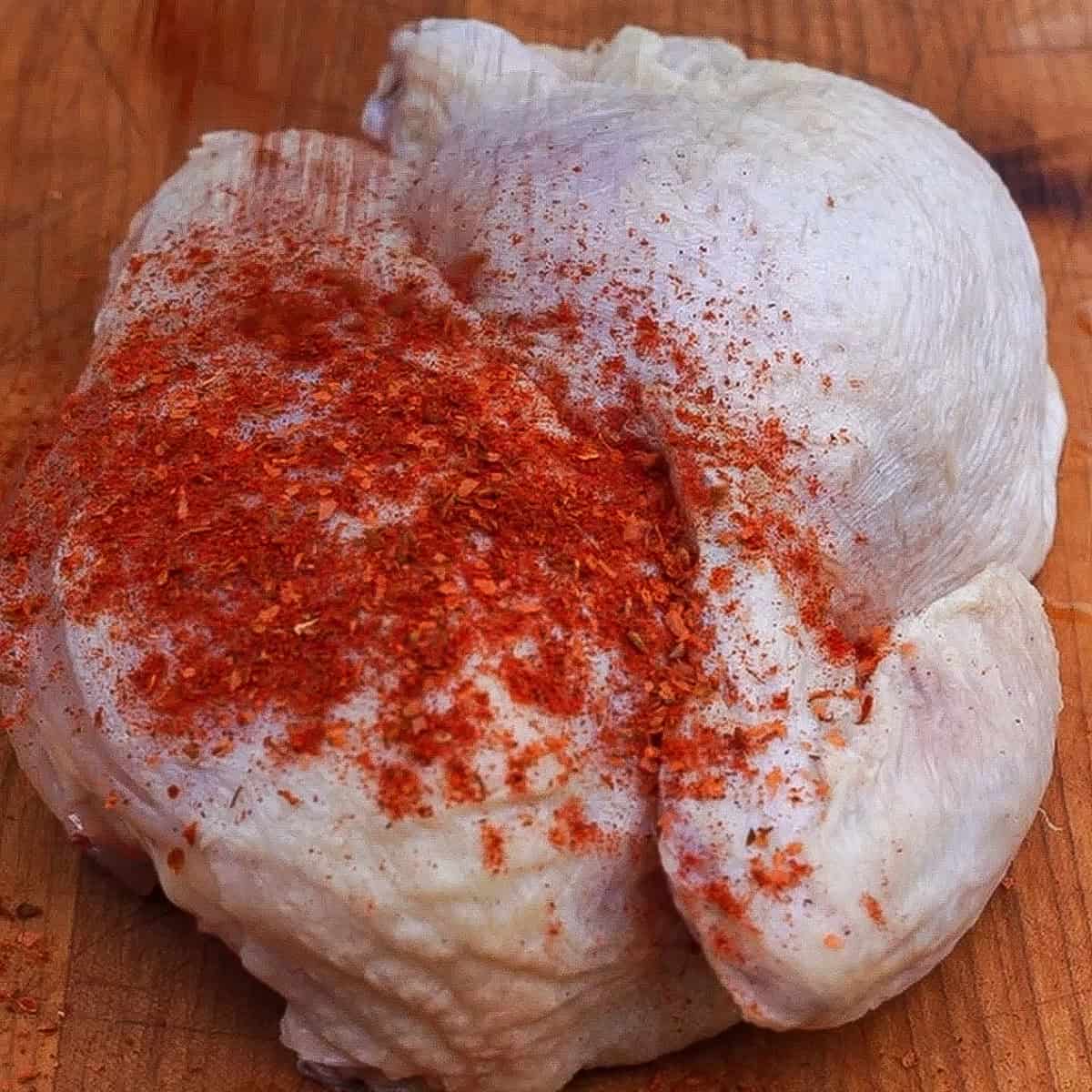
Coat each half generously with your dry rub, making sure that it reaches under the wings and into every nook. Let it sit at room temperature for 15–30 minutes to allow the rub to adhere while you preheat the grill. Alternatively, if you prefer to prepare the chicken in advance, refrigerate it for up to 4 hours to allow for deeper seasoning.
STEP 4: FIRE UP THE GRILL
Set up a charcoal grill for indirect heat and preheat to ~300-350°F. Add wood chips, chunks, or splits for extra smoky flavor if using charcoal. You’re looking for consistent heat, but there should be no direct flames under the chicken at this stage.
STEP 5: SMOKE THE CHICKEN
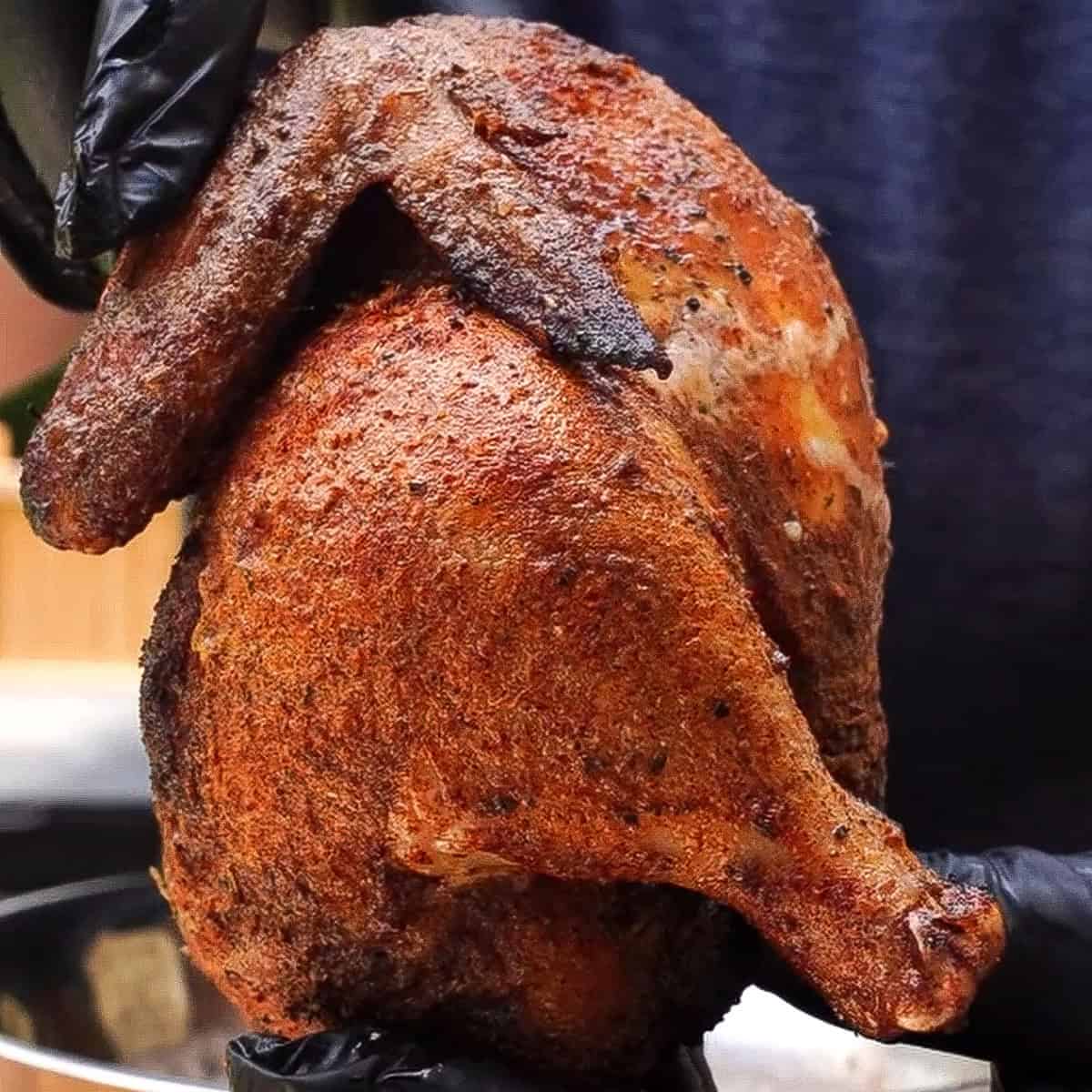
Place the chicken halves, skin-side up, on the grill, away from direct heat. When I make this, I tend to cook it on my ceramic grill and place a deflector underneath to prevent direct heat. Close the lid and cook until the thickest part of the breast reads 150°F on your meat thermometer.
STEP 6: SAUCE AND CRISP
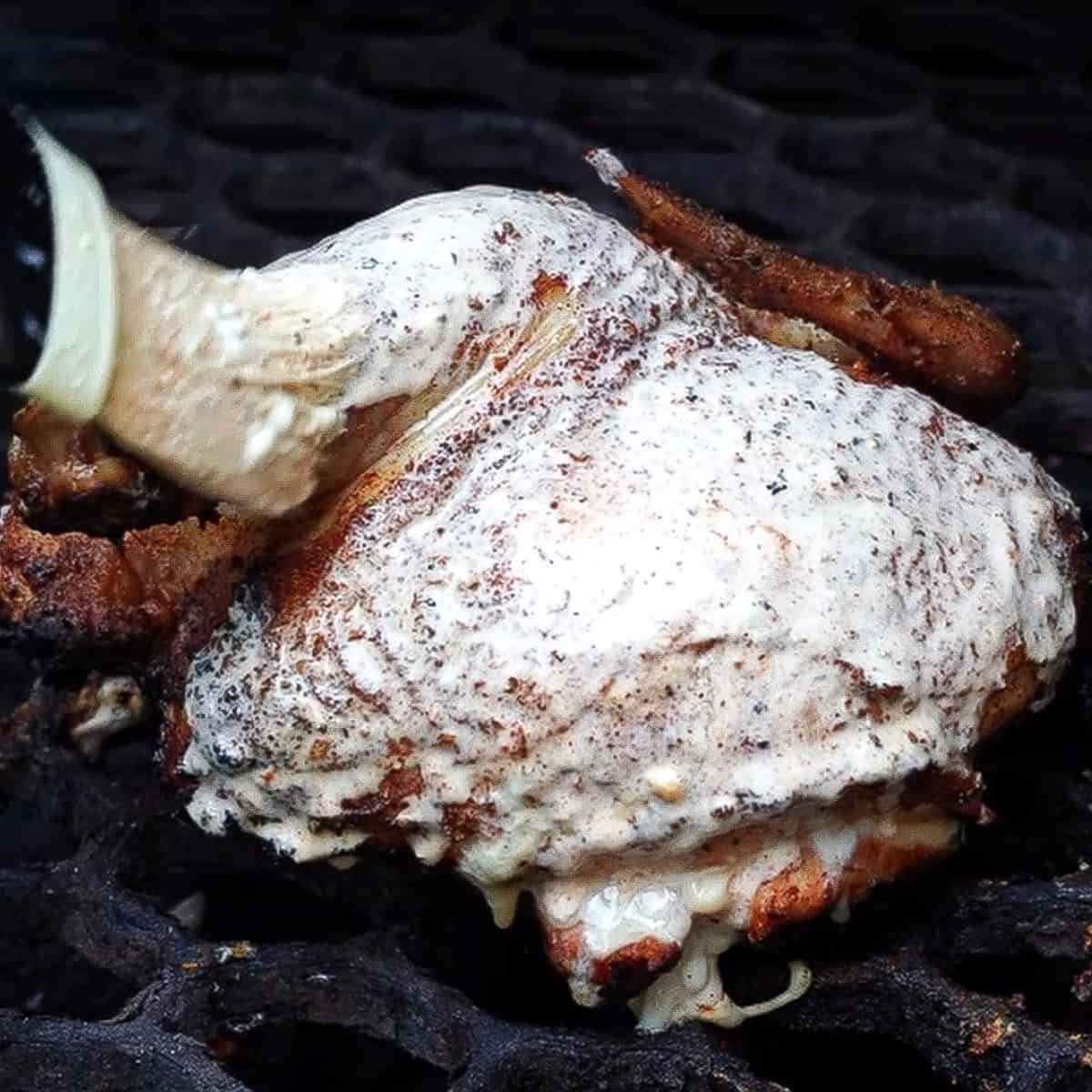
Brush the white sauce onto the chicken once it reaches an internal temperature of 150°F, then carry on the cooking process until the internal temperature reaches 160-162°F. The skin will be plenty crispy at this point, and pulling it slightly before 165°F ensures you don't overcook the chicken, allowing carryover cooking to do the work.
INTERNAL TEMPERATURE FOR SMOKED CHICKEN HALVES
Getting the internal temperature right is what separates juicy chicken from dry chicken. Here’s what I plan for when cooking smoked chicken halves:
- Breast: Pull at 160–162°F.
- Final temp: Let carryover cooking bring it to 165°F
- Dark meat (thighs/legs): Can safely go a little higher and stay tender
Breasts are the main concern because the legs tend to follow suit. Pulling the chicken just before 165°F keeps the meat juicy while still hitting a safe temperature once it rests.
STEP 7: REST AND SERVE
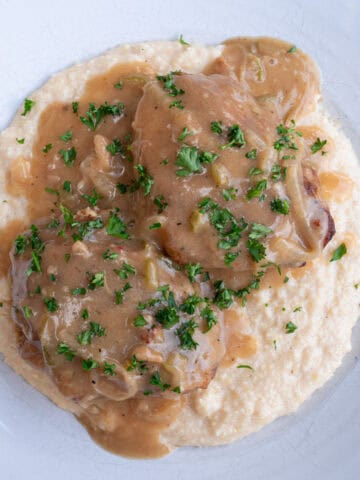
Let the chicken rest 10-15 minutes. This helps retain moisture and keeps the juices from spilling out when sliced. Serve halved or break down into chicken leg quarters and breasts. You can dunk the chicken in the white sauce or serve it on the side for you and your guests to enjoy!
EXTRA TIPS FOR CRISPING THE SKIN ON SMOKED SPATCHCOCK CHICKEN
A couple of additional tricks you can try if you have the time that will help even more include:
- Pat the chicken dry before seasoning.
- Salt the chicken (i.e., dry-brine) and place it on a wire rack in the refrigerator to air-dry for a few hours before cooking.
- Use oil as a binder. Also, don’t be afraid to oil the chicken during cooking.
- Finish the chicken at a higher heat once it's almost done if you think it needs a little help at the end.
- You can also hold off on saucing the chicken while it’s on the grill and instead serve it on the side. I’ve found this to be extremely helpful, but it just depends on if you’d rather use the sauce for dipping or just glaze it on the chicken.
Equipment
- Smoker
- Wire rack
- Tongs
- Sheetpan
- Carving Knife
- Cutting Board
- Prep bowls and measuring cups
- Instant-read thermometer
Other BBQ Sauces to Try with Smoked Chicken Halves
Here are a few more of my personal favorites:
- Alabama White Sauce
- Georgia BBQ Sauce
- Vinegar-Based Mop Sauce
- Hot Honey BBQ Sauce
- Creamy, Homemade Buffalo Sauce
STORAGE TIPS FOR BEST RESULTS
Want to keep that juicy chicken texture and avoid rubbery skin? Use these storage methods:
- Vacuum sealer: This is the best way to preserve meat for extended periods, especially when you're planning to freeze it. Vacuum sealing prevents air from entering, which in turn prevents both bacterial growth and freezer burn. It also locks in the flavor and keeps the meat from drying out. It's remarkable how much better this works compared to any other storage method. If you’re freezing, place the chicken in the freezer within 24 hours of cooking for best results. Hot-smoked meat can last up to three months in the freezer.
- Plastic wrap + foil: Wrap the chicken tightly in plastic wrap to hug its surface, then seal it in foil and place it in a freezer-safe bag to protect against moisture loss and odors in the fridge. This combo is a great way to preserve the smoky flavor while protecting the crispy exterior.
- Airtight containers: Quick and easy for same-week leftovers. Ensure that you choose containers that are long enough to fit multiple pieces and avoid stacking chicken in deep piles, as this may trap heat, reduce shelf life, and weaken the integrity of the skin.
THE RIGHT WAY TO REHEAT SMOKED CHICKEN
So you've smoked a chicken, refrigerated it, and are ready for leftovers the next day. Here's how you can bring the chicken back to life by reheating it to a safe internal temperature without drying it out or turning the skin rubbery:
- Oven method (best for skin): Set your oven to heat to 325 degrees Fahrenheit. Place chicken pieces on a wire rack set over a baking sheet to allow heat to circulate and keep the bottom from getting soggy. Cover loosely with aluminum foil to retain moisture while reheating. Cook for 20–25 minutes, depending on the size of the cut, or until the internal temp hits 165°F. For crispy skin, remove foil for the last few minutes and broil on high for 2–3 minutes—just long enough to re-crisp the outside without burning.
- Grill method: Reheat over indirect heat on your grill or smoker. This is a great way to bring back the smoked character and retain consistent texture. Place the chicken on the cooler side of the grill, just as you would when cooking it originally. Close the lid and warm it slowly to prevent the meat from drying out.
- Avoid using the microwave: It can cause moisture to evaporate, making the skin feel dry and rubbery. Use it only in a pinch, and always remove the skin before microwaving to preserve the meat's texture.
Recipe
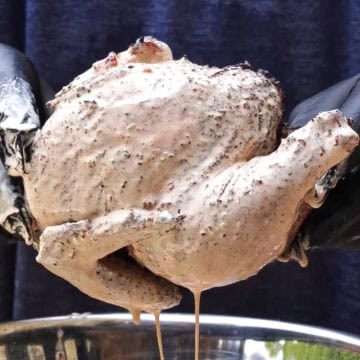
Smoked Chicken Halves with Georgia White Sauce
Equipment
- Large Spatula
- instant read thermometer
- Kitchen Shears
- Food Grade Gloves
- Wire Rack
- Aluminum Tray
- cutting board
- knife
- Measuring Spoons & Prep Bowls
- Whisk
Ingredients
- 1 3-5 lbs. chicken whole
- BBQ Rub as needed
- 2 C mayonnaise
- 1 T horseradish
- Dash of hot sauce
- ¾ C distilled white vinegar
- ½ C peach juice
- 1 T black pepper
- 1 lime zested & juiced
- 1 teaspoon cayenne pepper
- 1 teaspoon sugar
- 1 teaspoon paprika
- Salt as needed
Instructions
For the Georgia White Sauce:
- Add the mayonnaise & following nine ingredients to a mixing bowl and stir until combined. Season with salt as needed.
For the Chicken:
- Preheat the grill to 350 degrees. Meanwhile, remove the chicken from its packaging and pat it dry. Next, cut out the backbone with kitchen shears. After that, flip the chicken over and press down on the breasts to crack the breastbone. Finally, cut the chicken down the middle, where the breastbone used to be, to create two chicken halves. Trim the chicken of any remaining excess fat, discarding waste as needed.
- Season the chicken halves with your favorite BBQ rub. Allow the chicken to sit out for 15 minutes to allow the rub to adhere. Ideally, you’d want to do this 2-4 hours in advance to brine the chicken.
- Once the grill has preheated, add the chicken skin-side up. Allow the chicken to cook until the internal temperature registers ~150 degrees. At that point, liberally coat the chicken halves with the sauce until they are thoroughly covered. Continue cooking until the internal temperature reaches at least 165 degrees and the sauce has set. Once this occurs, set the chicken aside and shut off the grill.
To Finish:
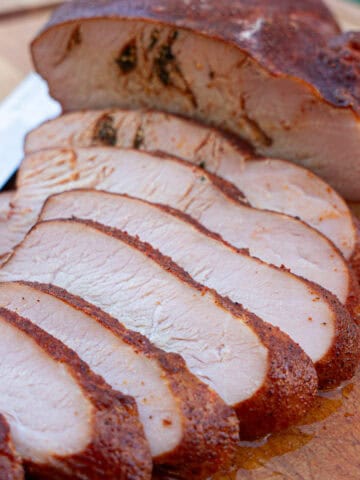
- Allow the chicken to rest for ~10 minutes. After that, separate the thighs and wings from the chicken using a sharp knife. Carve the remaining chicken breast into slices that are ½ to 1 inch thick.
- Apply the remaining sauce, if desired, serve with your choice of sides, and enjoy!
Notes
- Storage: Smoked chicken lasts 3–4 days in the refrigerator when stored properly. Cool it quickly, wrap it tightly, and store it at a temperature below 40°F.
- Tip: I like to keep a plastic bag nearby during this step to separate the chicken waste from my regular garbage. Helps keep bugs away!
Leave a Reply