Salmon has been one of my favorite proteins to cook since I was a kid—something about its rich flavor and versatility always drew me in. These days, it's still a staple in my kitchen, although I've got a bit of a problem: my wife has never been the biggest seafood fan. So I've spent years experimenting with new ways to make salmon more appealing, and I finally landed on a recipe she truly enjoys—spinach-stuffed salmon on the griddle. But before you get to that plate, there's a common question that comes up for a lot of home cooks: can you freeze salmon?
Whether you've got leftover cooked fillets, extra raw portions, or just picked up a bulk pack on sale, knowing how to freeze and thaw salmon the right way can make all the difference between a fresh-tasting meal and a mushy, freezer-burned letdown. In this post, I'll break down everything you need to know about freezing salmon—how to prep it, wrap it, store it, and bring it back to life when it's time to cook. In this post I'll provide you with a comprehensive guide, discussing both raw and cooked salmon, provide tips to prevent freezer burn and outline essential food safety practices to keep in mind. Additionally, I'll share my go-to method for transforming thawed salmon into a dish that even the pickiest eaters will love.
Jump to:
Can You Freeze Salmon?
Yes—you can freeze salmon, and if done right, it still tastes great when you're ready to eat it later. Both raw and cooked salmon freeze well, but the key to keeping the best quality lies in how you store it. Freezing salmon helps lock in flavor, texture, and those all-important fatty acids—such as omega-3s—that make salmon a great protein choice for backyard BBQers and health enthusiasts alike. However, there are some dos and don'ts when it comes to freezing fish that you'll want to follow, which I'll walk you through.
The Best Way to Freeze Salmon (Raw or Cooked)
Whether you're working with fresh fish or leftover salmon from dinner, here are the most crucial steps to freeze salmon properly:
Step 1: Pat It Dry
Use a paper towel to blot away excess moisture. You don't want ice crystals forming on the surface, which can lead to freezer burn and ruin the texture.
Step 2: Portion It Out
Cut salmon into portions you'll use later if you haven't already—no reason to thaw more than you need. For raw salmon, I prefer to leave the skin on if possible (it helps protect the flesh during freezing -- plus, I like cooking skin-on salmon over having it removed. I know I'm likely in the minority, but I like the way it tastes when cooked. It gives a nice protective layer during the cooking process).
Step 3: Wrap It Tight
Wrap the salmon tightly in a layer of plastic Wrap. Then wrap it again in aluminum foil or place it in a vacuum-sealed bag (to me, the latter is the gold standard and what I recommend doing if this is available to you). You want as little air as possible around the fish. Too much air leads to oxidation, which can damage not only the flavors but the freshness of the fish.
Step 4: Label & Freeze
Write the date on the packaging and store the fish in your home freezer, set to 0°F or colder. I know it sounds excessive, but trust me, you'll be glad you did later when you're rummaging around the freezer, trying to remember what you put in there. For optimal quality, use within 2-3 months; however, it can be stored safely for longer if frozen properly.
Tip: If you're freezing cooked salmon (like the leftovers from this recipe), follow the same wrapping method. Let the fish cool to room temperature, then wrap and freeze.
The Freezing Process for Salmon: Key Tools and Storage Methods
To make sure salmon freezes at its best, consider the following methods for proper storage:
- Vacuum Sealer: As I mentioned earlier, I believe vacuum packing is the best method for long-term freezer storage. It keeps air out and prevents freezer burn.
- Plastic Wrap (i.e. saran wrap) + Foil in a Freezer Safe Plastic Bag: A great way to store extra food if you don't have a vacuum sealer. This was an effective method for years for me before purchasing my vacuum sealer.
- Airtight Container: Works well for cooked salmon, especially when layering filets with parchment paper between them. That being said, more oxygen will enter the container, leading to a higher potential of freezer burn.
Avoid placing salmon near the front of your freezer where temps fluctuate more—I like to store it in the back or bottom for the most consistent cold.
How to Thaw Frozen Salmon Safely
Cold water thawing is the fastest way to thaw frozen salmon while maintaining texture and minimizing bacterial growth. Here's how to properly do this:
- Keep the salmon sealed in plastic or a freezer bag.
- Submerge it in a bowl of cold water.
- Change the water every 30 minutes until thawed (usually 1–2 hours).
If you're not in a rush, you can thaw it in the fridge overnight. I know this can be a slow process, but honestly, it's what I do 9 times out of 10 and is always a good bet. However, never thaw salmon at room temperature, as this increases the risk of bacterial growth and potential food safety issues.
Signs of Freezer Burn or Spoiled Salmon
When checking frozen salmon after pulling it from the freezer, look for a few key signs that indicate it may no longer be safe to eat. Dry, pale patches often indicate freezer burn, while a strong, sour odor is a warning sign of spoilage. If the texture feels slimy or the color appears dull compared to when you first froze it, those are also indicators that the salmon should be discarded. Ideally, frozen salmon (whether raw or cooked) should still have a mild fishy smell and maintain its original appearance.
Key Ingredients in Spinach-Stuffed Salmon
Whole Salmon (skin-on): This is the foundation of the dish. As I mentioned earlier, I'm partial to skin-on, fresh salmon because it gives a protective layer to the fish, making it easier to cook, especially in a recipe like this where the salmon is being stuffed. It's much harder to complete this recipe with skin-off salmon if the plan is to use stuffing. Plus I like to grab whole salmon because it tends to be significantly cheaper per pound and gives you more food.
Frozen spinach: Convenient and budget-friendly, frozen spinach adds earthy, savory depth without the extra prep of fresh greens. Be sure to dry it thoroughly to prevent watering down the filling.
Cream cheese: The creamy base of the stuffing—it holds everything together and adds rich, tangy flavor.
Parmesan cheese: A sharp, salty cheese that gives the stuffing a savory boost and extra depth.
Lemon juice and zest: Brings bright acidity and helps balance out the richness of the filling. I also like to add the zest, as it provides aromatic citrus oil that adds another layer to enhance the overall flavor of the dish.
Minced garlic: Adds warmth and that signature garlicky bite to the fish. Whether fresh, pre-minced (as I use here), or in paste form, garlic is a staple in just about every dish I make. Plus, it works exceptionally well with spinach and cheese.
Butter: Used at the end to finish the salmon, it adds a rich, glossy touch plus additional flavor, the signature of any fat in a meal.
Creole seasoning: I could put this seasoning on anything, but I especially love it on fish. It adds a punch of spice and complexity that enhances both the stuffing and the fish itself.
Spinach-Stuffed Salmon on the Griddle
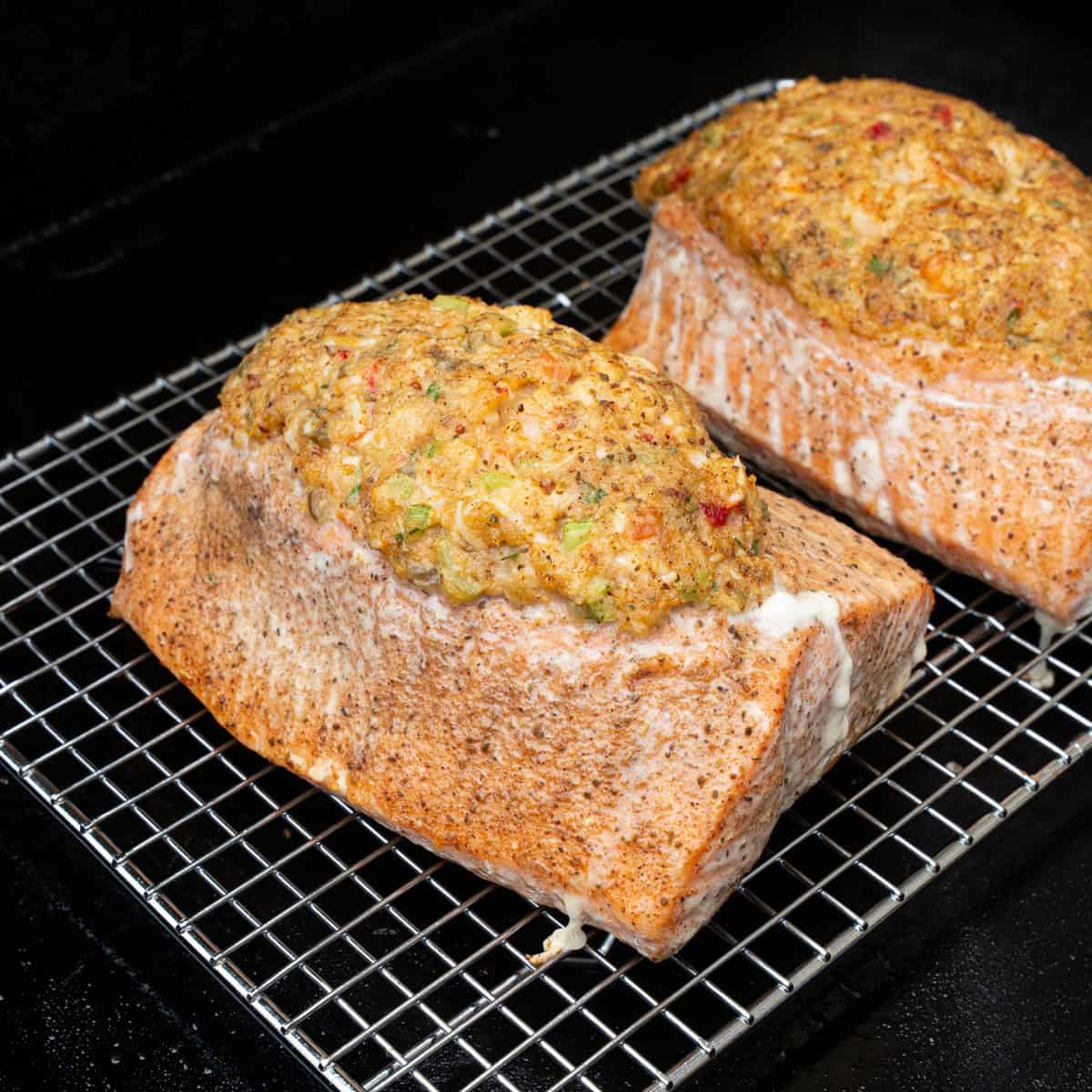
Now for the recipe itself! This spinach-stuffed salmon recipe is rich, flavorful, and perfect for the grill, griddle, or oven. The crispy crust you get on the salmon's flesh side is unmatched—and the creamy spinach mixture packed inside delivers on both texture and taste.
Step 1: Make the Filling
In a bowl, mix the cream cheese, thawed and paper towel-dried spinach, parmesan, garlic, lemon juice, zest, and Creole seasoning. This becomes your creamy spinach stuffing. Make sure the spinach is well drained— as I mentioned earlier, too much moisture in the filling can make the salmon soggy.
Step 2: Cut a Pocket in the Salmon
Take your thawed fish and make a horizontal cut on the thickest side to form a pouch. You can also slice the salmon down the center if you're standing over it. Either way works great! Leave about 1 inch on each end, though, so it holds together during cooking. Stuff each pocket generously with the spinach mixture.
Step 3: Season and Preheat the Griddle
Lightly season the outside of each salmon filet with more Creole seasoning. Preheat your griddle or preferred cooking source to 375°F or medium heat.
Step 4: Cook Skin-Side Up First
Start the salmon skin-side up. Let the fish sear for about 5 minutes until a nice crust forms. Flip it gently and continue cooking until the internal temperature reaches 145°F.
Step 5: Finish and Serve

Plate the salmon with a drizzle of melted butter and garnish with more lemon zest. Serve hot with your favorite sides.
Substitutions
Do you need to make some swaps based on what's in your fridge or pantry? These easy substitutions will still deliver great flavor and texture:
- Fresh spinach instead of frozen: Sauté it first and squeeze out all excess moisture with a towel or fine mesh strainer to keep your filling from turning soggy.
- Greek yogurt instead of cream cheese: Use full-fat plain Greek yogurt for a lighter, tangier alternative that still brings creaminess to the mix.
- Feta instead of Parmesan: Crumbled feta adds a sharper, saltier bite that complements the spinach well—great if you want a more Mediterranean flavor.
Variations
Looking to change things up? Try one of these alternatives:
- Add crab or shrimp: Fold in some lump crabmeat or finely chopped cooked shrimp to the filling for a loaded surf-and-turf take.
- Add chopped sun-dried tomatoes: These bring a rich, savory punch to the spinach stuffing (makes this almost like a Tuscan salmon -- so delicious!)—just a tablespoon or two goes a long way.
- Try smoked salmon: Make this same recipe on the smoker for an extra depth of flavor. I love making this recipe this way; it just takes more time.
- Bake instead of griddle: I mentioned earlier that you can also make this dish in the oven. I don't want to leave you hanging, so here's how: Bake your stuffed salmon fillets at 400°F for 12–15 minutes until they are flaky and golden.
Looking for more griddle-made recipes? Try out a few of my other favorites, like these loaded pulled pork sandwiches or these classic smash burgers with BBQ burger sauce!
Recipe

Spinach-Stuffed Salmon on the Griddle
Equipment
- Griddle
- Spatula
- Prep bowls & measuring cups
- cutting board
- Sharp knife
Ingredients
- 2 lbs. salmon skin-on
- 1 T Creole seasoning + more to taste
- 8 oz. cream cheese softened
- 8 oz. frozen spinach thawed
- ¼ C grated parmesan cheese
- 1 T minced garlic
- 1 lemon juiced & zested
- 4 T butter melted
Instructions
For the Creamy Spinach Mixture:
- Add cream cheese to a bowl with the spinach, parmesan cheese, garlic, lemon juice, and creole seasoning. Mix until well combined, then set aside.
For the Stuffed Salmon:
- Preheat the grill to 375 degrees or medium heat. Meanwhile, take out a salmon filet and make a horizontal cut along the thickest side of the salmon, making sure to leave ~1 inch on each end. Continue using the knife to make a pouch until the cut is deep enough to add the stuffing.
- At this point, add the creamy spinach mixture into the “pouch” until it has been filled. Lightly season the stuffed salmon with creole seasoning and set aside. Repeat these steps as needed.
- One all of the salmon filets have been stuffed, its time to move to the griddle. Place the salmon skin-side up to start. Allow the salmon to cook until a nice crust has formed on the flesh side, ~5 minutes. Once this occurs, flip the salmon over and continue cooking until the internal temperature registers 145 degrees or desired level of doneness. Remove the salmon filets from the grill.
To Finish:
- Plate the salmon with the sides of choice and top with melted butter. Garnish with lemon zest if desired, then serve & enjoy!


Leave a Reply