The Blackdog BBQ

  • Recipes
  • FAQ
  • About Me
  • Contact
menu icon
go to homepage
  • Recipes
    • Appetizers
    • Beef Recipes
    • Pork Recipes
    • Poultry Recipes
    • Seafood Recipes
    • Sides
    • Sauces, Glazes, & Gravies
  • BBQ Guides
  • About Me
  • Store
search icon
Homepage link
  • Recipes
    • Appetizers
    • Beef Recipes
    • Pork Recipes
    • Poultry Recipes
    • Seafood Recipes
    • Sides
    • Sauces, Glazes, & Gravies
  • BBQ Guides
  • About Me
  • Store
×
Home » Recipes » Pork Shoulders 101

How Many Sandwiches Per Pound of Pulled Pork? (Simple Serving Guide)

Published: Jun 1, 2025 · Modified: Apr 26, 2026 by Brandyn Baker · This post may contain affiliate links · Leave a Comment

Jump to Recipe Print Recipe
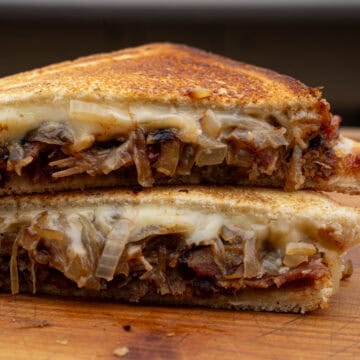
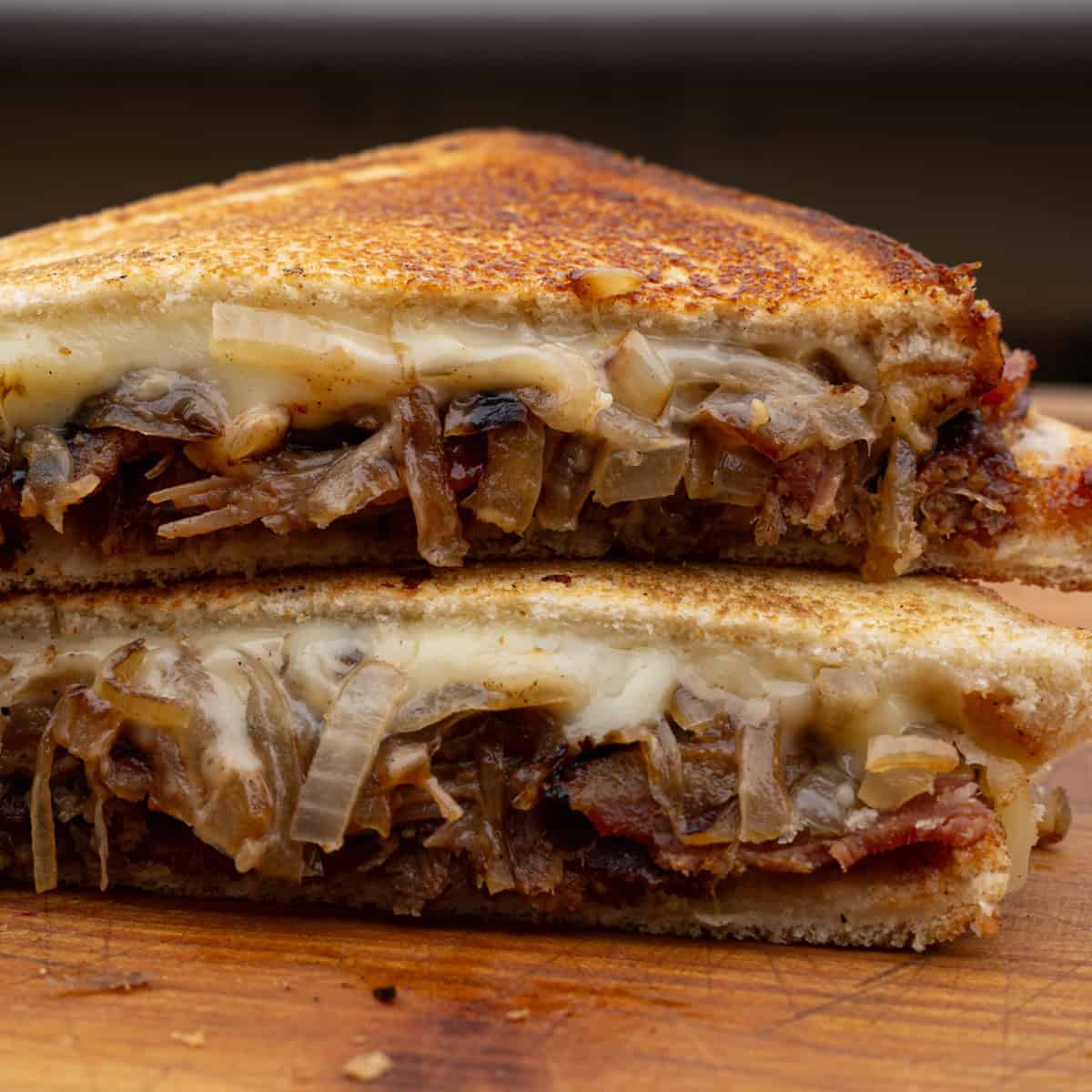
Cheesy Pulled Pork Sandwich with Caramelized Onions & Bacon

When you're planning pulled pork for a crowd, two questions always tend to come up: How much pork do I need? And how many sandwiches can I get per pound of pulled pork? Because let’s be real—there’s nothing worse than running out of meat halfway through a cookout.

My wife always says a cookout is like a wedding—what do people remember? The food and the alcohol. And while I can’t help you with the bar tab, I can make sure you properly account for the food. In this post, I break it all down—from calculating shrinkage and sandwich yields to scaling up for big groups with confidence (and still having plenty of leftovers for the next day).

I’ll also share how I build my bacon and cheese pulled pork sandwich, cover proper storage and reheating, and give you smart planning tips so you can cook just the right amount of pork, without overbuying or leaving folks hungry. Additionally, if you're looking for a comprehensive walkthrough on how I prepare my pulled pork from start to finish, you can check out my full pulled pork recipe post here.

Jump to:
  • The First Thing to Know: Pulled Pork Shrinks—A Lot
  • How Many Sandwiches Per Pound of Pulled Pork?
  • Serving Tips for a Large Crowd
  • Storing Leftover Pulled Pork
  • Ingredient Highlights for the Griddle Sandwich
  • How to Make the Sandwich
  • Recipe

The First Thing to Know: Pulled Pork Shrinks—A Lot

Before we discuss the number of pulled pork sandwiches you’ll get per pound, it’s essential to understand a key detail: meat shrinkage during cooking is very real, especially with a cut like pork shoulder (i.e., Boston butt). If you don’t factor it in, you’ll run short—and trust me, nobody wants to be the guy who runs out of pork halfway through a cookout.

Here’s the Breakdown

Raw pork shoulder (bone-in or boneless) loses about 30% to 50% of its weight during the cooking process. This reduction comes from three primary sources:

  • Rendered fat: Pork shoulder is a fatty cut, and as it cooks, that fat melts away.
  • Evaporated moisture: Just like any meat, pork loses internal moisture while cooking, even when wrapped or cooked in a slow cooker. This is why letting any cut of meat rest after cooking is crucial for retaining moisture.
  • The bone: If you’re starting with a bone-in pork shoulder, that bone doesn’t end up in your sandwich pile. You'll need to take this into account.

So Let’s Put That in Perspective

If you start with 10 lb butts, you’ll usually finish with around 5 to 7 pounds of cooked pulled pork once it has been entirely rendered, shredded, and trimmed.

That’s why you always plan for yield, not just the raw weight. Whether you're cooking in a smoker, slow cooker, or oven, this shrinkage rate is pretty consistent. If you're starting with boneless pork shoulder, you might recover a bit more meat, but you’ll still lose a significant amount to fat and moisture.

If you’re the planning type (or cooking for a large crowd or catering event), knowing this upfront helps you buy and cook the right amount of meat without overdoing it—or worse, coming up short.

How Many Sandwiches Per Pound of Pulled Pork?

Alright, now to the main question: how many sandwiches does one pound of pulled pork make? The short answer is it depends on how generous you are with your portions, but here’s what that may look like (taking into account fully cooked pulled pork): 

  • Light serving (3 oz): Yields about five sandwiches per pound
  • Average serving (4 oz): Yields about four sandwiches per pound
  • Heavy serving (6 oz): Yields about 2.5 sandwiches per pound

To be on the safe side, a good rule of thumb is to plan for ⅓ to ½ pound of cooked meat per person, especially if pulled pork is the main dish. That means:

  • For smaller portions or when serving a variety of side dishes, consider ⅓ pound per person.
  • If your guests are hungry, or if pulled pork is the only main, ½ pound per person is safer.

But don’t forget—you’re starting with raw pork. You have to do some math to account for shrinkage. Here’s an example of what that looks like in real-world planning so that you can make the best decision for your expected number of guests.

Example Planning Guide (Assumes 40% Shrinkage):

  • For 10 guests, plan on 5 to 7 pounds of raw pork per person. That’ll give you roughly 3 to ~4 pounds of pork butt, which comes out to about 12 to 16 sandwiches.
  • For 25 guests, you’ll need 12 to 18 pounds of raw pork. After shrinkage, you're left with ~7 to 11 pounds of meat—enough meat for 28 to 43 sandwiches, depending on how heavily you stack them.
  • For 50 guests, plan to use 25 to 36 pounds of raw pork. That should yield ~15 to 21 pounds of finished product, sufficient for 60 to 86 sandwiches. This ensures everyone gets at least one hearty sandwich, with some cushion for second helpings or a few leftovers (which reheat beautifully, by the way). If you’re using pulled pork for sliders instead of full-sized sandwiches, you’ll stretch it further—sliders are usually 2–2.5 oz of meat. That bumps your yield closer to 6–8 sliders per pound of cooked pork.

Bonus Tip:

Serve with sides like macaroni and cheese, coleslaw, or potato salad for a complete meal. That’s a great way to stretch your pork further without sacrificing satisfaction. It provides more flexibility with portions and keeps the meat from being the sole focal point on the plate.

Serving Tips for a Large Crowd

When feeding large gatherings, planning ahead is essential. Whether you’re prepping for a game day tailgate, backyard barbecue, or graduation party, keeping things organized and simplified is the key to stress-free serving.

How to Manage your Pulled Pork

Start by keeping your pulled pork warm. After smoking and shredding the meat, transfer it to a slow cooker set to the “warm” setting (a lot of pellet grills can do this now a days), or keep it in a pan covered with aluminum foil in the oven around 200°F to help retain moisture, add a splash of broth, apple juice, or even barbecue sauce while it rests.  If you have a Cambro box, even better. I tend to take the poor man's approach on this and store my BBQ wrapped in a cooler until serving time, after letting it sit out at room temperature for a little while. However, the cooler method is unlikely to be an option if you're serving a larger crowd. If you're serving for an extended period, these small additions help keep as much meat as juicy as possible, preventing it from drying out under heat.

How to Prepare Your Serving Area

Next, set up a simple sandwich bar. Lay out white bread, soft rolls, or hamburger buns alongside a few topping options—think sliced pickles, jalapeños, shredded cheese, and two or three sauces (a sweet BBQ, a vinegar-based sauce, and maybe a spicy one for good measure) -- or if you're at home and want to be level it up a little bit, you can use my recipe at the end of this article! Labeling toppings and sauces helps keep the line moving and allows guests to customize their sandwiches without confusion.
Don’t forget the sides. Classic BBQ companions, such as mac and cheese, baked beans, potato salad, and coleslaw, always hit the mark. These not only round out the plate but can also help stretch your meat portions further if you’re trying to feed a large crowd on a budget.

Tips for Serving Larger Groups

For groups of 25 or more, pre-portioning your pulled pork is the best way to go. Once the pork is shredded, divide it into portions of 1 to 1.5 pounds and seal them in airtight containers or vacuum bags. This makes it easier to manage when reheating in batches or when staggered serving times are expected. It also allows you to keep some portions warm while others stay refrigerated or frozen until needed.

When it's time to serve, having tongs and simple signage (like “1 scoop = 1 sandwich”) can help guests portion their food responsibly. You don’t need to be rigid about it, but setting expectations helps make sure there’s enough to go around.

And if you end up with leftovers, there are numerous ways to put them to good use. Pulled pork is one of those rare BBQ meats that keeps pretty well. Whether you’re turning it into tacos the next day or tossing it in with mac and cheese, you’ll be glad you made a little extra.

Storing Leftover Pulled Pork

Once the event winds down and you’re gathering your leftover pulled pork, it’s worth taking a little extra care with how you store it. Proper storage ensures that all that flavor and effort doesn’t go to waste—and that your leftovers reheat with as much of the same juicy, tender bite as they had when they came straight off the smoker.

Let the Pork Cool Before Storing

Let the pulled pork cool slightly before storing. Don’t leave it out too long—ideally no more than two hours (this is the maximum limit before food starts to enter the temperature danger zone. Ideally, you don't want the internal temperature of the meat to drop below 140 degrees.)—but do allow it to come down from piping hot before sealing. This prevents steam from building inside your container, which could make the meat soggy or accelerate spoilage.

Refrigerating Pulled Pork

For short-term storage, transfer the meat to an airtight container or resealable bags and place it in the fridge. It’ll stay fresh for up to four days. If you’re storing a larger batch, consider breaking it down into smaller containers so you only need to reheat what you’ll use at a time. Adding a splash of apple juice, broth, or BBQ sauce before storing helps lock in moisture and ensures better results when reheating.

Freezing Pulled Pork

For longer-term storage, the freezer (and ideally a vacuum sealer) is going to be your best option. Pork freezes beautifully as long as it’s packed well. Vacuum-sealed bags are always a good idea, but heavy-duty freezer bags will also suffice. Press out as much air as possible to avoid freezer burn. Properly stored, pulled pork will remain fresh in the freezer for approximately three months. Label each bag with the date and portion size—it’ll save you some guessing later on.

Reheating for Best Results

When it’s time to bring that pork back to life, reheat it in a covered pan in a 300°F oven until warmed through, adding a little liquid to maintain moisture. For stovetop reheating, use a covered pan over low heat and stir occasionally to prevent burning. If you’re working with a small portion and need speed, the microwave works—make sure to cover the pork and add a touch of moisture, heating in 30-second bursts and stirring in between. For the best chance of reviving the bark, try finishing the pork under the broiler for a minute or two, crisping it in an air fryer, or cooking it in a hot skillet.

Repurpose Like a Pro

As for what to do with leftover pulled pork? The possibilities are endless. Toss it into tacos, pile it on top of nachos, make a griddle sandwich out of it (like I do here), stir it into grits, or even repurpose it into a breakfast hash. A little leftover pork can go a long way when paired with the right textures and flavors.

Ingredient Highlights for the Griddle Sandwich

Pulled Pork – Use your favorite smoked pulled pork. You can see how I make mine here. This is the backbone of this sandwich.
BBQ Sauce – I opted for a sweeter sauce this time around, using Blue's Hog's Champions Blend, but I also enjoy a good mustard- or vinegar-based sauce.
American Cheese – I opt for this nine times out of ten because it's both my wife's and my kids' favorite, so it's always available. But feel free to switch this with you're preferred variety.
Bacon – I'm of the mindset that bacon makes everything better. Yes, you could stop with the pulled pork, but why stop there? The rendered fat not only adds crunch but also enhances the flavor of the entire sandwich.
Onions – Sautéed onions are something I love to add to a sandwich just about any time I can. The sweetness and umami flavor it adds to the sandwich make it that much better.
Butter + Bacon Grease – Don't just wipe up all of that fat! It makes a great agent to caramelize your sandwich, adding great flavor and an even crispier finish.

How to Make the Sandwich

Step 1: Cook the Bacon

Heat a griddle or cast-iron pan over medium heat and cook the bacon until crispy. Just make sure the temperature is not set too high; bacon cooks best when it can render slowly. Set it aside, but don’t toss the grease—you’ll need it for the onions and the bread.

Step 2: Sauté the Onions

Slice your onions and toss them onto the griddle in that leftover bacon grease (you can add a little butter here if needed). Cook them down until they start to caramelize and become soft, about 5–7 minutes. We're not going for all-out caramelization, as that would take the better part of an hour (but feel free to continue cooking these over low heat if you have the time!).

Step 3: Prep the Bread

In a small bowl, mix your reserved bacon grease with softened butter. Spread the mixture on one side of each slice of white bread—this will help you achieve a crispy, flavorful crust.

Step 4: Build the Sandwich

Place the buttered side of one bread slice down on the griddle (making sure you've reduced the heat to medium-low). Layer with American cheese, bacon strips, a generous pile of pulled pork, a drizzle of BBQ sauce, and a spoonful of sautéed onions. Top with the second slice of bread, buttered side up.

Step 5: Grill and Press

Let it cook until the bottom is golden brown, then carefully flip it over. Press the sandwich slightly with a spatula to get good, even griddle contact. Cook until both sides are crisp and the cheese is melted through. 

Note: If your griddle tends to run hot or the bread browns faster than you'd like, reduce the heat to low, or better yet, move it to indirect heat if this option is available in your cooking space.

Step 6: Serve

Once the sandwich is done cooking, remove it from the griddle, slice it in half, and serve.

Recipe

Cheesy Pulled Pork Sandwich with Caramelized Onions & Bacon

Cheesy Pulled Pork Sandwiches with Sautéed Onions and Bacon

Brandyn Baker
These cheesy pulled pork sandwiches are a next-level way to use up leftover smoked pork. Layered with crispy bacon, sautéed onions, melty American cheese, and a drizzle of BBQ sauce, all griddled between buttery slices of white bread — it’s smoky, cheesy, and loaded with flavor in every bite. A great comfort food sandwich that's perfect anytime you're craving something indulgent and savory.
Print Recipe Pin Recipe
Prep Time 10 minutes mins
Cook Time 30 minutes mins
Course Main Course
Cuisine American
Servings 4

Equipment

  • Prep Bowls & Measuring Spoons
  • Spatula
  • Griddle or Stovetop (with pan if doing this method)

Ingredients
  

  • 8 slices of thick-cut white bread
  • 8 strips of bacon
  • 1 ½ cups leftover pulled pork room temperature or gently reheated
  • 1 cup shredded or sliced American cheese or any meltable cheese
  • 1 large yellow onion thinly sliced
  • 2 tablespoon softened butter
  • 2 –3 tablespoon reserved bacon grease
  • Your favorite BBQ sauce for drizzling

Instructions
 

  • Heat a griddle or cast-iron skillet over medium heat. Lay the bacon strips flat and cook until crisp, letting the fat slowly render out—don’t rush this over high heat. Once done, transfer the bacon to a paper towel-lined plate. Reserve the bacon grease in the pan for the next steps.
  • Add sliced onions directly into the pan with the hot bacon grease. Sauté over medium heat, stirring occasionally, until the onions soften and begin to caramelize—about 5 to 7 minutes. If the pan looks dry, add a touch of butter to help them along. You’re not going full caramelization here, just a quick cook to bring out that sweet, savory flavor.
  • In a small bowl, mix your softened butter with 1–2 tablespoons of the reserved bacon grease. Spread this mixture on one side of each slice of bread. This is your secret weapon for a crispy, flavorful golden crust.
  • Turn the heat to medium-low. Lay one slice of bread, buttered side down, onto the griddle. Layer with cheese, bacon, pulled pork, a light drizzle of BBQ sauce, and a spoonful of sautéed onions. Top with the second slice of bread, buttered side facing up.
  • Cook the sandwich until the bottom is golden brown and crispy, about 3–5 minutes. Carefully flip it, press lightly with a spatula, and cook the other side until crisp and the cheese is fully melted. If the bread starts to brown too quickly, reduce the heat to low or move it to indirect heat on your grill setup.
  • Once the sandwich is crisped to perfection and the cheese is melted , remove it from heat, slice diagonally, and serve hot. Add extra BBQ sauce or slaw on the side if you're feeling fancy.

Notes

  • Use room temperature pulled pork for best results. Cold pork can make it harder for the sandwich to heat through evenly without burning the bread.
  • Cook bacon low and slow to render the fat correctly — this doubles as a flavorful cooking fat for your onions and bread.
  • Don’t skip the butter and bacon grease blend. It gives the bread an unbeatable crust and extra depth of flavor.
  • Keep your heat moderate. Griddling at medium-low heat allows everything to melt and crisp at the same time without rushing the process or burning the bread.
  • Make-ahead tip: You can cook the bacon and onions in advance to save time. Just reheat gently before assembling the sandwiches.
Keyword bbq, how many sandwiches per pound of pulled pork, leftovers, sandwich

More Pork Shoulders 101

  • pork butt on smoker hit with my favorite wood for pulled pork: hickory wood
    Best Wood for Smoking Pork Butt – Top Choices for Flavorful Pulled Pork
  • Pork Shoulder on the Smoker hit with smoke from my favorite wood for pulled pork: hickory wood
    Overnight Pulled Pork – How to Smoke It While You Sleep

Leave a Reply Cancel reply

Your email address will not be published. Required fields are marked *

Recipe Rating


About Me Picture for my BBQ & Grilling Food Blog

Hey, I'm Brandyn

Welcome to Blackdog BBQ, where bold Southern flavors and the art of grilling come together to inspire every recipe.

More about me

Popular

  • A raw chicken thigh and drumstick sliced from a whole chicken
    Chicken Thigh vs Leg – Which is Better for Grilling and BBQ?
  • Smoked Chicken Halves dunked in Alabama white sauce
    Smoked Chicken Halves – Even Cooking, Juicy Meat, and Bite-Through Skin
  • Smashing a burger patty with a burger press for smash burgers on the griddle
    Best Smash Burger Press – What to Use for Perfect Burgers
  • Spatchcock chicken smoking on a pellet grill
    Smoked Spatchcock Chicken on a Pellet Grill – Crispy Skin, Even Cook

Footer

↑ back to top

About

  • Privacy Policy
  • Terms & Conditions
  • Accessibility Policy

Contact

  • Contact
  • Services
  • FAQ

As an Amazon Associate I earn from qualifying purchases.

Copyright © 2025 Grafted Pro on the Foodie Pro Theme