
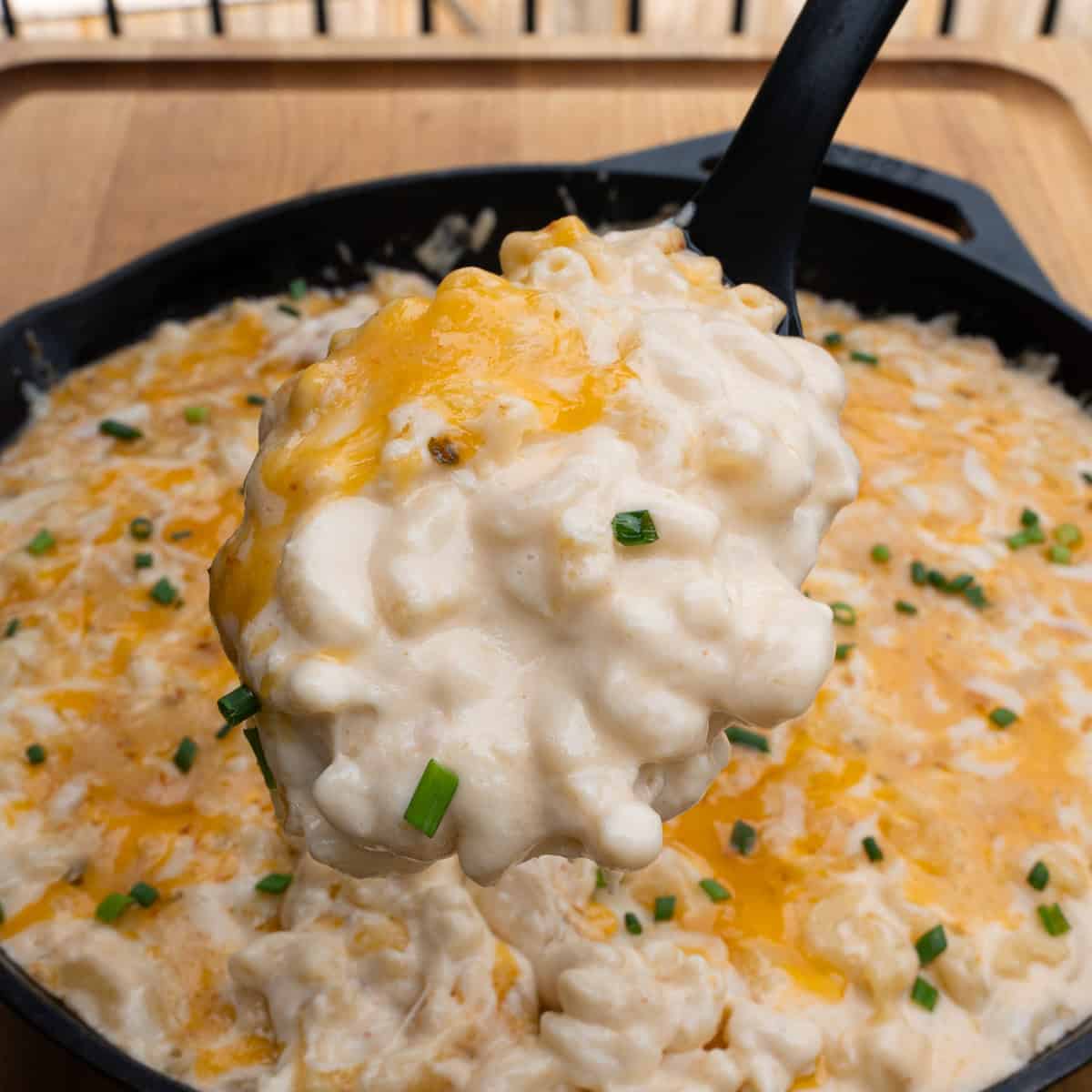
Like a lot of kids, I grew up on boxed mac and cheese—specifically the bright orange kind from Kraft that showed up at every sleepover and weeknight dinner. And hey, I loved it. But as I got older, I slowly realized there were a lot better ways of doing things when it comes to mac and cheese.
It started with my mother-in-law, who used to make it from scratch. While it was always good, she never used the same recipe twice. We'd eat it, love it, and then never remember exactly which version was truly our favorite. That's what inspired me to make my own—a version I could write down so we could go back to it again and again.
This southern-style mac and cheese with Gouda cheese is what I landed on. It's built on a stovetop base (or sideburner on my grill if you like cooking outside like me) with smoked Gouda, mild cheddar, and a habanero cheddar that kicks it up a notch to really make it stand out. That combination makes it creamy, smoky, spicy, and full of flavor, quickly making this my go-to mac and cheese recipe.
Whether you're cooking for a Sunday supper or a backyard BBQ, this one's worth every bite. Keep reading, and I'll walk you through exactly how I make it, plus a few tips and tricks to help you along the way.
Jump to:
Can You Make Mac and Cheese with Gouda Cheese?
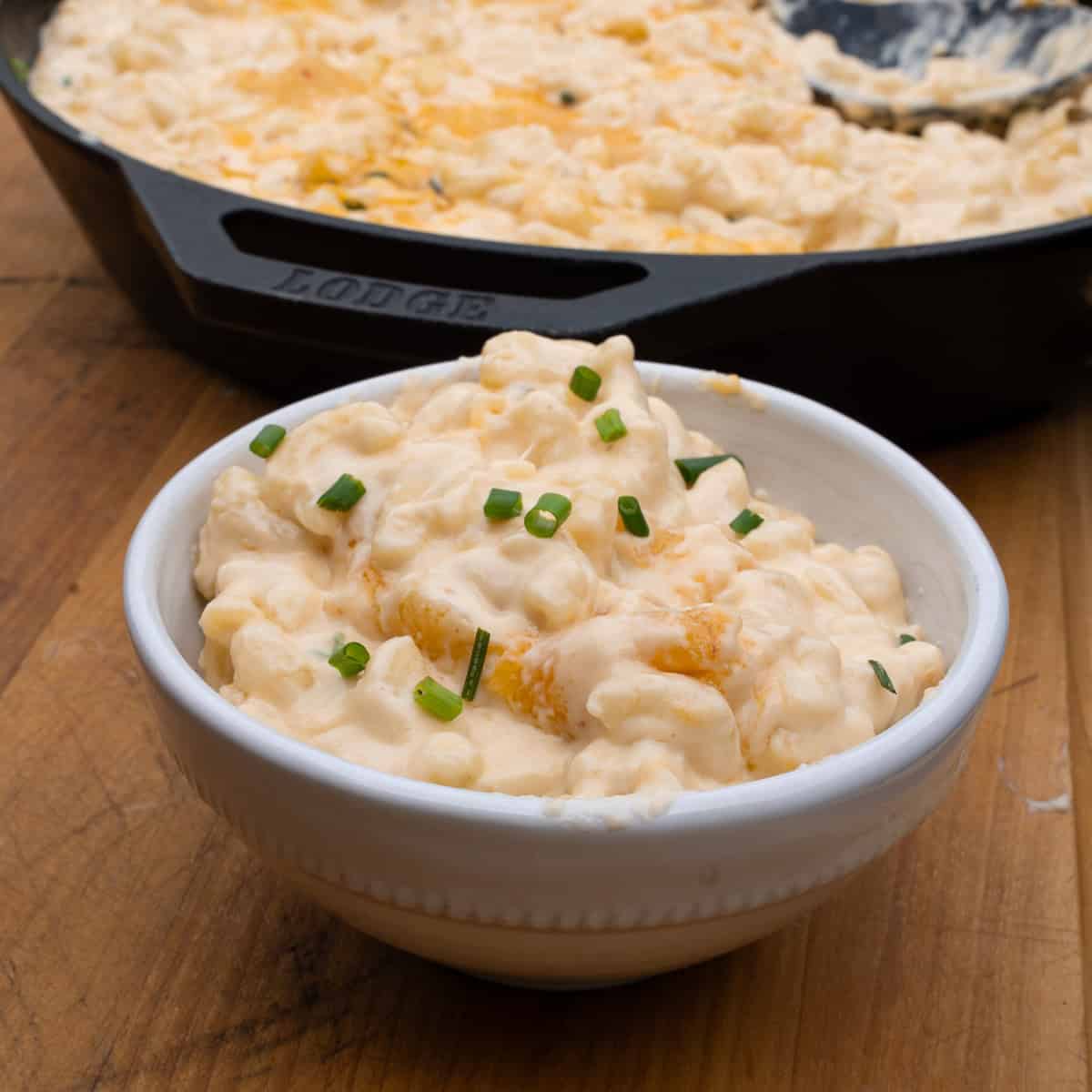
Absolutely—and you should. Gouda cheese, especially smoked Gouda, brings a smooth, slightly nutty richness that takes mac and cheese to a whole new level. It's one of those cheeses that melts extremely well into a creamy cheese sauce, giving your macaroni that velvety pull without the grit or oiliness you sometimes get with only cheddar. I've found that it's pretty available at most of my local supermarkets as well (I tend to shop at Kroger and Publix), so you shouldn't have to go out of your way to locate it.
As you guys know, I love grilling and smoking, so for this recipe, I wanted to pay homage to that by using smoked Gouda to add depth and a hint of that oh so sweet flavor. What makes it such a good addition to your mac and cheese is that it pairs incredibly well with both sharp and mild cheeses, such as the sharp and habanero cheddars I combined it with here. This versatility makes it perfect for recipes and as a base for blending multiple cheeses.
Pro tip: If you're nervous about smoked Gouda being too overpowering, start with half smoked and half regular Gouda and see what you prefer.
Is Gouda Good for Mac and Cheese?
If you read the last section, then you know that my resounding answer is yes! Like I mentioned, Gouda's high fat content gives you a creamy melt that doesn't break easily or go greasy. Plus, it's mild enough to balance more pungent cheeses like the cheddar varieties I use here, but flavorful enough on its own to make a real difference.
Smoked Gouda, in particular, is so good in macaroni and cheese. It's like tossing your mac and cheese on the grill (which you know I'd love to do)—without actually having to fire one up. It doesn't overpower; it just adds that subtle depth of flavor that makes it stand out from your more traditional varieties you find at a potluck or family dinner.
What Cheese Goes Well with Gouda for Mac and Cheese?
If you're starting with Gouda, you want cheeses that balance its creamy, smoky flavor with sharpness and a little kick. Here's what I've landed on to pair with smoked Gouda that gives you that perfect balance, plus melts beautifully in your macaroni and cheese:
- Mild cheddar – Adds that classic mac and cheese flavor we are all familiar with, with just the right bite to cut through the creamy Gouda. It gives the sauce structure and keeps the flavor from going too mellow.
- Habanero cheddar – This is my ace in the hole, as the saying goes. Truthfully, this addition started as an experiment. But after testing it out, I can't imagine making my mac and cheese without it (I make one exception for this: my sister-in-law can't handle even red pepper in a dish, so I've got to leave it out for her sake at the Thanksgiving Table). It brings just the right amount of heat and edge without overpowering the Gouda.
- Cream cheese – Smooths everything out and makes the sauce ultra silky and creamy. It goes unnoticed, but it helps to keep the dish together and smooths the edges of the habanero cheddar.
Are you missing one of these and need to substitute it with a different option? Monterey Jack is a solid choice if you want to lean towards a milder melt, or fontina if you want your mac and cheese extra gooey.
Ingredients
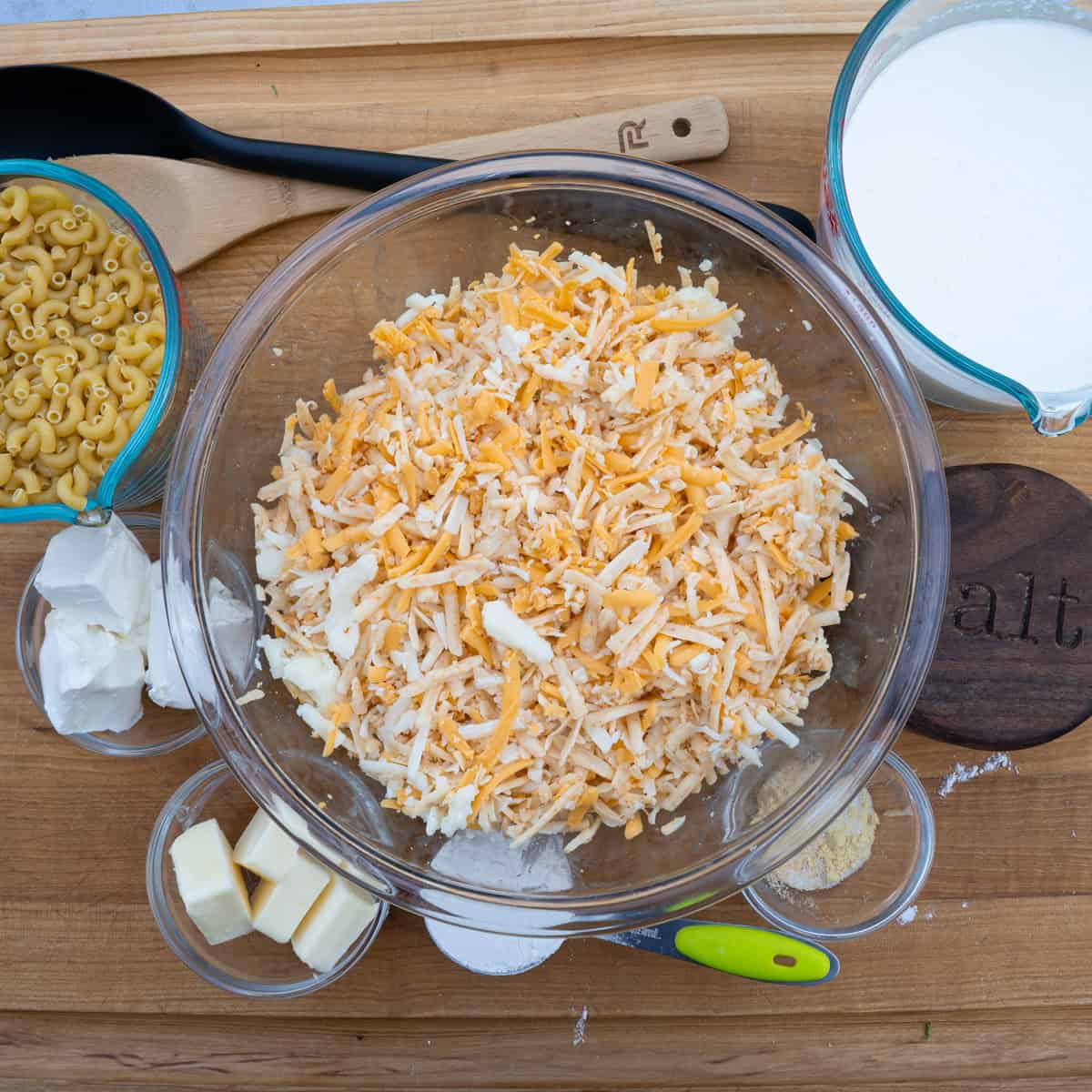
Here's what you'll need to build this flavor-loaded mac:
- Elbow macaroni or cavatappi – I don't get too caught up in variety because there are many good ways to go, but for this one, I used macaroni because our kids love it, and I already had it on hand. It has a classic shape you expect from macaroni and cheese.
- Butter & flour – These are the two simple ingredients you need to form a light roux that keeps the sauce thick but smooth. Light being the keyword here -- it's much easier to make and takes less time than what you're probably familiar with, with a dark roux like you'd make for gumbo.
- Whole milk + heavy cream – These two team up with your cheeses to help create a creamy, luscious base
- Four Cheese Blend (cream cheese, mild cheddar, habanero cheddar, and smoked Gouda) – We've talked about these at length, so I won't repeat myself, but this blend provides the unique flavor of the dish.
- Seasonings – Garlic powder, onion powder, dry mustard, salt, and cracked black pepper.
- Olive oil – Keeps the noodles from sticking -- This is an excellent option if you're making your noodles in advance before you're ready to put together your macaroni and cheese completely.
- Chives – Optional garnish for color and a fresh finish
Pro tip: If you have the time, always shred your own cheese. Pre-shredded options are coated in starch and additives that, while allowing the cheese to stay fresh longer, can mess with your cheese sauce and do not melt as well.
How to Make Mac and Cheese with Gouda Cheese
Step 1: Boil the Pasta
Cook your pasta in salted boiling water until just al dente, which should only take 8-10 minutes. You want it to hold up under the sauce, so al dente is better than limp and overcooked. After that, drain the excess liquid, and like I mentioned in the last section, toss in a little olive oil to help prevent the noodles from sticking if you're not using them immediately.
Step 2: Make the Roux
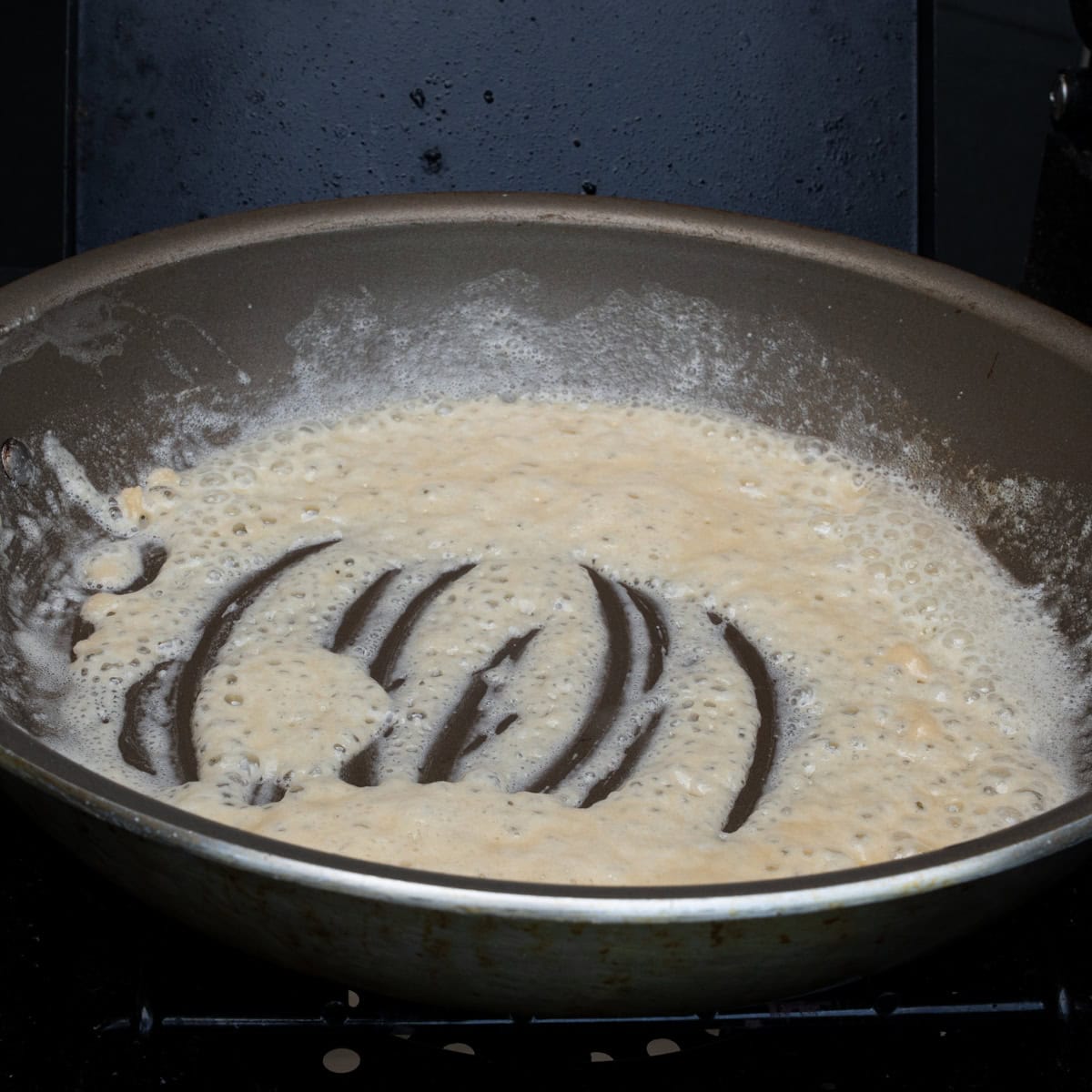
In a large cast-iron skillet or broiler-safe pan, melt your butter over medium heat. Whisk in the flour and cook for 1–2 minutes until light golden and bubbly. Equal parts butter and flour will set you up for success here; make sure to do the flour in batches so that it does not get clumpy. Because this is just a light roux, it won't take very long to come together.
Step 3: Build the Sauce
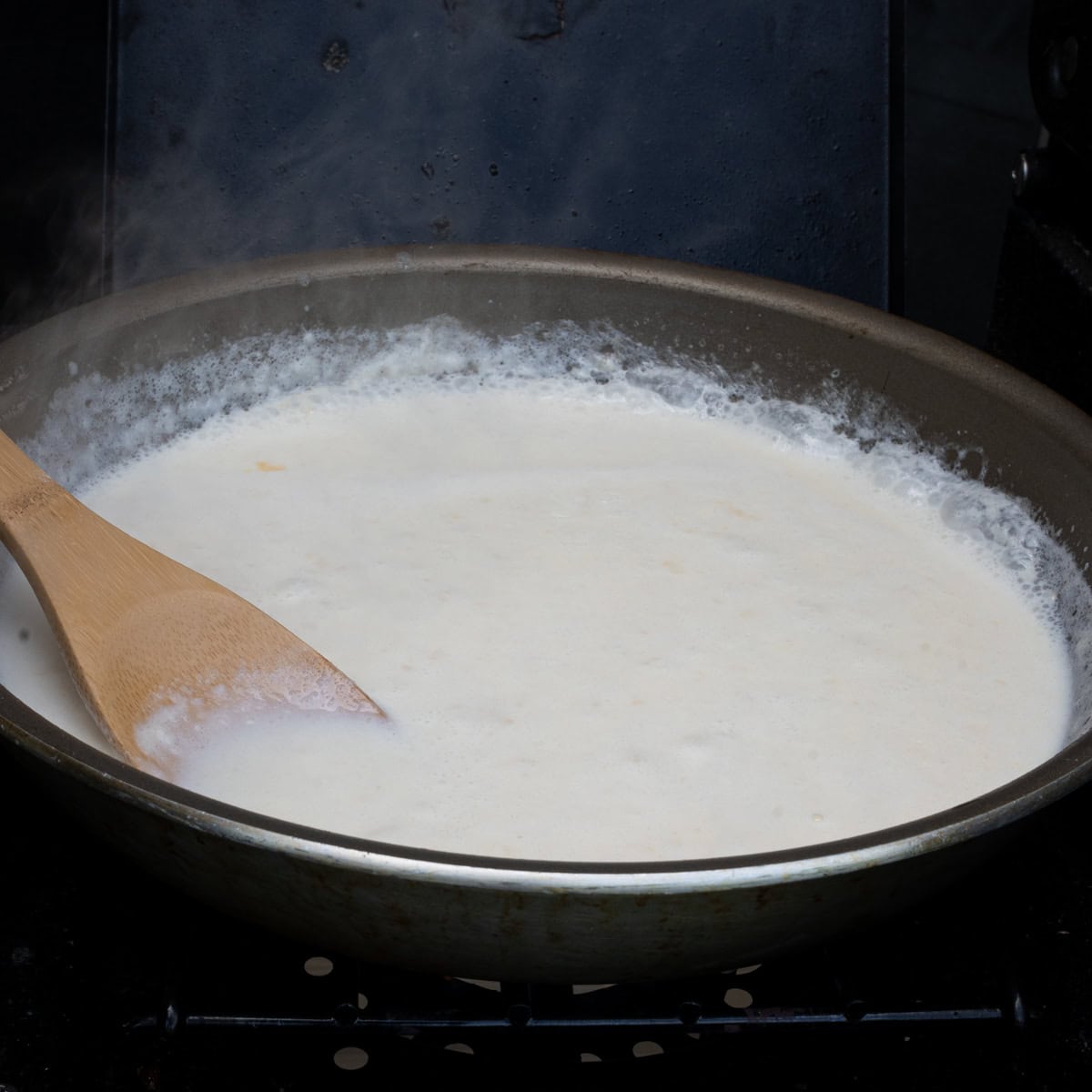
Slowly whisk in your milk and cream into the roux until smooth. Let it simmer gently until thickened—about 3–4 minutes. You'll want to keep a close eye on this because it'll happen fast. After that, add cream cheese and stir until melted. Then take the pan off the heat and add your shredded cheddar, habanero cheddar, and smoked Gouda a handful at a time, stirring until melted and silky.
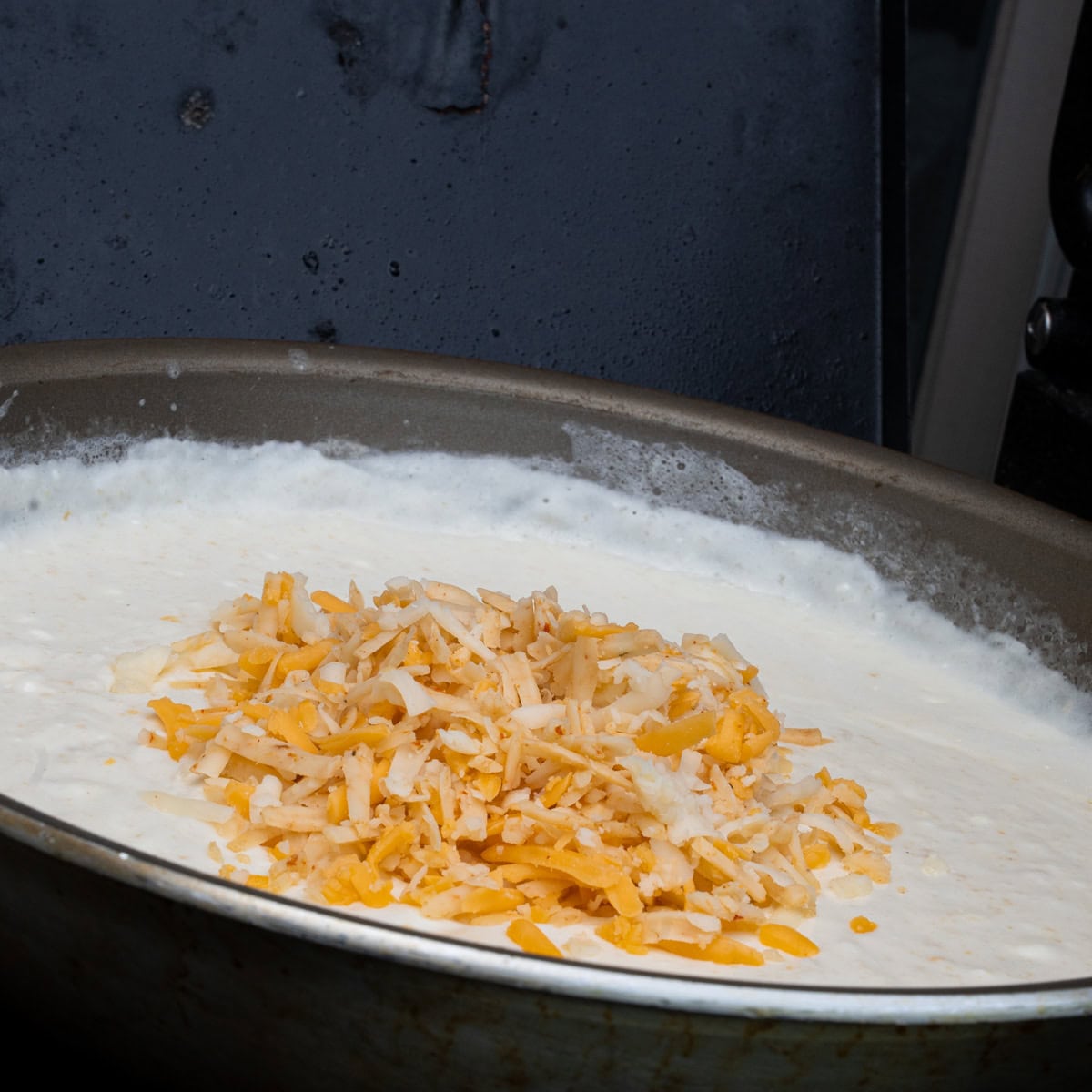
It's important to add the cheese off the heat here, because if the pan is too hot, the cheese may burn or clump together instead of forming a smooth sauce.
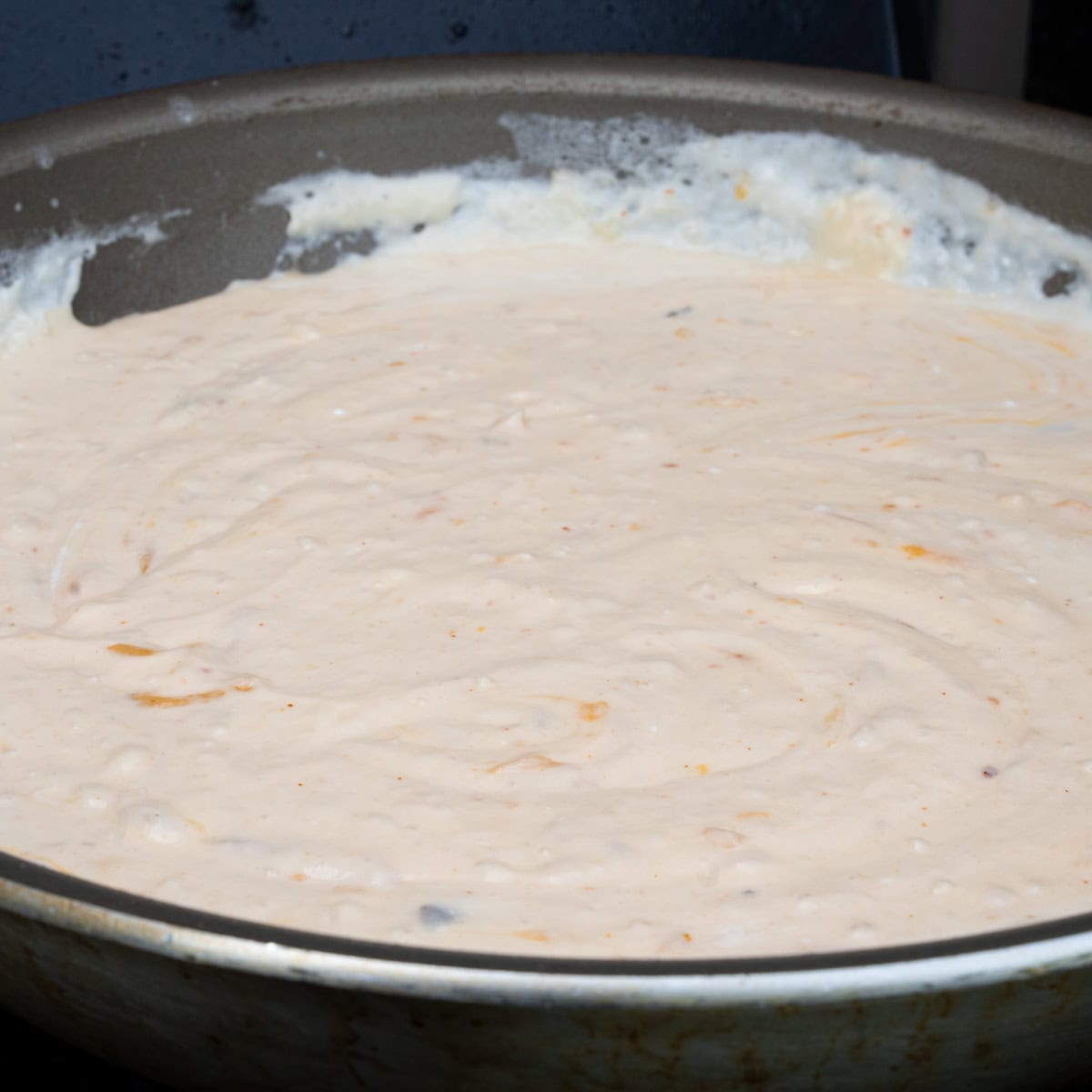
Sauce Troubleshooting Tip: If your sauce starts to look oily or grainy, the heat may be too high. Remove from heat immediately and stir in a splash of cream or milk to bring it back together. Check out this article here if you're curious about a few other tips and tricks to try if your sauce starts to "break".
Step 4: Season
Add garlic powder, onion powder, dry mustard, salt, and black pepper. From here, you taste and adjust—you want that smoked Gouda cheese flavor to come through without overpowering. Start by adding more salt, and adjust your other ingredients based on your preferences.
Step 5: Combine
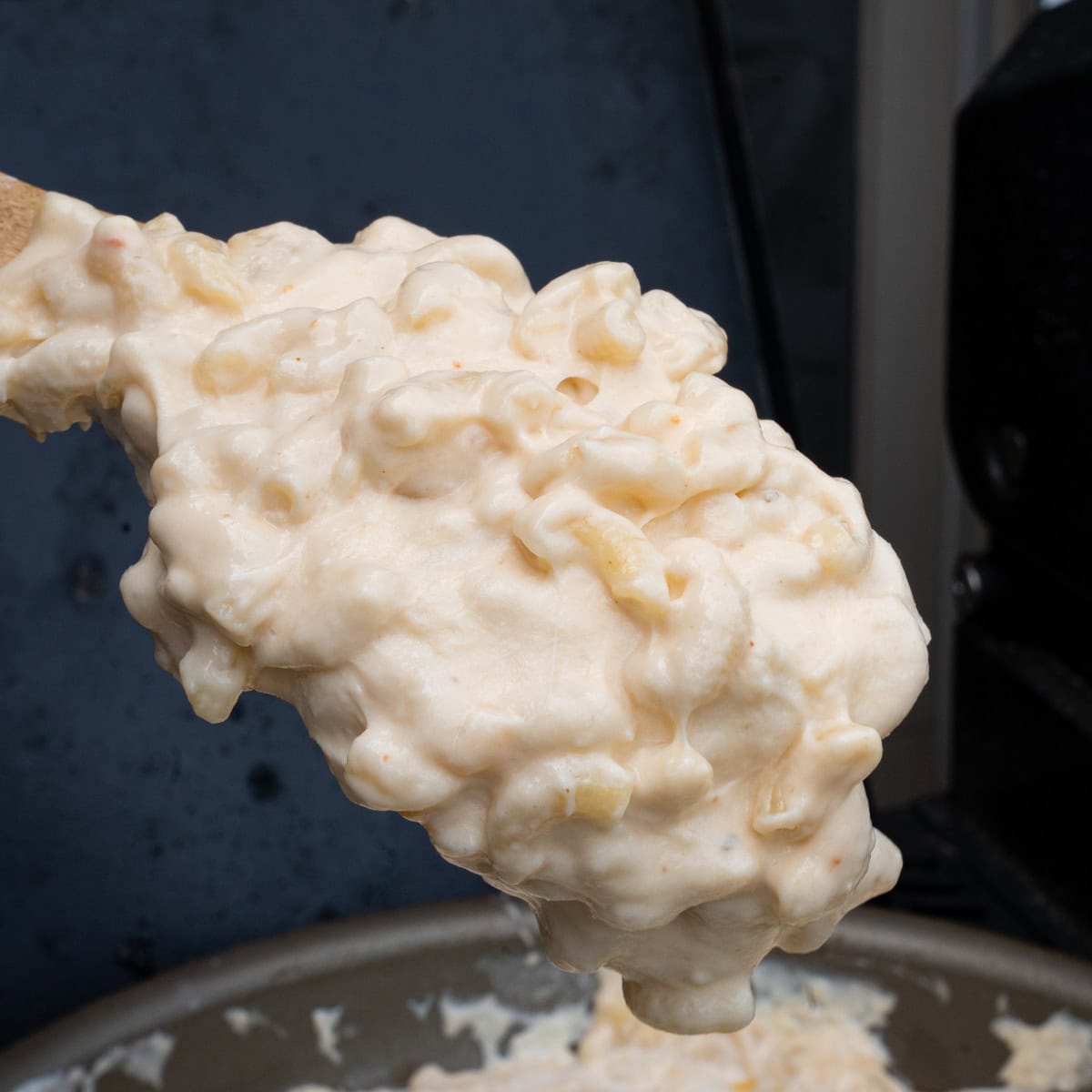
Now that you've successfully made your sauce, it's time to fold in your cooked pasta and stir until every noodle is coated in that creamy cheese sauce. From there, you're just about done!
Step 6: Bake
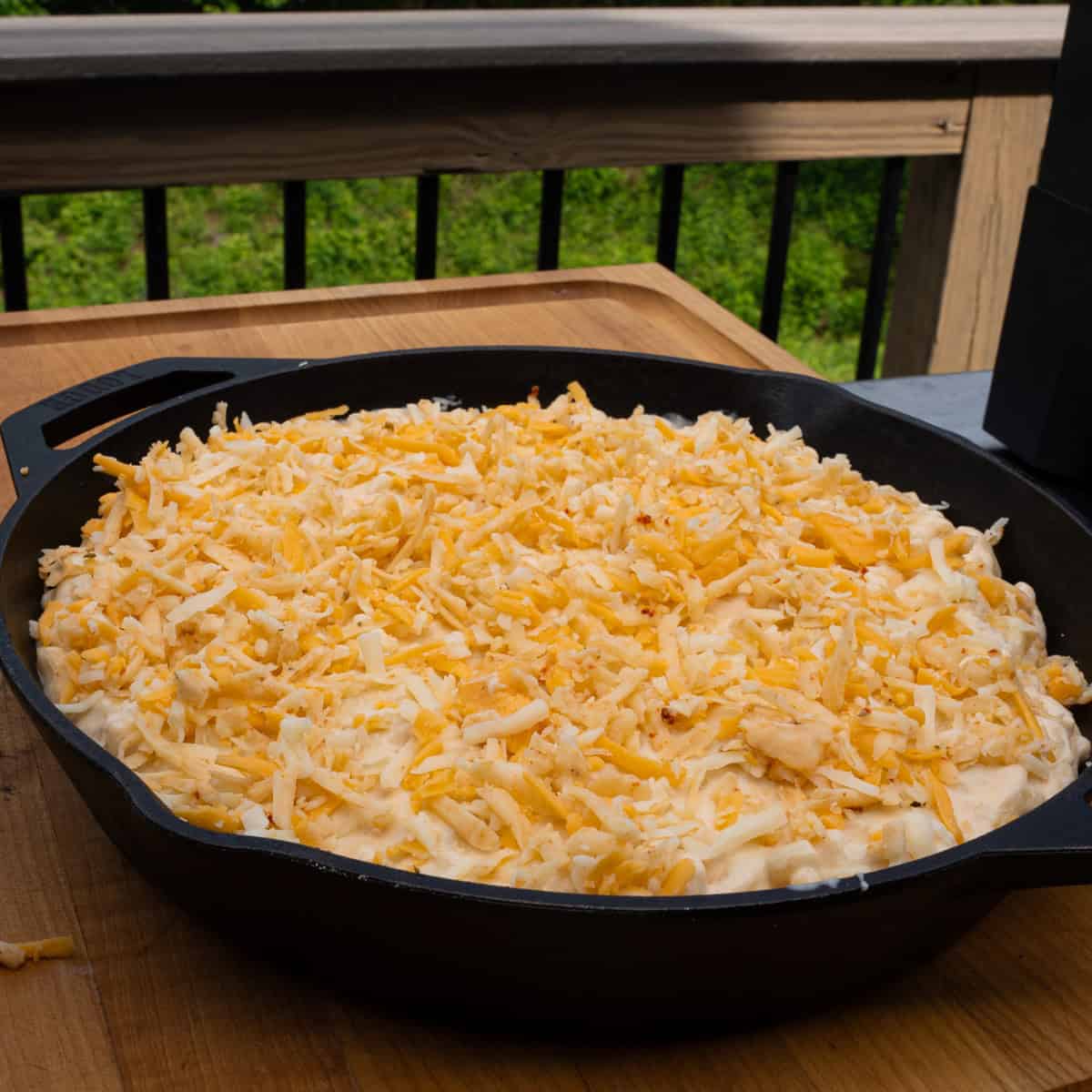
Now that you've assembled the Gouda mac, top with more shredded cheese (I go 50/50 Gouda and habanero cheddar), and put it in the oven at 350-375 degrees until bubbling and the top begins to turn golden brown.
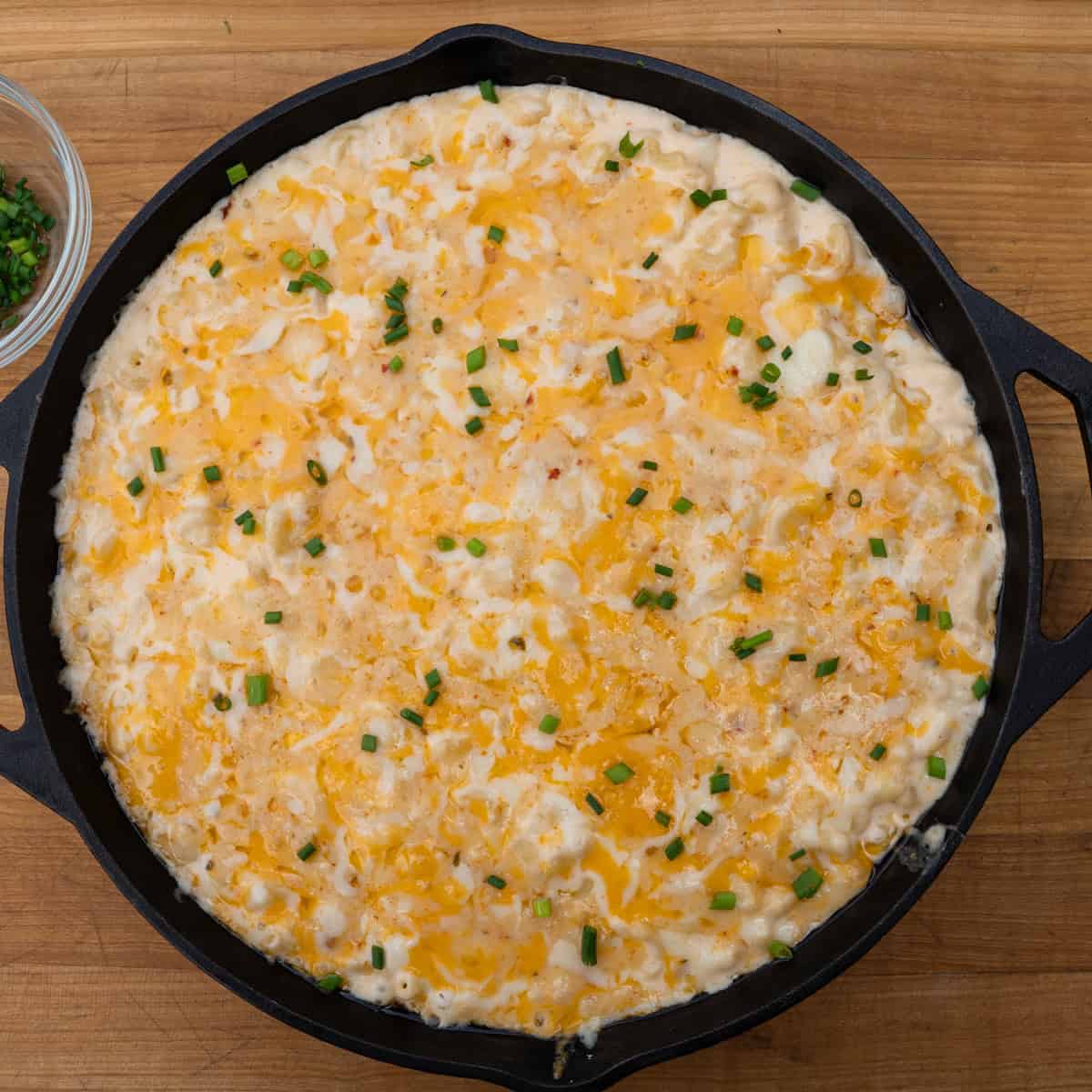
Optional Step: If you'd like, you can expedite the browning of the top by putting it under a broiler for just a few seconds -- keep a close eye on it so that it doesn't burn.
Step 7: Serve
Garnish with chopped chives if you're feeling fancy, then serve it hot and creamy straight from the skillet. Enjoy!
Substitutions
If you need to adjust for personal taste or what's in your fridge, here are a few options to consider:
- Dairy-free? Use your favorite unsweetened plant-based milk and vegan cheese that melts well (like a gouda-style vegan block).
- Gluten-free? Use GF elbow macaroni and adjust the roux like G-Free Foodie does here for an easy alternative.
- Too spicy? Cut the habanero cheddar in half or sub with a milder cheddar to tone it down. If you're just not a fan at all, swap this out entirely for a classic, mild cheddar.
Variations to Try
Once you've got the base recipe down, try these alternatives:
- Bacon Gouda Mac: Stir in crisp chopped bacon for a smoky crunch. Personally, I don't ever think you can go wrong adding bacon, and it is so good in this.
- BBQ Mac: Fold in pulled pork (check out my pulled pork recipe here to get you started) and a swirl of barbecue sauce (here's one of my favorites to get you started, cherry molasses bbq sauce).
- Buffalo Kick: Add a splash of buffalo sauce and top with blue cheese crumbles. This option is a popular alternative that I really enjoy as well.
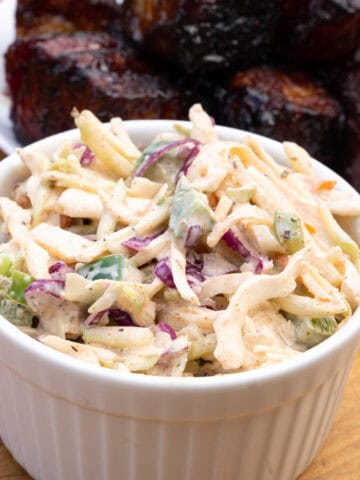
Looking for something to serve it up with? Pair this Gouda macaroni and cheese with my Smoked Chicken Halves and Memphis Style Cole Slaw for a meal that will really impress your guests (or in-laws if you're like me).
Equipment
- Cast-iron skillet or oven-safe pan
- Large pot
- Whisk
- Box grater
- Measuring cups & prep bowls
- Spatula
- Colander
- Oven or temperature controlled grill
How to Reheat Mac and Cheese Without Drying It Out
If you make enough to have leftovers and want them to taste as close to freshly made as possible the next time around, here are a few steps you can take to keep them creamy:
- Microwave: Add a splash of milk or cream, cover loosely, and microwave in 30-second bursts, stirring in between. Transparently, this is going to be the least effective method, but it's also the quickest, and I get how that can have its upside in some instances. Just know the latter options are going to work better for you if you have the time.
- Skillet: Do this by reheating on low with a bit of cream or milk added in, stirring until smooth. This method is my second favorite option.
- Oven: To me, this way is the gold standard. Cover with foil and warm at 300ºF for 15–20 minutes. Add a bit of extra cheese on top for bonus gooeyness. It takes a little more time, but it's going to give you the best end product.
Just remember, no matter what method you use, avoid high heat—that's what causes sauce separation and grainy texture to develop. Low and slow temperatures ensure the sauce doesn't break, and you can enjoy the same creamy, delicious end product you had the first time around.
For Storage
Let leftovers cool completely before transferring to an airtight container. They'll keep in the fridge for up to 4 days. You can also freeze this mac for up to 2 months as long as it's in a food-safe bag/container like you'd get by vacuum sealing.
Recipe
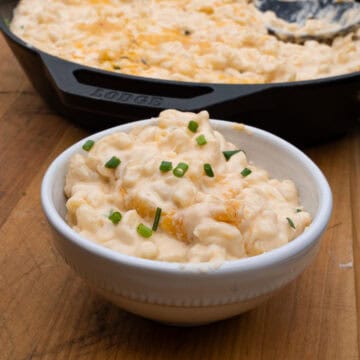
Creamy Southern Mac & Cheese with Gouda Cheese
Equipment
- Cast Iron Skillet or oven-safe pan
- Large pot
- Whisk
- Box grater
- Measuring cups & prep bowls
- Spatula
- Colander
- Oven or temperature controlled grill
Ingredients
- 1 lb elbow macaroni or cavatappi
- 4 tablespoon butter unsalted
- ¼ cup all-purpose flour
- 3 cups whole milk
- 1 cup heavy cream
- 4 oz cream cheese cubed
- 2 cups mild cheddar shredded
- 1 cup habanero cheddar shredded
- 1 cup smoked Gouda shredded
- 1 teaspoon garlic powder
- ½ teaspoon onion powder
- ½ teaspoon dry mustard
- Salt and cracked black pepper to taste
- Extra cheese for topping at least 1 cup mixed habanero cheddar/gouda
- Salt as needed
- Olive oil as needed
- Chives to garnish
Instructions
- Boil the pasta in salted water until just al dente. Drain and toss lightly with butter or oil to prevent sticking.
- In a large cast-iron skillet or broiler-safe pan, melt butter over medium heat. Whisk in flour and stir constantly for 1–2 minutes to make a light roux.
- Slowly whisk in milk and heavy cream until smooth. Let it simmer gently, stirring, until slightly thickened.
- Add the cream cheese and stir until melted and smooth. Then stir in the shredded cheeses off heat, one handful at a time, until melted and creamy.
- Add seasonings: garlic powder, onion powder, dry mustard, salt, and pepper. Taste and adjust if needed.
- Fold in the cooked pasta until it is fully coated. Stir until everything is evenly mixed and creamy. Top with the remaining cheese.
- Bake at 350-375°F until bubbly and the cheese has melted. Make sure to pay close attention so the top does not burn.
- Finally, serve in bowls and garnish with chives. Enjoy!
Notes
- Cheese tip: For best results, shred your own cheese from blocks. Pre-shredded cheese is coated with anti-caking agents that can mess with meltability and make the sauce grainy.
- Heat level: Habanero cheddar brings noticeable heat. If you're cooking for kids or spice-sensitive guests, swap it for a milder cheddar or use less of it.
- Make-ahead tip: Cook the pasta and sauce ahead of time, combine, and refrigerate. Add extra milk when reheating or baking to bring back that creamy texture.
Leave a Reply